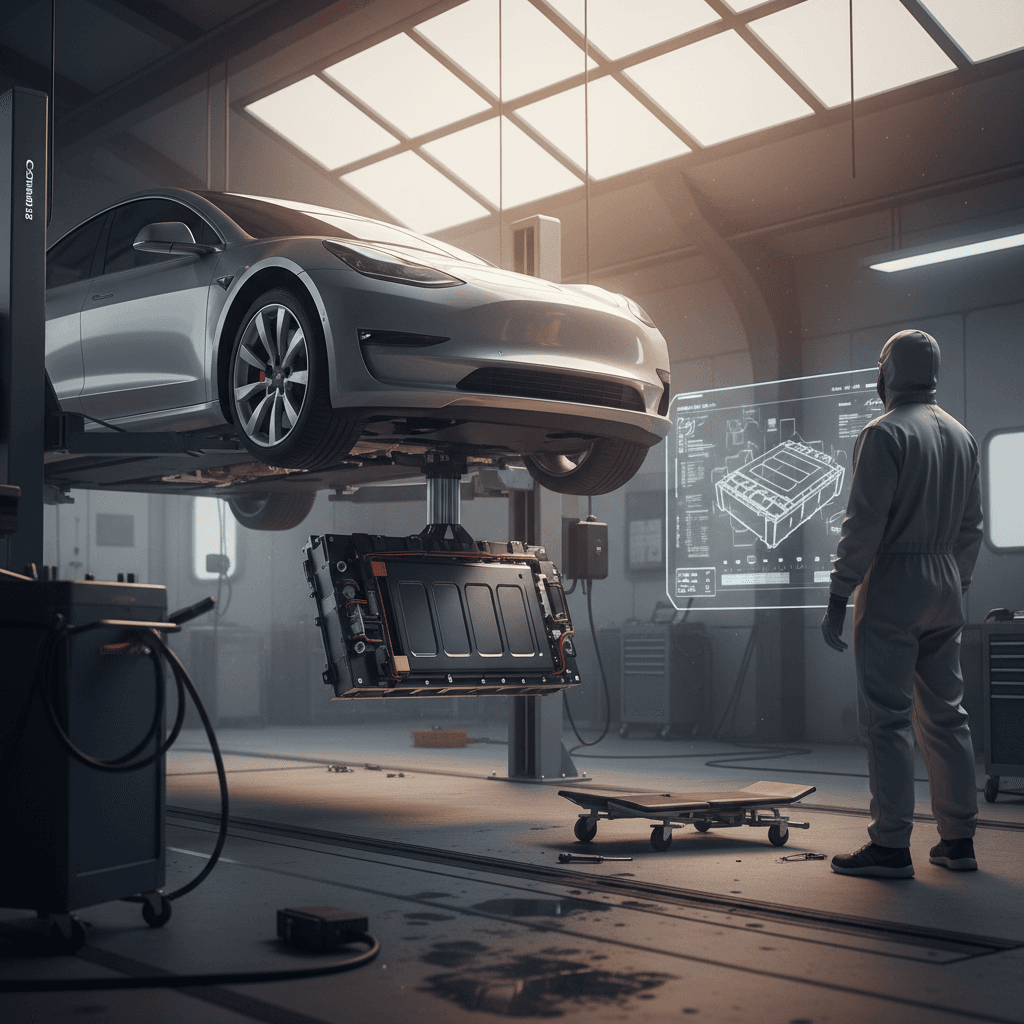
If you drive, or are shopping for, a Tesla Model 3, you’ve probably wondered about Tesla Model 3 battery replacement cost in 2026. With pack prices in the five-figure range, it’s a fair question, especially as more early Model 3s roll past their original 8‑year battery warranty window.
Key context for 2026
Quick answer: 2026 Model 3 battery replacement cost
Tesla Model 3 battery cost snapshot for 2026
Looking specifically at 2026 pricing in the U.S., most owner quotes and shop estimates for a full Tesla Model 3 battery replacement land in the $11,000–$18,000 range, parts and labor included, when it’s not covered by Tesla’s warranty. That lines up with broader EV battery cost data from AAA and industry reports, which peg Model 3 replacement at around $10,000–$15,000 for the pack itself, plus labor on top.
The single most important nuance
What actually drives Tesla Model 3 battery replacement cost?
If you’ve searched online, you’ve seen everything from $5,000 to $25,000 thrown around for a Model 3 pack. The spread is big because you’re rarely comparing apples to apples. In 2026, six main levers determine what you’ll actually pay:
- Pack size and chemistry. Earlier Standard Range (SR / SR+) cars tend to have smaller packs than Long Range (LR) and Performance models. Smaller pack = fewer kWh = lower parts cost. Some newer Model 3s use LFP chemistry, which has different cost and longevity characteristics.
- New vs. remanufactured pack. Tesla often installs a remanufactured pack with a fresh warranty. Third‑party shops may use refurbished packs or recondition your existing one, potentially saving thousands.
- Labor rates and shop type. Tesla Service Centers typically bill higher hourly labor rates than independent EV specialists. High‑voltage work can involve 6–10+ hours of labor, plus diagnostics.
- Diagnostic complexity. If your car needs extensive troubleshooting, firmware updates, or related component replacements (coolant manifolds, contactors, wiring), those line items add up.
- Shipping and logistics. Moving a 1,000‑pound battery pack isn’t cheap. Freight and handling charges are often baked into parts pricing, especially if your shop has to special‑order a pack.
- Warranty status. If Tesla determines the pack failed under warranty, your out‑of‑pocket cost may be a $0 battery plus incidental fees (like a diagnostic charge or rental). Outside warranty, you’re on the hook for the full invoice unless insurance is involved.
Don’t compare 2018 quotes to 2026 reality
2026 cost breakdown by Model 3 variant
To make the numbers more concrete, here’s how 2026 U.S. retail pricing generally shakes out by Model 3 configuration. These are directional ranges based on recent Tesla and independent‑shop invoices, industry cost data, and Recharged’s own benchmarking, not guaranteed quotes.
Estimated Tesla Model 3 battery replacement cost by variant (2026)
Approximate U.S. retail pricing for full high‑voltage pack replacement, including parts and labor, assuming no crash damage and out of warranty.
| Model 3 variant | Approx. pack size | Typical pack price (parts) | Typical labor & fees | Estimated total (installed) |
|---|---|---|---|---|
| Standard Range / SR+ (2017–2023) | ~50–60 kWh | $9,000–$12,000 | $1,500–$2,500 | $10,500–$14,500 |
| Standard Range / RWD (LFP) | ~57–60 kWh | $9,000–$12,500 | $1,500–$2,500 | $10,500–$15,000 |
| Long Range AWD | ~70–80 kWh | $10,000–$15,000 | $1,500–$3,000 | $11,500–$18,000 |
| Performance | ~75–80 kWh | $11,000–$16,000 | $1,500–$3,000 | $12,500–$19,000 |
Actual pricing will depend on your VIN, pack part number, shop, location, and whether you choose Tesla or an independent EV specialist.
Why your quote might be lower, or higher
Warranty coverage: when a Model 3 battery is free, or not
Before you panic about a five‑figure bill, you need to understand Tesla’s battery and drive unit warranty. As of the mid‑2020s, a Model 3’s high‑voltage battery is covered for 8 years from in‑service date, with a mileage cap that varies by trim:
- Standard Range / RWD: typically 8 years or 100,000 miles, whichever comes first, with a minimum 70% capacity guarantee.
- Long Range / Performance: typically 8 years or 120,000 miles, whichever comes first, with the same 70% capacity guarantee.
If your battery pack fails due to a defect or drops below the promised capacity threshold inside that window, Tesla may repair or replace it at no charge for the pack itself. You might still pay for diagnostics, towing, or a loaner, but not for the main battery.
Good news for many 2018–2020 owners
Where owners run into big bills is when a pack fails just outside that 8‑year / mileage cap, or when Tesla determines the issue isn’t a warrantable defect, say crash damage, water intrusion, or tampering. At that point, your options are to pay Tesla’s out‑of‑warranty rate, involve insurance if a loss is covered, or look to a reputable independent EV shop.
Repair vs full replacement in 2026
When a full pack replacement makes sense
- Severe internal faults such as multiple failing modules, internal shorts, or extensive contamination.
- Major crash damage where the pack case is compromised or mounting points are distorted.
- Repeated failures on a previously repaired or remanufactured pack.
- Situations where Tesla will only warranty a full pack, not a component‑level fix.
When repair or module work can save you money
- Isolated module failure that a third‑party specialist is willing to replace or recondition.
- Cooling system issues like a manifold leak, sensor failure, or coolant contamination.
- High‑voltage contactor or wiring faults that can be addressed without opening every module.
- Shops that specialize in pack refurbishment may restore range and performance for $3,000–$8,000 instead of $12,000–$18,000.
Choose your shop carefully
Real-world bills: what owners are seeing
So what does this look like on actual invoices, not just estimates? While individual stories vary, real‑world Model 3 battery jobs in the 2023–2026 window tend to fall into a few buckets:
Typical Model 3 battery invoice patterns
Anecdotes change, but the patterns are consistent.
Mid‑teens, full replacement
It’s common to see Tesla invoices around $13,000–$16,000 for a long‑range Model 3 full pack swap out of warranty. That usually includes a remanufactured pack and several years of warranty on the new unit.
Low‑thousands, repair only
When the root cause is a failed module, coolant issue, or contactor, specialized independent shops sometimes repair the pack or replace a subset of components for $3,000–$7,000.
Near‑zero, under warranty
Owners whose packs fail within Tesla’s 8‑year / mileage limits typically see $0 for the pack and only pay for ancillary fees, if anything at all.
Insurance can be a factor
Planning ahead if you own or are buying a Model 3
Whether you already own a Model 3 or you’re shopping the growing used market, you don’t control whether a pack will ever fail. But you can control your risk. Here’s how to plan around battery costs in 2026.
Smart steps to manage Model 3 battery risk
1. Know your in‑service date and warranty end
Pull your Tesla account or service records to confirm when the car’s 8‑year battery warranty expires and what mileage cap applies to your trim.
2. Track battery health over time
Watch rated range at 100% charge, look for sudden drops, and consider a professional battery health report, especially before buying a used Model 3.
3. Budget realistically if you’ll own long‑term
If you plan to keep the car well past warranty, assume a low‑probability but high‑cost event. That can mean setting aside savings, increasing your emergency fund, or making sure your insurance coverage lines up with your risk tolerance.
4. Research independent EV specialists near you
In 2026, more third‑party EV shops can safely service Tesla packs. Having a shortlist of reputable options gives you negotiating power if you’re ever quoted a full replacement.
5. Avoid abuse that can kill a pack
Extreme heat, physical damage to the pack, or tampering with high‑voltage components can all void warranty coverage and lead to ugly bills. If something seems off, get it inspected rather than DIY‑guessing.
6. Consider resale timing
If your Model 3 is approaching 8 years old or high mileage, you may prefer to sell or trade it before you’re fully outside warranty. That transfers the long‑term risk to the next owner.
How buying used through Recharged helps manage battery risk
If you’re shopping for a used Tesla Model 3, the scariest scenario isn’t a hypothetical $15,000 invoice, it’s buying a car blind and only discovering a weak or abused pack after the warranty is gone. That’s where a more transparent used‑EV experience matters.
What Recharged does differently on battery risk
Every used EV we list includes real battery health insight, not just a charge percentage.
Recharged Score battery report
Every vehicle comes with a Recharged Score Report that includes verified battery health diagnostics, so you’re not guessing about degradation or previous issues.
Transparent pricing & history
We align fair market pricing with a car’s actual condition, including its battery profile and remaining warranty, so you’re not overpaying for a pack near the end of its coverage.
End‑to‑end support
From trade‑ins and consignment to nationwide delivery and EV‑specialist guidance, we help you understand long‑term costs, including the unlikely but important risk of a future battery replacement.
Ready to find your next EV?
Browse VehiclesWant help evaluating a specific Model 3?
FAQ: Tesla Model 3 battery replacement cost in 2026
Common questions about 2026 Model 3 battery costs
Bottom line: should battery cost scare you away?
A Tesla Model 3 battery replacement in 2026 is undeniably expensive. For an out‑of‑warranty car, you’re usually talking about $11,000–$18,000 if the entire pack needs to be replaced. But that’s only part of the story. Most Model 3 packs are holding up well, many failures inside the 8‑year window are covered, and a growing ecosystem of EV specialists can repair or refurbish packs for far less than a brand‑new unit.
If you understand your warranty, track battery health, and buy used with real data instead of guesswork, battery replacement cost becomes a manageable risk rather than a deal‑breaker. And if you’d rather not navigate that alone, Recharged’s combination of verified battery diagnostics, fair pricing, and EV‑specialist guidance is designed to keep you out of the horror‑story scenarios and in a Model 3 that fits your budget for the long haul.