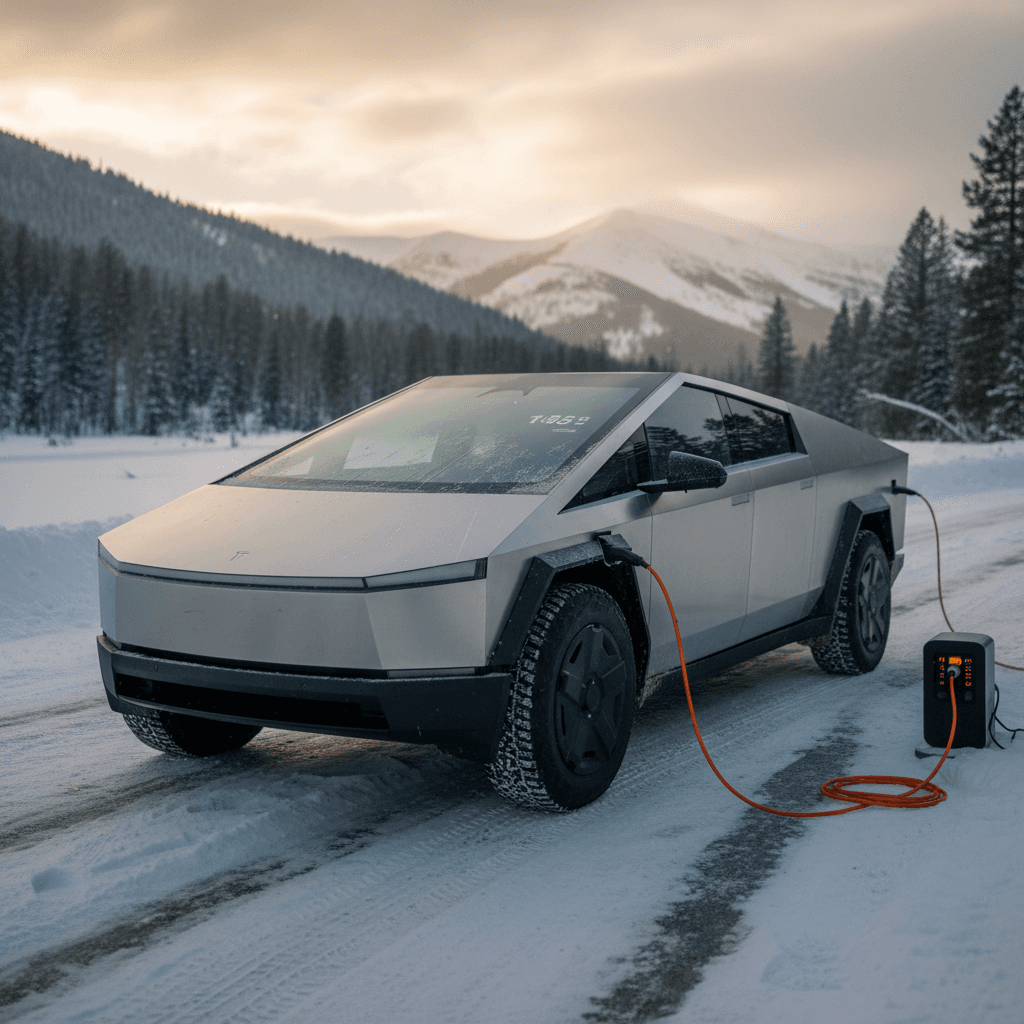
If you live where winters are real, freezing temps, snow, slush, highway salt, you’re right to wonder how much Tesla Cybertruck winter range loss you’ll see. The short answer: cold weather can cut effective range dramatically, especially on short trips, but with a bit of planning the truck stays very usable for daily driving and road trips.
Key takeaway on Cybertruck winter range
Why the Tesla Cybertruck Loses More Range in Winter
Every EV loses range in the cold, but the Cybertruck adds some twists: it’s heavy, shaped like a brick, and many owners buy it for highway use and towing, exactly the scenarios that stress an EV in winter. Underneath the drama, the physics are straightforward.
Four main reasons your Cybertruck loses range in winter
Each one stacks on top of the others
1. Battery chemistry slows down
2. Air is denser and drag increases
3. Cabin and seat heating are energy‑hungry
4. Snow, slush, and winter tires add rolling resistance
Short trips are the worst case
How Much Winter Range Loss to Expect in a Cybertruck
Tesla hasn’t redesigned physics for the Cybertruck. If you look at Model Y, Rivian R1T, and F‑150 Lightning winter data, the patterns are similar: range loss is modest in cool, dry weather, and steep once you’re below freezing and driving fast or towing. Early Cybertruck owners’ reports track those same numbers.
Typical Tesla Cybertruck winter range outcomes
On paper, a dual‑motor Cybertruck with the Foundation Series pack is targeted around the mid‑300‑mile range band in ideal conditions. In a typical U.S. winter, that’s more realistically closer to 200–240 miles of comfortable, usable range if you want to arrive with a buffer instead of running to 0%.
Plan around usable, not headline range
Factors That Make Cybertruck Winter Range Better or Worse
Habits that improve winter range
- Use scheduled preconditioning while plugged in so the battery and cabin are already warm before you drive.
- Rely on seat and steering‑wheel heaters more than blasting cabin air heat; they use noticeably less energy.
- Drive 60–65 mph instead of 75–80 mph, especially in strong winds. The Cybertruck’s shape punishes high speeds.
- Keep tires properly inflated; cold air drops pressure and increases rolling resistance.
- Clear snow and ice from the bed cover, roof, and wheel wells to reduce weight and drag.
Habits that hurt winter range
- Repeated short trips from a cold soak; you pay the warm‑up penalty each time.
- Sustained high‑speed driving (75+ mph) in dense, cold air and headwinds.
- Heavy, knobby winter or off‑road tires without adjusting expectations.
- Letting the truck sit unplugged outside in deep cold for days at a time.
- Using max Defrost constantly; it’s sometimes necessary, but very energy‑intensive.
Good news for daily driving
Charging a Tesla Cybertruck in Cold Weather
Cybertruck charging behavior in winter will feel familiar if you’ve driven other Teslas: the truck protects its battery when it’s cold, which shows up as slower Supercharger speeds until the pack is warm. That’s normal, and there are ways to work with it rather than fight it.
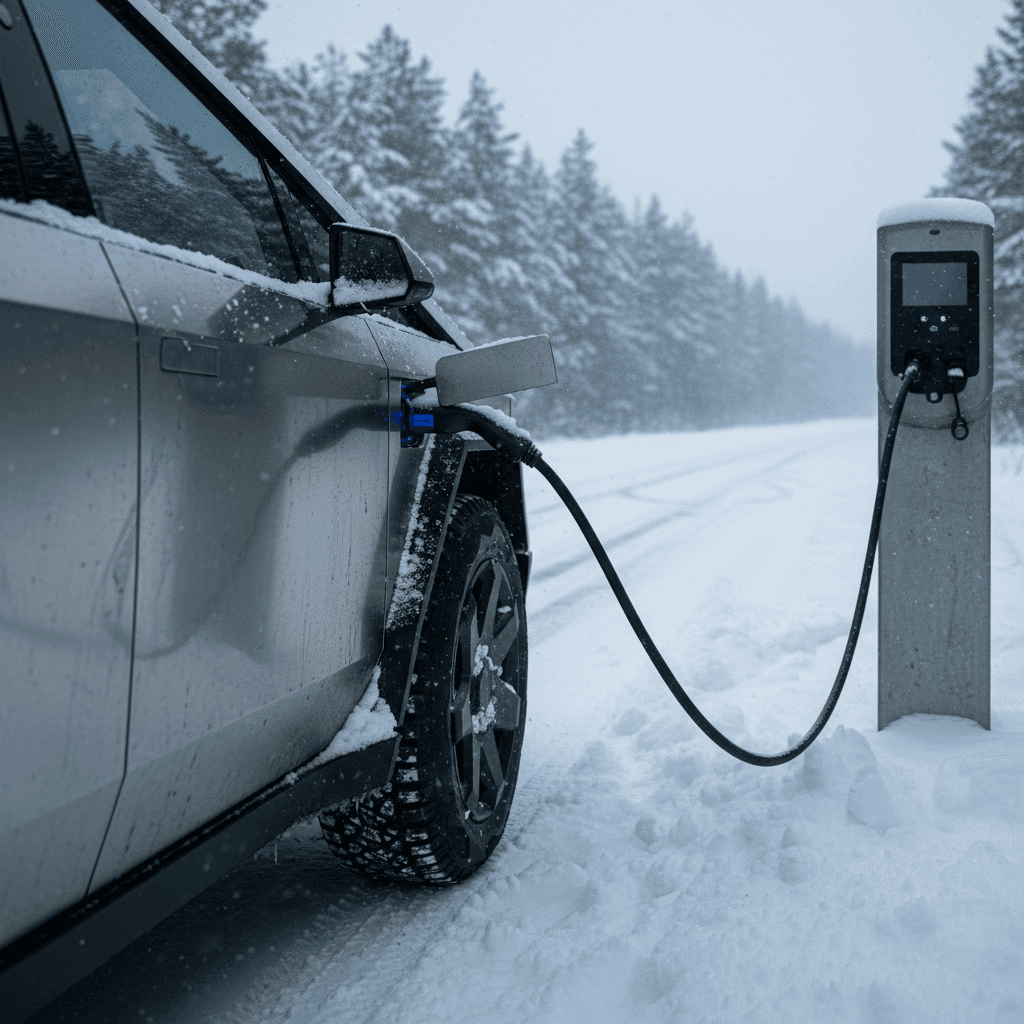
Cold‑weather charging tips for Cybertruck owners
Optimize both time and battery health
Precondition before Supercharging
Expect a slower ramp at first
Favor overnight L2 at home
Don’t chase 100% in deep cold
If you’re cross‑shopping a used Cybertruck in a few years, charging history matters. Trucks that were mostly home‑charged and only occasionally fast‑charged, especially if their owners avoided repeated 0–100% cycles, are likely to have healthier packs. That’s exactly the kind of behavior Recharged’s Score battery health diagnostics is designed to surface on used EV listings.
Winter Road Trips and Towing in a Cybertruck
Cybertruck buyers often have road trips, ski weekends, and towing in mind. Those use cases are absolutely doable in winter, but you need to plan them more like an aircraft flight than an old‑school gas truck romp. Range estimates, terrain, wind, and trailer aerodynamics all matter.
Planning assumptions for Cybertruck winter road trips
Use conservative estimates so you don’t stress about your next charger.
| Scenario | Temperature | Speed / Use | Conservative planning range |
|---|---|---|---|
| Dry highway drive | 25–32°F | 65–70 mph, no trailer | ~55–60% of EPA range |
| Ski weekend | 10–25°F | Mountain grades, gear on board | ~45–55% of EPA range |
| Small trailer | 20–32°F | 65 mph, modest frontal area | ~40–50% of EPA range |
| Tall/boxy trailer | < 25°F | 65–70 mph, strong headwinds | As low as ~35–45% of EPA range |
These are planning numbers, not promises, always leave a buffer for weather and traffic.
Watch altitude and wind
Steps for a smoother Cybertruck winter road trip
1. Map your route in Tesla’s planner first
Use the built‑in trip planner or the Tesla app to see Supercharger stops and estimated arrival states of charge. In winter, give yourself more buffer than the planner suggests, aim to arrive with 15–20% rather than single digits.
2. Start with a warm pack and cabin
Precondition on home Level 2 charging and time your departure so the truck is already warm. For early‑morning departures, this can recover a big chunk of “lost” range versus leaving with a cold‑soaked pack.
3. Use trailers with better aero when possible
A low, streamlined trailer punches a much cleaner hole in the air than a tall, blunt one. With a Cybertruck, you’ll feel that difference clearly in winter energy use.
4. Accept more, shorter charging stops
In deep cold, two or three 20–60% fast‑charge sessions can be faster overall than one big 10–90% push. Cybertruck, like other Teslas, charges fastest in the middle of the battery’s state‑of‑charge window.
5. Re‑evaluate speed as you go
If you see your projected arrival SoC dropping below your comfort buffer, slow down 5–10 mph. The impact on range in that aero‑sensitive brick‑shaped body is larger than most truck owners expect.
Protecting Battery Health vs Short-Term Range
Winter brings a trade‑off: you can squeeze out a bit more range by doing things that aren’t ideal for long‑term battery health, or you can protect the pack and accept slightly higher losses. Understanding where that line is helps you make informed choices rather than reacting to range anxiety.
Good habits for long‑term Cybertruck battery health
- Live between ~10–80% SoC for daily use; avoid leaving the truck at 0% or 100% for long periods.
- Keep the truck plugged in when parked at home. Tesla’s thermal management can then protect the pack without eating into your usable range.
- Use preconditioning instead of aggressive driving to warm the battery before fast‑charging.
- Avoid repeated back‑to‑back DC fast charges in a single day unless your trip really demands it.
Habits that might help today but hurt tomorrow
- Cranking it to 100% every cold morning “just in case,” even for short commutes.
- Ignoring the plug for days in sub‑freezing temps, forcing the truck to burn battery just to keep itself safe.
- Hammering the accelerator repeatedly on a cold pack to warm it faster.
- Using DC fast charging as your default winter charging method instead of home Level 2.
How Recharged helps with used Cybertruck battery health
Ready to find your next EV?
Browse VehiclesShould Winter Range Loss Stop You From Buying a Cybertruck?
Whether you’re considering a new Cybertruck or eyeing future used listings, winter range is one of the most important reality checks. If you’re coming from a gas F‑150 or Silverado, needing to plan around 200–230 winter miles instead of 400–500 gas miles is a genuine lifestyle change. For some owners, that’s a deal‑breaker. For others, charging at home and hitting Superchargers on road trips is a non‑issue.
- If your typical winter day is a 40–80 mile commute with home charging, winter range loss is mostly a psychological issue, not a practical one.
- If you routinely drive 200–300 miles in a day through rural, charger‑sparse areas, you’ll have to plan carefully, or consider whether an EV truck really fits your use case yet.
- If you tow long distances in winter, understand that your effective range could drop below 150 miles between charges depending on trailer and weather. That’s manageable for some use patterns, unacceptable for others.
EV trucks are tools, not magic
If you’re weighing a used EV versus a new gas truck, or comparing Cybertruck to other used EVs, the best thing you can do is look at your real mileage and charging access. At Recharged, we lean heavily on that data to help shoppers find EVs whose winter behavior will feel boring, in a good way, instead of stressful.
Cybertruck Winter Range Checklist
Quick checklist to tame Tesla Cybertruck winter range loss
Know your personal winter range number
Based on your climate and driving style, pick a conservative planning factor (for example, 60% of rated range in deep winter). Use that for trip planning instead of the EPA number so you’re rarely surprised.
Precondition whenever you can
Set scheduled departure times in the Tesla app so the battery and cabin are warm while the truck is still plugged in. This reduces both winter range loss and charging delays.
Dial in your climate control
Lean on seat and steering‑wheel heaters and use moderate cabin temperatures (68–70°F) instead of full blast. Turn off Max Defrost once windows are clear.
Watch tires, snow, and rolling drag
Maintain tire pressures at the recommended levels, clear heavy snow from the truck, and remember that deep snow or slush will permanently drag efficiency down for that trip.
Plan winter road trips with buffer
When the forecast shows sub‑freezing temps, mountain passes, or heavy wind, add an extra stop or aim to arrive at each charger with 15–20% instead of cutting it close.
Charge smarter, not harder
Use home Level 2 charging as your default and treat DC fast charging as a trip tool. In winter this is better for both your time and your battery.
Tesla Cybertruck Winter Range FAQ
Frequently asked questions about Cybertruck winter range loss
Cold weather doesn’t make the Tesla Cybertruck unusable, but it does make honest planning non‑negotiable. If you size your expectations around realistic winter range, use the truck’s software tools, and build a few simple habits into your routine, winter driving becomes predictable rather than stressful. And as Cybertrucks filter into the used market, tools like Recharged’s battery health diagnostics and transparent pricing will make it much easier to tell which trucks were treated well through all four seasons, not just photographed in the sunshine.