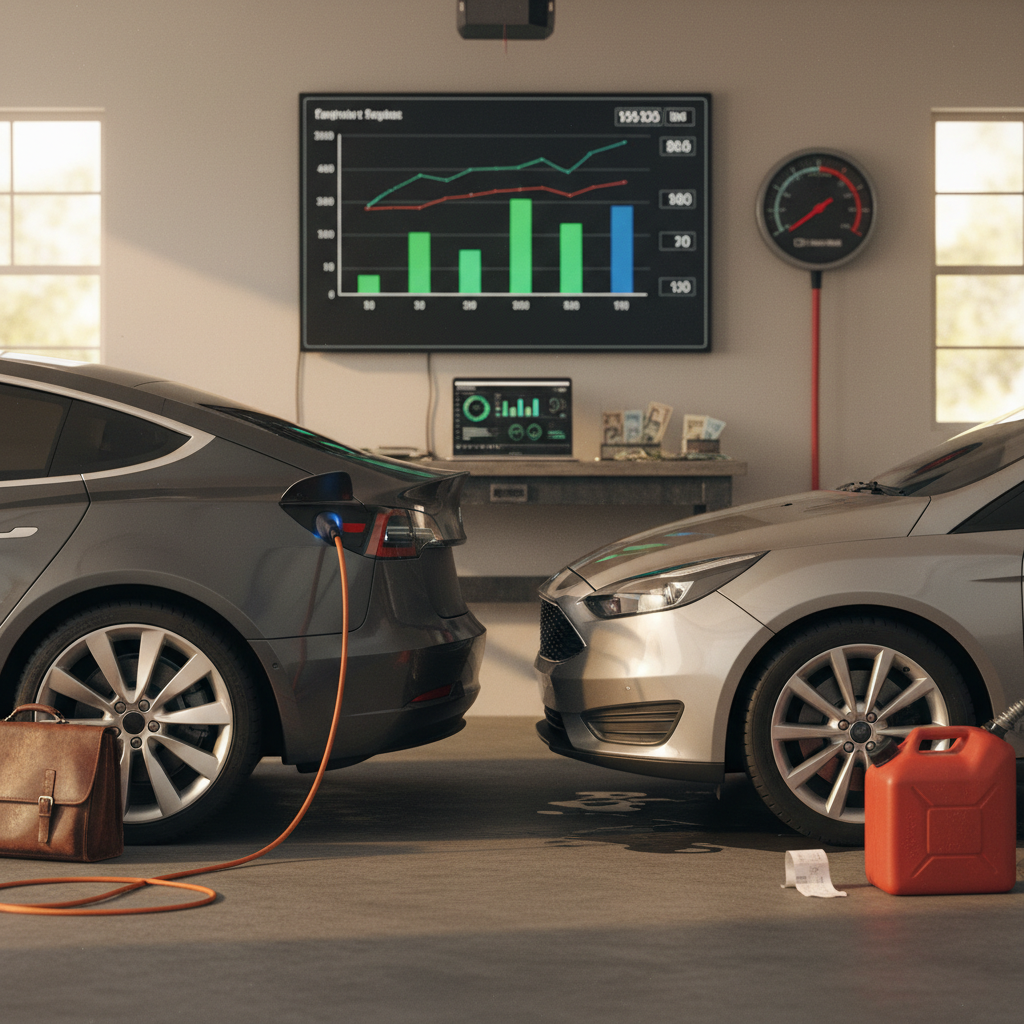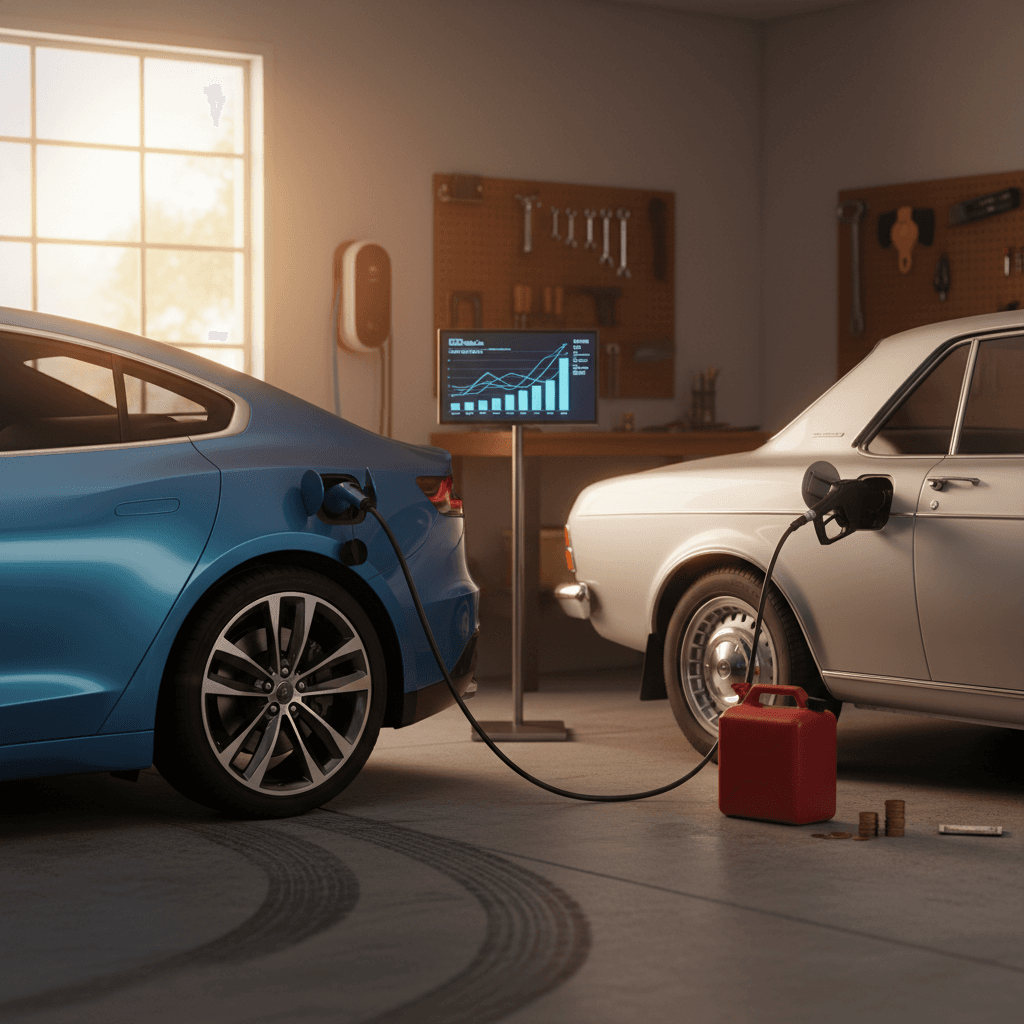
If you drive about 50 miles a day, the question isn’t “Are EVs cheaper than gas?”, it’s **“How much cheaper for my commute, right now?”** In 2026, energy prices have shifted again, so let’s put hard numbers on the **EV vs gas cost for a 50‑mile commute**, using realistic U.S. averages and easy formulas you can reuse.
Quick answer
How much does a 50‑mile commute cost: EV vs gas?
Typical 2026 daily cost for a 50‑mile commute
Those are broad ranges. To make this useful for you, we’ll walk through: - The **assumptions** behind the numbers (electricity price, gas price, efficiency) - **Exact per‑day, per‑month, and per‑year** costs for a 50‑mile round‑trip commute - A **plug‑and‑play formula** so you can drop in your own local rates - Situations where **gas can still be competitive**, especially with very efficient hybrids or expensive electricity Let’s start with the ground rules.
Baseline assumptions for 2026 numbers
Energy prices move around, but to make a fair comparison we’ll use **recent U.S. averages** and round slightly so the math is easy to follow. You can fine‑tune later for your ZIP code.
Baseline assumptions for this comparison
You can swap in your actual numbers later, but these 2026 averages keep the examples realistic.
| Item | EV baseline | Gas car baseline |
|---|---|---|
| Energy price | $0.18 per kWh (home) | $3.10 per gallon (2025 avg) to about $4.00 in early 2026 |
| Efficiency (typical commuter car) | 28 kWh/100 miles (≈3.6 mi/kWh) | 30 mpg for a compact / small crossover |
| Commute distance | 50 miles round trip, 5 days/week | Same |
| Workdays per year | 240–250 (we’ll use 250 to be conservative) | Same |
All costs in U.S. dollars; miles are real‑world combined driving, not EPA lab figures.
Reality check: your local prices matter
Step‑by‑step cost for a 50‑mile commute
1. Cost per mile: the key starting point
EV cost per mile (home charging)
General formula:
EV cost per mile = (Electricity price × kWh per 100 miles) ÷ 100
Using our baseline:
- Electricity price: $0.18/kWh
- EV efficiency: 28 kWh/100 miles
So:
($0.18 × 28) ÷ 100 = $0.0504 per mile
That’s just about 5 cents per mile.
Gas car cost per mile
General formula:
Gas cost per mile = Gas price ÷ MPG
Using our baseline:
- Gas price: $3.10/gal (recent U.S. average)
- Fuel economy: 30 mpg
So:
$3.10 ÷ 30 ≈ $0.103 per mile
That’s a little over 10 cents per mile, about double the EV’s energy cost at home.
2. Daily cost for a 50‑mile commute
Now we just multiply **cost per mile × 50 miles**.
Daily energy cost for a 50‑mile round‑trip commute
Using the baseline EV and gas assumptions above.
| Vehicle type | Cost per mile | Daily commute cost (50 mi) |
|---|---|---|
| Efficient EV (home charging) | $0.05/mi | ≈ $2.50 per day |
| Typical gas car (30 mpg, $3.10/gal) | $0.10–$0.11/mi | ≈ $5.15 per day |
| Same gas car at $4.00/gal | ≈$0.13/mi | ≈ $6.67 per day |
Round numbers make this easy to sanity‑check against your own experience.
Think in “price per gallon equivalent”

Monthly and annual commuting costs
Most people budget by the month, not by the mile. So let’s take that 50‑mile daily commute and stretch it over a typical work year. We’ll assume **250 commuting days** (roughly 5 days a week with vacations and holidays).
What a 50‑mile commute costs over a full year
250 commuting days per year, 50 miles per day.
| Vehicle type | Daily cost | Annual miles | Annual energy cost |
|---|---|---|---|
| Efficient EV (home charging) | ≈$2.50 | 12,500 | ≈ $625 per year |
| Gas car (30 mpg, $3.10/gal) | ≈$5.15 | 12,500 | ≈ $1,290 per year |
| Gas car (30 mpg, $4.00/gal) | ≈$6.67 | 12,500 | ≈ $1,670 per year |
If your work schedule is lighter, you can scale these numbers down proportionally.
Typical annual savings
Simple calculator: use your own numbers
You don’t need a fancy app to work this out. A couple of quick formulas will tell you exactly what **your** EV vs gas cost for a 50‑mile commute looks like, using your local rates and your actual car or candidate EV.
DIY commute cost calculator (5‑minute exercise)
1. Gather four key numbers for your EV
You’ll need: (a) your electricity price in $/kWh (from your utility bill), (b) your EV’s efficiency in kWh/100 miles or miles/kWh (from the window sticker or trip computer), (c) your one‑way commute distance, and (d) your commuting days per week.
2. Calculate EV cost per mile
If you have kWh/100 miles, use:<br><code>EV $/mi = (Electricity price × kWh per 100 mi) ÷ 100</code><br>If you have miles per kWh, use:<br><code>EV $/mi = Electricity price ÷ mi per kWh</code>.
3. Do the same for your gas car
You’ll need: (a) your average gas price, and (b) your car’s real‑world mpg. Then:<br><code>Gas $/mi = Gas price ÷ MPG</code>.
4. Turn per‑mile into daily and monthly cost
Daily cost is:<br><code>Daily cost = Cost per mile × round‑trip miles</code><br>Monthly cost is just that daily number × your commuting days per month.
5. Compare annual totals, not just monthly
Multiply your monthly estimate by 12. That gives you a clear, apples‑to‑apples **annual commute cost** that’s easier to compare with things like insurance, maintenance, or a slightly higher car payment on an EV.
Shortcut for rule‑of‑thumb shoppers
When gas can be competitive – or even cheaper
There are real‑world situations where a gas car, usually a very efficient hybrid, can match or even beat an EV on **energy cost alone** for a 50‑mile commute. Understanding these edge cases keeps you from being surprised later.
Scenarios where gas narrows the gap
It’s all about efficiency and local energy prices.
Ultra‑efficient hybrid (45–55 mpg)
Very expensive electricity
Heavy reliance on fast charging
Beware of headline claims
Other costs beyond fuel or electricity
Focusing only on “fuel” (gas or electricity) understates the long‑term advantage EVs can offer, especially for a high‑mileage commuter. Over 5–10 years, **maintenance, repairs, and depreciation** often matter as much as the pump or plug.
EV ownership costs that help you
- Less routine maintenance: No oil changes, fewer moving parts, and regenerative braking can stretch brake pad life.
- Predictable “fuel” costs: You’re largely insulated from gas price spikes when conflict or supply shocks hit.
- Home charging convenience: You’re effectively “filling up” while you sleep, which has real time value even if it doesn’t show up on a spreadsheet.
Costs that work against you
- Higher purchase price: New EVs can still carry a price premium versus similar gas models, though used EV pricing has become very competitive.
- Public charging markups: Relying heavily on DC fast charging can push your per‑mile cost close to, or above, efficient gas cars.
- Battery health anxiety: On older EVs, you’ll want solid data on battery condition, not just a guess from the dash.
Where Recharged fits in
How a used EV changes your commute math
The energy‑cost math we’ve walked through doesn’t care whether your EV is brand‑new or five years old. But your **up‑front price and long‑term value** absolutely do. That’s where used EVs can shine for commuters willing to do a bit of homework.
Why commuters often love used EVs
Especially if you’re stacking 12,000+ miles a year in mostly predictable driving.
Depreciation already happened
Range needs are modest
Look beyond odometer miles
Tips to cut your EV commute costs even more
If you’re already leaning toward an EV, the good news is that you have a lot of control over your actual **cents‑per‑mile** number. Small changes in how and when you charge can make that 50‑mile commute even cheaper.
Practical ways to lower EV commuting costs
1. Charge off‑peak when possible
Many utilities offer cheaper rates overnight. If your plan has time‑of‑use pricing, schedule charging after the off‑peak window starts, your cost per mile can drop dramatically.
2. Keep tires properly inflated
Low tire pressure hurts efficiency on both EVs and gas cars. Check pressures monthly; it’s cheap, easy, and can save you real money over 12,500+ miles a year.
3. Use eco modes and gentle acceleration
Most modern EVs have drive modes that soften throttle response and tweak climate settings. Over the course of a year, those small efficiency gains add up.
4. Limit DC fast charging for daily use
Reserve DC fast charging for trips and occasional top‑offs. Relying on it for daily commuting not only costs more per kWh; it can also add unnecessary stress to the battery over time.
5. Precondition while plugged in
On cold or very hot days, pre‑heat or pre‑cool the cabin while the car is still plugged in. That way you’re using grid power, not battery power, to get comfortable, and preserving range for the actual drive.
6. Right‑size your EV
You don’t need a three‑row 6,000‑lb SUV to commute solo. Smaller, lighter EVs are typically far more efficient, which lowers your cost per mile automatically.
EV vs gas cost for 50‑mile commute: FAQ
Frequently asked questions about a 50‑mile EV commute
Bottom line: should you commute 50 miles in an EV?
If your situation looks anything like the national averages, an EV turns a 50‑mile daily commute from a budget headache into something much more manageable. Charging mostly at home, you’re often paying **around half what a comparable gas car would cost per mile**, and over a full work year that adds up to hundreds, sometimes thousands, of dollars saved.
The flip side is that **your local energy prices and your specific vehicles matter**. A cheap‑to‑run hybrid on $3.00 gas in a high‑electricity‑cost state may narrow the gap. Heavy reliance on expensive fast charging can erase much of the advantage. That’s why it pays to run the simple per‑mile math with your own numbers rather than relying on slogans.
If you’re ready to turn those savings into a real car, a well‑chosen **used EV with a healthy battery** is often the sweet spot for commuters. Recharged was built around exactly that idea: transparent battery health, fair pricing, expert EV guidance, and nationwide delivery so you can match the right car to your 50‑mile commute with confidence.