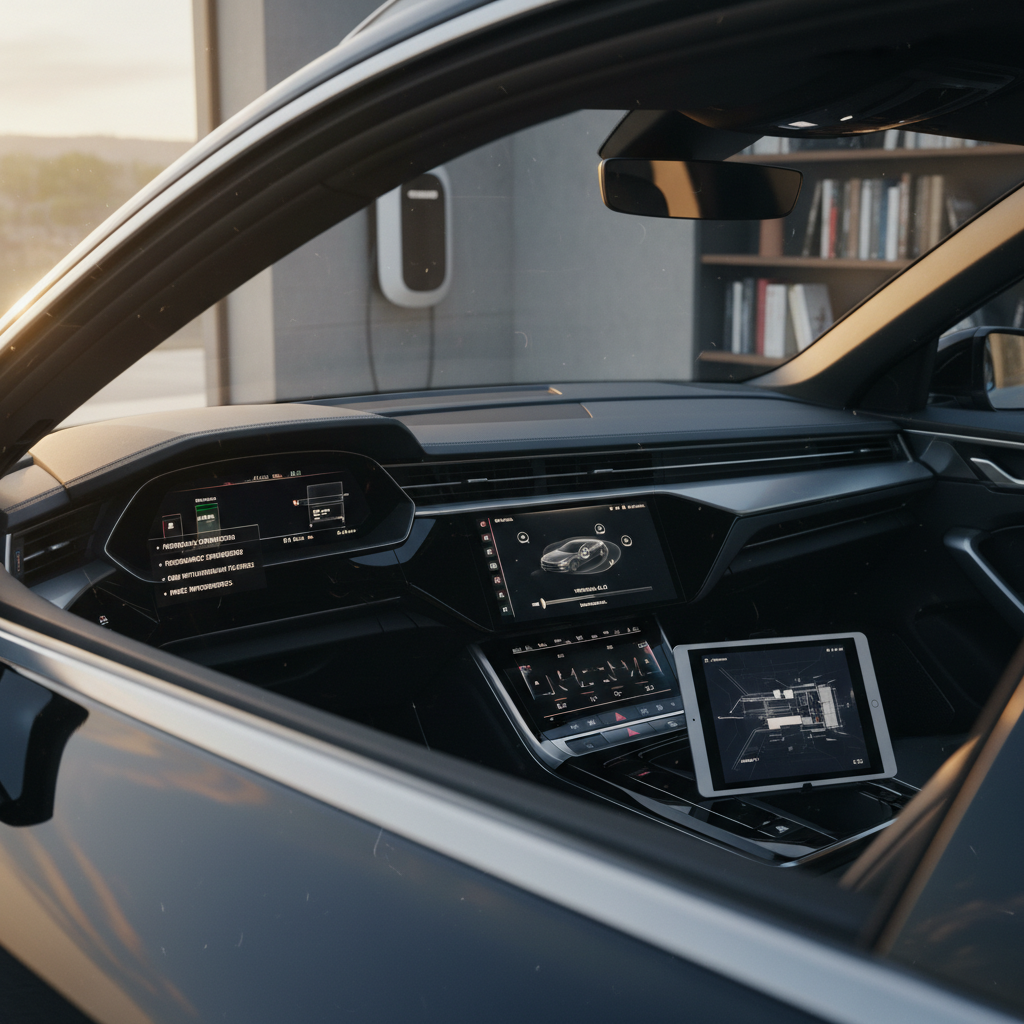
The Tesla Cybertruck vs GMC Hummer EV matchup isn’t just a spec-sheet duel. It’s two different visions of the electric future: one a stainless-steel sci‑fi wedge, the other an electric super‑tank that can crabwalk sideways. If you’re trying to decide between them, or just wondering which one actually works as a truck in the real world, this breakdown will walk you through performance, range, towing, off‑road tech, charging, ownership costs, and how each fits into everyday life.
Big picture
Cybertruck vs Hummer EV at a glance
Core specs: 2025 Tesla Cybertruck vs 2025 GMC Hummer EV pickup
Headline numbers for the highest‑performance versions most people cross‑shop: Cybertruck Cyberbeast and Hummer EV 3X pickup. Exact figures can vary slightly by wheel/tire choice and options.
| Spec | Tesla Cybertruck Cyberbeast | GMC Hummer EV 3X Pickup |
|---|---|---|
| Drivetrain | Tri‑motor AWD | Tri‑motor 4WD |
| Max horsepower | ≈845 hp | 1,000 hp |
| 0–60 mph (best claimed) | 2.6 s (with rollout subtracted) | ≈3.0 s (Watts To Freedom launch mode) |
| Max towing capacity | 11,000 lbs | 12,000 lbs |
| Battery capacity (usable, approx.) | ~122 kWh | ~212 kWh |
| Max EPA range config | Up to ~362 miles | Up to ~367 miles |
| DC fast‑charge peak | Up to ~325 kW | Up to 350 kW |
| Curb weight | ~6,600–6,900 lbs (est.) | ≈9,000 lbs |
| Starting price (performance trims) | Around $114,000 (Cyberbeast) | Around $100,000+ (3X, depending on options) |
Specs are manufacturer or dealer published figures as of 2025–2026 and may change with future updates.
Don’t chase the top trim by default
Design and personality: brutalist wedge vs electric super-tank
Tesla Cybertruck: stainless steel fever dream
The Cybertruck is a polygon on wheels: cold‑rolled stainless steel, no paint, flat planes and knife‑edge creases. It looks like it escaped from a PlayStation loading screen. The structure doubles as the exterior, so you’re not just buying a truck, you’re buying an opinion about what the future should look like.
- Unpainted stainless is tough but hard to repair or blend if damaged.
- Big glass, minimalist interior, yoke‑style or squircle steering control depending on build.
- Only one exterior finish and a fairly stark color palette overall.
GMC Hummer EV: luxury super‑off‑roader
The Hummer EV pickup is the opposite philosophy: retro‑rugged H2 vibes dialed up with LED theatrics and off‑road armor. It looks purpose‑built to star in its own Marvel spinoff.
- Boxy, military‑inspired profile with a traditional truck bed.
- Infinity Roof with removable Sky Panels for open‑air driving.
- Multiple paint colors, chrome or blacked‑out trims, and a very busy (some would say over‑designed) cabin full of physical buttons.
Who wins on design?
Power, 0–60 and driving character
Performance: straight-line absurdity either way
Both of these trucks will embarrass most sports cars from a stoplight, but they do it with different personalities.
Tesla Cybertruck
Cyberbeast trim delivers around 845 hp and Tesla claims 0–60 mph in about 2.6 seconds with rollout subtracted. That’s supercar brutal in a vehicle with a bed.
The steering is quick, and rear‑wheel steering helps mask size, but the ride can feel busy on big wheels and stiff tires.
GMC Hummer EV
The tri‑motor Hummer EV 3X pushes a full 1,000 hp and about 3.0‑second 0–60 mph launches in Watts To Freedom mode. It feels like the Earth is moving under you, not the other way around.
Weight is the villain here: around 9,000 pounds of truck makes it feel substantial and a bit floaty at speed.
Real-world feel
The Cybertruck feels more like a giant performance hatchback, instant, sharp, occasionally restless. The Hummer EV is an electric sledgehammer: stable, tall, and hilariously overpowered, but you’re always aware there’s a lot of mass in motion.
Performance has a price
Range, battery size and efficiency
Range, battery and efficiency highlights
On paper, range looks similar: depending on trim and wheel/tire choice, both the Cybertruck and Hummer EV can crest the mid‑300‑mile mark in their most efficient configurations. The crucial difference is how they get there. The Hummer EV uses an enormous ~212 kWh Ultium battery to drag its 9,000‑lb self through the air. The Cybertruck does roughly the same job with a pack closer to 122 kWh and about two tons less mass.
- Cybertruck: Better MPGe, smaller battery to charge, less weight to move. If you care about energy costs and road‑trip efficiency, it has the edge.
- Hummer EV: Uses a huge battery to brute‑force its way to comparable range. You’ll feel that at the plug, fast charging is excellent, but you’re adding more kWh each stop.
Why efficiency matters more than you think
Towing, hauling and real‑world utility
Towing and payload: numbers vs usability
How the Cybertruck and Hummer EV compare on towing, payload and usable cargo space.
| Capability | Tesla Cybertruck | GMC Hummer EV Pickup |
|---|---|---|
| Max towing | 11,000 lbs (dual & tri‑motor) | Up to 12,000 lbs (2X, 3X trims) |
| Lower trims towing | ~7,500 lbs (discontinued RWD) | 8,500 lbs (3X with certain configs) |
| Bed length | ~6 ft+ with sail‑panel vault | About 5 ft conventional bed |
| Bed volume | ~56 cu ft with under‑bed storage | ~37 cu ft (approx.) |
| Front trunk | Smaller frunk | Larger eTrunk, ~11+ cu ft |
| Tailgate tricks | Power tonneau, integrated bed storage | MultiPro tailgate, load‑stop, step, work surface |
For most owners, stability, stopping power and charging access on your route matter as much as the headline tow rating.
Both trucks can tow serious weight on paper, roughly in the 11,000–12,000‑lb ballpark on their stronger trims. In practice, towing heavy with an EV slashes range, often by 40–50%, so what really matters is how often, how far and where you tow.
Questions to ask yourself before towing with an EV truck
1. How often will you tow near the limit?
If you’re at or above 8,000 lbs regularly, lean toward the Hummer EV’s higher tow rating and more conventional truck ergonomics, or consider a more range‑focused electric or hybrid alternative.
2. How long are your towing trips?
Short, predictable runs from home base are EV‑friendly. Cross‑country towing where you rely on public fast‑charging is still a logistical puzzle, regardless of brand.
3. Can you charge at your origin and destination?
If you can plug in at both ends of a towing trip, the Cybertruck’s efficiency advantage matters more. If you’re reliant on public chargers along the way, the Hummer’s third‑party DC fast‑charge compatibility can be a plus.
4. Do you need a big bed or a big frunk?
Cybertruck offers a longer vault‑style bed and clever under‑floor storage; the Hummer EV counters with a larger front trunk and multi‑function tailgate tricks.
Think like a contractor, not a drag racer
Off-road tech, ride and comfort
Off-road toys and on-road comfort
Where the Hummer EV turns the drama up to 11, and where the Cybertruck quietly undercuts it.
GMC Hummer EV off‑road arsenal
- CrabWalk lets the truck move diagonally at low speed using rear‑wheel steering, genuinely helpful on tight trails, and also a party trick.
- Adaptive air suspension with massive ride‑height range and underbody armor.
- Available 35‑inch off‑road tires, locking diffs, and multiple off‑road drive modes.
- Excellent cameras, including underbody views, make picking lines easier.
Comfort is plush: big seats, thick glass, lots of sound deadening. It drives more like a lifted luxury SUV than a work truck.
Tesla Cybertruck ride and capability
- Adaptive air suspension with variable ride height and self‑leveling for loads or trailers.
- Rear‑wheel steering for tighter turning circles and more agility in parking lots and on trails.
- Off‑road modes and a rigid exoskeleton body for durability.
On pavement, the Cybertruck feels firmer and more "Tesla", quick steering, sharp responses, sometimes choppy on poor roads, especially on big‑diameter wheels.
Trail hero vs high‑speed oddball
Charging experience and road trips
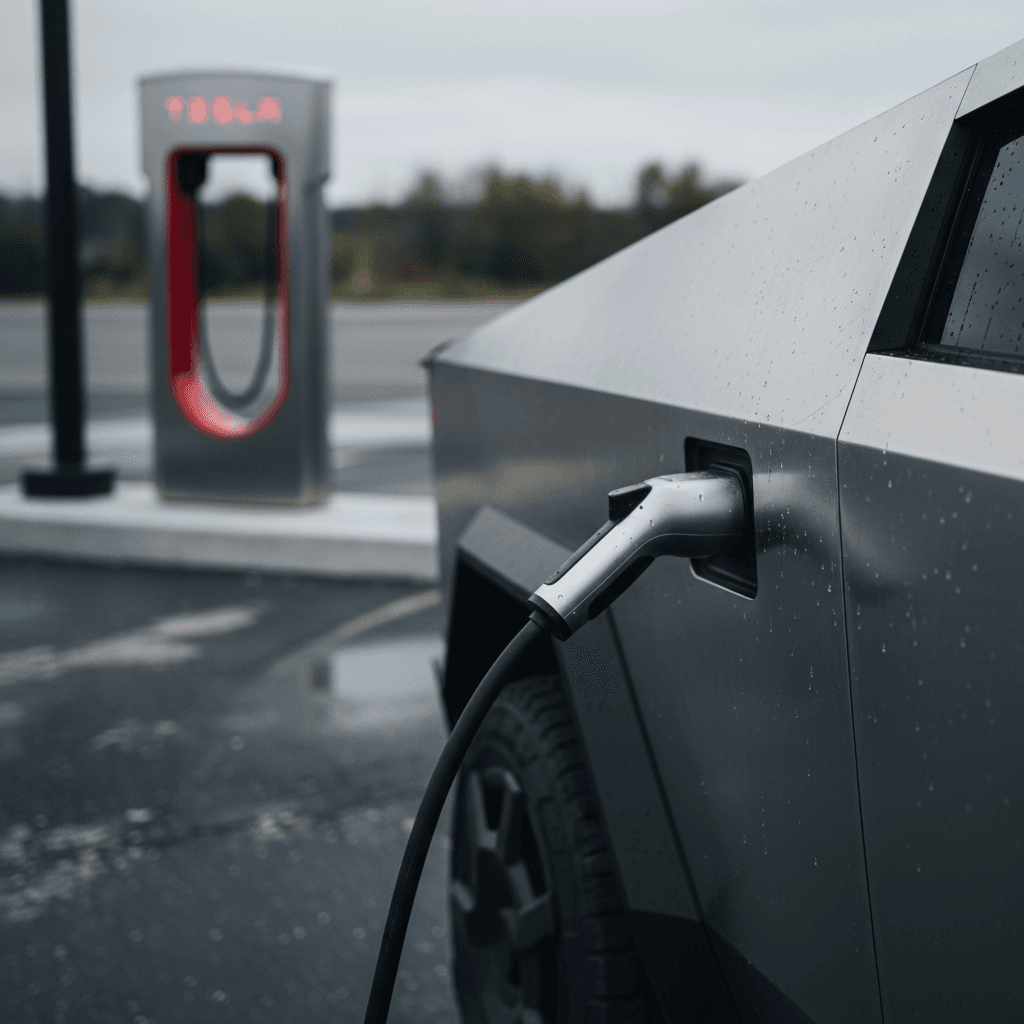
Charging is where the philosophies really diverge. The Cybertruck taps into Tesla’s Supercharger universe; the Hummer EV lives in the CCS/third‑party ecosystem powered by GM’s Ultium platform and networks like Electrify America.
Cybertruck: Supercharger privilege
- Access to Tesla’s dense Supercharger network, with many sites now open to non‑Tesla EVs but still optimized for Teslas.
- Peak DC rates around 325 kW, with roughly 130+ miles of range in about 15 minutes on a compatible high‑power stall.
- Tesla Wall Connector at home can add roughly 40+ miles of range per hour depending on circuit and trim.
Navigation, pre‑conditioning the battery for fast charging, and payment are all tightly integrated and generally seamless.
Hummer EV: big battery, big power draw
- Ultium platform supports up to 350 kW DC fast‑charging on 800‑V hardware, adding around 100 miles in about 10 minutes on a strong charger.
- Onboard AC charger up to roughly 19.2 kW, which is great, if your home electrical service and panel can support it.
- Relies on third‑party networks with more variability in uptime, station layout and pricing.
Planning is more hands‑on: you’ll juggle apps, memberships and sometimes less‑than‑perfect charging locations designed for smaller vehicles.
Reality check: road‑tripping giant EV trucks
Price, value and ownership costs
By early 2026, both Cybertruck and Hummer EV have shed their original "affordable" promises and landed squarely in the six‑figure toy territory when well‑equipped. Tesla has already axed its cheapest rear‑drive Cybertruck after a short run, leaving the more expensive dual‑motor and Cyberbeast trims. Hummer EV production has focused on upper trims from the beginning.
Price and value snapshot
Numbers change with incentives and dealer markup, but the story is consistent: neither of these is a budget work truck.
Purchase price
- Cybertruck AWD: Starts around the high‑$70Ks and climbs quickly with options.
- Cyberbeast: Roughly mid‑$110Ks before taxes and fees.
- Hummer EV 2X / 3X: Commonly stickers from the high‑$80Ks up into six‑figure territory, depending on options and market.
Running and repair costs
- Electricity is cheaper than gas, but giant packs mean big charging sessions.
- Tires, air‑suspension, four‑wheel steering and complex electronics raise long‑term costs.
- Insurance is higher than a typical half‑ton truck due to price, weight and repair complexity.
Depreciation and repair risk
Which truck fits which kind of buyer?
Match the truck to the life, not the poster on your wall
The tech-forward daily driver
You commute, take kids to school, and occasionally haul Home Depot runs.
You care about software, over‑the‑air updates, and seamless charging.
You don’t tow heavy every weekend, and most of your driving is on pavement.
→ The Cybertruck is the better fit if you can live with the looks and price.
The off-road weekend warrior
Your idea of fun is a weekend in Moab, not a Cars & Coffee meet.
You want max ground clearance, armor, off‑road cameras, and real trail hardware.
You’re okay with lower efficiency and more weight in exchange for capability.
→ The Hummer EV is the more satisfying toy and trail rig.
The image-conscious executive
You want presence in the valet line and in the boardroom parking lot.
Ride comfort, cabin drama and brand statement matter more than kWh math.
You’ll rarely use the full towing or off‑road envelope.
→ Either works, but a fully loaded Hummer EV feels more like a rolling luxury lounge.
The pragmatic truck user
You tow and haul for work or business and care about total cost of ownership.
Time off the road for service costs you money.
You like the idea of an EV truck, but not the first‑gen experimental vibe.
→ Consider a more conventional EV truck, new or used, before settling on Cybertruck or Hummer EV.
Try them like you’d actually use them
Why many buyers end up in used EV trucks instead
Once you run the numbers, it’s common to look at Cybertruck and Hummer EV, sigh deeply, and then ask: "What else is out there?" That’s where the used EV market gets interesting. Trucks like the Ford F‑150 Lightning, Rivian R1T, and even upcoming used examples of these halo trucks often deliver 80–90% of the capability for far less money, especially once early owners absorb the steepest depreciation.
Advantages of a used EV truck from a trusted marketplace
How going used, especially with independent battery health data, can beat chasing the latest toy.
Known battery health
With EVs, the battery pack is the heart of the truck. A good used‑EV marketplace will provide a third‑party battery health report so you’re not guessing about degradation.
Depreciation already paid
First owners eat the biggest value drop. Coming in a few years later means you often get a truck that still feels new, but at a price that makes more sense next to a well‑equipped gas pickup.
More transparent total cost
When you buy used through a specialist, you can compare range, charging speed, towing, and expected running costs across several models, not just whichever brand has the loudest marketing.
Where Recharged fits in
Tesla Cybertruck vs GMC Hummer EV isn’t a good vs bad story, it’s a question of which flavor of excess fits your life, your roads and your budget. Both are wildly fast, deeply impressive engineering exercises. But if you strip away the hype, the right electric truck is the one that quietly does your boring, daily work for years without complaint. For many shoppers, that ends up being a more conventional EV pickup bought lightly used, with its depreciation already paid and its battery health independently verified.