If you’re cross-shopping the Tesla Cybertruck vs Chevrolet Silverado EV and wondering which is better, you’re not alone. These are the two most polarizing electric pickups on sale in 2025: one a stainless-steel fever dream, the other a familiar Chevy truck body stuffed with Ultium batteries. On paper they trade blows in range, towing, and tech; in real life, they serve very different kinds of truck owners.
At a glance
Cybertruck vs Silverado EV: quick overview
How these trucks are positioned
Two visions of the electric pickup
Tesla Cybertruck
Positioning: Futuristic lifestyle truck with supercar acceleration, strong towing and tight integration with Tesla’s software and charging network.
- Trims: RWD, All-Wheel Drive, Cyberbeast
- Max range: roughly mid‑300s miles (RWD est.)
- Max towing: 11,000 lb
- Vibe: Blade Runner meets Home Depot
Chevrolet Silverado EV
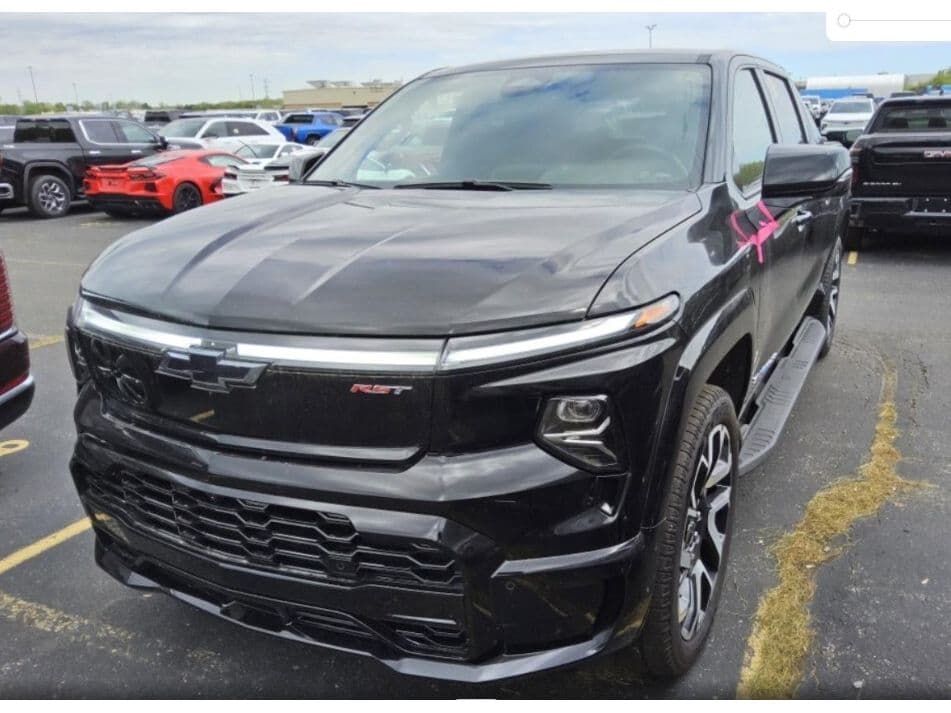
Positioning: Traditional full-size pickup feel on GM’s Ultium EV platform, aimed squarely at fleet users and truck loyalists.
- Trims: WT, LT, RST (plus Trail Boss and future variants)
- Max range: up to 450+ miles (WT / long-range packs)
- Max towing: up to 12,500 lb (certain trims)
- Vibe: Conventional Chevy truck, electric powertrain
Specs are moving targets
Headline specs: range, towing and power
Core numbers: Cybertruck vs Silverado EV (2025 reality)
Tesla Cybertruck vs Chevrolet Silverado EV: key specs
Representative figures for popular 2025 configurations. Exact numbers vary by trim, wheels, and options.
| Spec | Tesla Cybertruck (AWD / Cyberbeast) | Chevrolet Silverado EV (WT / RST) |
|---|---|---|
| Estimated max EPA range | ~320–340 miles depending on trim and wheels | ~393–450+ miles depending on pack and trim |
| Max towing | 11,000 lb | Up to 12,500 lb |
| Max payload | Around 2,200–2,500 lb | Roughly 1,400–2,100 lb depending on trim |
| 0–60 mph | As quick as mid‑2s (Cyberbeast); AWD still sports‑car quick | High‑4s to mid‑5s in performance‑oriented trims, slower in WT |
| Drive layout | RWD or dual/tri‑motor AWD | Dual‑motor AWD |
| Battery platform | Tesla proprietary pack | GM Ultium skateboard platform |
Always confirm specs for your specific build, especially when shopping the used market.
Numbers verdict
Work truck vs lifestyle truck
Chevrolet Silverado EV: the pragmatic hauler
The Silverado EV was engineered first as a tool, then as a toy. Fleet‑focused WT trims give you long range, stout towing, and a cabin that feels like an evolution of a gas Silverado, not a spaceship. Rubber floors, big side mirrors, bed rail tie‑downs and a traditional box shape all say: throw the tools in, it’ll be fine.
If your truck earns its keep, construction, landscaping, mobile service, the Chevy’s familiar proportions and straightforward ergonomics are a feature, not a bug. Your crew can hop in and go with almost no learning curve.
Tesla Cybertruck: the statement piece
The Cybertruck does real work, but it’s also a rolling concept car. You don’t buy it to blend in; you buy it because you want to arrive somewhere and have people film you with their phones.
The stainless body panels, sail‑pillars over the bed, and integrated tonneau are clever but also constrain certain uses. Tall appliances or bulk materials that sit happily in a square‑sided Silverado may battle the Cybertruck’s sloping bed rails. It’s part pickup, part sports car, part art project.
Think about your parking lot

On-road comfort and driving experience
- Ride quality: Both use sophisticated suspensions and heavy battery packs for a planted feel. The Silverado EV tends to ride like a traditional half‑ton: calm, slightly floaty, tuned for comfort with a load in the back. The Cybertruck, especially in sportier settings, can feel firmer and more eager.
- Noise and refinement: The Silverado’s conventional body and glasshouse do a good job of wind and road isolation. The Cybertruck’s flat glass and sharp edges generate a different acoustic profile, still quiet by truck standards, but you’re more aware of the outside world.
- Cabin space: Chevy’s cab feels wide and airy, with familiar seats and a conventional dash. The Cybertruck is minimalist: one big center screen, clean surfaces, and a more upright, sci‑fi ambience. Some love the simplicity; others miss physical knobs and buttons.
- Driving feel: The Cybertruck’s instant torque and rear‑steer agility make it feel smaller than it is in tight parking lots. The Silverado EV is more traditional: solid, substantial, and easygoing rather than playful.
If the Silverado EV is an electric version of the truck you already know, the Cybertruck is the truck you dreamed about when you were twelve and drawing spaceships in math class.
Tech, interfaces and driver assistance
Infotainment and driver-assistance: where they differ most
Both are high-tech; only one is full sci‑fi.
Tesla Cybertruck tech experience
- Single central touchscreen runs virtually everything, from HVAC to towing settings.
- Over‑the‑air updates routinely add features and tweak performance.
- Deep integration with the Tesla app for preconditioning, charging, and location sharing.
- Advanced driver‑assistance suite with Tesla’s Autopilot and optional supervised “Full Self-Driving” features.
- Interface is clean but heavily touch‑driven; if you dislike menus, you’ll bristle.
Chevrolet Silverado EV tech experience
- More conventional layout with digital cluster plus central touchscreen.
- Google‑built‑in infotainment on many trims: native Maps, Assistant, and Play Store apps.
- GM’s Super Cruise hands‑free system available on higher trims, excellent for highway miles.
- More physical controls for core functions, volume, climate, drive modes, than the Tesla.
- Software updates are coming, but GM’s cadence has historically been slower than Tesla’s.
Ecosystem vs compatibility
Charging, range and road-trip logic
On paper, the Silverado EV has the range advantage. Long‑range WT and upcoming trims can crest 400–450 miles of EPA range when spec’d with the biggest Ultium packs. The Cybertruck’s longest‑range configurations sit more in the mid‑300s. But raw range is only half the story; how and where you charge matters just as much.
Cybertruck: Supercharger native
Cybertruck owners get native access to the Tesla Supercharger network, still the gold standard for reliability and density in North America. You plug in, the truck and charger handshake, and billing happens automatically. On a long road trip, this simplicity is worth real money in reduced stress.
Charging speeds are competitive, and you can also use CCS/NACS adapters as infrastructure converges. For now, if you road‑trip frequently and value hassle‑free charging, that Supercharger logo on the map is a big point in Tesla’s column.
Silverado EV: Ultium plus public networks
The Silverado EV taps into Ultium‑compatible DC fast chargers, including many high‑power stations from Electrify America, EVgo, and others. Max charging rates are strong on paper, and Chevrolet has been working to improve software handshakes and reliability.
However, non‑Tesla public infrastructure remains more hit‑or‑miss depending on region. If you mostly charge at home and use DC fast charging occasionally, the Chevy is fine. If you live at public chargers, Tesla’s ecosystem still feels more polished day to day.
Remember towing cuts range
Pricing, value and total cost
MSRPs for both trucks have floated up since their early announcements, and 2025 reality is that neither is a budget option. Well‑equipped Cybertrucks and Silverado EVs typically land in the $70,000–$100,000 neighborhood when new, depending on trim and options. Incentives can help, and some configurations qualify for federal and state EV credits, always check the latest IRS and state lists before you sign anything.
Where each truck delivers value
Not all dollars buy the same experience.
Cybertruck value sweet spot
The dual‑motor AWD Cybertruck tends to be the performance value: huge power, strong towing, access to Superchargers, and that wild design without quite reaching Cyberbeast money.
Silverado EV WT / LT value
Fleet‑oriented WT and mid‑level LT trims offer serious range and towing without the luxury tax. If you care more about range than 0–60 bragging rights, the Chevy’s long‑range packs make economic sense.
Depreciation and resale
It’s early days, but Tesla products traditionally hold value well, especially with strong software support. Chevy trucks are resale champs in gas form; the EV Silverado is still proving itself. When you shop used, compare actual transaction data, not just MSRP history.
Factor in charging and maintenance
Used Cybertruck vs used Silverado EV
Because both models are new, the used market is still thin and a bit wild. Early builds, launch‑edition trims, and lightly‑driven fleet trucks are starting to show up with a wide spread between asking price and actual value. This is exactly where a data‑driven marketplace like Recharged earns its keep.
What to scrutinize on a used Cybertruck or Silverado EV
Battery health and fast‑charge history
Ask for a <strong>verified battery health report</strong>, not just a guess based on displayed range. Frequent DC fast charging or heavy towing can age packs faster. Every vehicle on Recharged includes a Recharged Score with battery diagnostics baked in.
Towing and payload usage
A truck that spent its life towing at the limit will have different wear than a commuter truck. Look for hitch wear, frame and suspension inspections, and service records that mention heavy use.
Body and bed condition
Cybertruck’s stainless panels are tough but expensive to repair; Silverado’s traditional panels are easier for most body shops. Check bed floors, inner fenders, and tailgate mechanisms carefully on either truck.
Software, recalls and updates
Confirm the truck is on current software, with open recalls addressed. Tesla can push many fixes over the air; GM leans more on dealer visits. On Recharged, you’ll see disclosed recall and service history where available.
Charging hardware and accessories
Make sure any included home charging cables, bed power outlets, and adapters are present and functional. Replacing lost OEM hardware isn’t cheap.
How Recharged can help
Ready to find your next EV?
Browse VehiclesWhich electric truck is better for you?
Best‑fit recommendations by buyer type
Contractor or fleet manager
You live and die by <strong>range, payload, and uptime</strong>. The Silverado EV WT and upcoming work‑oriented trims are built with you in mind.
The familiar Chevy layout makes it easy to drop into existing fleets without retraining every driver.
If your region has solid CCS/Ultium fast charging or most of your work is within home‑charging radius, the Silverado EV is likely the better tool.
Tech-forward daily driver
You want outrageous acceleration, minimalist design, and the easiest long‑distance charging experience available today.
You care less about maximum bed volume and more about the way the truck makes you feel every time you walk up to it.
For this buyer, the <strong>Cybertruck</strong> is the more satisfying, future‑leaning choice.
Weekend tower and road-tripper
You tow a camper, boat, or toys a handful of times a year and otherwise use the truck for family duty.
Long‑range Silverado EV trims give you more headroom when the trailer is hitched, but the Cybertruck’s Supercharger access can simplify road‑trip planning.
Here it’s a genuine toss‑up: choose based on where you drive, what chargers exist there, and which cabin you and your family like better.
Brand‑loyal truck owner
If you’ve owned Silverados for 20 years and your toolbox has a bowtie sticker on it, the EV Silverado will feel like home with far less culture shock.
If you’re already in the Tesla ecosystem, a Model 3 in the garage, wall connector on the house, the Cybertruck plugs right into your existing habits.
Buying checklist: Cybertruck vs Silverado EV
Before you choose your electric truck
Clarify your core use case
Write down how many days per month you actually tow, haul heavy, or road‑trip. Don’t buy a max‑tow Silverado EV or triple‑motor Cybertruck if 90% of your life is commuting with an empty bed.
Map your real charging options
Look at a map: how many Superchargers vs CCS fast chargers are near your home, routes, and vacation spots? Infrastructure on the ground may make the Cybertruck or the Silverado EV an obvious choice.
Test-drive both interiors
Sit in both trucks. Poke the screens and knobs. The Cybertruck’s stark minimalism thrills some and alienates others; the Chevy’s more traditional cabin can feel either comforting or dated depending on your taste.
Run a 5‑year cost-of-ownership estimate
Include purchase price, financing, electricity vs fuel, insurance, and expected maintenance. A slightly more expensive truck up front can still be cheaper to own if it fits your life better.
If buying used, insist on battery data
A pretty paint job tells you nothing about pack health. Use a marketplace like <strong>Recharged</strong> that provides <strong>third‑party battery diagnostics</strong> and a transparent Recharged Score so you’re not flying blind.
FAQ: Tesla Cybertruck vs Chevrolet Silverado EV
Frequently asked questions
Bottom line
So, Tesla Cybertruck vs Chevrolet Silverado EV, which is better? If you treat your truck like a business partner and care most about range, towing, and familiar utility, the Silverado EV is the steadier, more conventional choice. If you want your truck to double as a conversation piece and cutting‑edge gadget, and you value the Tesla charging and software ecosystem, the Cybertruck is the one that will make you smile every time you hit the start button.
Either way, the smart move is to buy the truck that fits your life, not just your Instagram feed. If you’re looking at either model on the used market, Recharged can help you compare real battery health, fair pricing, and total ownership costs, so your first (or next) electric truck is the right one for how you actually live and work.