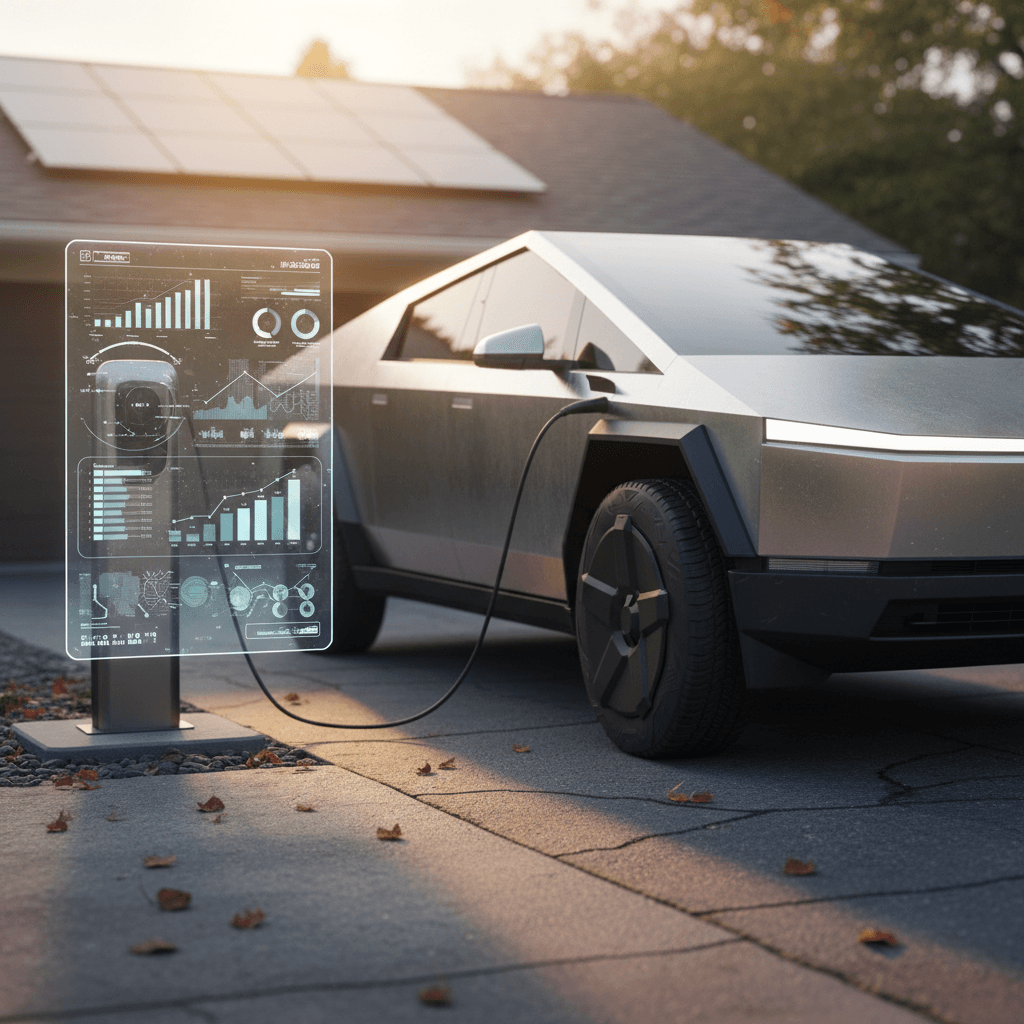
The Tesla Cybertruck is not a normal pickup, and its long-term ownership cost won’t look like a normal pickup either. Between stainless-steel body panels, steer‑by‑wire, a structural battery pack, and Tesla’s software‑first approach, you’re buying both a work tool and a rolling experiment. If you’re trying to understand what a Cybertruck really costs to own over 5–10 years, you need to think beyond the sticker price.
Assumption disclaimer
Why Cybertruck ownership costs are different
- It’s an electric full-size truck: energy use is much higher than a sedan, especially when towing or at highway speeds.
- The body is unpainted stainless steel: less routine paint care, but potentially higher repair costs if panels are damaged or warped.
- It uses a structural 4680 battery pack: good for stiffness and efficiency, but a more integrated pack can be costlier to repair if damaged.
- Tesla relies on over‑the‑air software: new features and efficiency tweaks can arrive after purchase, which can change the long‑term value equation.
- The brand has a strong fan base and high volatility: resale value can swing more with sentiment and news than traditional trucks.
If you’re cross‑shopping a Cybertruck with an F‑150, Silverado, or Ram, you’re not just choosing a powertrain. You’re choosing a completely different cost profile over the next decade.
Cybertruck price, trims, and what you really pay
Tesla has already adjusted Cybertruck pricing more than once, and it likely will again. But the broad picture is clear: this is a premium-priced pickup, even before options.
Cybertruck trims and approximate pricing (early production)
Approximate starting MSRPs in the U.S. before incentives, fees, or destination. Real transaction prices depend on Tesla’s live pricing, options, and dealer‑style add‑ons like FSD.
| Trim | Drivetrain & Range | Starting price (approx.) | Likely out‑the‑door with fees & tax |
|---|---|---|---|
| Cybertruck Rear-Wheel Drive* | Single motor, ~250 mi est. | $60,000+ | $64,000–$68,000 |
| Cybertruck All-Wheel Drive | Dual motor, ~340 mi est. | $80,000+ | $85,000–$90,000 |
| Cyberbeast | Tri motor, ~320 mi est. | $100,000+ | $107,000–$115,000 |
Use these numbers as directional guideposts, not locked‑in prices.
Watch the options creep
5-year vs 10-year Cybertruck cost baseline
Let’s zoom out and look at the major cost buckets that shape total cost of ownership (TCO) for a Cybertruck in the U.S. over 5 and 10 years, assuming 12,000 miles per year and mostly home charging.
Typical cost breakdown for a Cybertruck (10-year horizon)
For a well‑optioned All‑Wheel Drive Cybertruck purchased around $85,000 out‑the‑door, a realistic 10‑year ownership window (120,000 miles) could land in the $110,000–$140,000 all‑in range before financing costs. Where you land in that spectrum depends heavily on how well depreciation, charging, and insurance are managed.
Depreciation and resale value
Depreciation is where Tesla ownership can either be surprisingly cheap or painfully expensive. We’ve seen both with Model 3 and Model Y as incentives changed, competition increased, and Tesla repeatedly cut prices. The Cybertruck adds even more volatility because it’s polarizing and supply‑constrained early on.
Optimistic scenario
If Tesla keeps demand strong, limits discounting, and the Cybertruck proves durable, you might see:
- 5-year value: 55–65% of original price
- 10-year value: 30–40% of original price
This would put it in line with desirable premium trucks and older Teslas that aged well.
Pessimistic scenario
If new competitors undercut pricing, Tesla cuts new‑vehicle prices, or early Cybertrucks develop quality issues:
- 5-year value: 40–50% of original price
- 10-year value: 20–30% of original price
This looks more like a heavily discounted luxury truck with poor resale.
How to protect your resale value
Charging costs vs gas or diesel trucks
Energy is one of the few places where the Cybertruck almost certainly beats a comparable gas or diesel truck over the long haul, even though its boxy shape and weight mean it won’t be as efficient as a Model 3 or Model Y.
Energy cost comparison: Cybertruck vs gas truck (10 years, 120,000 miles)
U.S. averages; your local rates and driving style matter a lot.
Home-charged Cybertruck
- Assume ~2.0–2.3 mi/kWh in mixed driving
- 120,000 miles → ~52,000–60,000 kWh
- At $0.15/kWh average home rate → $7,800–$9,000 over 10 years
Heavy fast-charging use
- Frequent Supercharging or third‑party fast charging
- Effective rate closer to $0.30–$0.40/kWh
- Same 120,000 miles could cost $15,000–$20,000
Comparable gas/diesel truck
- Assume 17 mpg combined
- 120,000 miles → ~7,000 gallons
- At $3.50/gal average → ~$24,500 in fuel
Towing changes the math
Maintenance and repairs
Compared with a gas pickup, the Cybertruck should save you money on routine maintenance: there’s no engine oil, no spark plugs, no exhaust, fewer fluids, and regenerative braking reduces pad wear. But when things do go wrong, especially out of warranty, they can be expensive and highly centralized through Tesla.
Key long-term maintenance and repair items to budget for
Tires and alignments
A heavy, high‑torque truck on large wheels will eat tires faster than an economy car. Budget for premium all‑season or all‑terrain replacements every 25,000–40,000 miles and periodic alignments, especially if you use off‑road or high suspension settings.
Brakes and suspension
Regenerative braking helps, but a heavy truck towing regularly can still wear through pads and rotors faster. Air suspension components, bushings, and ball joints may need attention in years 6–10, particularly in harsh climates.
Glass and cosmetic repairs
The sloped windshield is large and relatively upright, rock chips and cracks are likely over many highway miles. Stainless panels won’t rust, but are hard to repair invisibly if they’re creased or stretched.
Electronics and sensors
ADAS hardware, cameras, radar (if equipped), and steer‑by‑wire components are complex and tightly integrated. Out‑of‑warranty repairs here can be costly, and usually must be done by Tesla or a limited number of certified shops.
Out-of-warranty risk
Insurance, registration, and taxes
Cybertruck insurance is likely to sit at the higher end of the pickup spectrum at first. Repair complexity, new materials, and limited parts availability are all red flags for underwriters. Over time, if claim experience is better than expected, premiums could come down, but you shouldn’t plan on that.
- Vehicle value: An $80,000–$100,000+ truck simply costs more to insure than a $45,000 one, even before repair complexity is considered.
- Repair networks: If most structural or high‑voltage work must go through Tesla‑approved centers, insurers will bake those higher costs into premiums.
- Location and usage: Urban vs rural driving, high annual mileage, and commercial use all materially move the needle on cost.
- State policies: Registration fees and taxes for high‑value EVs vary a lot by state; some add EV‑specific fees, others offer incentives.
How to control insurance costs
Battery health, warranty, and replacement risk
Battery health is the cornerstone of long-term EV ownership cost. Tesla has generally delivered good real‑world degradation on its packs, but the Cybertruck’s structural 4680 pack is new, and long‑term data doesn’t exist yet. What we can say is that most owners will never pay for a full pack replacement, yet the possibility hangs over the TCO conversation.
Tesla battery and drive unit warranty basics (typical pattern)
Exact Cybertruck warranty language can change, but Tesla’s pattern has been 8 years with a mileage cap and a minimum capacity guarantee.
| Component | Typical coverage | What it means for you |
|---|---|---|
| Battery & drive unit | 8 years / ~120k–150k miles with ~70% retention | For most private owners driving 12,000 miles/year, that’s the full 8 years. |
| Basic vehicle warranty | 4 years / 50,000 miles | Covers non‑wear components; excludes things like tires, glass, and cosmetic damage. |
| Corrosion / body | Long-term corrosion coverage | Stainless panels reduce traditional rust concerns but not damage from impacts. |
Always check Tesla’s current warranty document before purchase.
Battery replacement reality check
Real-world use: towing, hauling, and commercial use
A Cybertruck used as a weekend lifestyle vehicle has a very different cost story from one that tows a trailer four days a week or spends its life on work sites. The truck’s radical design doesn’t change the physics: weight, speed, and aero drag all show up in your energy bill and maintenance.
How your use case changes total cost of ownership
Same truck, different cost curve.
Weekend warrior
- Lower annual miles
- Mostly home charging
- Light towing a few times a year
- Pros: Slower depreciation, lower wear
- Cons: High fixed costs for limited use
Daily work truck
- High mileage, mixed loads
- Some fast charging at job sites or on routes
- Pros: Excellent fuel savings vs gas
- Cons: Faster tire/suspension wear, range planning overhead
Commercial/fleet use
- Centralized charging depot
- Predictable routes can optimize efficiency
- Pros: Strong TCO if utilization is high
- Cons: Downtime risk if repair parts back‑ordered
How the Cybertruck is likely to age
Traditional pickup buyers are used to 15‑year lifespans and half‑million‑mile diesel odometers. EVs can last that long too, but they age differently, and the Cybertruck adds some wildcards.

- Styling: The design won’t quietly blend into the used‑truck market. That’s either a long‑term resale asset (if enthusiasm stays high) or a liability (if tastes shift).
- Software: Over‑the‑air updates can improve range, add features, or change driving feel years after purchase, but Tesla can also remove or paywall features.
- Hardware changes: Early‑build Cybertrucks may differ meaningfully from later ones as Tesla iterates. That can affect parts compatibility and desirability on the used market.
- Aftermarket ecosystem: If racks, bed accessories, camper shells, and fleet‑grade upfits become common, that supports long‑term viability as a work platform. If not, it stays a niche toy for many buyers.
"The Cybertruck is less about being the cheapest truck to own and more about being a proof of concept that can still carry its weight economically if you play to its strengths."
Tips to lower your Cybertruck long-term ownership cost
Practical ways to keep Cybertruck ownership costs in check
Prioritize home charging
Install or use a reliable Level 2 charger where you park overnight so most energy comes from cheaper residential rates. If you rent or can’t install, look for workplace charging to avoid relying on high‑priced DC fast charging.
Right-size your configuration
Don’t over‑spec the truck if you don’t need it. If you rarely tow heavy, an All‑Wheel Drive with standard wheels may pencil out better over time than a maxed‑out Cyberbeast with expensive tires and accessories.
Drive efficiently when it’s cheap to do so
At highway speeds, even small reductions in speed can noticeably improve efficiency, especially in a brick‑like truck. Over 100,000+ miles, that can save you thousands in energy costs.
Stay ahead of small repairs
Fix chips in the windshield, address minor alignment issues, and investigate unusual noises early. On a vehicle with limited repair networks, letting minor issues snowball is a recipe for big bills later.
Document everything for resale
Keep service invoices, tire receipts, and charging history. When it’s time to sell or trade into something else, a clean paper trail and third‑party health report, like a Recharged Score, can boost your resale and shorten time on market.
Consider buying used once supply is stable
If you care more about cost than being first, waiting a few years for Cybertrucks to enter the used market lets someone else eat the steepest part of depreciation. Platforms like Recharged focus on transparent battery health and fair pricing, which matters a lot on a complex truck like this.
FAQ: Tesla Cybertruck long-term costs
Frequently asked questions about Cybertruck ownership cost
Is a Tesla Cybertruck worth it long term?
A Tesla Cybertruck isn’t a slam‑dunk financial upgrade over every gas or diesel truck. It’s a high‑priced, high‑complexity product whose long-term ownership cost can be excellent if you drive a lot, charge smartly, and avoid big accidents, but punishing if you buy high, insure poorly, or end up on the wrong side of repair or resale surprises.
If you want the lowest possible cost per mile from a truck‑shaped vehicle, there are simpler ways to get there. If you want a futuristic electric pickup and you’re comfortable with some uncertainty, the Cybertruck can make economic sense, especially as a used purchase once depreciation has done its work. When that time comes, marketplaces like Recharged are built to make EV ownership more transparent, with battery‑health diagnostics, fair market pricing, financing, and expert support from test‑drive to trade‑in.