If you live in Arlington, VA and you’re eyeing an electric vehicle, you’ve probably heard about EV rebates in Arlington, VA and across Virginia. The challenge in 2026 is sorting out what still exists, what’s just been proposed, and what only applies to chargers, not the car itself. This guide walks you through today’s landscape so you know exactly which credits, rebates, and utility programs you can realistically count on when you buy a new or used EV.
Quick reality check for 2026
Overview: EV rebates in Arlington, VA in 2026
Arlington & Virginia EV incentive snapshot, 2026
The incentive picture around Washington, D.C. has changed significantly in the last few years. Federal purchase credits have tightened, Virginia’s statewide rebate program is still looking for stable funding, and utilities have stepped into the gap with programs focused on charging more than on the vehicle itself. For an Arlington buyer, that means your smartest move is usually to combine a solid deal on the car, especially a used EV with verified battery health, with every home‑charging and utility incentive you can reasonably qualify for.
Why used EVs are a sweet spot in Arlington
What’s left of federal EV incentives in 2026?
Over the last several years, federal EV incentives have shifted from a broad, one‑size‑fits‑all tax credit to a more targeted mix of purchase and infrastructure support. As of early 2026, there are two main buckets to know about if you live in Arlington:
- Vehicle tax credits: The generous, widely available credits for new and used EVs that existed earlier in the decade have largely expired or been dramatically narrowed. A handful of models and specific circumstances may still unlock federal benefits, but you should treat those as the exception, not the rule, and verify eligibility with a tax professional before you count them into your budget.
- Charging and infrastructure credits: Federal policy has shifted toward supporting charging infrastructure, especially in lower‑income or rural census tracts. That matters because you might qualify for a home charger tax credit even if there’s no longer a big federal check waiting for the car itself. We’ll cover this in more detail below.
Don’t build your budget on expiring federal credits
Virginia state EV rebates: what’s authorized vs actually funded
Virginia has been talking about statewide EV rebates for several years, and the law now includes an Electric Vehicle Rebate Program Fund. On paper, it authorizes rebates of roughly $2,500 for qualifying new or used EVs under a price cap, with an additional amount for income‑qualified households. Several budget amendments in 2025 proposed $20 million per year to get this program off the ground.
The catch is simple but crucial: as of early 2026, that program is still not consistently funded. Fairfax County’s own EV guidance for residents notes that the statewide rebate has been established but remains unfunded, and they point residents to that page for updates when and if money is appropriated. Arlington drivers are in the same boat, until the General Assembly and Governor both sign off on funding in an enacted budget, the statewide rebate is more promise than paycheck.
How to track Virginia’s EV rebate status
Local Arlington programs and perks for EV drivers
Arlington County doesn’t currently run a direct cash rebate program for EV purchases, but it does work to make driving electric more practical and attractive. Here’s what that looks like today:
Arlington’s local support for EV ownership
Less about big checks, more about day‑to‑day usability
Growing public charging network
Arlington has steadily expanded public and workplace charging, leveraging both public initiatives and private investment. For many apartment and condo residents, these stations make EV ownership possible without a dedicated home charger.
AIRE & education programs
Through Arlington’s Initiative to Rethink Energy (AIRE), the County offers webinars and resources on electric vehicles, sustainable transportation, and permitting. These programs won’t put cash in your pocket, but they help you avoid costly mistakes.
Regional policy & planning
As part of the greater D.C. metro area, Arlington benefits from regional planning that prioritizes EV‑friendly infrastructure, everything from parking policies to future charging hubs along key commuter corridors.
Apartment or condo in Arlington?
Dominion Energy incentives for Arlington EV owners
Most Arlington residents buy their electricity from Dominion Energy Virginia, and that’s where some of the most concrete, active incentives live in 2026. These programs don’t usually reduce the sticker price of the car, but they can meaningfully cut the cost of charging and home‑charger installation.
Key Dominion Energy EV programs for Arlington customers
Active programs focused on charging rather than vehicle price
EV Charger Rewards
Dominion’s EV Charger Rewards program pays you to let them slightly adjust your Level 2 home charging during peak demand times.
- Upfront enrollment incentive around $125 when you buy and enroll an eligible smart Level 2 charger.
- Ongoing annual bill credits (around $40/year) as long as you stay enrolled and let Dominion manage your charging during occasional peak events.
- You remain free to opt out of individual events if you need a full charge.
Think of this as a quiet, behind‑the‑scenes discount on your charging costs.
Residential Charger Program
Launched in 2024, Dominion’s Residential Charger Program is a turnkey way to install a Level 2 home charger with minimal up‑front cost.
- Instead of paying thousands up front, you make a fixed monthly payment on your electric bill (around $40/month over five years).
- Dominion arranges approved equipment and installation with licensed electricians.
- Income‑qualified customers may be able to get the charger and installation at little or no up‑front cost.
For many Arlington homeowners, this is effectively a financed home‑charging solution backed by the utility.
Program details can change
Tax credits and rebates for home charging in Arlington
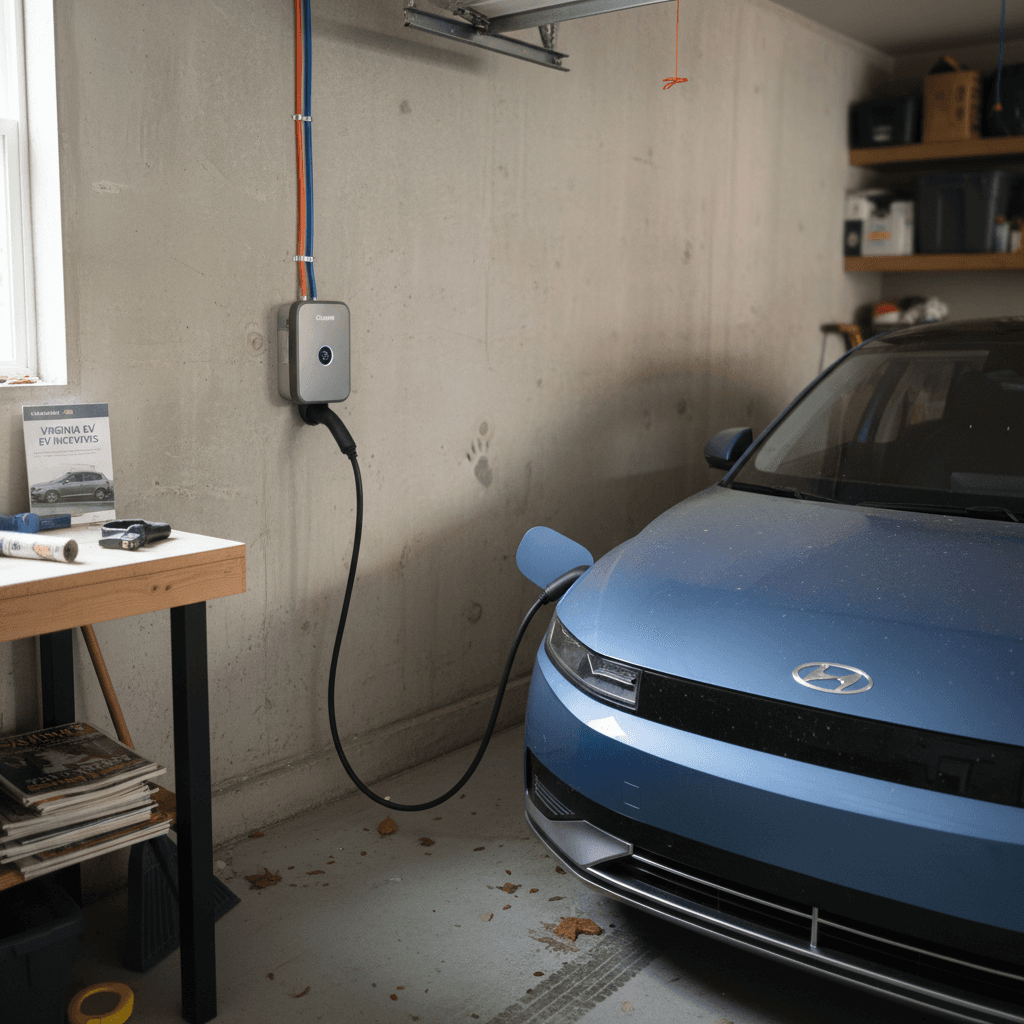
Even as some vehicle purchase incentives have faded, charging‑focused incentives have grown more important. Two pieces are especially relevant if you own a home in Arlington:
- Federal Alternative Fuel Vehicle Refueling Property Credit: As of 2026, the federal government offers a tax credit for installing qualifying home charging equipment, covering 30% of the cost up to $1,000 for residential taxpayers. The big caveat is that your home must be in an eligible census tract defined by the law, many, but not all, Arlington neighborhoods qualify. Fairfax County’s EV guidance explicitly notes this credit and points residents to an Argonne National Laboratory tool to check eligibility; Arlington residents can follow the same approach.
- Stacking with Dominion programs: You may be able to combine the federal tax credit with Dominion’s EV Charger Rewards enrollment incentive if you purchase an eligible smart charger and enroll it. However, Dominion’s Residential Charger Program is structured more like on‑bill financing; because Dominion owns or bundles the equipment, you may or may not be able to claim the federal credit yourself. It’s wise to confirm this with your tax professional and Dominion before you choose a path.
Avoid double‑dipping mistakes
How to stack incentives when you buy a new or used EV
With fewer big checks available at signing, your strategy in Arlington shifts from chasing headline rebates to optimizing the total cost of ownership over the years you’ll own the car. Here’s how to think about stacking what’s left:
1. Start with the vehicle price, not the rebate
Because Virginia’s statewide rebate remains unfunded and federal vehicle credits are at best very limited, your first priority should be negotiating or finding a fair market price on the EV itself.
When you shop used, look beyond the monthly payment to battery health, mileage, and how the car was used. At Recharged, every car comes with a Recharged Score battery health report and fair‑market pricing so you know what you’re actually getting for your money.
2. Layer in charging incentives and rate strategies
Once you have a realistic sense of vehicle cost, then add the confirmed incentives:
- Federal home‑charger tax credit (if your census tract qualifies).
- Dominion EV Charger Rewards enrollment incentive and annual bill credits.
- Any future special off‑peak EV charging rates Dominion may roll out.
Those “smaller” programs can trim your effective fuel costs for years, which often matters more than a one‑time check you may never see.
A realistic Arlington stacking example
Do any rebates apply to used EVs in Arlington?
Used EV shoppers in Arlington used to have more obvious help from Washington. Today, the story is different, but not all bad.
- Virginia’s unfunded rebate would apply to used EVs: The statewide program, if funded, is designed to include qualifying used EVs under a price cap. That’s good news conceptually, but until the legislature actually funds the program and the state opens applications, you can’t count it as real money.
- Federal used‑EV credits are now narrow and model‑specific: Recent federal rules dramatically narrowed which used vehicles qualify and under what income caps. Some Arlington buyers may still find individual models or situations that unlock a federal benefit, but you should view that as a welcome surprise, not an assumption.
- Charging and ownership incentives apply equally to used cars: The good news is that programs like Dominion’s EV Charger Rewards and the federal home‑charger tax credit care about your charger, not whether the car is new or used. A 5‑year‑old EV plugged into a smart Level 2 charger can qualify just as well as a showroom‑fresh model.
Used EVs + Recharged Score
Future outlook: Will Virginia fund its EV rebate program?
The big open question for Arlington and the rest of Virginia is whether the General Assembly will consistently fund the Electric Vehicle Rebate Program. In recent budget cycles, lawmakers have proposed sizable appropriations, on the order of tens of millions of dollars per year, to capitalize the fund and deliver $2,500–$4,500 rebates depending on income. That’s a strong signal that the state sees EVs as part of its long‑term transportation and climate strategy.
At the same time, Virginia has also been returning revenue surpluses to taxpayers via broad‑based rebate checks and shoring up its rainy‑day fund. That tug‑of‑war, between targeted EV policies and general tax relief, makes it risky for any buyer to assume that a state EV rebate will be live when they’re ready to sign.
How to plan around uncertainty
Practical checklist for Arlington EV shoppers
Step‑by‑step game plan for maximizing incentives
1. Confirm your home charging situation
Are you in a single‑family home, townhouse, or condo with deeded parking? If you can install a Level 2 charger within about 20–30 feet of your electrical panel, you’ll have more options. Renters should inventory workplace and public charging options nearby.
2. Check census‑tract eligibility for home charger credit
Use the federal mapping tools (via Argonne National Laboratory) to see whether your Arlington address qualifies for the 30% home‑charger tax credit, up to $1,000. Save a copy or screenshot for your tax files.
3. Review Dominion’s EV programs before you buy hardware
Visit Dominion Energy’s website to confirm the latest details on EV Charger Rewards and the Residential Charger Program. Make sure any charger you’re considering is on the eligible list if you want that $125 enrollment rebate and annual credits.
4. Decide: pay up front or go with Dominion’s turnkey program
If you have cash and a trusted electrician, buying and installing your own charger may maximize tax credits. If you’d rather avoid up‑front costs, Dominion’s Residential Charger Program can wrap both hardware and installation into a predictable monthly bill line item.
5. Shop vehicles with total cost of ownership in mind
Compare EVs on efficiency (miles per kWh), real‑world range for your commute, and battery health, not just the sticker price. On a used EV, a trusted battery report like the Recharged Score can be worth more than a disappearing rebate.
6. Validate any tax credits with a professional
Before you assume you’ll get a federal or state credit, run your situation past a CPA or tax preparer. A quick conversation now beats an unpleasant surprise next April.
FAQ: EV rebates and incentives in Arlington, VA
Frequently asked questions about EV rebates in Arlington
Key takeaways for Arlington drivers
In 2026, chasing “free money” on an electric car in Arlington, VA is less effective than it used to be. Federal purchase credits have narrowed, Virginia’s statewide rebate program is still searching for stable funding, and Arlington County isn’t cutting its own checks for EV buyers. But that doesn’t mean the economics don’t work. When you combine a fairly priced EV, especially a used one with verified battery health, with smart home‑charging choices, Dominion incentives, and the remaining federal home‑charger credit, the numbers can still tilt strongly in your favor.
If you’re ready to run the numbers on a used EV, focus on total cost of ownership over the life of the car, not just the presence or absence of a rebate. Tools like the Recharged Score, expert EV guidance, and financing options tailored to used electric vehicles can do more for your wallet than a headline incentive that may or may not be there when you need it. Build your budget around the incentives that are actually active today, and treat any future Virginia rebate as the icing on a cake that already makes financial sense.