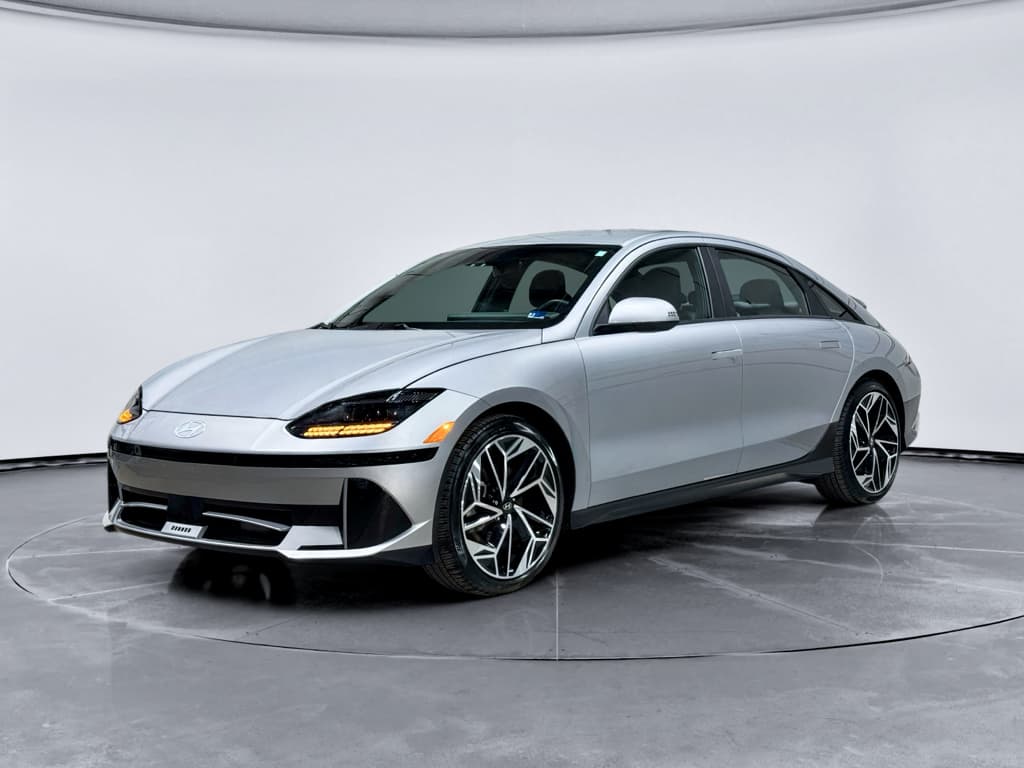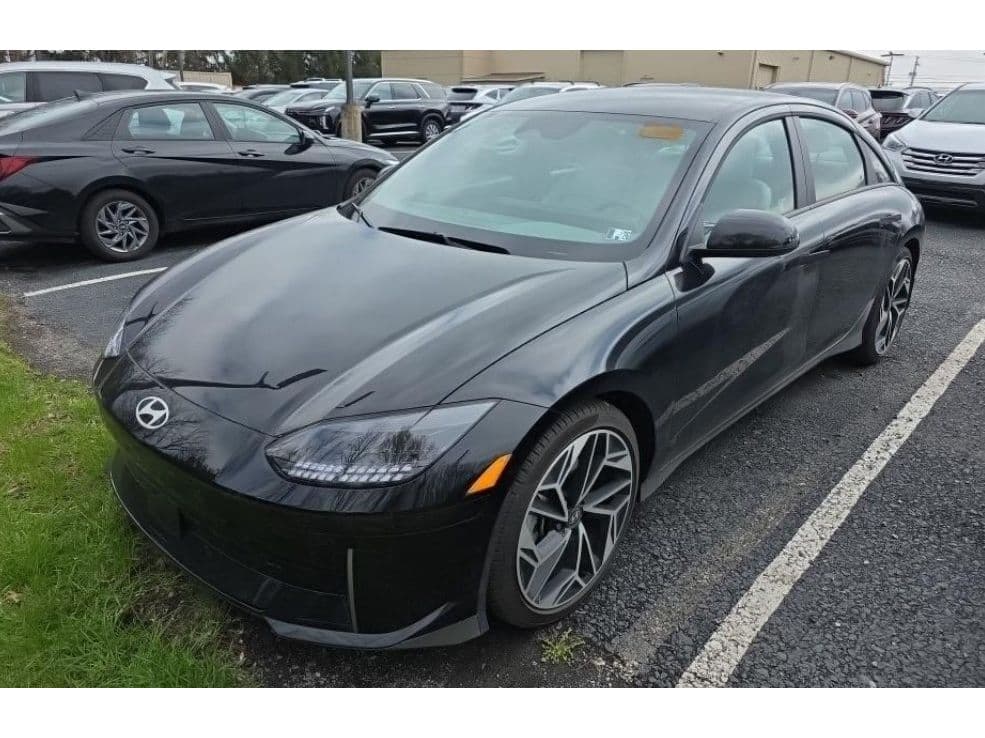
If you bought a Hyundai Ioniq 6 for its slippery aerodynamics and long range, you’re not alone. But sooner or later, someone in the family asks the big question: “Can we tow a trailer with it, and how much range loss are we talking about?” This guide walks you through the Ioniq 6’s real-world towing capacity, how towing slashes range, and what it takes to plan a stress-free trip with a trailer behind this sleek electric sedan.
Quick answer
Can the Hyundai Ioniq 6 Tow at All?
Here’s where things get confusing fast. Whether your Hyundai Ioniq 6 can tow legally depends on where you live and which manual you’re reading.
- In many European, UK, Australia and New Zealand specs, the Ioniq 6 is homologated for towing and has a published braked/unbraked capacity.
- In North America, Hyundai’s owner’s manuals for the Ioniq 6 generally state that you should not tow a trailer with the vehicle. Some dealer sites still quote “about 1,500 lb” as a guideline, but that’s not the same as an official rating.
- Regardless of market, Hyundai expects the Ioniq 6 to serve first as an efficient family sedan, not a dedicated tow vehicle. That means modest tow numbers and lots of fine print.
Always follow your manual
Official Hyundai Ioniq 6 Towing Capacity by Market
Factory tow ratings for the Hyundai Ioniq 6 differ by region but fall into a tight band. Here’s what various international spec sheets and brochures list for typical trims (numbers rounded for clarity):
Hyundai Ioniq 6 Towing Capacity (Typical Ratings Outside North America)
Approximate tow ratings gathered from international Ioniq 6 spec sheets. Always confirm against your exact VIN and local documentation.
| Battery / Drive | Market examples | Braked trailer | Unbraked trailer | Tongue weight |
|---|---|---|---|---|
| 77.4 kWh RWD | EU / UK / AU / NZ | 1,500 kg (≈3,300 lb) | 750 kg (≈1,650 lb) | Up to 100 kg (≈220 lb) |
| 77.4 kWh AWD | EU / UK / AU / NZ | 1,500 kg (≈3,300 lb) | 750 kg (≈1,650 lb) | Up to 100 kg (≈220 lb) |
| 53 kWh RWD | Selected markets | Often 1,000–1,200 kg braked | 750 kg unbraked | Typically 75–100 kg |
| North America, all trims | U.S. / Canada | Not rated – manual often says “Do not tow” | Not rated | n/a |
Ratings apply only where the car is homologated for towing and properly equipped with a towbar.
Braked vs. unbraked trailers
If you’re shopping a used Ioniq 6 and plan to tow, make sure you know whether the car’s original market allowed it. A European-market car imported into the U.S., for example, may carry a tow rating on its original documents that your local DMV and insurance company don’t recognize.
How Towing Affects Hyundai Ioniq 6 Range
The Hyundai Ioniq 6 is one of the most efficient EVs on sale. Long-range rear-wheel-drive versions are rated for more than 360 miles of EPA range in North America and over 600 km WLTP in Europe in the right spec. That’s thanks to its tiny frontal area and ultra-slick aerodynamics.
Hook a trailer to the back and you throw those advantages overboard. Range loss when towing isn’t just about weight, it’s about how much extra air you’re trying to punch through at highway speeds.
Why the Ioniq 6 Loses So Much Range When Towing
It’s mostly physics, not bad engineering.
Aerodynamic drag
Higher power demand
Rolling resistance
Typical Ioniq 6 Range Impact When Towing
Slow down to go farther
Real-World Ioniq 6 Towing Range Loss Examples
Because Hyundai doesn’t position the Ioniq 6 as a mainstream tow vehicle, there aren’t as many well-instrumented tests as you’ll find for SUVs and pickups. But owner reports and basic physics point to a consistent pattern: towing roughly cuts range in half. Here are some realistic scenarios based on owner logs and comparable EV towing data:
Light utility trailer, local moves
You’re pulling a small open utility trailer with yard waste or furniture, maybe 500–800 kg (1,100–1,760 lb) total.
- Speed: 45–60 mph mixed roads
- Energy use: 2.5–3.0 mi/kWh
- Rough range hit: 30–40% vs. solo driving
If your Ioniq 6 normally does 300 miles on a full charge in these conditions, plan on roughly 180–210 miles when towing this kind of trailer.
Small camper or box trailer, highway trip
Now you’re pulling a small caravan or cargo box with a much bigger frontal area, total weight 1,200–1,500 kg (2,650–3,300 lb).
- Speed: 60–70 mph highway
- Energy use: 1.9–2.3 mi/kWh
- Rough range hit: 45–55% vs. solo highway driving
A long-range Ioniq 6 that might comfortably run 220–240 highway miles between DC fast charges alone is now more realistically a 100–130 mile per-leg tow rig.
Don’t plan to “almost” make it
Planning Trips with an Ioniq 6 and Trailer
If you accept that your Hyundai Ioniq 6 is a light-duty tow vehicle with roughly half its normal range, you can absolutely make smart, enjoyable trips. You just plan differently than you would in a diesel wagon.
Towing Trip Planning Checklist for Ioniq 6 Owners
1. Verify your legal tow rating
Confirm in your <strong>exact-market owner’s manual</strong> that your Ioniq 6 is rated to tow, and note the braked/unbraked limits. Don’t rely solely on dealer ads or generic spec sheets.
2. Weigh the real trailer load
Load the trailer as you’d actually use it, then weigh it at a public scale. Stay <strong>under the lowest limit</strong> of car rating, hitch rating, and local law, whichever is stricter.
3. Cut your normal range in half
Take whatever highway range you’re used to solo and assume <strong>50–60% of that</strong> when you’re towing at speed. Use that number for planning between fast chargers.
4. Map chargers that fit a trailer
Use apps that show <strong>pull-through or trailer-friendly sites</strong>. Avoid chargers squeezed against walls or curbs where you can’t pull straight in with a trailer.
5. Add time for slower driving
Plan to cruise at <strong>60–65 mph</strong> where safe, and build extra time into your schedule. You’ll stop more often and for longer than you would in a gas tow vehicle.
6. Watch weather and elevation
Strong headwinds, mountain grades, and cold weather hit towing range hard. If your route includes all three, be conservative, shorter legs and higher arrival state of charge.
Charging Challenges When You’re Hitched Up
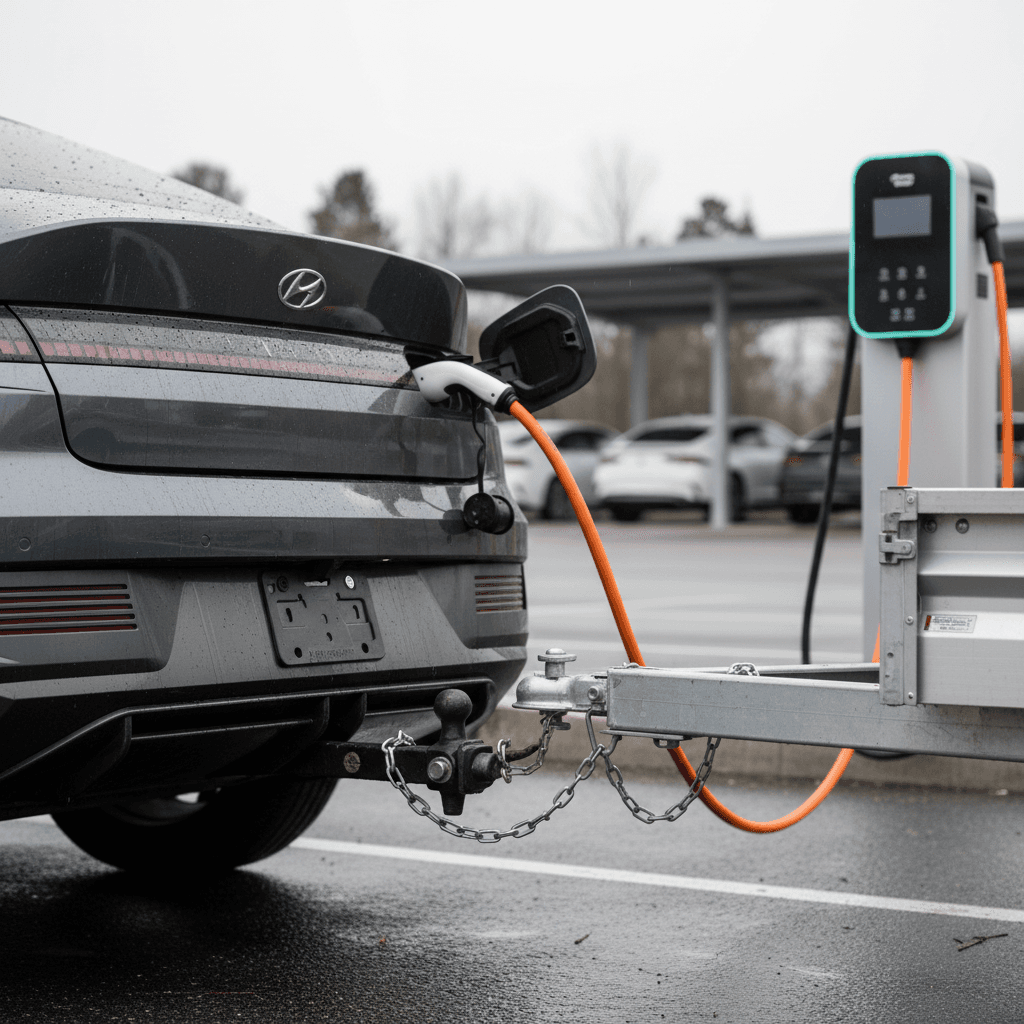
The Ioniq 6 shines at fast charging. On an 800‑volt DC fast charger, it can go from 10% to 80% in around 18 minutes in ideal conditions. But charging is more awkward with a trailer attached than it looks on paper.
Common Charging Headaches When Towing
Plan for these before you leave the driveway.
Back-in only stalls
Limited maneuvering space
More frequent stops
Look for pull-through charging
Choosing the Right Trailer and Hitch for the Ioniq 6
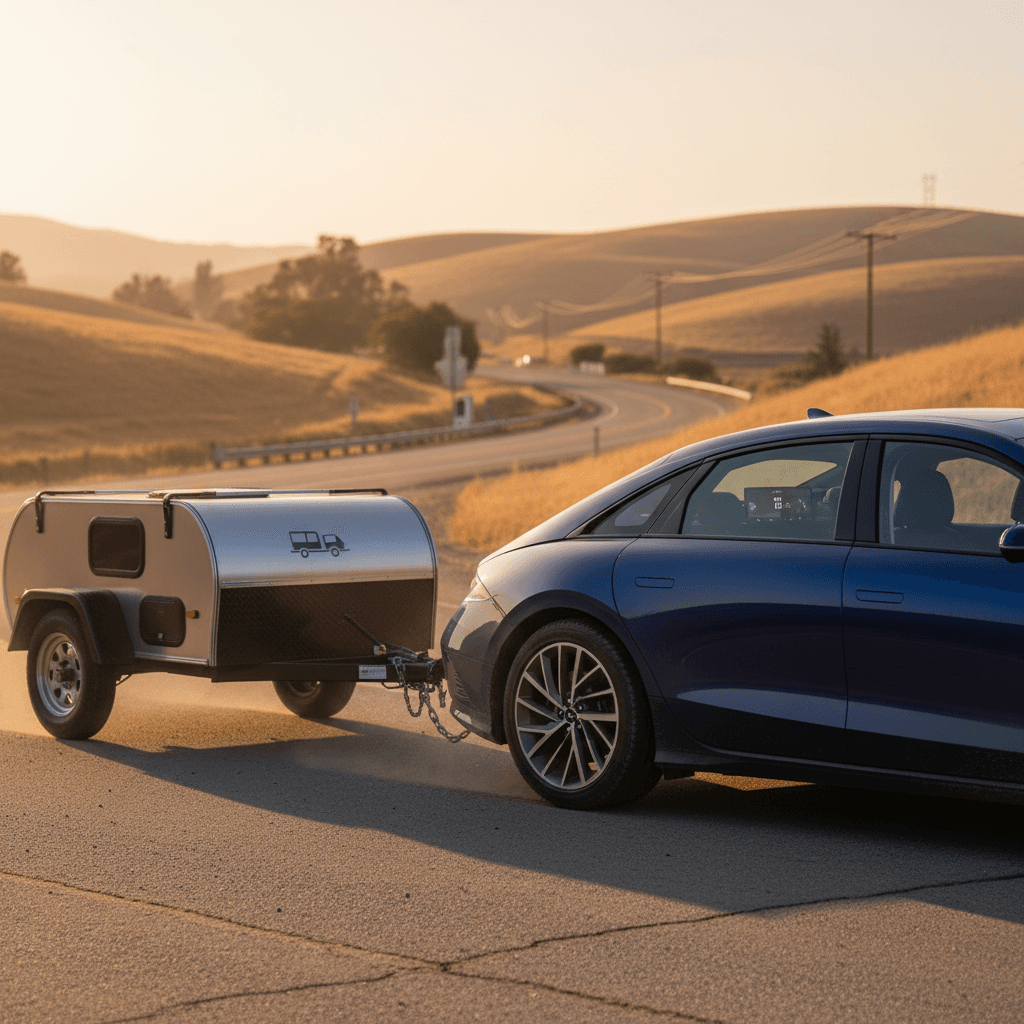
Since the Hyundai Ioniq 6 is tall on efficiency and modest on tow rating, the smartest move is to keep your trailer light and slippery. Think micro-camper, teardrop, or compact box, not a towering travel trailer.
Trailer Types: Better and Worse Fits for the Ioniq 6
How different trailer choices affect your towing experience and range.
| Trailer type | Typical loaded weight | Aerodynamics | Match for Ioniq 6 |
|---|---|---|---|
| Small teardrop / micro-camper | 900–1,400 kg (2,000–3,100 lb) | Very good | Excellent – light and streamlined, best for road trips. |
| Low open utility trailer | 500–1,000 kg (1,100–2,200 lb) | Good to fair | Good – fine for local hauling and short highway stints. |
| Full-height 4–5 berth caravan | 1,400–1,800 kg (3,100–4,000+ lb) | Poor | Marginal – may exceed rating and will crush range. |
| Tall box cargo trailer | 1,200–1,800 kg (2,650–4,000+ lb) | Poor | Poor – huge drag penalty; not ideal for an aero-focused sedan. |
These are general guidelines; always cross-check weight and dimensions with your specific tow rating.
Don’t ignore tongue weight
You’ll also need a properly engineered towbar. In markets where Hyundai approves towing, factory or dealer accessories are usually available. In North America, you’ll likely be looking at aftermarket hidden hitches primarily marketed for bike racks and cargo carriers. If your manual says “no towing,” those hitches generally aren’t rated or warranted for pulling a trailer.
Does Towing Hurt Ioniq 6 Battery Health?
Towing makes the powertrain work harder, but modern EVs like the Ioniq 6 are designed to protect themselves. The car will simply pull back power or speed if temperatures get too high. Occasional towing within the rated limits is unlikely to be catastrophic for battery life.
What towing changes day-to-day
- More time spent at higher power levels while accelerating or climbing.
- More frequent fast-charging stops on long trips, which warms the battery.
- Potentially more use of Sport or Normal drive modes to keep pace with traffic.
How to be kind to your battery
- Use Eco mode where traffic allows when towing.
- Aim to charge between 10–80% on road trips instead of 0–100% cycles.
- If you tow often, consider a used Ioniq 6 with a verified battery health report, such as the Recharged Score included with every vehicle on Recharged.
Heat is the real enemy
Checklist for Used Ioniq 6 Shoppers Who Plan to Tow
If you’re eyeing a used Hyundai Ioniq 6 with towing in mind, you’ll want to look beyond color, wheels, and trim lines. Here’s a focused checklist to bring to the test drive, or to your online shopping session.
Used Hyundai Ioniq 6 Towing Readiness Checklist
1. Confirm original market & tow rating
Check the build sheet or original window sticker to see which region the car was first sold in. If you’re in the U.S. or Canada, be extra cautious, Hyundai’s documentation there typically says the Ioniq 6 <strong>isn’t approved for towing</strong>.
2. Inspect for towbar or hitch evidence
Look for a factory towbar, aftermarket hitch, or signs of prior installation. Ask for documentation of who fitted it and whether it’s rated for towing or just rack use.
3. Review battery health
Ask for a <strong>battery health report</strong>. On Recharged, every used Ioniq 6 includes a Recharged Score report with verified pack health, so you’re not guessing how past owners used the car.
4. Check suspension and tires
Uneven tire wear or tired rear dampers can hint at a hard towing life. Budget for fresh rubber with the correct <strong>load rating</strong> if you’ll tow regularly.
5. Test fast-charging behavior
On a test drive, stop at a DC fast charger and watch charging power. A healthy Ioniq 6 should ramp quickly on a warm battery. Weak charging curves may point to underlying issues you don’t want in a tow car.
6. Verify warranty and insurance stance
If you’ll be towing in a region where it’s not officially endorsed, talk to your insurer and carefully read the warranty terms so you’re clear on what’s covered, and what isn’t.
Hyundai Ioniq 6 Towing Capacity & Range Loss: FAQ
Frequently Asked Questions about Towing with the Hyundai Ioniq 6
Bottom Line: Should You Tow with an Ioniq 6?
The Hyundai Ioniq 6 wasn’t built to be the world’s greatest tow vehicle, it was built to slip through the air and sip electrons. In the right markets and with the right trailer, though, it can absolutely handle light-duty towing. Think micro-campers, small cargo boxes, and utility trailers, not towering fifth-wheels.
If you respect the car’s tow rating, keep an eye on tongue weight, and plan your route around shorter legs and trailer-friendly chargers, you can have a smooth experience. Go in expecting your range to be cut roughly in half, and you’ll be far less stressed than if you cling to the EPA sticker number.
And if you’re shopping for a used Hyundai Ioniq 6 to do double duty as a commuter and occasional tow rig, this is where buying from a transparent EV-focused marketplace matters. Every vehicle listed on Recharged comes with a Recharged Score battery health report, fair market pricing, and EV specialists who can help you decide whether a particular Ioniq 6, and your trailer dreams, are a smart match.