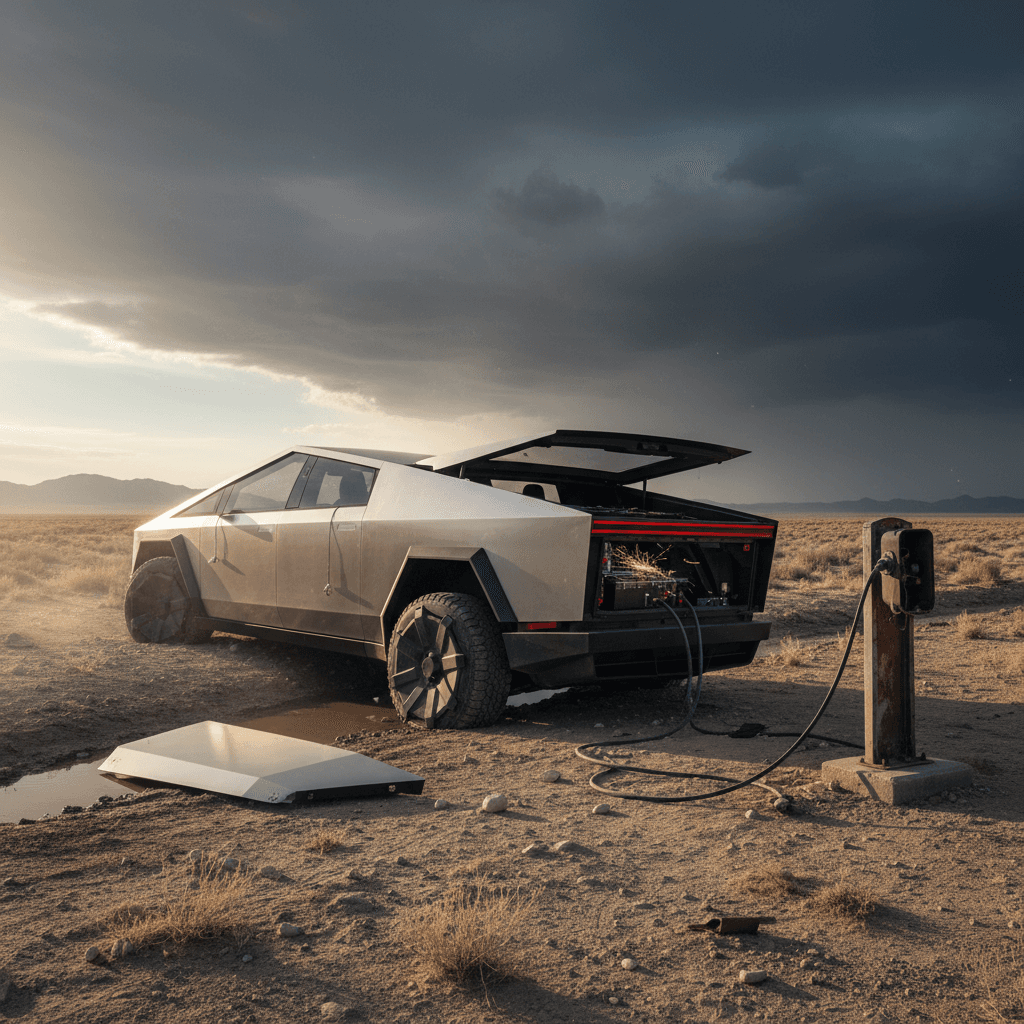
If you’re searching for Tesla Cybertruck common problems in 2026, you’re probably trying to separate the internet drama from the issues that actually matter when you’re living with (or shopping for) this stainless-steel spaceship. After a couple of years on U.S. roads, patterns are starting to emerge, recalls, rust spots, build quirks, and software behavior that ranges from brilliant to head‑scratching.
Quick reality check
2026 Cybertruck problems at a glance
Cybertruck problem trends by early 2026
By 2026, the Cybertruck is no longer a unicorn. Thousands of owners have piled on miles, filed complaints, and visited service centers. The pattern that’s emerging is clear: the powertrain and core EV hardware are generally stout, while many headaches come from software, body construction, and Tesla’s “fix it later” approach to early production quirks.
Why Cybertruck issues look different in 2026
Early builds (late 2023–2024)
- Most of the headline problems, like the infamous accelerator pedal recall and cant‑rail trim separating, show up on these first trucks.
- Owners report more alignment issues, inconsistent panel gaps, and water or wind noise at highway speeds.
- Software felt rougher: more phantom alerts, Autopilot quirks, and UI bugs.
Later builds (late 2025–2026)
- Hardware running changes and recall campaigns mean many early defects are already addressed at the factory.
- Build quality has improved, but stainless finish consistency and minor rattles are still common talking points.
- Software is more polished, but updates can introduce new bugs, so the experience can change overnight.
Bottom line: what you read about a 2024 Cybertruck may not apply 1:1 to a 2026 build, and vice versa. Always check the specific VIN’s recall and service history.
Don’t assume “they fixed it by now”
The big Cybertruck recalls so far
Major Cybertruck recalls relevant in 2026
Always run a VIN check through NHTSA and Tesla before you buy or take delivery, this is only a snapshot of the most impactful recalls owners talk about.
| Issue | What happens | Model years mainly affected | How Tesla fixes it |
|---|---|---|---|
| Accelerator pedal pad can slip and stick | Under heavy pressure, the pedal pad may move and trap the pedal, leading to unintended acceleration. | Primarily early 2024 builds | Revised pedal assembly and inspection; affected trucks get parts replaced at no cost. |
| Cant‑rail stainless trim delaminates | A long roof‑edge trim piece can loosen or detach while driving, becoming a hazard for other road users. | 2024–2025 | Inspect and replace or re‑bond trim with improved adhesive and process. |
| Exterior lighting calibration | Headlights or DRLs too bright or aimed incorrectly can increase glare for other drivers. | 2024–2026 (specific build ranges) | Over‑the‑air software update to adjust lighting behavior and brightness. |
| Assorted software safety updates | Driver‑assistance and warning behavior not meeting regulatory expectations. | Multiple years | OTA updates changing how Autopilot/FSD monitors driver attention and responds. |
Recall campaigns are fixed free of charge, but they’re a huge window into how a vehicle behaves in the real world.
How to check recall status in 60 seconds
Build quality, body, and trim issues
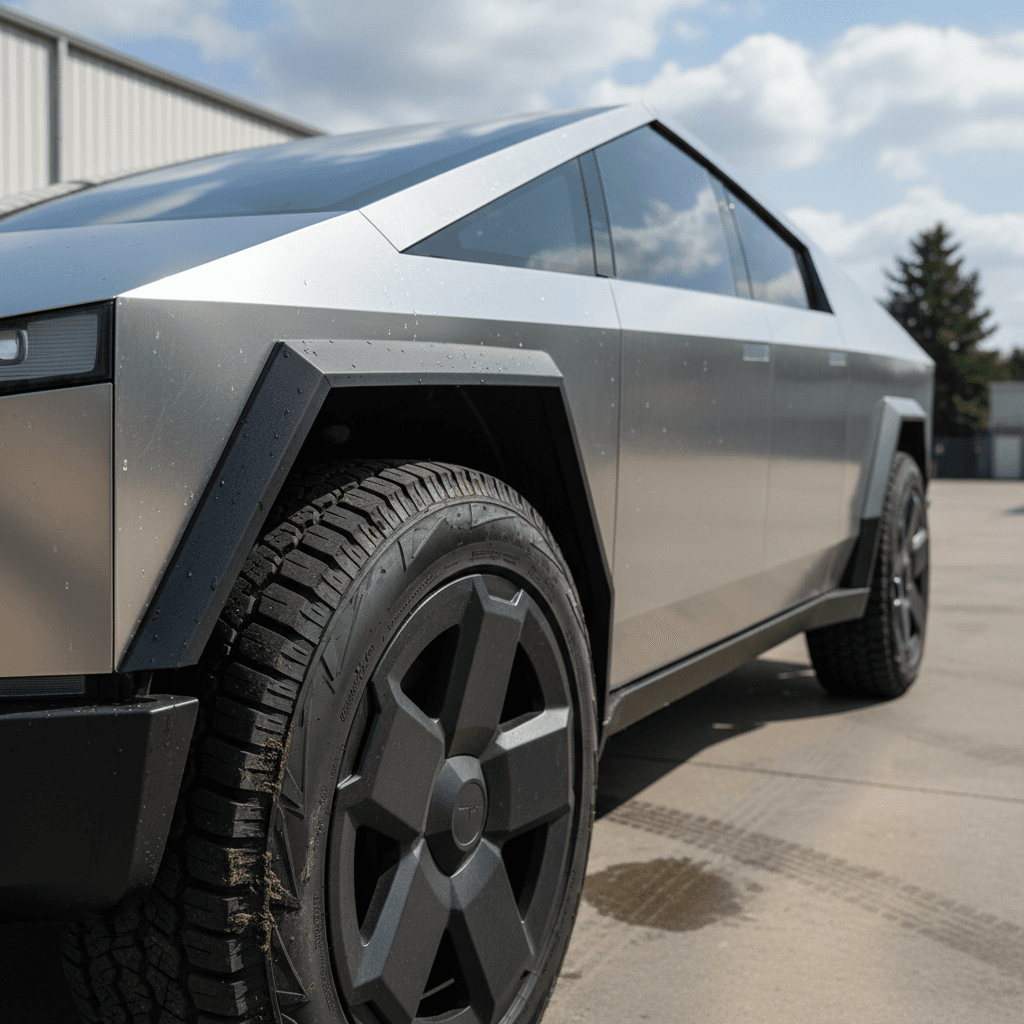
This truck was always going to be a manufacturing challenge. The flat stainless panels that look so dramatic on Instagram are unforgiving in real life. Owners and shop inspectors see a higher‑than‑normal rate of panel misalignment, inconsistent gaps, and trim pieces that don’t stay where they should, especially on early builds.
- Panel gaps and uneven doors: Front and rear doors that don’t sit flush, mismatched gaps at the tailgate, and hood alignment complaints.
- Loose or noisy trim: Exterior cant‑rail pieces, bed trim, and underbody covers that can rattle or, in recalled cases, detach.
- Water intrusion: Isolated reports of leaks at the roof seams, rear glass, or around the frunk seal, often discovered after a strong car wash or storm.
- Wind noise: Whistling sounds from mirrors, A‑pillars, or around the roof at highway speeds, sometimes fixable with seal adjustments.
Why body repairs are a big deal
Rust spots and stainless-steel care
“Stainless” doesn’t mean “invincible.” By 2025, owners in cold, salty regions had started posting photos of rust‑colored specks and tea‑staining on lower body panels, wheel arches, and exposed edges. Most of this is surface contamination, tiny particles of regular steel from the road or brakes that embed in the finish, but left alone, it can stain and even lead to localized corrosion.
Common Cybertruck rust and discoloration complaints
Most are cosmetic, but they’re still headaches on a six‑figure truck.
Winter road‑salt staining
Speckling or brownish haze appears on lower doors, rocker areas, and around wheel openings after winter driving in the Rust Belt or mountain states.
Tea‑staining on panel edges
Yellow‑brown streaks near seams, badges, or fasteners where water and salt sit. Often shows up on tailgate seams and near door handles.
Improper cleaning damage
Harsh brushes, steel wool, or the wrong chemicals can scratch the grain and make discoloration worse instead of better.
Simple stainless care routine
Software glitches and driver-assistance quirks
The Cybertruck is as much rolling software project as pickup. Over‑the‑air updates can make it better overnight, or introduce brand‑new frustrations. Owners in 2024–2026 consistently mention bugs, UI changes, and driver‑assistance behavior among their top complaints, even when they love the way the truck drives.
- Phantom warnings and chimes: Sudden collision‑warning beeps or lane‑departure nudges when nothing seems wrong, especially in construction zones or poor lane markings.
- Autopilot/FSD inconsistency: Smooth on one stretch, then suddenly over‑cautious or late‑braking in another. Updates can improve behavior in one situation while making another feel worse.
- Camera / sensor oddities: Brief camera outages in heavy rain or road grime, or parking sensors that behave differently after software updates.
- UI reshuffles: Tesla occasionally moves controls or changes menu structures, which can be jarring if you’re used to doing something by muscle memory.
Know what your truck can, and can’t, do
Ride quality, noise, and interior wear
On paper, an adaptive air‑suspension Cybertruck should be the grand‑touring EV truck of your dreams. In reality, owners report a split personality: planted and composed on smooth pavement, a bit busy and sometimes boomy on broken concrete. Throw in the big tires, big mirrors, and flat glass, and you have a recipe for more road and wind noise than a Model Y or Model X.
How the Cybertruck feels and ages inside
What multiple owners and inspectors report by year two.
Ride & noise
- Air suspension takes the edge off big hits but can still feel firm on patchy city streets.
- Wind noise around mirrors and A‑pillars is a frequent complaint above 70 mph.
- Off‑road modes are fun but can increase whine from motors and tires.
Interior wear
- Seat bolsters on heavily used trucks show wear and creasing quickly, especially in work use.
- Hard interior plastics scratch easily if you treat it like a worksite beater.
- Some squeaks and rattles develop from the rear cabin and bed partition area as miles add up.
The upside
Battery, range, and charging experience
Here’s the good news: Compared with body and trim drama, battery and core driveline issues are not the main Cybertruck story so far. That doesn’t mean everything is perfect, but catastrophic pack failures or widespread motor problems simply aren’t topping complaint lists the way build quality and software are.
- Real‑world range vs. window sticker: Like every EV pickup, expect a noticeable gap between EPA figures and reality, especially at 75–80 mph, in cold weather, or when towing or hauling.
- Cold‑weather performance: Range can drop dramatically in freezing temps if you take short trips and don’t pre‑condition. Owners who pre‑heat and use scheduled charging fare much better.
- Supercharging behavior: Most owners praise the sheer convenience of Tesla’s network but note that charge rates can taper early if the pack is cold or you arrive above ~40–50% state of charge.
- Home charging quirks: Wall connector issues are rare but not unheard‑of; more often it’s home electrical problems (breaker sizing, wiring) showing up once you start pulling 48 amps every night.
Range sanity checks before you buy
What it costs to fix common Cybertruck problems
A lot of Cybertruck problems are covered under Tesla’s basic warranty or specific recall campaigns. But if you’re out of warranty, or considering cosmetic or alignment fixes on a used truck, it’s smart to understand the cost ballpark. Exact numbers will vary by region and shop, but these ranges reflect what owners and independent EV specialists are seeing by 2026.
Approximate costs to address common Cybertruck issues (out of warranty)
Rough, non‑binding estimates for U.S. owners in 2026. Recalls and warranty repairs are typically free; cosmetic or wear‑and‑tear fixes usually are not.
| Problem | Typical fix | Ballpark cost |
|---|---|---|
| Minor panel misalignment / door adjustment | Adjust hinges, latches, and seals, verify wind noise. | $200–$600 |
| Loose exterior trim (non‑recall) | Re‑secure or replace clips/adhesive, refit part. | $150–$500 per area |
| Surface rust / tea‑staining | Chemical decontamination, correction of stainless finish. | $250–$800 depending on severity |
| Interior squeaks & rattles | Isolate and pad contact points, refit panels. | $150–$600 |
| Home charging circuit issues | Electrical diagnostic, breaker/wiring upgrades by licensed electrician. | $400–$1,500+ depending on work required |
Use this as a budgeting guide, not a quote, always get a written estimate from the Tesla Service Center or qualified EV‑experienced body shop.
Why pre‑purchase inspections matter more with Cybertruck
Used Cybertruck checklist for 2026 shoppers
If you’re browsing used listings, or looking at a trade‑in offer for your own Cybertruck, you want to know whether you’re buying someone else’s problem child. Use this quick checklist as a starting point before you fall in love with the stainless origami.
Quick inspection checklist for a used Cybertruck
1. Scan for open recalls and service history
Ask the seller for a Tesla service history printout or app screenshots. Verify that accelerator pedal and cant‑rail trim recalls are listed as completed, and run the VIN through the official recall lookup tools.
2. Inspect panel gaps in good light
Walk the truck from nose to tail. Look at every door, the tailgate, and the bed cover from multiple angles. You’re not aiming for museum perfection, but large, inconsistent gaps can signal prior damage or a very early, poorly built truck.
3. Look closely for rust specks and staining
Kneel down and study the lower doors, rocker areas, wheel arches, and tailgate seams. Light brown or orange specks may be removable, but heavy staining or pitting can mean more work (and cost) down the line.
4. Drive at highway speed
On your test drive, get to 65–75 mph. Listen for wind whistles, booming, or rattles from the rear cabin or bed wall. Any obvious noise should be noted and priced into the deal, or fixed by the seller first.
5. Test all software and cameras
Cycle through driver‑assistance modes, check every camera view, and pay attention to warnings or error messages. If something feels off, take a photo of the screen; intermittent software problems are easier to argue about when you have evidence.
6. Confirm charging behavior
If possible, plug into a Level 2 charger and watch the charge rate. You shouldn’t see repeated connection errors or extreme fluctuations in power. If the seller has Supercharging logs, review them for any odd patterns or repeated session failures.
How Recharged de-risks a used Cybertruck
Ready to find your next EV?
Browse VehiclesFrequently asked questions about Cybertruck problems in 2026
Cybertruck problems FAQ (2026)
Should you buy a Cybertruck in 2026?
By 2026, the Tesla Cybertruck is exactly what it looks like: bold, capable, a bit ridiculous, and not remotely boring. Its common problems cluster around recalls, build quality, stainless‑steel cosmetics, and ever‑evolving software, not around its motors or battery pack. If you’re the sort of driver who expects your truck to disappear into the background, you may be happier in a more conventional EV pickup. But if the shape, performance, and tech have their hooks in you, go in with your eyes open, do your homework on recalls and rust, and lean on independent data instead of hype.
That’s where a platform like Recharged can tilt the odds in your favor. Every used EV we sell comes with a Recharged Score Report, battery‑health verification, transparent pricing, and EV‑savvy support from your first question to delivery. Whether you’re selling a Cybertruck, trading into something tamer, or hunting for your first electric truck, you don’t have to navigate the learning curve alone.