If you’re looking at a Tesla Cybertruck, you’re probably wondering how much **usable cargo space you actually get with the rear seats down**, not just the numbers Tesla puts on a spec sheet. Between the enclosed vault bed, frunk, and a surprisingly flexible cabin, the Cybertruck can swallow a lot of gear, if you understand how its space is laid out and how to use it.
Key takeaway on seats-down cargo space
Why Cybertruck cargo space with seats down matters
On paper, the Cybertruck is a pickup. In practice, a lot of owners use it like a **blend of a full-size SUV, a work truck, and an overlanding rig**. That means cargo flexibility, especially with the rear seats down, is just as important as towing or 0–60 times. Whether you’re hauling tools, mountain bikes, or building a sleep platform for road trips, knowing what happens when you fold those seats is critical.
- You want to know if you can replace a traditional SUV or truck in your household.
- You’re planning to sleep in the truck for camping or overlanding.
- You routinely carry bulky items that won’t fit in a frunk or small crossover.
- You’re cross‑shopping Cybertruck against Rivian R1T, F‑150 Lightning, or a big SUV.
Think in both volume and shape
Official Tesla Cybertruck cargo volumes explained
Tesla’s own documentation breaks Cybertruck cargo into the **frunk, the bed (or vault), an under‑bed compartment, and the cabin behind the front seats**. Here’s how those numbers shake out for the all‑wheel‑drive and Cyberbeast models:
Tesla Cybertruck official cargo volumes
Key factory cargo volume specs for current Cybertruck variants.
| Location | AWD & Cyberbeast (cu ft) | Long Range RWD (cu ft) | Notes |
|---|---|---|---|
| Frunk (front trunk) | 7.1 | 7.1 | Lockable, weather‑sealed |
| Cargo bed above floor (vault) | 56.1 | 58.1 | Approx. 6 ft long, 4 ft wide between walls |
| Under‑bed compartment | 3.4 | 3.4 | Hidden bin at rear of bed |
| Cabin behind front seats (rear cushions folded up) | 54.1 | 54.4 | Open floor behind front seats |
| Total volume with 5 passengers | 66.6 | 65.2 | Frunk + bed + under‑bed |
| Total volume with 2 passengers | 120.7 | 119.6 | Frunk + bed + under‑bed + cabin behind front seats |
Figures rounded; actual usable space varies slightly by trim and how you pack.
What “total volume with two passengers” really means
Cybertruck cargo stats at a glance
How the rear seats fold and what space you gain
Unlike a typical SUV where the **seatbacks fold flat into the floor**, the Cybertruck’s rear bench behaves more like many crew‑cab pickups:
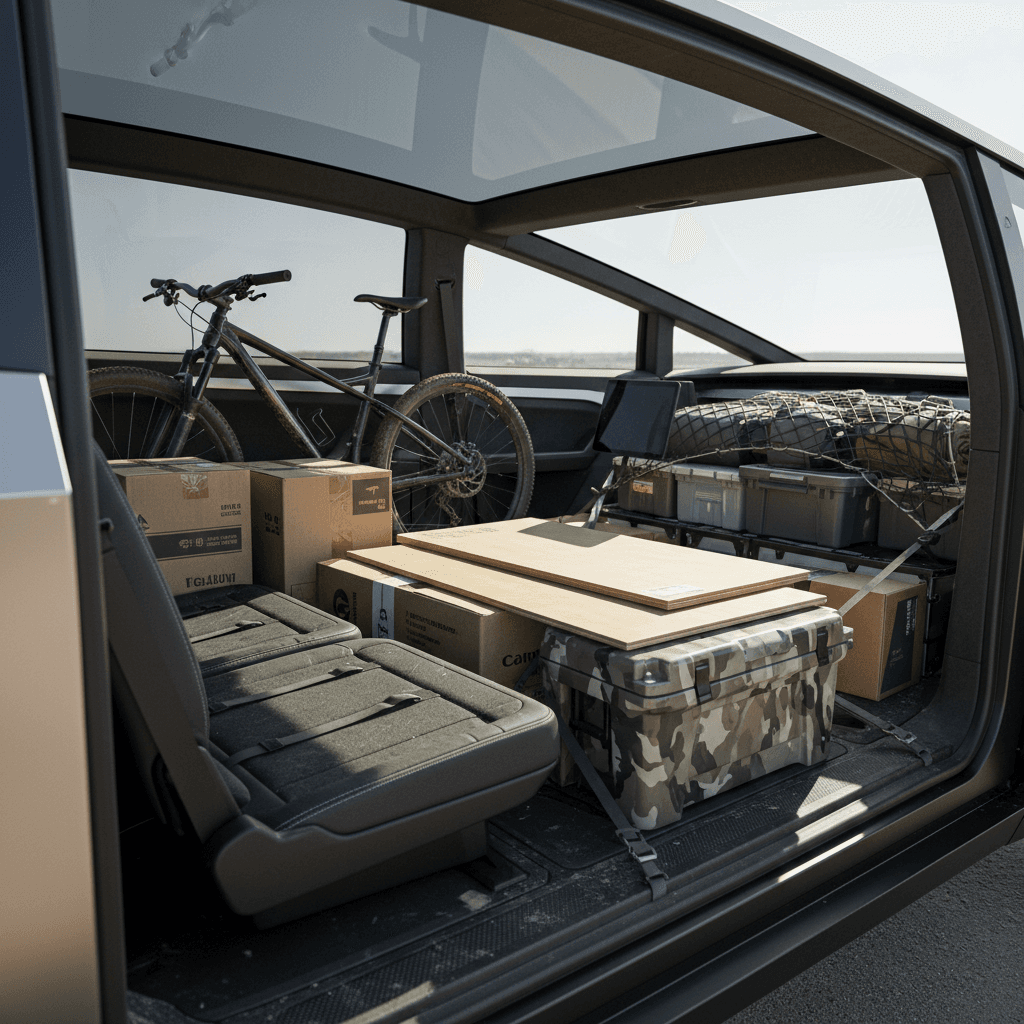
- The **rear seat cushions flip up** toward the seatbacks, opening a large, continuous floor area behind the front seats.
- The seatbacks remain upright, so your cargo sits on the cabin floor instead of on the folded seatbacks.
- This configuration helps keep the center of gravity low and protects the back wall of the cabin.
When Tesla talks about "cabin behind front seats with rear seat cushions folded up," that’s the **roughly 54 cubic feet** of space you unlock in the cabin alone. Think of it as a tall, wide cargo bay that starts at the back of the front seats and runs to the rear wall of the cab, with a flat floor.
Check what “seats down” means in Cybertruck
Real-world uses: seats down vs bed only
In everyday life, you won’t always need all 120 cubic feet. Often you’ll be deciding between **using the bed alone** or **opening up the rear cabin as well**. Here’s how those scenarios play out.
When to use the bed vs opening the cabin
Match your cargo strategy to your trip, not just the spec sheet.
Bed (vault) only
Best when you:
- Carry dirty or dusty cargo like soil, lumber, or worksite tools.
- Need lockable, weather‑protected space but want to keep all five seats available.
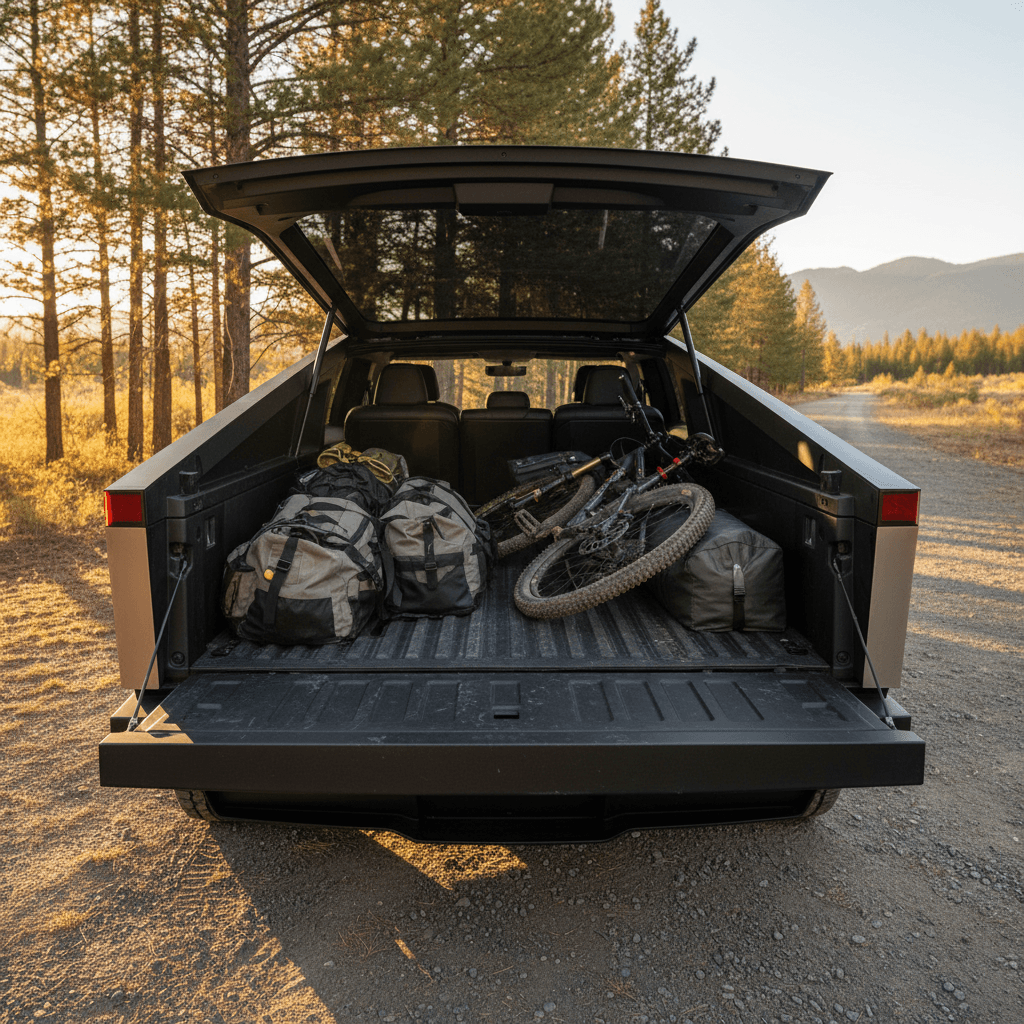
- Haul bikes or coolers and don’t mind lifting them into the bed.
Bed + seats down
Best when you:
- Move apartments and need every cubic foot you can get.
- Carry tall items that must stand upright in the cabin.
- Want to lay out a **full‑length sleep platform** that runs from cabin to bed.
Measure before you commit to a layout
Cybertruck vs SUVs and pickups on max cargo space
If you’re coming from a large SUV or crew‑cab pickup, you’re probably wondering how the Cybertruck stacks up when everything is folded or flipped out of the way. Using manufacturer data and owner reports, here’s a rough comparison of **maximum cargo volume with seats down**:
Max cargo volume: Cybertruck vs popular haulers
Approximate maximum cargo volumes with rear seating areas folded or removed.
| Vehicle | Max Cargo Volume (cu ft) | Configuration Notes |
|---|---|---|
| Tesla Cybertruck (AWD) | ~120 | Two passengers only; includes frunk, bed, under‑bed, and cabin behind front seats |
| Ford Expedition Max | ≈105 | Second and third rows folded flat |
| Chevrolet Suburban | ≈145 | Second and third rows folded; traditional SUV layout |
| Rivian R1S | ≈91 | Second and third rows folded |
| Typical crew‑cab full‑size pickup | 80–100+ | Bed plus limited in‑cab storage behind front seats |
Numbers are rounded and may vary slightly by model year and trim, but they illustrate how competitive the Cybertruck is on total space.
Where Cybertruck shines, and where a big SUV wins
Payload limits and safe loading
Volume is only half the equation. You also have to respect **payload**, which is the total weight of passengers plus cargo. Depending on trim, the Cybertruck’s payload rating is roughly **2,000–2,500 pounds**. That sounds like a lot, and it is, but it’s easier than you think to hit that limit when you’re carrying people, tools, and overlanding gear.
Quick checklist: loading your Cybertruck safely
1. Know your specific payload rating
Open the door jamb label or your owner’s manual to find the exact payload capacity for your trim. Don’t rely on generic numbers; the Cyberbeast, AWD, and Long Range RWD can all differ slightly.
2. Count passengers first, then cargo
Multiply passengers’ weight and subtract that total from your payload rating. Whatever’s left is what you have for cargo in the cabin, bed, frunk, and under‑bed storage.
3. Distribute weight low and forward
Place the heaviest items on the floor and as close to the cab as possible, whether in the bed or in the cabin behind the front seats. This keeps handling predictable and reduces stress on the suspension.
4. Secure cargo in the cabin
When the rear seats are folded and you’re using that space for cargo, use straps or nets to keep heavy items from shifting forward under hard braking.
5. Use tie‑downs in the vault
The Cybertruck bed includes tie‑down points and L‑tracks. Use them liberally, especially for tall items that could topple into the rear glass or tonneau.
6. Don’t forget tongue weight if towing
If you’re towing, the trailer’s tongue weight eats into payload. Factor that in before you load the bed and the cabin with additional gear.
Overloading is more than a comfort issue
Camping and sleeping in a Cybertruck
One of the most common reasons shoppers care about Cybertruck cargo space with the seats down is **camping**. The combination of a long bed, a fully enclosed vault, onboard power, and extra cabin volume makes it an appealing electric basecamp.
Sleeping in the bed (vault)
- The bed is roughly 6 feet long, so many adults can lie flat with the tailgate closed.
- With the powered tonneau closed, you get a **dark, weather‑protected sleeping space** that’s separate from the cabin.
- Some aftermarket and Tesla accessories add tents or bed platforms that take advantage of the high bed walls.
Extended sleep platform into the cabin
- Flip the rear seat cushions up and build a platform that runs from the cabin floor into the bed.
- This can give taller occupants more stretch‑out room or allow you to separate sleeping and storage zones.
- Because the seatbacks stay upright, you’ll need to design around them rather than expecting a completely flat wagon‑like floor.
Use the cabin for gear, bed for sleep
Tips to maximize Cybertruck cargo space
The Cybertruck gives you a lot of cubic feet, but the real magic is how you organize them. A few smart habits and accessories can make the truck feel much bigger in day‑to‑day use.
Smart ways to unlock every cubic foot
Little changes in how you pack can add up to big gains.
Use stackable bins
Leverage the high bed walls
Reserve frunk for daily items
- Use soft duffels instead of hard suitcases so you can conform to the angular cabin and bed walls.
- Invest in cargo nets and straps to keep items from shifting under hard acceleration or regen.
- If you frequently haul long lumber, consider a bed rack or tailgate extender and reserve the cabin for lighter cargo when the seats are down.
What to check on a used Cybertruck’s cargo areas
If you’re shopping for a **used Cybertruck**, how the previous owner used the cargo space matters. Work trucks and heavy‑use overlanders can still be great buys, but you’ll want to inspect a few areas closely.
Used Cybertruck cargo and seats-down inspection tips
1. Rear seat mechanisms
Flip the rear cushions up and down several times. They should latch securely and move smoothly with no grinding or binding. Excessive play could indicate past abuse.
2. Cabin floor and trim behind front seats
Look for deep scratches, cracked panels, or moisture stains in the area you’d use for seats‑down cargo. This tells you how heavily that space has been used and whether water ever made its way inside.
3. Bed (vault) liner and tie‑downs
Inspect the plastic bed liner, L‑tracks, and tie‑down anchors for cracks or missing hardware. A heavily gouged bed doesn’t have to be a deal‑breaker, but it’s fair grounds for a **price negotiation**.
4. Under‑bed compartment
Open the lower storage compartment and check for standing water, rust on fasteners, or broken latches. This space is incredibly useful, but it can take a beating on work trucks.
5. Tonneau cover operation
Run the power tonneau open and closed. A smooth, consistent motion matters if you plan to rely on the vault for weather‑sealed cargo or camping.
6. Frunk seals and struts
Check that the frunk opens and closes confidently and that the weather seals are intact. A leaky frunk can turn into a surprisingly expensive problem in an EV.
How Recharged helps with used Cybertruck cargo concerns
Ready to find your next EV?
Browse VehiclesFrequently asked questions about Cybertruck cargo space
Cybertruck cargo space FAQs
Bottom line: Is Cybertruck cargo space right for you?
If you regularly haul big loads or dream about turning your EV into a rolling basecamp, the **Tesla Cybertruck’s cargo space with the seats down is a genuine strength**. With the rear cushions flipped up, you unlock over 50 cubic feet of additional cabin volume, and when you combine that with the 6‑foot enclosed bed, under‑bed compartment, and frunk, total enclosed cargo climbs to around 120 cubic feet with only two passengers aboard.
Where some trucks give you a big bed and little else, the Cybertruck gives you a **modular set of spaces** you can tune for workdays, weekend projects, or cross‑country trips. If you’re comparing specific used Cybertruck examples, a retailer like Recharged can help you understand exactly how each truck’s cargo areas have been used and how that fits your life. Once you know how to work with the cabin and bed together, the Cybertruck becomes far more than just a cool‑looking pickup, it becomes a genuinely practical electric hauler.