If you own, or are shopping for, a Ford Mustang Mach‑E, you’ve probably heard about the battery contactor recall. The language in the official documents is dry, but the stakes are not: in the wrong conditions, certain Mach‑E models could lose drive power or refuse to start because of overheated high‑voltage battery contactors. This guide translates the recall alphabet soup, 22S41, 23S56, 25S14, into plain English and explains what it means for current and future Mach‑E owners.
Quick takeaway
Overview: What the Mach‑E battery contactor recalls are really about
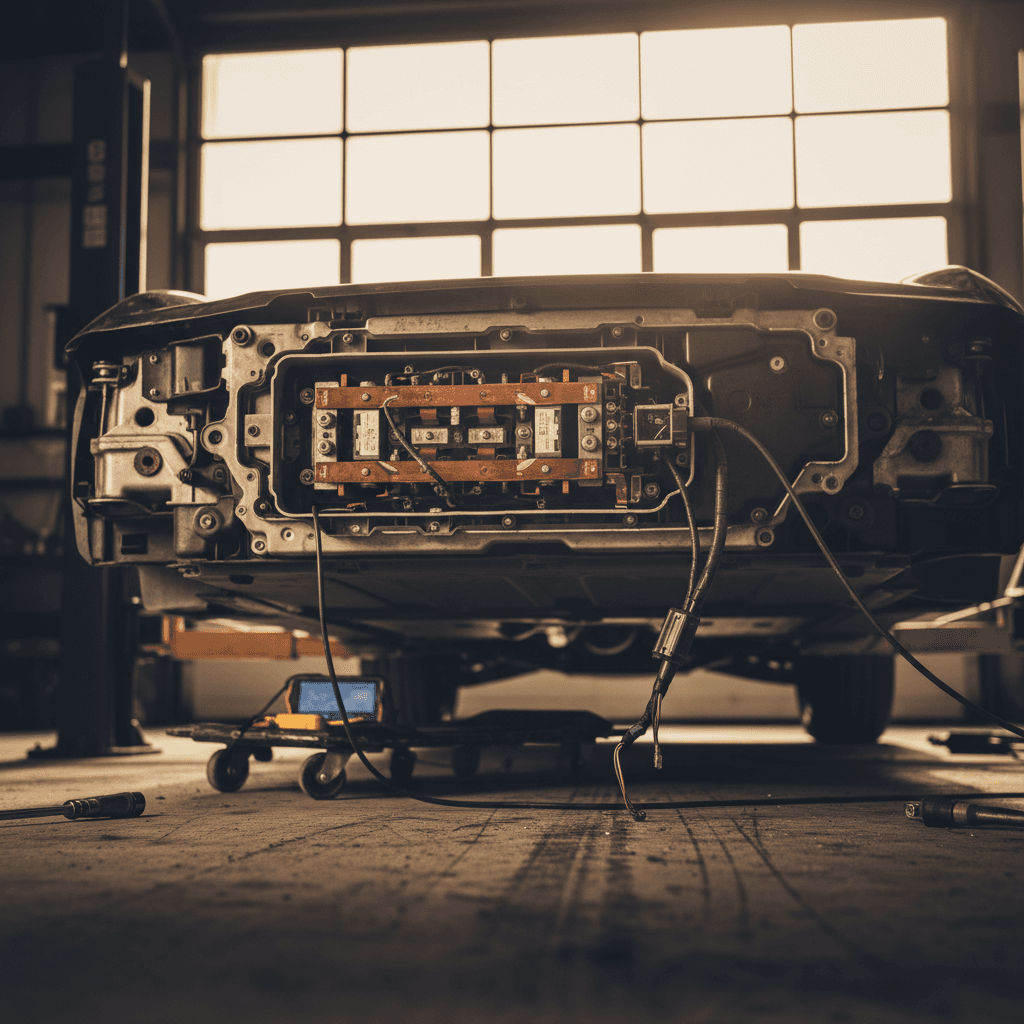
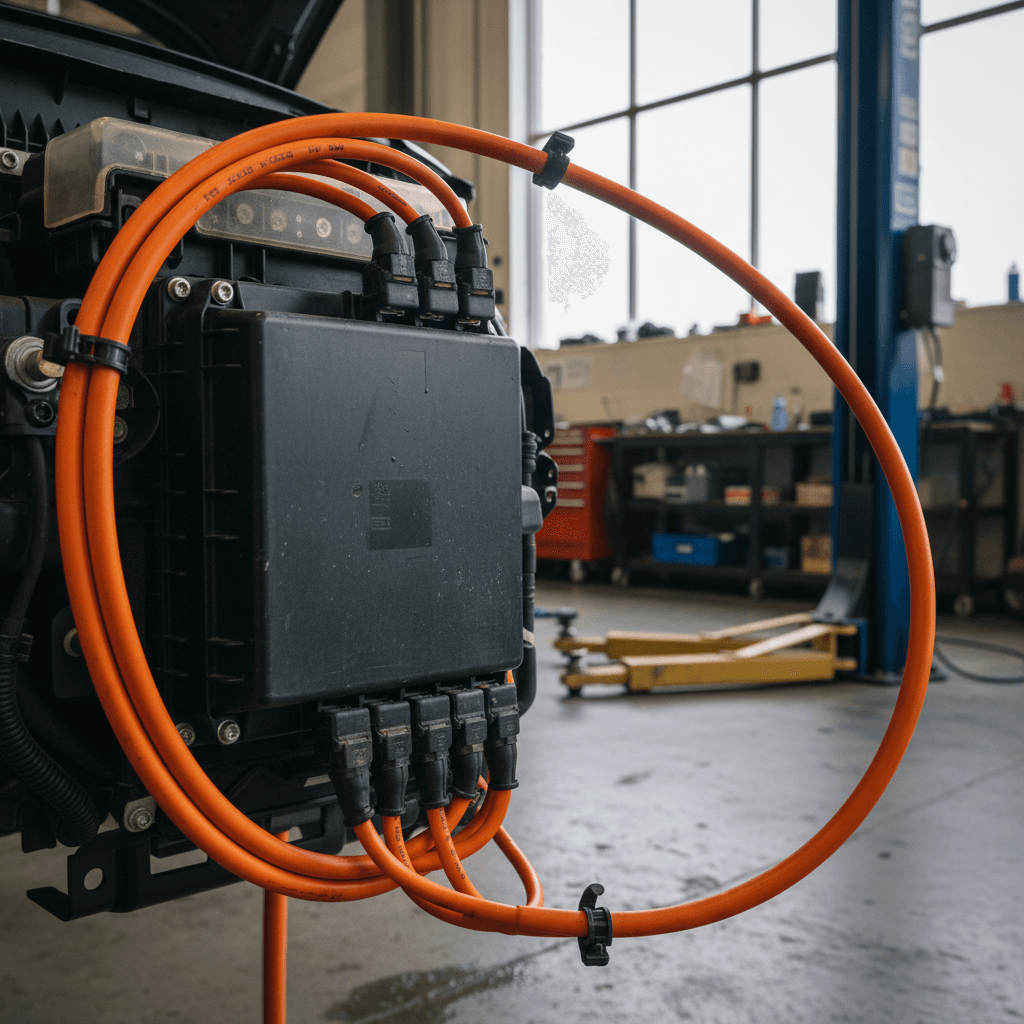
At the center of the Ford Mustang Mach‑E battery contactor recalls is a component called the high‑voltage battery main contactor, housed in the High Voltage Battery Junction Box (HVBJB), sometimes called the Bussed Electrical Center. Under heavy use, think repeated DC fast‑charging and wide‑open‑throttle acceleration, the contactors in some 2021–2022 extended‑range and GT models can overheat. When that happens, the contactor can either stick open (so the car can’t drive) or weld closed (which can damage components and trigger a shutdown on the next restart).
Ford’s first attempt at a fix was a software update that monitored contactor temperature and resistance, cutting power if things started to look dicey. Later data showed that on some extended‑range and GT vehicles, that software didn’t fully prevent failures, which led to a second, more robust fix: replacing the HVBJB hardware on affected vehicles (recall 23S56 / NHTSA 23V687). More recently, Ford discovered that a small subset of Mach‑Es were incorrectly recorded as having the right software when they did not, prompting an additional clean‑up recall (25S14) to get everyone truly up to date.
Mustang Mach‑E battery contactor recall at a glance
How the Mach‑E battery contactor works, and why it matters
Think of it as a giant, smart light switch
In an EV, the big battery pack sits quietly under the floor until the car decides it’s time to send power to the motors. That on/off decision happens through electromechanical switches called contactors. When you "start" the Mach‑E, the contactors close, connecting the high‑voltage battery to the rest of the car. When you shut it down, they open and isolate the pack.
Every time you accelerate hard or plug into a DC fast charger, those contactors are asked to carry high current loads cleanly and repeatedly.
What goes wrong when contactors overheat
In the affected Mach‑Es, heavy DC fast‑charging and wide‑open‑pedal events (Ford’s charming term for full‑throttle blasts) can heat the contactors enough to cause arcing and deformation of the contact surfaces. In practice you might see:
- A contactor that won’t close, so the car won’t go into drive.
- A contactor that welds closed; the car may continue to drive, but on the next restart it may refuse to start or throw warnings.
- A "power reduced" mode as software tries to protect the hardware from further damage.
Why this is a safety recall
Which Mustang Mach‑E models are affected by the recalls?
Ford Mustang Mach‑E battery contactor–related recalls by model/year
This table focuses on the high‑voltage battery contactor and HVBJB campaigns, not door‑latch or unrelated recalls.
| Model year | Trim focus | Build dates (approx.) | Recall codes tied to battery contactor | Typical remedy |
|---|---|---|---|---|
| 2021 | Extended Range & GT | May 27, 2020 – Dec 23, 2021 | 22S41 (software), 23S56 (hardware), 25S14 (software verification on some) | Software update, then HVBJB replacement for eligible vehicles |
| 2022 | Extended Range & GT | Aug 16, 2021 – May 24, 2022 | 22S41 (software), 23S56 (hardware), 25S14 (software verification on some) | Software update, then HVBJB replacement for eligible vehicles |
| 2021–2022 | Standard Range | Same as above | 22S41 (software only in many cases) | Software update to monitor contactor temperature/resistance |
| 2023+ | All trims | Later production | No battery‑contactor‑specific recall as of early 2026 | Design and software refinements baked into production |
Always confirm your VIN on Ford’s recall site or NHTSA.gov; this table is a simplified overview, not a legal definition.
Check your exact VIN
Key Mach‑E battery contactor recall campaigns and timeline
Major battery contactor–related campaigns for the Mach‑E
Multiple bites at the same apple, here’s how the fix evolved.
2022 – 22S41: Software guardian
Ford’s first move was a software update (22S41 / NHTSA 22V412) for 2021–2022 Mach‑Es. It updated the Secondary On‑Board Diagnostic Control Module and Battery Energy Control Module to:
- Monitor contactor temperature and resistance
- Derate power if values drifted out of spec
- Warn the driver with dash messages
This didn’t repair damaged contactors, but it tried to prevent new failures and mitigate risk.
2023 – 23S56 / 23V687: Hardware replacement
Field data showed extended‑range and GT models could still experience failures even with 22S41 installed. Ford issued 23S56 (NHTSA 23V687) to:
- Replace the High Voltage Battery Junction Box (HVBJB)
- Address contactors already weakened by heat
- Focus on 2021–2022 extended‑range and GT builds
Think of this as the more permanent mechanical fix.
2025 – 25S14: Software record clean‑up
By late 2024, Ford discovered a smaller but important issue: some Mach‑Es were marked as updated even though the correct software had never actually been flashed. Campaign 25S14 targets roughly a few hundred vehicles for:
- Verification of software state
- Re‑installing the correct update where missing
- Ensuring the original contactor defect is truly addressed
How to translate recall codes as a shopper
Symptoms and warning signs of a battery contactor issue
Plenty of Mach‑E owners will drive their entire lease term without ever triggering the conditions that stress these contactors. Still, you should know what the car is trying to tell you when something’s wrong. The language is often cryptic, but the pattern is familiar if you’ve lived with other modern EVs.
Common real‑world symptoms of a Mach‑E battery contactor problem
1. "Stop Safely Now" message
You’re cruising on the highway and get a bright red "Stop Safely Now" warning in the cluster, often accompanied by a wrench icon. The car may immediately begin coasting and refuse to respond to further accelerator input.
2. Sudden loss of drive power
Without any drama, no smoke, no clunks, the Mach‑E simply rolls to a stop. Power steering, brakes and lights usually remain active, but propulsion is gone until the fault is cleared and hardware inspected.
3. Won’t go into Drive after a key cycle
You park, shut down, come back later, and the car refuses to shift into drive or shows reduced‑power warnings. This is consistent with a contactor that won’t close after it has overheated.
4. Persistent wrench light or EV system warning
If your Mach‑E shows a wrench icon or high‑voltage system warning that persists across restarts, especially after fast‑charging or repeated hard launches, don’t ignore it. That’s exactly the scenario the monitoring software is built to flag.
5. Noticeable power derate after an update
After the 22S41 software update, some owners noticed the car felt less eager under heavy load. That ‘sluggish’ behavior can be the car proactively limiting power to protect the contactors from further damage.
Is it safe to drive your Mach‑E before the recall is fixed?
No one wants to read "your car might shut itself off" in the same sentence as "it’s probably fine." The truth is somewhere in between. For many owners, especially those who mostly Level 2 charge at home and don’t drag‑race their commute, the real‑world risk of a contactor failure is low, but not zero. Regulators care about worst‑case scenarios, not averages.
When you should park it and call your dealer
If your VIN shows an open battery contactor recall but the car is behaving normally, Ford’s own guidance is more measured. Until your appointment, they advise minimizing repeated full‑throttle accelerations and using DC fast charging only when necessary. That’s not exactly a hardship; most owners charge at home and reserve the high‑speed chargers for road trips.
What Mach‑E owners should do now (step‑by‑step)
Step‑by‑step plan for Mach‑E owners
1. Check your VIN for open recalls
Visit Ford’s recall lookup or NHTSA.gov and enter your 17‑digit VIN. You’ll see a list of open and completed actions, including 22S41, 23S56, or 25S14. Take a screenshot or print this page for your records.
2. Book a dealer appointment promptly
If you see an open recall, schedule service with a Ford dealer as soon as possible. Mention the specific recall code so they can order any required HVBJB parts and plan enough time for software updates.
3. Ask what remedy your car is getting
Not all Mach‑Es get the same fix. Ask the advisor: Is this just a software update? Or is the High Voltage Battery Junction Box being replaced? Get the answer in writing on the repair order.
4. Request documentation for your records
When the work is complete, keep the repair order that lists recall codes performed, part numbers, and mileage. This paperwork is gold when you eventually sell or trade the car, and it’s something buyers should insist on.
5. Adjust charging and driving habits temporarily
Until the fix is complete, avoid repeated back‑to‑back fast‑charge sessions and refrain from repeated wide‑open‑pedal launches. This reduces stress on the contactors and lowers the odds you’ll trigger a failure before repair.
6. Report any post‑repair issues immediately
If the car still throws warnings, refuses to start, or loses power after the recall work, contact the dealer right away and log a case with Ford customer care. Very occasionally, a faulty part or incomplete software flash sneaks through.
The upside of being an early adopter
Buying a used Mustang Mach‑E: recalls, battery health and value
If you’re shopping the used market, and the Mach‑E is suddenly very interesting on the used market, the battery contactor recall is one of those things that looks scary in headlines but manageable in practice. The key is to separate fixed cars from neglected ones, and to look beyond recalls to overall battery health.
How to vet a used Mach‑E for recall work
- Run the VIN through Ford and NHTSA recall tools before you even go see the car.
- Ask the seller for dealer service records showing recall 22S41 and 23S56 as completed, plus any HVBJB part numbers.
- If the car is at a non‑Ford dealer or independent lot, insist they have recall work completed before you sign, or negotiate accordingly.
- Be wary of explanations like "the software was done over‑the‑air" without any paperwork backing it up.
Why battery health matters just as much
Recalls fix a specific defect; they don’t tell you how the pack has aged. For that, you want a battery health report, something more objective than a guess at range based on a few test drives.
Every used EV listed on Recharged includes a Recharged Score Report with verified battery health, charging history insights where available, and fair market pricing. If you’re comparing two similar Mach‑Es, the one with a healthier pack and documented recall work is usually the smarter buy, even if the sticker is a little higher.
How Recharged helps de‑risk a used Mach‑E
Do the recalls affect range or long‑term battery life?
Here’s where terminology matters. The recall targets the contactors and junction box, not the lithium‑ion cells themselves. Replacing the HVBJB is like swapping the main breaker panel in a house, not ripping out all the wiring in the walls. In other words, the fix is aimed at the power‑routing hardware, not the energy storage.
- The initial 22S41 software update could make the car feel slightly less aggressive under prolonged hard use, because it’s willing to pull power to protect hardware.
- The 23S56 hardware replacement is designed to restore full, reliable operation without relying solely on derating.
- Normal, gradual range loss over years, battery degradation, is driven more by total miles, fast‑charging habits, climate and time than by this specific recall.
- A Mach‑E with new or updated contactors and a healthy pack can be every bit as road‑trip‑worthy as one that left the factory last week.
A note on DC fast charging
Ford Mustang Mach‑E battery contactor recall FAQ
Frequently asked questions about the Mach‑E battery contactor recalls
The Ford Mustang Mach‑E battery contactor recalls are a reminder that early‑run EVs sometimes expose weaknesses the lab tests missed. But they’re also a reminder of why recalls exist in the first place: to identify a pattern, engineer a fix, and get it into every affected vehicle at no cost to the owner. If you already have a Mach‑E, the right move is simple, check your VIN, get the recall work done, and keep the paperwork. If you’re hunting for a used one, treat completed recall repairs and strong battery health as key buying criteria. With those boxes ticked, the Mach‑E remains what it set out to be from day one: a genuinely desirable electric crossover that just happens to wear a Mustang badge.