If you’re shopping for a used Tesla, you’ve probably run into the phrase “Tesla Certified Pre-Owned” or just wondered whether Tesla has a real CPO program at all. The answer is: sort of. Tesla doesn’t run a traditional franchise-dealer CPO network, but it does sell factory-backed used cars with extra warranty coverage that function very much like a Certified Pre-Owned program. Understanding how that system actually works will save you real money, and maybe a headache or two.
Quick reality check
Tesla CPO program at a glance
Key facts about Tesla’s CPO-style used program
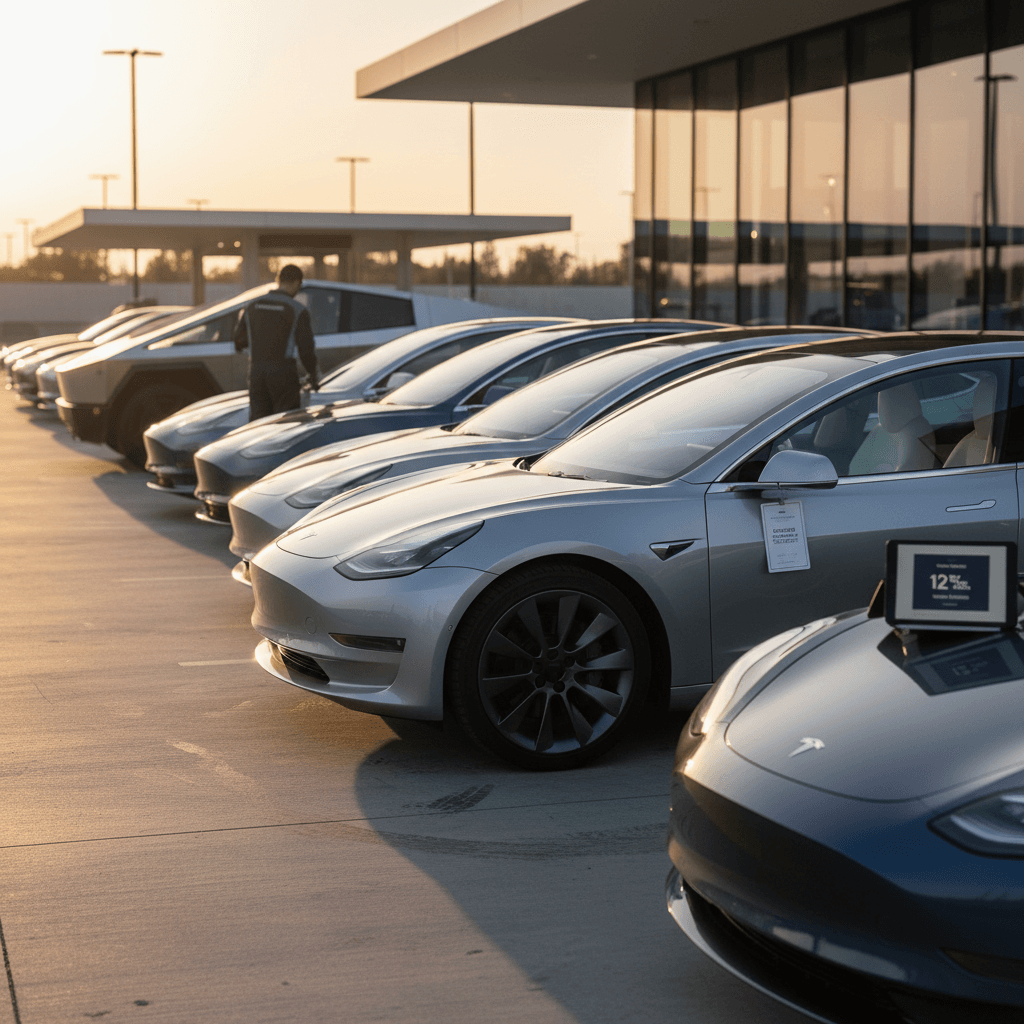
Traditional Certified Pre-Owned (CPO) means an automaker works through local dealers: the dealer inspects a used car, certifies it to the brand’s standard, adds extended warranty coverage, and resells it at a premium. Tesla ripped up that playbook. There’s no dealer shaking your hand; cars are listed centrally on Tesla’s site, reconditioned by Tesla techs, and delivered through Tesla locations or direct delivery. But for the shopper, the essential CPO question is the same: what extra protection and assurance are you actually paying for compared with a normal used car?
Tesla CPO vs today’s Tesla used program
The early “CPO” era
In Tesla’s early Model S and Model X days, the company leaned into the term Certified Pre-Owned. Cars were advertised as CPO, heavily reconditioned, and often priced like slightly used new cars. That branding has largely disappeared in the U.S. marketing copy, even though the underlying idea, a factory-inspected used Tesla with an extra warranty, survives.
- Marketing used the CPO label explicitly.
- Inventory skewed heavily toward off-lease Model S and X.
- Warranty structure and coverage details were still evolving.
Today’s “Used Tesla” with pre-owned warranty
Today when you browse Tesla’s site in the U.S., you’ll typically see cars labeled simply as Used or Pre-Owned. The fine print explains the same core promises you’d expect from a CPO program:
- Tesla-performed inspection and reconditioning.
- Any remaining balance of the 4-year/50,000-mile basic warranty.
- An additional 1-year/10,000-mile Pre-Owned Vehicle Limited Warranty if the basic warranty is expiring or already expired.
So regardless of label, when people talk about the “Tesla CPO program,” they’re really talking about this factory-backed used program and its extra warranty layer.
Terminology can be confusing
What you get with a Tesla certified used car
Whatever badge you put on the trunk, a Tesla-sold used car comes with three main ingredients that make it feel like a CPO vehicle: inspection and reconditioning, software and feature verification, and warranty coverage. Here’s what that looks like in practice.
Core components of Tesla’s CPO-style experience
What Tesla does before a used car hits the website
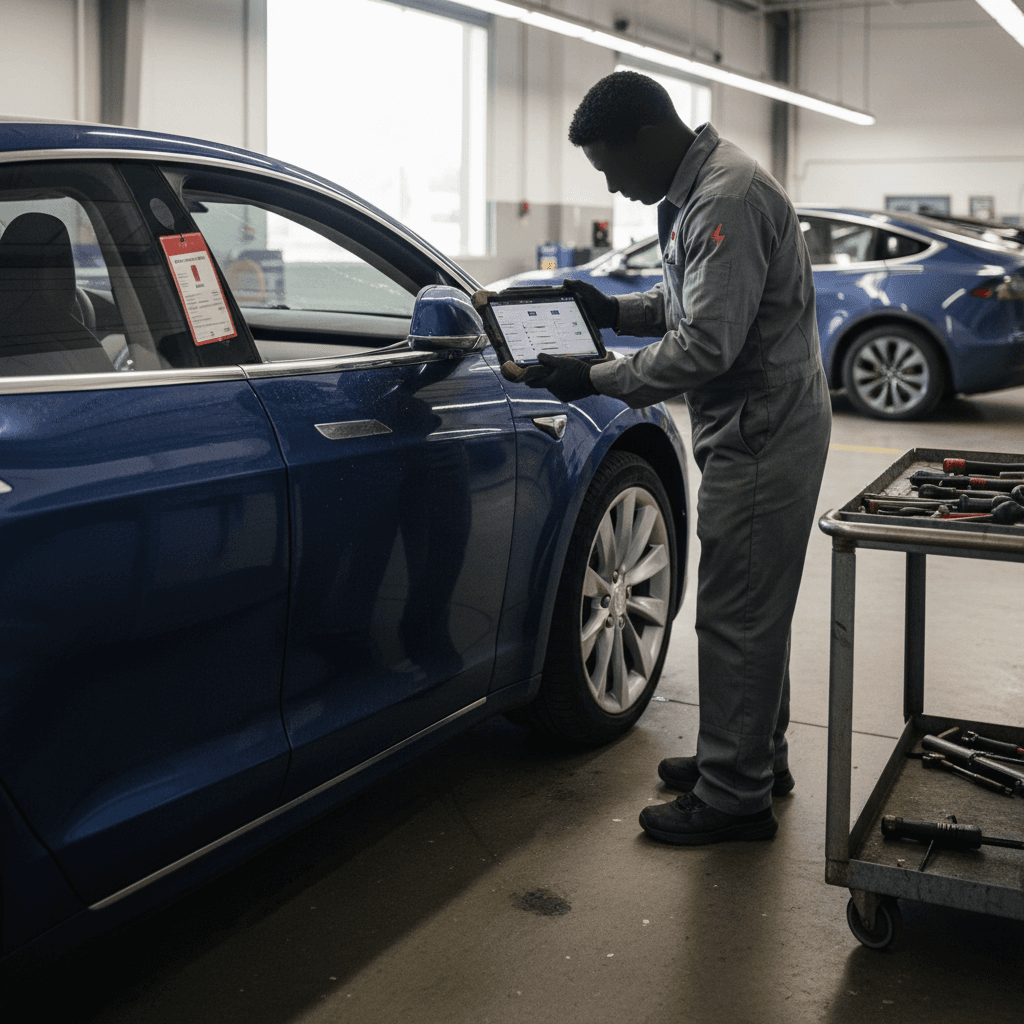
Mechanical & cosmetic inspection
Tesla performs a multi-point inspection, comparable in spirit to a 100+ point CPO check, covering brakes, suspension, HVAC, electronics and safety systems. Cosmetic issues are addressed to a “retail ready” standard, not necessarily flawless concours trim.
Software & feature check
Because a Tesla is part car, part smartphone, verification goes beyond oil leaks. Techs confirm the software build, Autopilot/Full Self-Driving entitlements, connectivity status and that all driver-assist systems behave as designed.
Road test & readiness
After reconditioning, the car is driven to confirm no warning lights, odd noises or drivability issues. Tires and brakes are checked for minimum remaining life; items that don’t pass Tesla’s internal thresholds are typically replaced.
Don’t skip your own inspection
How the Tesla pre-owned warranty works
Here’s where the Tesla CPO-style program earns its keep. When you buy directly from Tesla, you inherit any remaining factory coverage and, in many cases, tack on extra pre-owned protection. The crucial thing is understanding which clocks are still running and which have been reset, or not.
Tesla used & CPO-style warranty basics
High-level look at how coverage typically stacks when you buy a used Tesla directly from Tesla in the U.S.
| Warranty type | What it covers | Typical term for used buyer |
|---|---|---|
| Basic Vehicle Limited Warranty | Most non-wear components: electronics, climate, interior systems, many hardware failures | Remainder of original 4 years / 50,000 miles from in-service date |
| Pre-Owned Vehicle Limited Warranty | Similar scope to basic warranty; kicks in after basic expires | About 1 year / 10,000 miles from your delivery if the basic warranty is ending or already ended |
| Battery & Drive Unit Limited Warranty | High-voltage battery pack and drive unit assemblies | 8 years and 100,000–150,000 miles from new (model-dependent), usually with 70% minimum capacity retention |
| Corrosion & restraint warranties | Body rust, airbags, seatbelt systems (where applicable) | Separate fixed terms from in-service date; these don’t reset with a used sale |
Exact terms can vary by model and build date; always confirm the specific warranty line items on the individual car you’re considering.
What happens if the basic warranty is already over?
- Warranty coverage is VIN-specific and follows the car, not the owner, as long as ownership is properly transferred in Tesla’s system.
- The pre-owned warranty is shorter than what some luxury brands offer in their CPO programs, but still meaningful protection against major non–wear-and-tear failures.
- Routine wear items, tires, wiper blades, brake pads, cosmetic blemishes, are generally excluded, just like with any other OEM warranty.
How to shop a Tesla certified or used car, step by step
Step-by-step: navigating Tesla’s CPO-style used inventory
1. Decide if you really need factory-backed
If you’re highly risk-averse or want the simplest ownership experience, Tesla’s own used program (or a curated marketplace like <strong>Recharged</strong>) may make sense. If you’re comfortable trading some certainty for a lower price, third-party dealers and private sellers broaden your options.
2. Run the numbers on warranty time left
Look up the car’s in-service date and mileage. Estimate how much of the 4-year/50,000-mile basic warranty is left and confirm whether a <strong>Pre-Owned Vehicle Limited Warranty</strong> will be added on top.
3. Compare Tesla’s price vs independent listings
Pull up the same model and year, Model 3, Model Y, etc., on platforms like <strong>Recharged</strong>, where you’ll see battery health data and pricing benchmarks. This lets you quantify the “CPO premium” you’re paying for Tesla’s logo on the listing.
4. Dig into condition and history
On Tesla’s site, photos and descriptions can be sparse. Ask for more detail if needed. With marketplaces like Recharged, you’ll typically see a <strong>Recharged Score battery health report</strong>, detailed photos and pricing transparency baked in.
5. Factor in delivery, fees and return options
Tesla often charges destination or delivery fees and has its own policies for deposits and returns. Independent retailers may offer different structures, Recharged, for example, supports nationwide delivery and a fully digital purchase experience.
6. Arrange financing and trade-in
You can finance directly through Tesla or use your own lender. Recharged also offers <strong>EV-specific financing</strong> and can handle trade-ins or instant offers, which can be simpler if you’re coming out of a gas car or another EV.
Tesla CPO program: pros and cons
Advantages of Tesla’s CPO-style used program
- Factory inspection & reconditioning. The people who built the car are the ones vetting it. That’s no small thing on a software-heavy platform.
- Extra warranty safety net. The Pre-Owned Vehicle Limited Warranty adds ~1 year/10,000 miles of coverage on top of whatever basic warranty remains.
- Simplified purchase and delivery. Browse online, click to buy, pick a delivery slot. No dealer markups, no back-room “protection package” theatrics.
- Battery and drive unit protection. Regardless of where you buy, the original 8‑year battery and drive unit warranty usually still applies. Buying from Tesla just wraps extra bumper-to-bumper protection around that core.
Drawbacks compared with other used options
- Limited transparency on battery health. Tesla doesn’t typically publish quantified battery health metrics on listings. At Recharged, for example, every vehicle includes a Recharged Score report with verified battery diagnostics.
- Pricing can be firm, and high. Tesla tends to price its own inventory aggressively, assuming some buyers will pay extra for the badge and warranty. Negotiation isn’t really part of the game.
- Sparse listing details. Photos, cosmetic disclosures and previous use (personal vs rental, for example) may be thinner than what you’ll see from a dedicated used-EV retailer.
- Service experience varies. Your long-term satisfaction will depend heavily on your local service center. Some are excellent; some are overwhelmed.
Don’t assume every used Tesla is CPO-quality
Tesla CPO vs buying a used Tesla from Recharged
Tesla’s factory-backed used program is one way to buy a pre-owned Tesla. Another is to work with a specialist marketplace that lives and dies on transparency instead of just brand gravity. That’s where a platform like Recharged takes a different tack.
Tesla used vs Recharged used Teslas
Two different philosophies for the same car
Buying used directly from Tesla
- Pros: Factory inspection and reconditioning; extra Pre-Owned Vehicle Limited Warranty; all-in-one experience from listing to delivery.
- Cons: Limited visibility into battery health; relatively rigid pricing; service experience tied to Tesla’s local capacity.
- Best for: Buyers who prioritize staying inside the Tesla ecosystem and are willing to pay a bit more for the comfort of a factory seal.
Buying a used Tesla from Recharged
- Pros: Every vehicle comes with a Recharged Score report that includes verified battery health, pricing that’s benchmarked against the broader market, and EV-specialist support from search to delivery.
- Cons: Factory bumper-to-bumper coverage may vary by VIN and mileage; you’ll rely on Recharged’s inspection, diagnostics and any included protections plus the remaining Tesla battery/drive unit warranty.
- Best for: Shoppers who care deeply about battery transparency, fair-market pricing and a digital-first buying process, even if the car doesn’t roll off Tesla’s own lot.
Recharged is built specifically for used EVs, not as an afterthought bolted onto a new-car business. That means the things that matter in EV life, the state of the battery, realistic range, charging history and software configuration, aren’t hidden behind a curtain. They’re central to the listing itself.
Pricing and value: what you’re really paying for
When you compare Tesla’s CPO-style pricing to other used Teslas on the market, you’re not just comparing metal. You’re comparing risk bundles. Tesla wraps risk in warranty; specialists like Recharged wrap it in diagnostics, transparency and curated condition. Both have value. The question is which version you actually need.
What the “CPO premium” usually buys you
How Tesla’s factory-backed used cars typically differ from a well-sorted independent used Tesla purchase.
| Factor | Tesla factory-backed used | Well-vetted used Tesla (e.g., Recharged) |
|---|---|---|
| Upfront price | Often higher; little to no negotiation | Market-based; more room to cross-shop and compare |
| Bumper-to-bumper coverage | Remainder of 4 yr/50k + ~1 yr/10k Pre-Owned warranty | Depends on VIN’s remaining factory warranty; may be paired with service contracts or protections offered by the retailer |
| Battery transparency | Battery covered by factory warranty but health not always quantified in the listing | Battery health explicitly measured and reported in tools like the Recharged Score |
| Buying experience | Streamlined, app-forward, tied to Tesla account | Fully digital, EV-specialist support, more flexibility on financing and trade-ins |
| Resale story | “Bought from Tesla with warranty” may reassure some future buyers | “Bought from a specialist EV marketplace with proven battery health” can be equally compelling for informed shoppers |
Exact dollars will vary by market, but this shows the categories where you’re paying more, and where you may be getting more.
How to test the value for yourself
Who should buy Tesla CPO, and who shouldn’t
Is Tesla’s CPO-style program a good fit for you?
Great candidates for Tesla factory-backed used
You want a near-new Tesla with low miles and at least some basic warranty coverage still on the clock.
You’d rather have <strong>one throat to choke</strong>, Tesla, for both the car and any warranty repairs.
You’re comfortable paying a premium for the convenience and the psychological safety of buying from the manufacturer.
You live reasonably close to a Tesla Service Center and have had (or expect) good service experiences there.
Better served by Recharged or other used channels
You care more about <strong>battery health transparency and fair market pricing</strong> than a short extra bumper-to-bumper term.
You’re shopping in the sweet spot: 3–7-year-old Teslas where factory basic warranty is nearly or fully gone, but the battery warranty still has years left.
You want expert help comparing trims, model years and software options, not just whichever VIN happens to be on Tesla’s used page today.
You’d like nationwide vehicle delivery, digital paperwork and options such as <strong>EV-focused financing</strong>, instant offers and trade-in support.
FAQ: Tesla CPO program & how it works
Frequently asked questions about Tesla’s CPO-style program
Bottom line on Tesla’s CPO-style program
Tesla’s “Certified Pre-Owned” era may have blurred into today’s simpler Used / Pre-Owned branding, but the fundamentals are intact: a factory-inspected car, a meaningful extra slice of warranty, and a buying experience that takes about as much small talk as ordering a laptop online. That’s the upside.
The tradeoff is information. Tesla’s own listings often tell you less than you’d like about battery health, prior use and fair-market value. That’s why a growing number of shoppers treat Tesla’s program as one data point among several, then cross-shop it against specialist platforms like Recharged that surface the battery diagnostics and pricing transparency Tesla tends to keep in the back room.
If you’re the kind of driver who sleeps better with a factory logo on the warranty paperwork, Tesla’s CPO-style program still makes sense. If you’re more interested in getting the right car at the right price with clearly documented battery health, you may find that the smarter move is to let Tesla handle the engineering, and let a used-EV expert like Recharged handle everything that comes after.