You don’t really know a car until you live with it on the road at 75 mph, six hours deep into a family trip, when the snacks are gone and the kids are restless. This Tesla Model Y road trip review looks past the spec sheet and into that reality: real-world range, charging, comfort, and whether this wildly popular EV crossover actually makes long-distance travel easier, or just different.
Quick take
Who this Tesla Model Y road trip review is for
- Drivers cross-shopping a Tesla Model Y with a gas crossover (RAV4, CR‑V, X3, Q5) for frequent road trips.
- Current EV owners wondering if upgrading to a Model Y will make long drives less stressful.
- Shoppers considering a used Tesla Model Y and trying to decide if it’s still road-trip-ready, especially the battery.
- Families who want one car that can do school runs, Costco, and 800‑mile holiday drives without drama.
This isn’t a fan-club love letter. Think of it as a road‑trip reality check from someone who has driven far too many miles in cars that promised comfort and delivered chiropractic bills instead.
Tesla Model Y on the open road: the big picture
Tesla Model Y: key road-trip numbers
On paper, the Model Y is deeply competent: decent battery sizes, efficient motors, and access to the world’s most mature fast‑charging network. In practice, it’s the *integration* that makes it compelling on a road trip. The car plans your charging stops, preconditions the battery on the way, and handholds even first‑time EV drivers through the process. You trade gas‑station spontaneity for a kind of algorithmic predictability, and for many people, that’s a good deal.
Real-world highway range: how far can you really go?
EPA numbers flatter every EV, and the Tesla Model Y is no exception. The Long Range trim is rated around 310–330 miles depending on year and wheel size; Performance versions are a bit lower, and early Standard Range cars lower still. On a road trip, what you care about is real-world highway range at 70–80 mph with passengers, luggage, and maybe a roof box.
Estimated Model Y highway range at ~70–75 mph
Approximate, real-world figures in mild weather with 19–20" wheels and a light to medium load.
| Model Y version | Battery & drive | EPA rated range (approx.) | Realistic highway range | Typical comfortable leg (to ~10–15% SoC) |
|---|---|---|---|---|
| Long Range (AWD) | Dual motor | 310–330 mi | 260–290 mi | 190–230 mi |
| Performance (AWD) | Dual motor | 285–303 mi | 230–260 mi | 170–210 mi |
| RWD / Standard Range* | Single motor | 244–260 mi | 200–230 mi | 150–190 mi |
In winter, in heavy rain, or with a roof box, expect these ranges to drop by 15–30%.
About these numbers
The key insight: on a long highway day, you’re usually not trying to run the pack from 100% to 5%. You’re driving in charging “hops” of roughly 150–220 miles, because the fastest charging happens between about 10% and 60–70% state of charge. The Model Y is optimized for that rhythm, not for bragging rights on a single-charge distance record you’ll never actually attempt with kids onboard.
How to protect your range on a Model Y road trip
1. Use 70–75 mph as your baseline
An extra 5–10 mph on the interstate is where EV efficiency goes to die. Driving slightly slower can add 20–40 miles of usable range without feeling like a rolling roadblock.
2. Precondition in cold weather
Use the app or scheduled departure so the pack is warm when you start. A cold battery is an inefficient battery, and it will also charge slower at your first stop.
3. Pick aero-friendly wheel and tire setups
The 21" Uberturbines look great, but they’re not your friend on a 900‑mile slog. For road‑trip duty, 19s (or 20s with efficient tires) are a quieter, more efficient choice.
4. Travel light on the roof
A roof box is like dragging a parachute. If you must use one, assume a 10–20% hit in highway range and tighten your charging stops accordingly.
Charging on a road trip: life on the Supercharger network
There are other fast‑charging networks now, some genuinely improving, but Tesla’s Supercharger system is still the closest thing EVs have to a sure thing on the road. Globally, there are roughly 7,700 stations and more than 73,000 individual connectors, with North America hosting about 3,000 of those stations along key corridors. In plain English: if your route is at all normal, Superchargers are simply *where you are*.
What Tesla gets right about road-trip charging
It’s not just the plug, it’s the whole system.
Integrated route planning
The car plans your charging stops, builds in buffer, and preconditions the battery before arrival so you hit peak charging speeds sooner. You don’t juggle apps, maps, and plug‑share rumors.
Generally reliable hardware
Superchargers aren’t flawless, but compared with many third‑party fast chargers, they’re the honor students. Most stalls simply work; no swipe‑this-card, scan‑that‑QR, stand‑in‑the‑rain ritual.
Short, predictable stops
On a decent V3/V4 stall, expect something like 10–60% in 15–25 minutes, enough time for a restroom, a coffee, and a sentence or two of existential dread about email.
Plan around meals, not 100% charges
How it usually goes
On a normal day in mild weather, the car’s estimates for arrival state‑of‑charge and charging time are impressively conservative. If the screen says you’ll arrive with 9%, you often roll in with 11–13%; if it predicts a 20‑minute charge, you might be unplugging in 18.
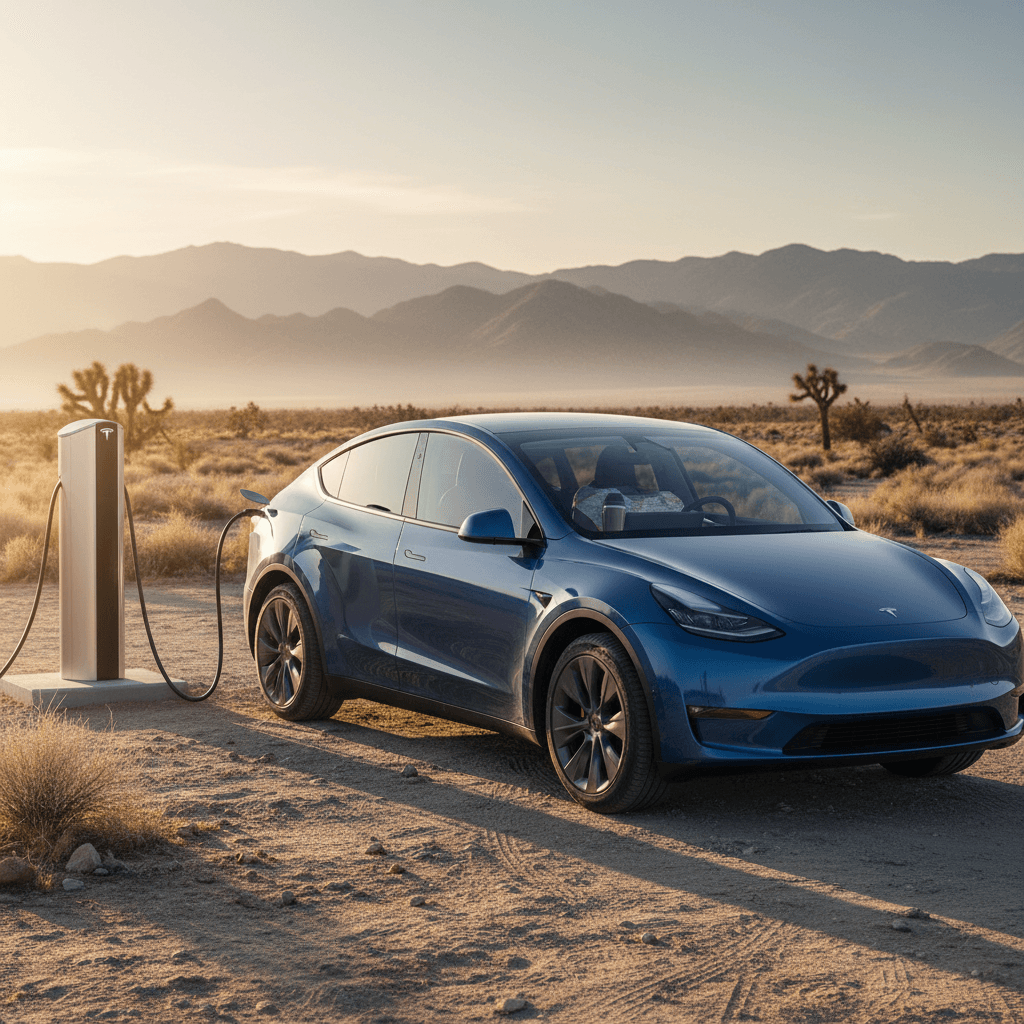
This builds trust, which is priceless when you’re threading the high desert between distant chargers.
When it doesn’t
Throw in a 25 mph headwind, 95°F heat and AC on full blast, or a surprise detour, and that margin shrinks. The estimate will recalc, and it may ask you to slow down or add an intermediate stop.
The takeaway: watch the trip energy graph, and don’t treat estimates as promises. In rough weather, give yourself 10–15% extra cushion.
The crowding problem
Comfort, noise, and ride quality after hours on the interstate
Tesla’s marketing wants you to think “California tech lounge on wheels.” The reality is more nuanced. The Model Y is competently comfortable, but it’s not a soft‑riding German luxury sedan, and that matters the longer your day gets.
Model Y road-trip comfort: hits and misses
What feels good at mile 50 isn’t always what feels good at mile 500.
What it gets right
- Supportive seats: The front chairs are well-shaped for most body types, with decent lumbar support. You don’t sink into them; you sit on them, which helps over time.
- Spacious cabin: Lots of legroom and headroom, especially up front. The glass roof makes the interior feel airy, which keeps claustrophobia at bay.
- Cabin storage: Giant center console, door bins that actually hold water bottles, and a big under‑floor rear bin for road‑trip clutter.
Where it wears thin
- Firm ride: On 20" or 21" wheels, the suspension can feel jouncy and abrupt on broken pavement. After a few hours, you’ll know exactly which joints in the interstate need maintenance.
- Road noise: It’s quieter than many mainstream crossovers but not nearly as hushed as a luxury SUV. Coarse asphalt and winter tires will have you nudging the volume up.
- Minimal adjustability: Seats and steering wheel adjust electrically but lack the fine multi-way tweaks of a true grand‑touring seat.
Spec it for comfort, not curb appeal
Tech, driver assistance, and navigation on long trips
This is where the Model Y feels like it’s from the future parked next to an ordinary crossover at a rest stop. The good news: most of that futurism is actually useful when you’re eating miles.
- Adaptive cruise and Autosteer: Standard Autopilot (not the pricy Full Self‑Driving option) does the heavy lifting on interstates, keeping distance, centering the lane, and taking the edge off fatigue. It’s more assertive than some rivals but generally well‑sorted if you stay attentive.
- Trip planner + live traffic: The car will reroute for faster paths and adjust your charging plan dynamically. Compared to juggling Waze, PlugShare, and a random network app, this is blissfully simple.
- Minimalist cabin, maximal screen: Everything lives on the central display. Once you’re used to it, having energy data, navigation, and media under one glass rectangle feels natural on long hauls. But it’s not to everyone’s taste, if you crave physical buttons, this won’t convert you.
Don’t believe in robotaxis just yet
Family and cargo space: road-trip practicality
On packaging, the Model Y is the quiet overachiever of the Tesla line‑up. It’s about the size of a compact crossover on the outside, but inside it’s playing in a bigger league.
Packing a Tesla Model Y for a week away
Where all the stuff actually goes.
Huge rear cargo area
The rear hatch area swallows multiple suitcases, a stroller, and a small mountain of soft bags. Drop the split‑fold rear seats and it becomes a small cargo van with windows.
Hidden storage bins
An under‑floor well in the rear plus a surprisingly useful front trunk (frunk) give you places to hide dirty boots, charging cables, or food you’d like out of the cabin.
Back seat livability
Legroom is generous and the floor is nearly flat. Car seats fit easily, and kids can see out without feeling like afterthoughts. Adults will tolerate long stints back there just fine.
What about the 7-seat Model Y?
Cost to road trip in a Tesla Model Y vs. gas SUV
EVs save their best economic tricks for home charging, but even on the road, a Model Y can undercut a comparable gas SUV on fuel costs, especially if you’re coming from something thirsty.
Illustrative 1,000-mile road trip cost: Model Y vs. gas SUV
Back-of-the-envelope comparison assuming U.S. averages in early 2026.
| Vehicle | Assumed efficiency | Energy/fuel needed | Energy price | Approx. fuel cost |
|---|---|---|---|---|
| Tesla Model Y Long Range | ~3.1 mi/kWh highway | ~320 kWh | $0.32/kWh Supercharger | ≈ $100 |
| Gas crossover SUV (28 mpg) | 28 mpg highway | ≈ 36 gal | $3.75/gal regular | ≈ $135 |
| Gas midsize SUV (22 mpg) | 22 mpg highway | ≈ 45 gal | $3.75/gal regular | ≈ $170 |
Actual costs will vary by Supercharger pricing, local gas prices, weather, and driving style.
Where the big savings really are
Strengths and weaknesses: Tesla Model Y as a road-trip car
What the Model Y absolutely nails
- Charging ecosystem: Nothing else in 2026 offers this combination of density, speed, and integration in North America.
- Efficiency: You go a long way on each kWh, crucial when chargers are far apart.
- Packaging: Cabin and cargo space feel more like a midsize SUV than a compact crossover.
- Tech that actually helps: Trip planning, Autopilot, and real‑time energy prediction measurably reduce mental load on long days.
Where it comes up short
- Ride and noise: The tuning is firm and the cabin isn’t luxury‑quiet, especially on big wheels.
- Build and materials: Fine for a family crossover, but if you’re used to the vault‑like solidity of an Audi or Volvo, you’ll notice the difference.
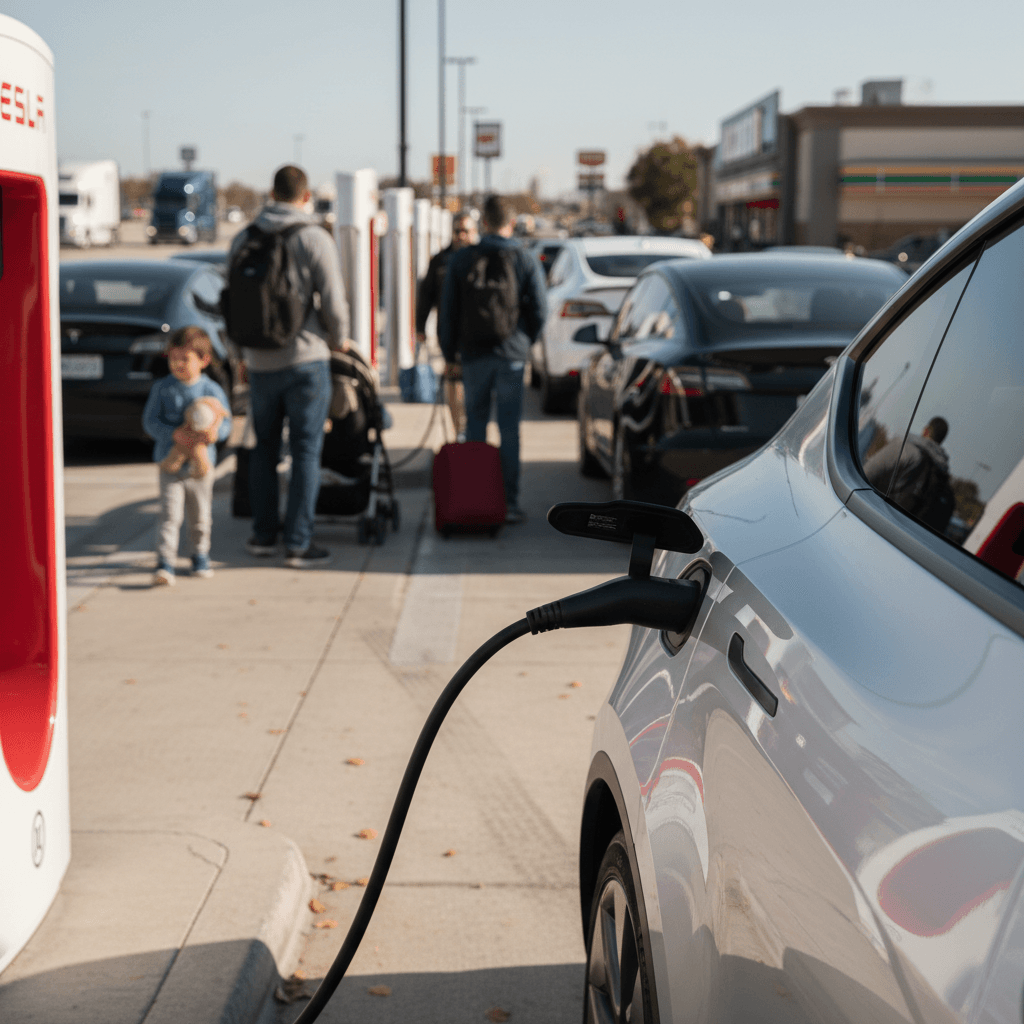
- Supercharger crowding: At peak times near cities or on holiday weekends, you may wait for a stall.
- One‑screen interface: Some drivers never fully warm up to hunting for climate and seat controls on a touchscreen.
Should you buy a used Tesla Model Y for road trips?
This is where the Model Y starts to look very smart. The market is now flooded with 2–4‑year‑old examples coming off leases, many of them with under 50,000 miles and a lot of life left in their battery packs. For road-trip duty, a well‑vetted used car can offer nearly the same experience for a lot less money.
Used Model Y road-trip buyer’s checklist
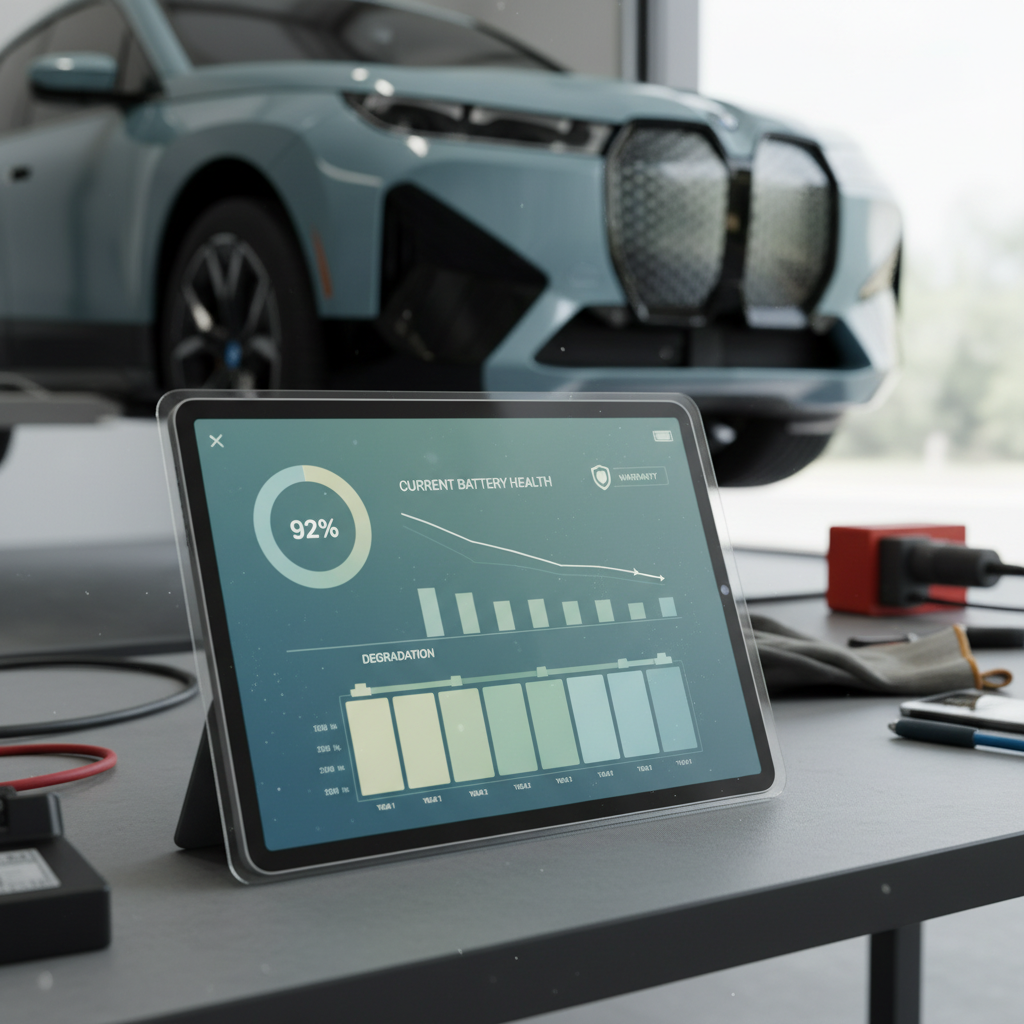
1. Put battery health first
You want a car whose battery still delivers strong usable range. Look for a transparent battery‑health report, Recharged includes a <strong>Recharged Score</strong> and verified pack diagnostics with every used EV so you can see real state‑of‑health before you buy.
2. Check charging history and patterns
Frequent DC fast charging isn’t necessarily bad, but a mix of home and Supercharger use is ideal. Ask about typical charging habits if you’re buying from a private seller.
3. Inspect tires and wheels carefully
Curb rash and cheap replacement tires are common on used Teslas. For quiet road‑trip duty, you want quality rubber with even wear, properly aligned suspension, and no bent wheels.
4. Test Autopilot and driver-assist systems
On a highway test drive, confirm adaptive cruise and lane‑keeping behave smoothly and that all driver‑assist cameras are functioning. These features are central to the Model Y’s long‑distance appeal.
5. Confirm Supercharger access and software features
Tesla has occasionally changed access or pricing structures; make sure the car’s account is properly set up, software is current, and you understand any subscription costs for premium connectivity.
6. Consider delivery and support
If you’re shopping nationwide, look for a retailer that can <strong>deliver the car to your door</strong> and support you through registration and setup. Recharged offers nationwide delivery, online financing, trade‑in options, and EV‑specialist support so you aren’t guessing your way into your first road trip.
Why a used Model Y makes sense for road trips
FAQ: Tesla Model Y road trip questions answered
Tesla Model Y road trip FAQ
Verdict: Is the Tesla Model Y a great road trip car?
If your idea of the perfect road trip is gliding silently across states with minimal planning and maximum comfort, the Tesla Model Y comes tantalizingly close, provided you define comfort more as convenience than as pillow‑top ride quality. Its real superpower is how much thinking it removes from the process: the car handles energy math, charger hunting, and even some of the lane‑keeping, leaving you to manage the music and the arguments about where to stop for lunch.
Where it falls short is tactile: the suspension is firm, the cabin is not library‑quiet, and the single‑screen interface won’t charm everyone. But weighed against the strength of the Supercharger network, the excellent efficiency, and the generous space, those flaws feel more like trade‑offs than deal‑breakers, especially when you can buy a carefully inspected used Model Y with verified battery health and let someone else eat the initial depreciation.
If you’re ready to make the jump, consider starting your search with a road-trip lens: prioritize battery health, wheel/tire choices, and driver‑assist functionality. At Recharged, every used EV includes a detailed Recharged Score report, expert EV‑specialist support, and options for financing, trade‑in, consignment, and nationwide delivery, so the only thing you need to worry about before your first big trip is what to cue up on the playlist.