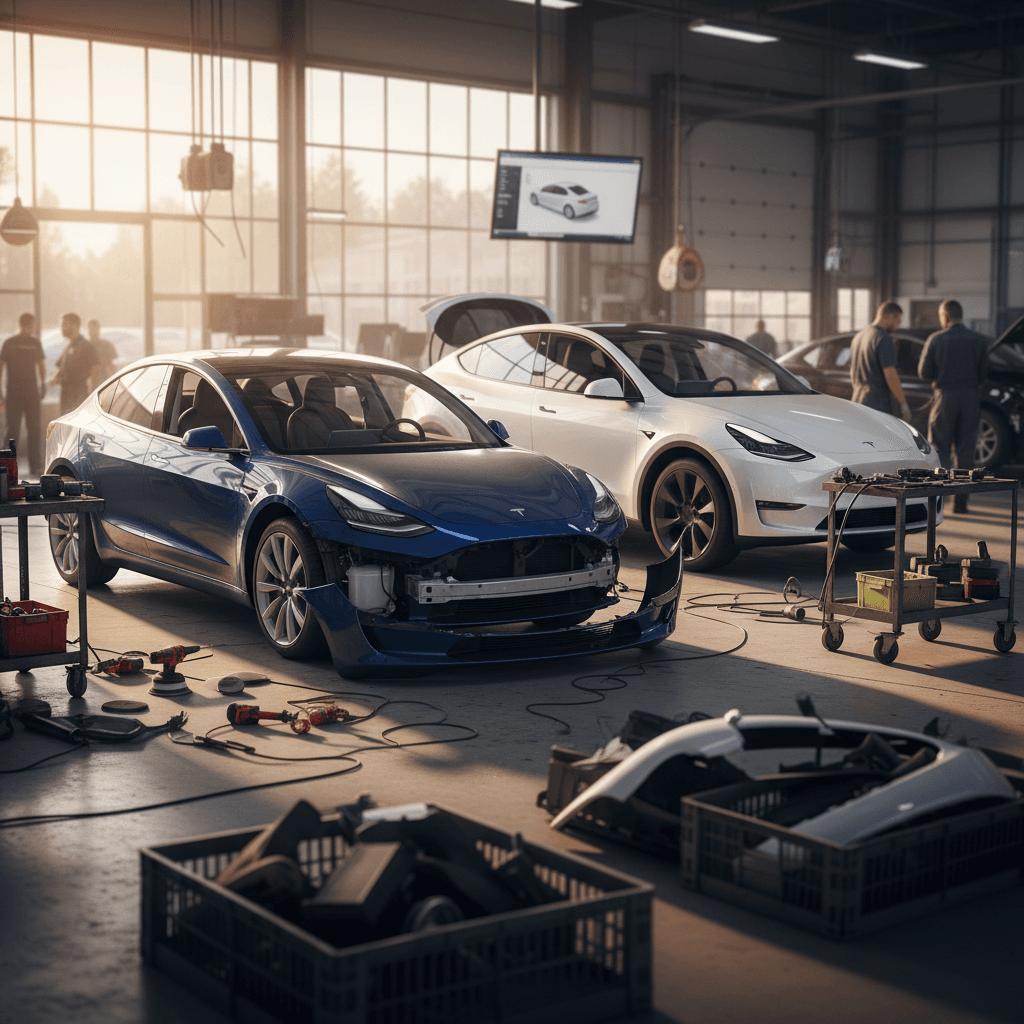
You don’t have to be in a major crash to get a major bill. Many owners are surprised when a minor fender-bender turns into a multi‑thousand‑dollar Tesla collision repair. Between aluminum panels, glued structures, and sensitive Autopilot hardware, Tesla collision repair costs can run higher than comparable gas cars, and insurance companies know it.
At-a-glance: Tesla collision repair in 2025
Why Tesla collision repairs feel so expensive
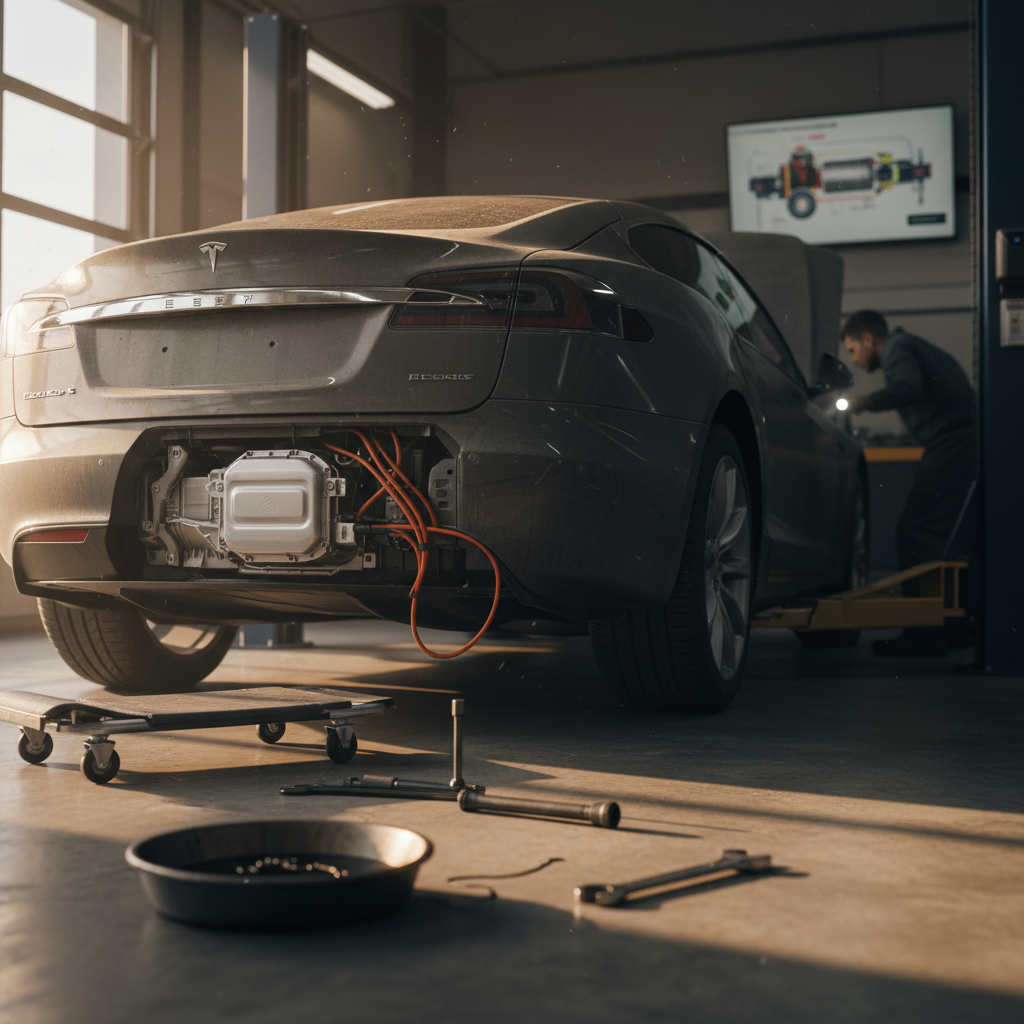
From the outside, it can feel like Tesla shops are just expensive for the sake of it. In reality, several structural choices Tesla made to improve safety, aerodynamics, and efficiency also make repairs more complex, especially after a crash. That drives hours, parts cost, and calibration work higher than on a typical compact sedan or crossover.
Four big reasons Tesla collision repairs cost more
It’s not just the badge, it’s how the car is built
Aluminum & high‑strength materials
Cameras & sensors everywhere
Proprietary repair procedures
Higher labor rates
Typical Tesla collision repair costs by damage type
No two accidents are the same, but by late 2025 we have enough real‑world estimates to sketch out ballpark ranges. Think of these as starting points before any hidden structural damage or additional parts are discovered once the car is disassembled.
Common Tesla collision repair cost ranges (all models)
Typical Tesla collision repair cost ranges by damage type
Approximate 2025 estimates across Model 3, Y, S, and X. Actual invoices vary with labor rates, parts prices, and severity.
| Damage type | What’s usually involved | Typical cost range |
|---|---|---|
| Cosmetic paint scuffs | Spot repair and refinish, no panel replacement | $400–$1,000 |
| Minor bumper crack | Plastic repair & refinish or used/OEM cover, limited sensor impact | $750–$2,000 |
| Front bumper replacement | New cover, paint, parking sensors and Autopilot hardware R&R, calibration | $1,100–$2,300+ |
| Rear bumper replacement | New cover, paint, parking sensors, potential rear radar work | $1,000–$2,000+ |
| Front fender or door skin | Panel repair or replacement, blending adjacent panels | $1,500–$3,500 |
| Rear quarter panel hit | Cut‑and‑weld structural repair, extensive refinishing | $3,000–$8,000+ |
| Frame / structural damage | Straightening, sectioning, major parts and labor | $8,000–$20,000+ |
| Battery enclosure inspection | Shields, brackets, and underbody checks after impact | $500–$1,500 (inspection only) |
These ranges assume work at a Tesla service center or Tesla‑certified body shop using OEM parts.
Cost estimates by Tesla model
Larger, more expensive Teslas cost more to fix. Panels are bigger, parts prices are higher, and labor times stretch with features like falcon‑wing doors or power liftgates. Here’s how Tesla collision repair costs often shake out by model in 2025.
Approximate Tesla body repair costs by model (2025)
These figures reflect typical insurance‑paid repairs at Tesla‑certified shops using OEM parts.
| Model | Minor repair (bumper, single panel) | Major collision (structure/frame) |
|---|---|---|
| Model 3 | $1,200–$2,500 | $8,000–$15,000+ |
| Model Y | $1,500–$3,000 | $9,000–$16,000+ |
| Model S | $2,000–$4,000 | $10,000–$20,000+ |
| Model X | $2,500–$5,000 | $12,000–$25,000+ |
Real invoices can fall outside these ranges, especially with hidden damage, supply chain delays, or regional labor rate differences.
Why insurers sometimes total Teslas after "moderate" crashes
What drives Tesla collision repair costs up?
- Labor rates: Tesla and EV‑certified collision shops often bill $100–$200+ per hour, vs $50–$80 at many mainstream shops.
- Parts pricing: OEM bumpers, aluminum panels, lights, and glass for Teslas carry premium pricing and often must ship from Tesla’s network.
- Scan and calibration time: Pre‑ and post‑repair scans plus camera/radar calibration add hours of billed time.
- Structural design: Bonded and riveted structures take longer to section and straighten than simple weld‑on components.
- Limited shop network: In some areas, a small number of Tesla‑certified shops means less price competition and longer queues.
Pro tip: ask for line‑item detail
Insurance totals vs. repairs: how claims really play out
With Teslas, the question often isn’t just, "How much will it cost to fix?" It’s, "Will my insurer even agree to fix it?" High repair bills and fast‑moving used EV prices mean borderline cases can go either way.
When your Tesla is likely to be repaired
- Damage is mostly cosmetic, bumper covers, a fender, or a single door.
- Battery pack, cooling system, and high‑voltage cabling show no impact on inspection.
- Pre‑loss value is high (newer vehicle, low miles, clean history).
- Estimate lands comfortably under 60–65% of the car’s actual cash value.
When your Tesla may be totaled
- Floorpan, pillars, or multiple structural rails are kinked or torn.
- Impact near the battery pack, drive units, or high‑voltage components.
- Pre‑loss value is lower (older, higher‑mile car, prior damage on record).
- Repair estimate plus supplemental damage approaches 70–80% of value.
Supplements can add thousands
Lease returns & used Teslas: collision damage to watch for
If you’re coming to the end of a Tesla lease, or shopping for a used Tesla, collision history matters just as much as battery health. Tesla’s own Excess Wear guidelines distinguish between normal dings and billable damage. The same goes for lenders and future buyers.
Collision issues that quietly hurt value
Pay attention to these when inspecting a used Tesla
Poor paint repairs
Misaligned panels
Warning lights or ADAS issues
How Recharged helps with collision history
Ready to find your next EV?
Browse VehiclesHow to lower your out-of-pocket Tesla repair costs
You can’t change Tesla’s parts catalog or your local labor rate, but you do have more control than you might think over the final bill. The key is to make smart decisions early, before repairs start and while you still have options.
Smart steps to reduce Tesla collision repair costs
1. Use insurance strategically
For small cosmetic issues near your deductible, paying cash might make more sense than filing a claim that could raise premiums. For anything structural or near the battery pack, insurance involvement is almost always the wiser play.
2. Ask for OEM vs. aftermarket options (when allowed)
Some insurers and shops permit aftermarket or refurbished parts on certain components like bumper covers or glass. OEM parts protect warranty and resale better, but knowing both prices lets you decide where to save.
3. Compare Tesla-certified and high-quality independents
In some markets, a reputable independent shop with EV experience may come in lower on labor rates while still doing excellent work. For more complex hits, a Tesla‑certified shop is usually worth the premium.
4. Clarify calibration costs up front
Ask how many hours are built into the estimate for scan and calibration, and who performs it. Sometimes a dealership or specialized vendor handles calibration separately, which can be negotiated or scheduled strategically.
5. Understand diminished value claims
After a major repair on a newer Tesla, your car may be worth less than a similar clean‑history vehicle. In some states, you can pursue a <strong>diminished value</strong> claim from the at‑fault insurer, effectively compensation for that lost value.
6. Plan ahead if you’re shopping used
When you buy a used Tesla, budgeting a portion of your savings versus new for potential future repairs is just smart. With Recharged, you’ll see transparent condition reports so you’re not surprised down the road.
Should you use a Tesla-certified body shop?
Tesla‑approved shops have access to factory procedures, training, and often more direct parts support. That matters for safety and long‑term value, but it can add cost, and sometimes delay.
Pros of Tesla-certified collision centers
- Technicians trained specifically on Tesla structures, materials, and safety systems.
- Better access to OEM parts and up‑to‑date repair procedures.
- Repairs more likely to satisfy Tesla lease‑return and warranty expectations.
- Stronger resale story: "Repaired at Tesla-certified shop" reassures future buyers.
Pros of a strong independent shop
- Potentially lower labor rates and shorter scheduling delays.
- More flexibility on aftermarket or refurbished parts for cosmetic areas.
- Can still sublet calibration to Tesla or a dealer, blending cost and capability.
- Good option for out‑of‑warranty vehicles with minor to moderate cosmetic damage.
Don’t skimp on safety‑critical repairs
Collision repair and battery health
Most front‑ or rear‑end fender‑benders won’t touch the battery pack. But once you get into underbody strikes, hard curb hits, or more serious damage near the pack, the calculus changes. High‑voltage components are expensive, specialized, and sometimes non‑repairable.
When to worry about the battery after a crash
Questions to ask your shop or insurer
Was the pack area hit or scraped?
Any cooling system damage?
Is a high‑voltage inspection on the estimate?
Buying a used Tesla after an accident
FAQ: Tesla collision repair costs
Frequently asked questions about Tesla collision repair
Bottom line on Tesla collision repair costs
Tesla collision repairs are rarely cheap, but they don’t have to be mysterious. Now you know why a small bumper hit can cost over a thousand dollars, how high‑voltage safety and calibration work factor into the bill, and why insurers sometimes total seemingly repairable cars. With the right mix of insurance strategy, shop choice, and careful inspection, especially if you’re buying used, you can manage Tesla collision repair costs without compromising safety.
If you’re considering a used Tesla or any other EV, Recharged is built to remove the guesswork. Every vehicle comes with a Recharged Score Report that blends real battery diagnostics, market‑correct pricing, and transparent condition history so you go in eyes‑wide‑open on future repair risk and ownership costs.