If you drive, or are thinking about buying, an electric car in the Volunteer State, you’re probably wondering how reliable the Tennessee electric car charging network really is. The short answer: it’s growing fast, especially for highway fast charging, but it’s still spottier than the national average. With a little planning, though, you can handle daily driving and even serious road trips across Tennessee in an EV.
Snapshot: Tennessee EV and charging growth
Why Tennessee’s EV charging network matters now
Tennessee is quickly becoming an EV manufacturing hub, with major investments in batteries and electric trucks, but until recently, the public charging network lagged behind both the national and Southeastern averages. That gap is starting to close as the state focuses on corridor fast charging and local destination chargers. For you as a driver, that means more options every month, especially along I‑40, I‑24, I‑65, and I‑75.
- EV ownership in Tennessee has climbed to well over 60,000 plug-in vehicles, with battery-electric models growing fastest.
- Public charging ports have more than doubled in just a few years, with especially strong growth in DC fast chargers.
- State agencies, utilities, and private networks are targeting rural gaps to make cross-state travel more practical.
Tennessee is improving, but still behind
How many EV chargers Tennessee has today
Tennessee EV & charging numbers at a glance
Those numbers tell an important story: the ratio of EVs to chargers is tightening. That’s good news for utilization, chargers are being used more often, which supports further investment, but it also means peak times in busy locations can be crowded. In practice, drivers in Nashville, Knoxville, Chattanooga, and Memphis will find a reasonable spread of options, while smaller towns may have just one or two reliable sites.
Where Tennessee’s public chargers tend to be
You’ll find the densest charging coverage in and around the state’s big four metro areas, plus along major interstate corridors.
| Region | Typical coverage | Charger mix | What it means for you |
|---|---|---|---|
| Nashville metro | Highest density | Many Level 2, multiple DC fast hubs | Easier to own an EV without home charging; good backup options. |
| Memphis, Knoxville, Chattanooga | Strong coverage | Good mix of Level 2 and DC fast | Daily driving is easy; most highway exits near cities have fast charging. |
| I‑40, I‑24, I‑65, I‑75 corridors | Improving quickly | Primarily DC fast | Cross‑state trips are increasingly practical with moderate planning. |
| Rural West & East Tennessee | Sparse but growing | Scattered Level 2, a few DC fast | Best for drivers who can charge at home and plan ahead. |
This table summarizes typical charger coverage patterns across Tennessee. Exact numbers change frequently as new stations come online.
Fast Charge TN Network and highway corridors
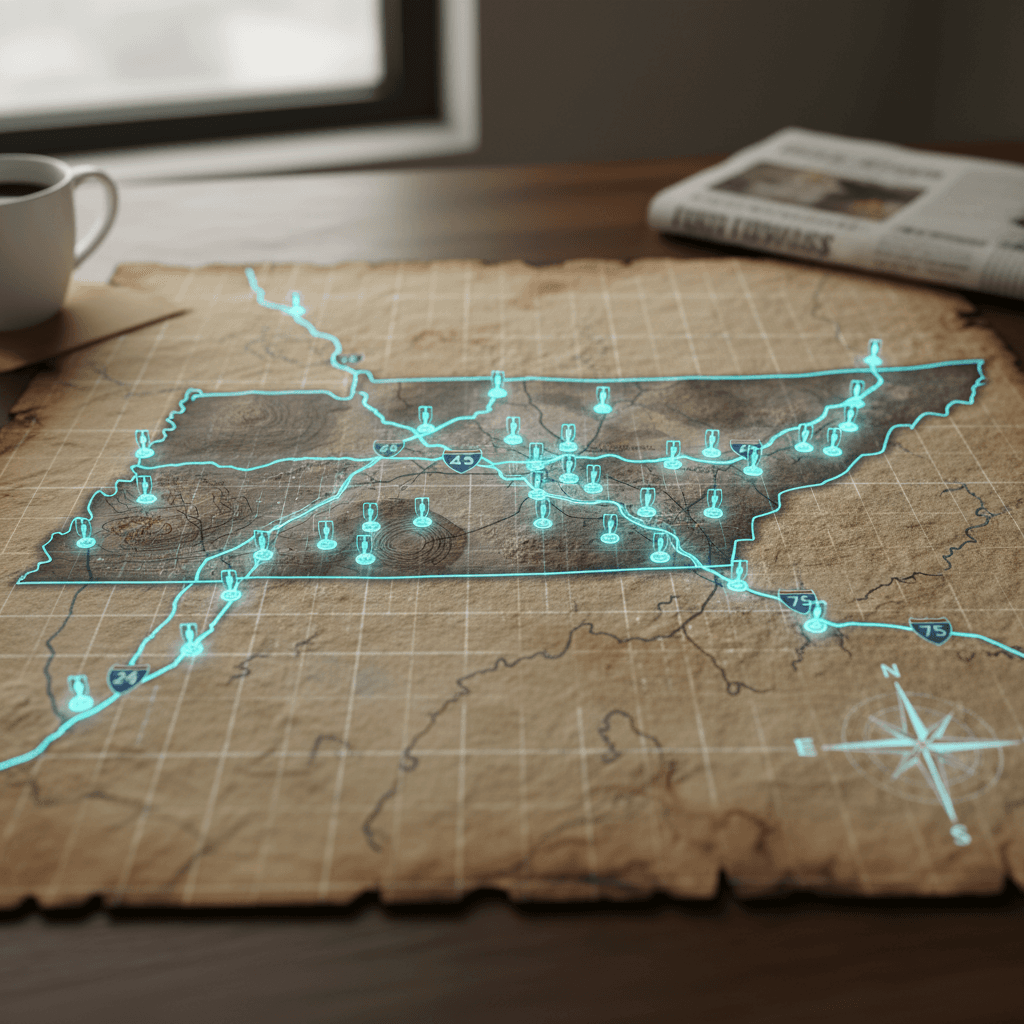
The backbone of the Tennessee electric car charging network is the Fast Charge TN Network, a partnership between the Tennessee Department of Environment and Conservation (TDEC) and the Tennessee Valley Authority (TVA). The goal is simple: place DC fast charging stations roughly every 50 miles along major interstates and priority highways so you can cross the state without worrying about running out of range.
What the Fast Charge TN Network is building
Why it matters when you’re planning long-distance drives
Every ~50 miles
Stations are spaced along interstates like I‑40, I‑24, I‑65, and I‑75 so most modern EVs can comfortably make the next stop, even in bad weather.
DC fast chargers
Sites typically include multiple DC fast chargers that can add major chunks of range in 20–45 minutes, depending on your vehicle.
Shared investment
State funds, utilities, and private companies share costs, which helps bring stations to areas that might not pencil out on private investment alone.
Use corridor maps before you go
DC fast charging: your highway workhorse
On interstates, you’ll mainly use DC fast chargers that deliver 50–350 kW. They’re ideal for trips between cities like Nashville and Memphis or Knoxville and Chattanooga. Plan your stops where you can also grab food or a restroom break so charging time feels shorter.
Level 2: overnight and destination support
Once you pull off the highway, Level 2 chargers at hotels, downtown garages, or attractions can refill your battery while you sleep, work, or explore. In smaller communities, a single Level 2 station might be your only public option, so verify it’s operational before you count on it.
Urban and destination charging in Tennessee cities
Inside Tennessee’s larger cities, the charging picture looks less like a string of pearls along a highway and more like clusters around workplaces, entertainment districts, and parking garages. Private networks like ChargePoint, EVgo, Tesla (for NACS‑equipped vehicles), and Electrify America are all present in the state, alongside utility‑ and city‑owned stations.
How the network feels in major Tennessee metros
What you can expect living with an EV in each area
Nashville
Broad coverage of Level 2 chargers around downtown, hospitals, and universities, with multiple DC fast sites on major approaches. Many new apartments and offices are adding on‑site charging.
Memphis, Knoxville, Chattanooga
Each city has a growing mix of Level 2 and DC fast stations. Chargers cluster near riverfronts, campuses, shopping centers, and key freeway interchanges.
Smaller cities & college towns
Places like Murfreesboro, Johnson City, and Cookeville often have a handful of Level 2 chargers and at least one DC fast location at a travel center or big‑box retailer.
Tourist destinations
Areas near the Smoky Mountains, state parks, and resort towns are gradually adding chargers, but coverage can still be spotty. Check availability before booking lodging if you’ll rely on public charging.
Good news for apartment dwellers
How to find Tennessee electric car charging stations
With multiple networks, utility programs, and new highway projects, it can be confusing to figure out where chargers actually are. The best approach is to use more than one tool, especially before a road trip, so you’re not surprised by a site that’s out of service or still under construction.
Best ways to locate Tennessee EV chargers
Use two or more tools for the most reliable picture
Charging apps & maps
PlugShare, A Better Routeplanner, Chargeway, and network‑specific apps show live status, user check‑ins, and pricing for chargers across Tennessee.
In‑car navigation
Most modern EVs can route you through compatible chargers and estimate arrival battery percentage. Update your navigation software regularly to capture new Tennessee stations.
State & utility resources
The Tennessee state energy office, Drive Electric Tennessee, and local utilities publish maps and updates on corridor projects and new fast‑charging sites.
Quick checklist before you rely on a charger
1. Confirm connector type
Make sure the station supports your plug, CCS, NACS, CHAdeMO, or J1772. Newer non‑Tesla EVs are rapidly shifting toward NACS, but many still use CCS.
2. Check recent user check‑ins
Look for check‑ins within the past week in apps like PlugShare so you know the site is operational and not perpetually broken.
3. Look at power rating
A 50 kW charger will be slower than a 150 or 350 kW unit. Your car’s max DC rate also matters; some older EVs can’t use full station power.
4. Verify access hours & parking rules
Some Tennessee chargers sit in gated lots, garages, or hotels. Make sure non‑guests are allowed or that the station is available 24/7 if you’ll arrive late.
5. Have a backup option
For rural sites or single‑stall locations, identify an alternate charger within your remaining range in case the first choice is offline or occupied.
Don’t arrive empty
Cost and charging speeds: what to expect
Charging costs in Tennessee vary by network and utility, but the pattern is straightforward: Level 2 is slower but cheaper, while DC fast charging is quick but costs more per kWh. Some workplace and hotel chargers remain free as perks, especially in metro areas competing for tenants and customers.
Typical Tennessee public charging costs
- Free or low-cost Level 2 at workplaces, universities, and some municipal lots.
- Paid Level 2 often bills by the kWh or by time, but overall cost per mile usually undercuts gasoline.
- DC fast charging is priced higher per kWh, especially at highway sites where land and maintenance costs are steepest.
Exact pricing differs by network, membership plan, and local utility rates.
How long charging really takes
- Level 2: Adds roughly 20–35 miles of range per hour, ideal for overnight or long stops.
- DC fast charging: Many modern EVs can go from 10% to 80% in 20–40 minutes on a 150+ kW charger.
- Older or smaller‑battery EVs may peak at lower power levels, so don’t assume every fast charger can hit its advertised maximum with your car.
Think in miles per minute, not 0–100%
Planning a Tennessee EV road trip
Driving an EV from Memphis to Knoxville or Chattanooga to Nashville isn’t an adventure sport anymore, but it still isn’t quite as carefree as driving a gasoline car. You’ll want to layer in a bit of planning, especially if you’re new to EVs or driving a used model with some battery degradation.
Step-by-step: planning a Tennessee EV road trip
1. Start with your realistic range
Base your plan on the range you actually see at highway speeds, often 20–30% lower than the EPA rating, and even less in winter or heavy rain.
2. Map chargers around food and breaks
Use apps or in‑car navigation to target chargers near restaurants, restrooms, or parks so charging time feels like normal stop time.
3. Prioritize multi-stall DC fast sites
Whenever possible, choose stations with several fast chargers rather than a lonely single unit. The odds of something going wrong are lower.
4. Watch elevation and weather
In East Tennessee’s hills and around the Smokies, climbs and cold temperatures can significantly increase energy use. Add more buffer between stops.
5. Book lodging with Level 2 when you can
A hotel, cabin, or rental with overnight charging can turn a marginal route into an easy one, especially in areas where public DC fast is still thin.
6. Update apps before you leave
Make sure your phone apps and car navigation are updated to capture newly opened Fast Charge TN and private-network sites.
Future outlook for Tennessee’s charging network
Over the next few years, Tennessee’s charging network should continue to fill in along interstates and expand gradually in smaller cities and tourist zones. The state has already awarded tens of millions of dollars in highway fast‑charging grants, with private partners matching those funds to build new sites.
- More DC fast hubs at travel centers, truck stops, and major retail locations along I‑40, I‑24, I‑65, and I‑75.
- Additional Level 2 and DC fast stations in downtowns, campuses, and hospital systems as fleets and commuters go electric.
- Ongoing upgrades of early, lower‑power stations to higher‑speed chargers as usage data supports reinvestment.
Policy can speed things up, or slow them down
What Tennessee’s charging network means for used EV buyers
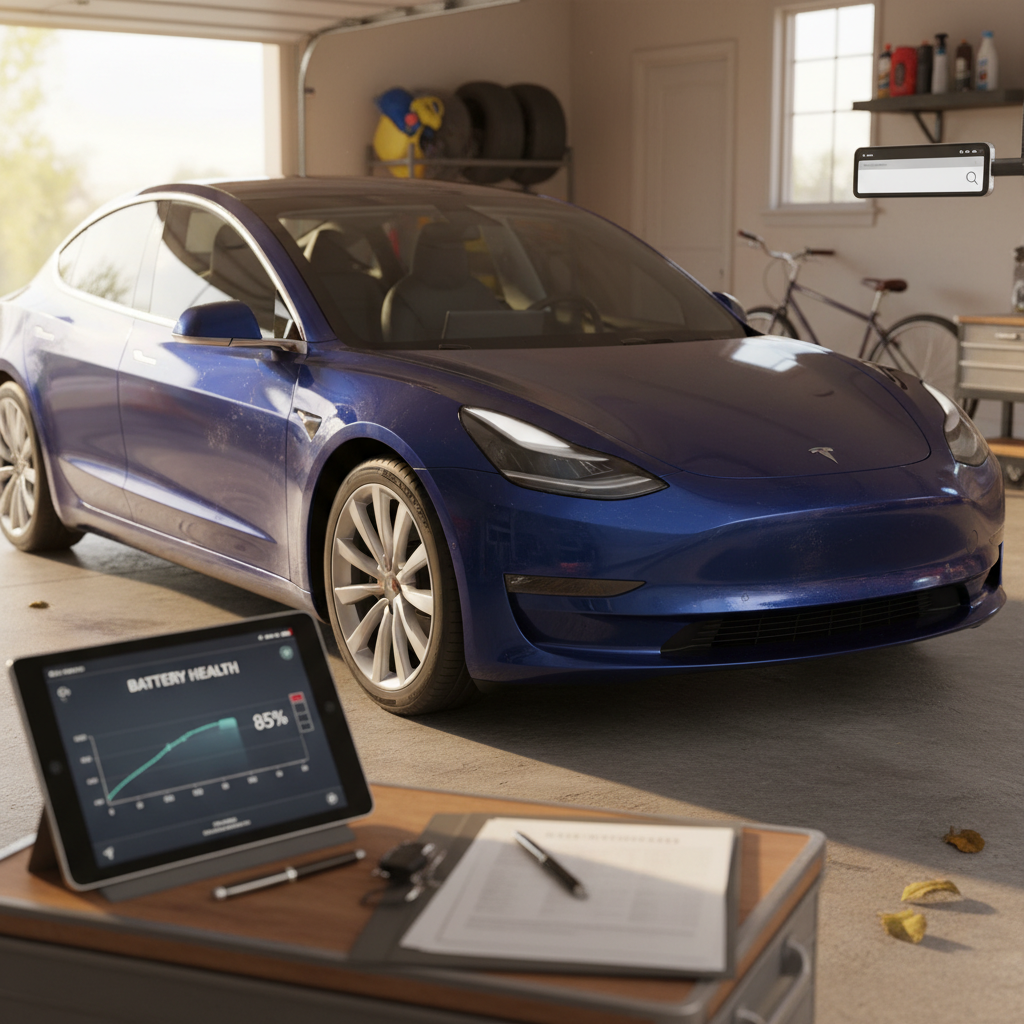
If you’re shopping for a used EV in Tennessee, the state of the charging network should be part of your decision, just like battery health, price, and features. A car that’s perfect for central Nashville might feel limiting in a rural county unless you can charge at home and you’re comfortable planning around a handful of public stations.
Match the car to your local charging reality
- City or inner suburbs: Smaller‑battery EVs can work well if you have workplace or public Level 2 nearby.
- Rural or small town: Look for longer‑range EVs and prioritize home Level 2 charging to minimize dependence on sparse public options.
- Frequent interstate travel: Favor models with faster DC charging capability and connectors common on Tennessee’s main fast‑charging networks.
How Recharged helps Tennessee shoppers
Every vehicle on Recharged comes with a Recharged Score Report that includes verified battery health, charging capability details, and fair market pricing. That means you can see how much real‑world range to expect before you sign, and our EV specialists can help you think through how Tennessee’s charging network fits your daily routes and favorite trips.
You can handle the entire purchase digitally and arrange nationwide delivery, or visit the Recharged Experience Center in Richmond, VA if you want an in‑person walkthrough before your car heads to Tennessee.
Use the network to your advantage
Tennessee EV charging network FAQ
Frequently asked questions about Tennessee’s electric car charging network
Tennessee’s electric car charging network is in that awkward but exciting middle phase: no longer experimental, not yet as invisible and ubiquitous as gas stations. If you understand where the chargers are, how fast they work, and how your particular EV behaves on hills and interstates, the state is already very livable in an electric car, and it will only get easier from here. Whether you’re cross‑shopping used EVs or preparing for your first EV road trip from Memphis to the mountains, a bit of smart planning will help you take full advantage of the Volunteer State’s rapidly improving charging landscape.