If you’re shopping for an electric car in Greater Boston, **EV charging stations in Boston** are probably top of mind. You’re juggling questions about curbside chargers, Logan Airport fast charging, snow‑clogged streets, and whether you can live with an EV in a triple‑decker without a driveway. This guide walks you through what’s really available today, how to find it, what it costs, and how charging in Boston should influence the EV you choose.
Boston is quietly becoming an EV‑friendly city
Why EV charging in Boston matters right now
Charging access is the single biggest factor that determines whether owning an EV in Boston feels easy or stressful. You’re dealing with tight on‑street parking, winter weather, and a housing stock that wasn’t designed with 240‑volt outlets in mind. At the same time, the state is **pushing hard toward electrification**, with aggressive climate goals and funding for new chargers. The result: infrastructure is improving fast, but it’s uneven. Knowing where chargers are today, and where they’re coming next, will help you buy the right EV and build habits that actually work in the city.
Boston & Massachusetts EV charging by the numbers
Boston EV charging at a glance
What EV charging looks like in Boston today
From downtown curbside charging to highway fast‑charge hubs
Dense urban core
You’ll find Level 2 curbside chargers in neighborhoods like Back Bay, South End, Roxbury, Dorchester, Allston, and Brighton, plus a growing number of chargers in municipal lots and garages.
Fast charging for trips
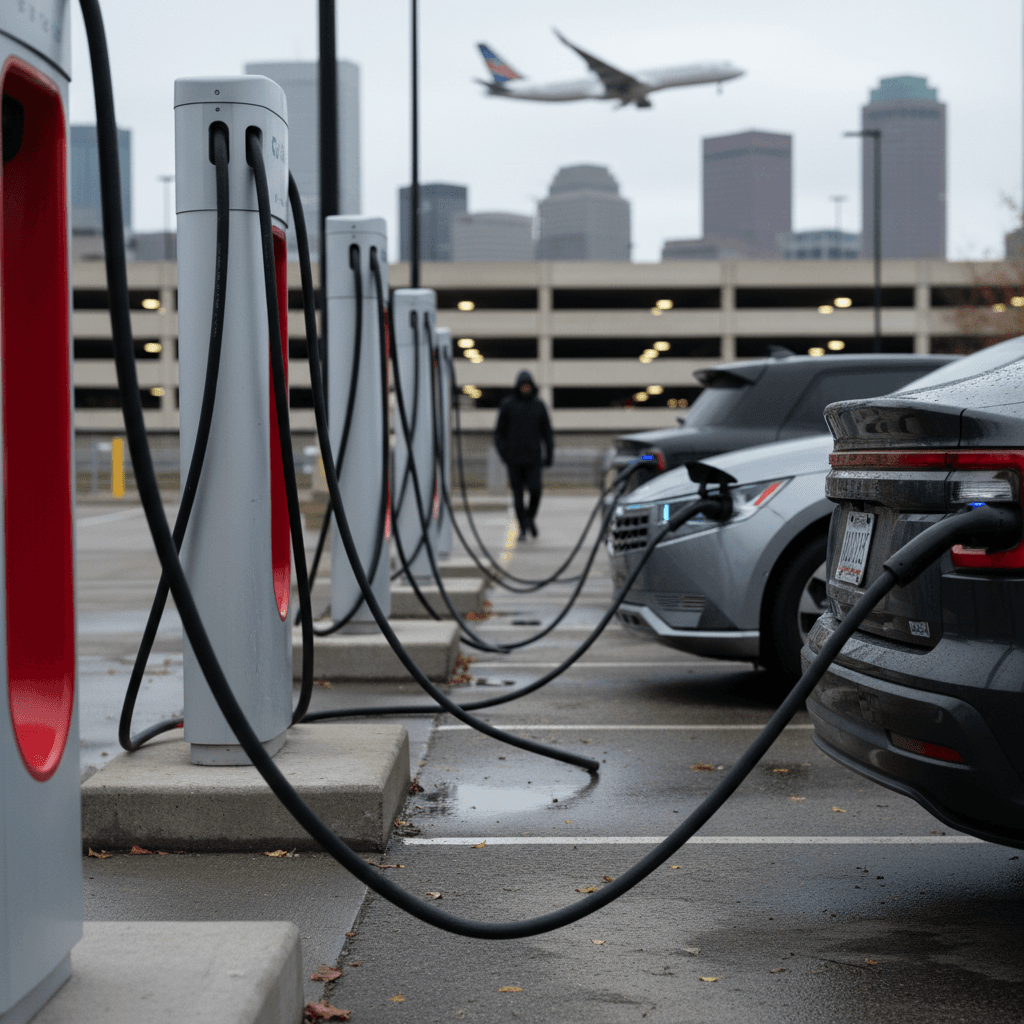
DC fast chargers cluster along major corridors (I‑90, I‑93, Route 1) and near Logan Airport, where new high‑power sites make quick top‑ups practical.
Policy tailwind
State and city programs, from MassEVIP to Recharge Boston, are funding hundreds of new ports, especially in environmental justice communities and renter‑heavy neighborhoods.
Types of EV charging stations you’ll find in Boston
Before you worry about specific addresses, it helps to understand the **three main charging types** you’ll encounter. Knowing the difference between Level 1, Level 2, and DC fast charging will help you match Boston’s infrastructure to your daily driving.
Common EV charging options in Boston
How Level 1, Level 2, and DC fast charging compare for city drivers.
| Charger type | Typical power | Where you’ll see it in Boston | Ideal use | Rough speed* |
|---|---|---|---|---|
| Level 1 (120V) | 1–1.4 kW | Standard household outlets in single‑family homes, some garages | Very light driving, backup only | 3–5 miles of range per hour |
| Level 2 (240V) | 6–11 kW | Curbside chargers, municipal lots, workplaces, parking garages, some apartments | Routine overnight or all‑day charging | 20–40 miles of range per hour |
| DC fast charging | 50–400 kW | Highway sites, near Logan Airport, some big retail and travel hubs | Road trips, quick top‑ups, no‑home‑charging drivers | Up to 150–200+ miles in 30–40 minutes |
Use Level 2 for routine charging and DC fast chargers as your safety valve for road trips and busy weeks.
Don’t plan your life around Level 1
Major EV charging networks in and around Boston
Common networks you’ll actually see
- ChargePoint – Extremely common at workplaces, municipal lots, and private garages. Many Level 2 ports; pricing varies by site.
- EVgo – Mix of urban DC fast‑charging sites and Level 2, often colocated with grocery stores and shopping centers.
- Electrify America – DC fast‑charge hubs near major interstates and big box retail, good for road‑trip top‑ups.
- Tesla Supercharger – Historically Tesla‑only, but more sites near Boston are gradually opening to other EVs as the NACS standard rolls out.
New and niche players
- BP Pulse – Recently opened a high‑power DC fast‑charging "Gigahub" just north of Logan Airport with a mix of 150 kW and 400 kW chargers, ideal if you need a fast turn‑around between flights and errands.
- Greenspot & other curbside operators – Partnering with the City on dedicated curbside EV spots in dense neighborhoods.
- Destination chargers – Hotels, parking garages, and attractions increasingly offer Level 2 chargers as an amenity. Often free or low‑cost while you park.
Most of these networks show up inside popular apps like PlugShare and A Better Routeplanner, so you don’t need to keep track of each individually, just recognize the brand when you arrive.
Curbside EV charging in Boston neighborhoods
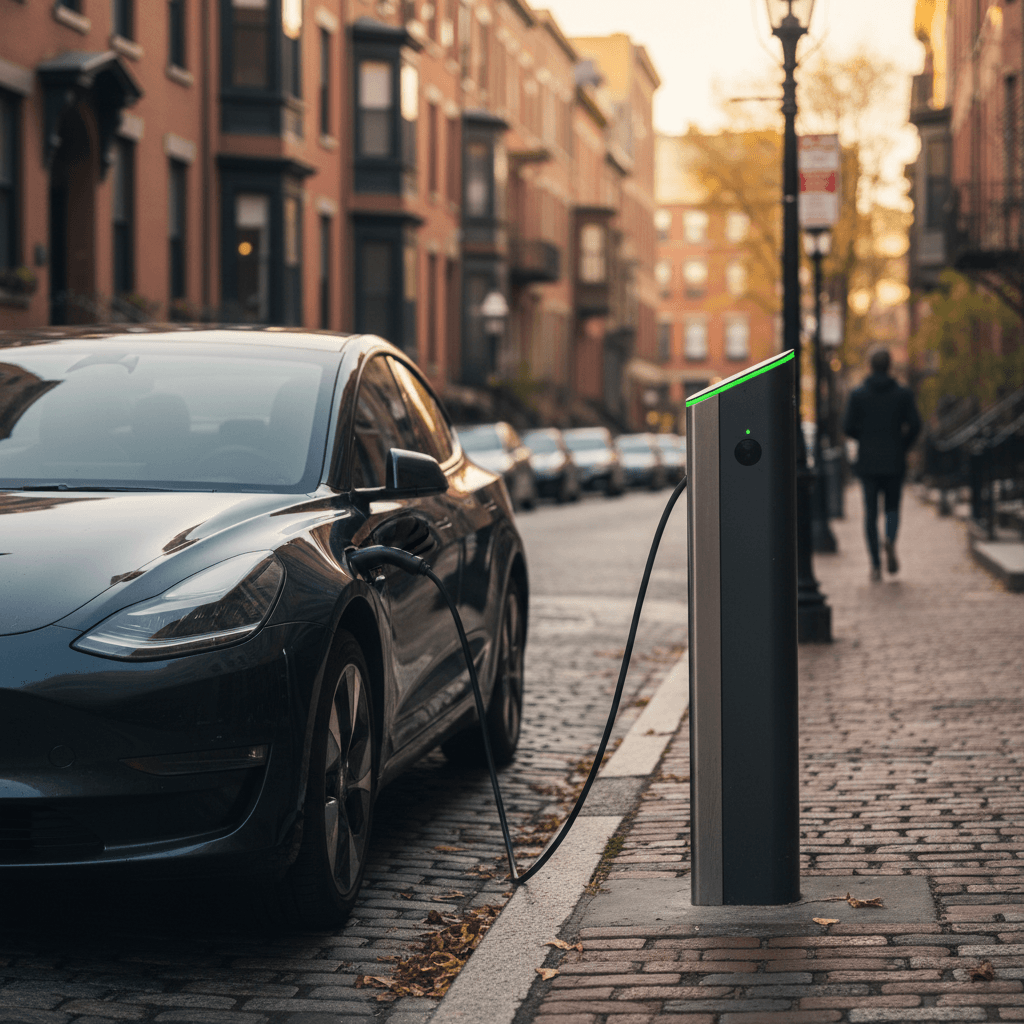
If you rent in Boston or park on the street, curbside charging is the difference between EV ownership working and not working. That’s why the City’s **Recharge Boston** program, along with partners like Greenspot, is adding curbside Level 2 ports across neighborhoods instead of just downtown business districts.
- The City is installing Level 2 curbside chargers and additional ports in municipal lots in Roxbury, Dorchester, Roslindale, Brighton, and Allston.
- Boston is partnering with private operators to deploy hundreds of additional curbside spaces dedicated to EVs over the next few years, with a focus on environmental justice communities.
- The long‑term goal is for every resident to live within a roughly five‑minute walk of a charger by 2030, dramatically reducing reliance on home driveways.
Use the City’s own tools
DC fast‑charging hotspots in Boston (including Logan)
Level 2 is your workhorse, but DC fast charging is your **safety valve**, especially if you can’t install home charging. In Boston, fast chargers concentrate near major travel routes, the airport, and big retail centers.
Where to look for DC fast charging in and around Boston
You won’t find a fast charger on every corner, but certain patterns make them easier to locate.
| Area | Typical locations | What you’ll find | Best for |
|---|---|---|---|
| Logan Airport & East Boston | Near rental car facilities and major roads like Route 1A | High‑power DC fast sites, including BP Pulse’s 150–400 kW "Gigahub" just north of the airport | Quick top‑ups before or after flights, rideshare drivers, heavy‑use EV owners |
| Downtown & Seaport | Garages, mixed‑use developments, some retail lots | Mix of Level 2 and a handful of DC fast stalls | Topping up while you’re at work or out to dinner |
| Suburban ring (Cambridge, Somerville, Quincy, Waltham) | Shopping centers, highway interchanges, university areas | Clusters of DC fast chargers from Electrify America, EVgo, and Tesla | Commuters and road‑trip stops on I‑90/I‑93 corridors |
Always confirm power levels and connector types in your app before you arrive, especially in winter when charging speed matters most.
Winter reality check
How to find EV charging stations in Boston
You don’t need to memorize station addresses. The trick is to lean on apps that combine network data, real‑time status, and driver reviews. Use more than one, no single app is perfect in a fast‑changing city like Boston.
Best tools for finding EV charging stations in Boston
Combine these for the most reliable picture of what’s available around you.
PlugShare
Crowd‑sourced map with excellent coverage around Boston. You’ll see photos, recent check‑ins, and reliability notes, which matter more than marketing claims.
ChargePoint, EVgo, EA apps
Each major network has its own app with pricing, port availability, and start/stop controls. Use them when you tend to frequent a particular brand of station.
ABRP & in‑car navigation
A Better Routeplanner (ABRP) and many built‑in navigation systems can plan trips around Boston traffic, weather, and charger locations so you’re not guessing on the Pike or I‑93.
Quick routine for stress‑free charging in Boston
1. Save your home and work areas
In PlugShare or your favorite app, star chargers near your home, office, and usual weekend spots so you’re never starting from scratch.
2. Filter by connector and speed
Set filters for your connector (CCS, NACS/Tesla, CHAdeMO) and minimum power level so you’re not navigating to a slow or incompatible station.
3. Read the latest check‑ins
Check user reports from the last few days to see if a charger is down, blocked by gas cars, or slower than advertised.
4. Have a Plan B nearby
Especially in the city core, always note a backup charger within a 5–10 minute drive in case your first choice is occupied or out of service.
What EV charging costs in Boston
EV drivers in Boston see a mix of **per‑kWh pricing**, **per‑minute pricing**, and **flat session or parking fees**. Exact numbers vary by network and site owner, but you can get a useful ballpark for planning your budget.
Typical EV charging costs in Boston (rough ranges)
Actual prices vary by network, time of day, and parking fees, but these ranges reflect what many Boston drivers see in 2025.
| Charger type | Where | How you pay | Typical cost pattern |
|---|---|---|---|
| Home Level 2 (if available) | Driveway / dedicated space | Per kWh on your utility bill | Often the cheapest option over time, especially with off‑peak rates. |
| Public Level 2 | Curbside, municipal lots, garages | Per kWh, per hour, or bundled with parking | Frequently comparable to or a bit higher than home rates; some workplaces remain free. |
| DC fast charging | Highways, Logan area, big retail | Per kWh or per minute, often with idle fees | Most expensive way to fill up, but still competitive with gasoline on a per‑mile basis for many EVs. |
Whenever possible, price your energy in cents per kWh so you can compare apples to apples against your home electric rate.
Use Level 2 as your primary fuel
Planning life with an EV in Boston: apartment vs. driveway
The right charging strategy in Boston depends less on your brand of EV and more on **where you park at night**. Let’s break it into two very different use cases.
Scenario 1: No driveway, mostly street parking
- Rely primarily on curbside Level 2, workplace chargers, and occasional DC fast charging.
- Use apps to learn which curbside spots tend to be open late evening or early morning.
- Choose an EV with at least 220–250 miles of EPA range so you can comfortably go several days without charging if weather or parking doesn’t cooperate.
- Expect charging to feel a bit like refueling a gas car, planned stops a few times a week instead of automatic overnight charging.
Scenario 2: Driveway or deeded garage spot
- Install a Level 2 home charger if possible; this turns your home into your primary fuel station.
- Use public chargers mainly when you’re parking downtown anyway or taking trips.
- You can live happily with a shorter‑range EV (180–220 miles) because overnight charging is easy and predictable.
- Coordinate with an electrician about panel capacity and local code before buying hardware.
If you’re considering a used EV, factor installation costs into your total ownership budget, not just the vehicle price.
Get electrical work done safely
How Boston charging should shape the EV you buy
It’s tempting to start with paint colors and wheel designs, but in Boston you’re better off starting with **charging realities** and working backward to the right car. That’s especially true if you’re looking at the used market, where range, charging speed, and battery health vary widely by model year.
Charging questions to answer before you pick an EV
Use these factors to narrow your short list, especially for used EVs.
Max DC fast‑charge rate
If you’ll rely on DC fast chargers near Logan or along I‑90, prioritize an EV that can accept at least 100–150 kW. That keeps stop times reasonable, especially in winter.
Battery health & range
For used EVs, pay close attention to degradation. A car that started at 250 miles of range but is down to 190 will feel very different in a Boston January.
Connector & adapter situation
Massachusetts is transitioning toward the Tesla‑designed NACS standard, but most public fast chargers today are CCS. Make sure you understand which adapters you’ll need for the networks you plan to use.
Where Recharged fits in
FAQ: EV charging stations in Boston
Frequently asked questions about EV charging in Boston
Bottom line: can you realistically own an EV in Boston?
For most drivers, the answer is yes, **if you match the car to the charging reality you live in**. Boston isn’t California, but it doesn’t need to be. Between a fast‑growing network of curbside Level 2 ports, new DC fast‑charging sites near Logan and along the highways, and strong state support for infrastructure build‑out, owning an EV here is getting easier every year. The key is to be honest about your parking situation, build a short list of reliable chargers, and choose a vehicle whose range and charging speed fit your lifestyle.
If you’re still on the fence, or wondering which used EV will feel least stressful to live with in Boston, this is where a transparent marketplace helps. With Recharged, every vehicle comes with a Recharged Score battery‑health report, fair, data‑driven pricing, and EV‑savvy specialists who can walk you through how that specific car will behave on your commute, in a Nor’easter, and at the chargers you’ll actually use. That kind of clarity turns charging from a worry into just another part of everyday Boston driving.