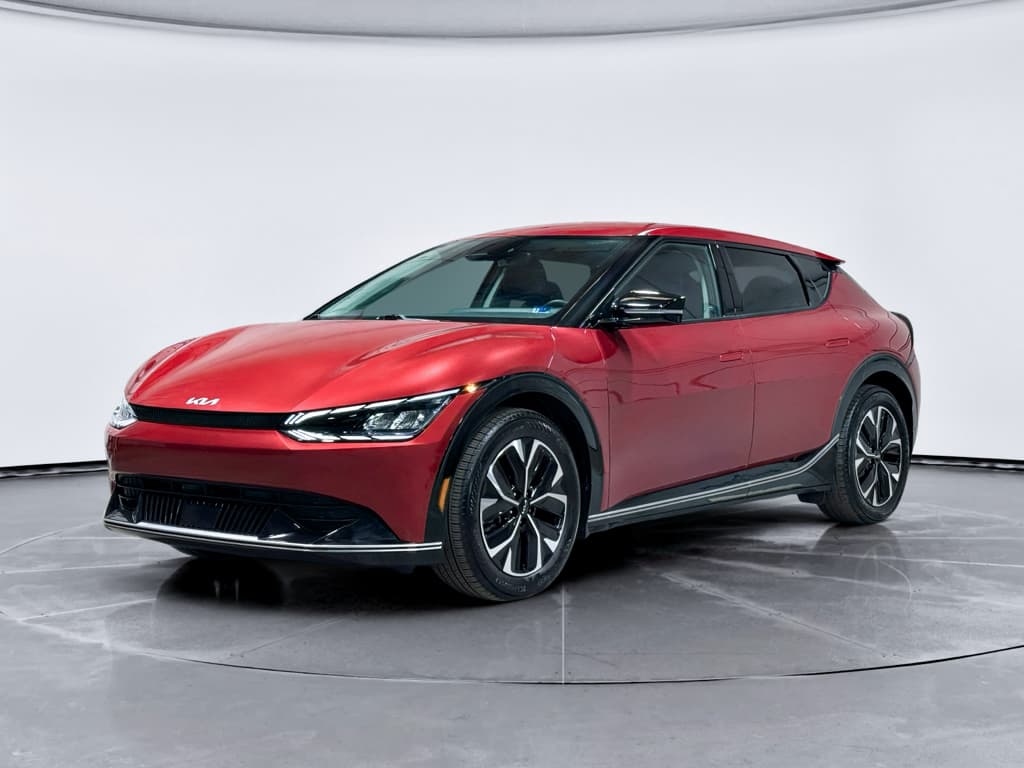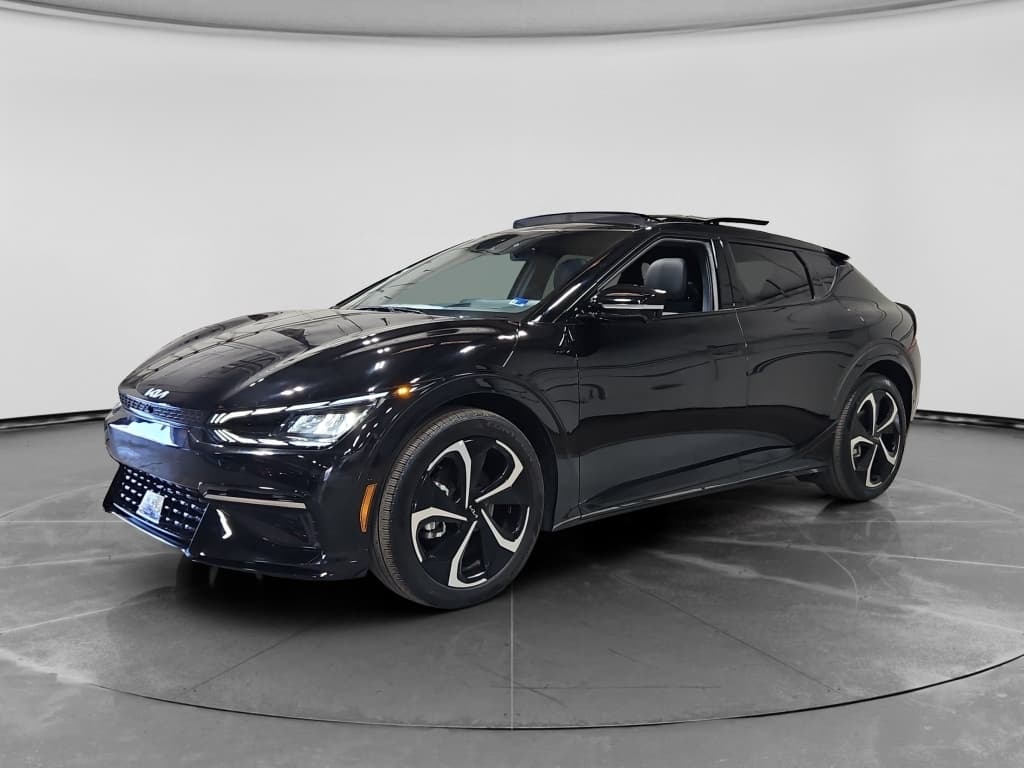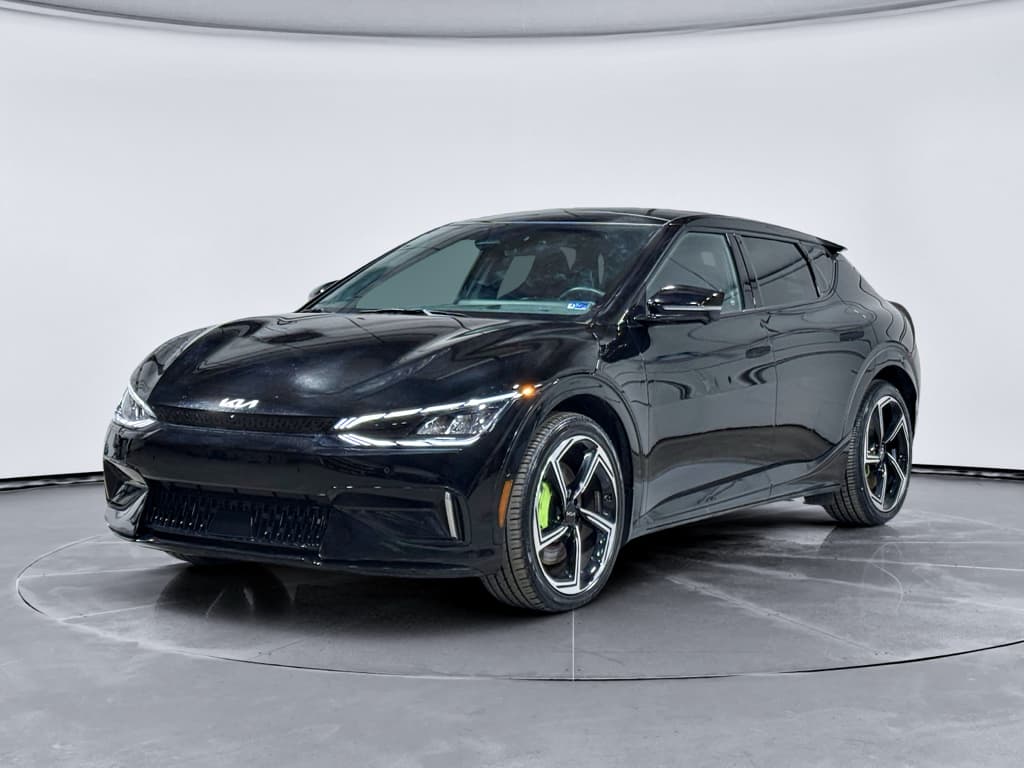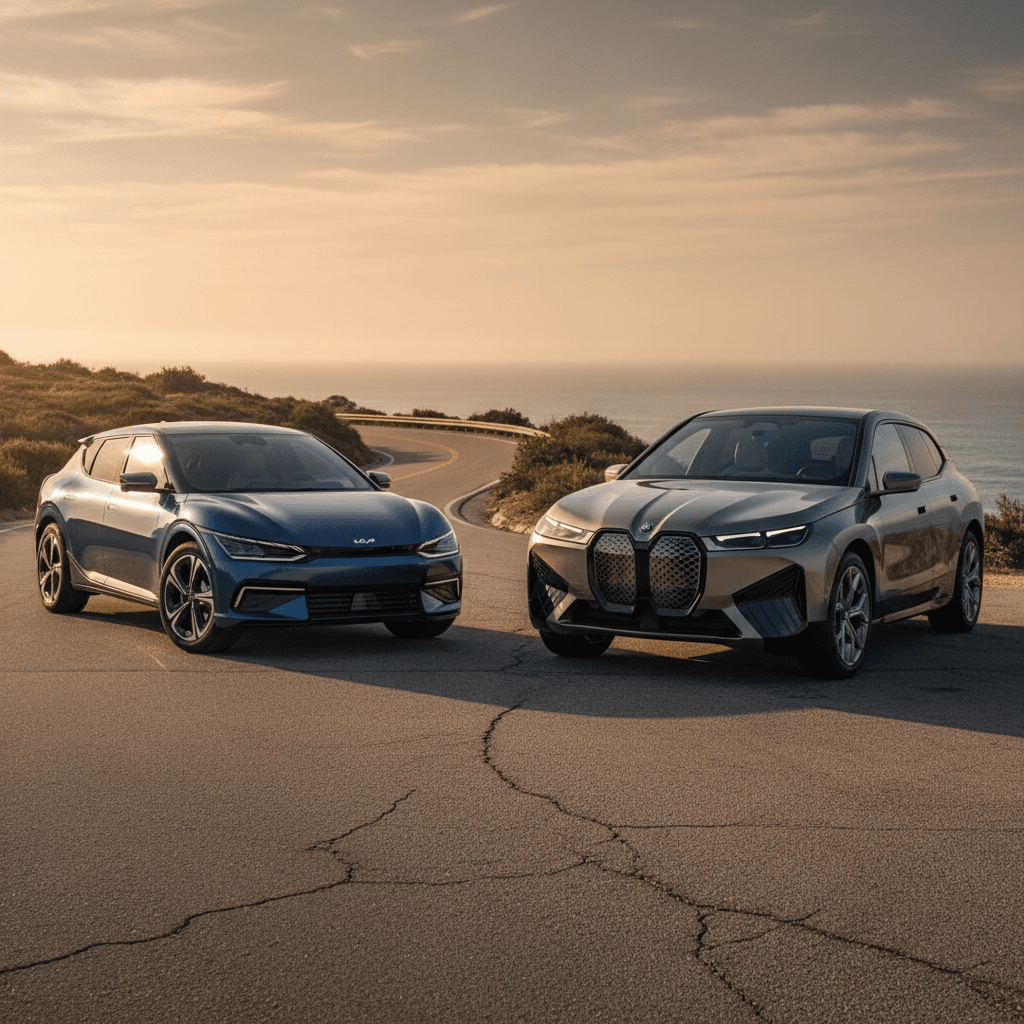
You could think of the Kia EV6 and Genesis GV60 as fraternal twins: same underlying electric platform, very different personalities. When you’re shopping used, the question isn’t "which is better," it’s "which one fits you", and how much you’re willing to pay for polish, badges, and toys.
Same bones, different vibes
Overview: Used Kia EV6 vs Genesis GV60
Kia EV6 (used)
- Positioning: Sporty mainstream electric crossover
- Range: Many trims around 282–310 miles EPA on larger battery packs for 2024 models
- Performance: From relaxed single‑motor to wild 576 hp GT in earlier years; newer GT variants push higher still
- Strengths: Value, range, charging speed, roomy cabin, fun-to-drive feel
- Weak spots: Road noise on some trims, more basic interior vs GV60, fewer luxury touches
Genesis GV60 (used)
- Positioning: Compact luxury EV crossover
- Range: Roughly 235–294 miles EPA depending on trim and wheels, with an 84 kWh pack on newer models
- Performance: Standard, Advanced, and Performance dual‑motor trims; quick in any spec, genuinely rapid in Performance
- Strengths: Cabin quality, quiet ride, advanced tech (face/fingerprint recognition, trick features), warranty
- Weak spots: Higher price, slightly less range than comparable EV6 trims, smaller dealer/service footprint
Quick take: Which one fits you?
At-a-glance recommendation
If you remember nothing else, remember this.
Choose a used Kia EV6 if…
- You want maximum range per dollar.
- You care more about sporty driving than about ultra‑luxury finishes.
- You’re cross‑shopping with Model Y, Mach‑E, Ioniq 5 and want a compelling value.
- You like the idea of a larger, more practical cabin and cargo area.
Choose a used Genesis GV60 if…
- You want your EV to feel like a luxury product inside and out.
- You value quiet, refined ride quality as much as speed.
- Things like facial recognition, crystal shifter, and premium audio make you smile.
- You’re okay paying more upfront for nicer materials and more standard tech.
How Recharged can help
Price and depreciation on the used market
On the new market, the Kia EV6 has generally undercut the Genesis GV60 by several thousand dollars trim‑for‑trim. For example, many 2024 EV6 trims started in the low‑to‑mid $40,000s before destination, while GV60 pricing typically lived closer to the high $50,000s and beyond depending on trim and options. That gap carries straight into the used market.
Typical used pricing snapshot (U.S., early 2026)
Approximate asking-price ranges you’re likely to see from dealers and marketplaces. Exact numbers vary by mileage, region, trim, and incentives.
| Model & age | Typical mileage | Ballpark asking range | Notes |
|---|---|---|---|
| 2023 Kia EV6 Wind RWD | 20,000–35,000 mi | Low–mid $30,000s | Long‑range battery, strong range per dollar |
| 2023 Kia EV6 GT-Line AWD | 20,000–35,000 mi | Mid–high $30,000s | Plenty of tech, still under factory warranty in most cases |
| 2023 Kia EV6 GT (performance) | 15,000–30,000 mi | Low–mid $40,000s | Performance halo trim; range penalty vs other EV6s |
| 2023 Genesis GV60 Advanced AWD | 15,000–30,000 mi | Low–mid $40,000s | Luxury focus, well‑equipped even in non‑Performance trims |
| 2023 Genesis GV60 Performance AWD | 10,000–25,000 mi | High $40,000s–low $50,000s | High-output dual‑motor; smaller pool of used examples |
These are directional ranges, not offers. Always compare multiple listings and factor in battery health and warranty coverage.
Don’t shop on sticker price alone
Because Genesis is a newer luxury brand with smaller volume, used GV60 inventory is thinner than EV6 inventory. That usually means less choice and slower price drops. The EV6, by contrast, is widely available in multiple trims, colors, and drive layouts, which puts downward pressure on used prices and gives you more leverage when negotiating.
Range, battery, and charging experience
Underneath the bodywork, the used Kia EV6 and Genesis GV60 share a lot of hardware. Both ride on the Hyundai–Kia 800‑volt E‑GMP platform, which enables very fast DC charging when you find a strong enough public charger. But there are important differences in range and battery options you should know about.
Headline numbers to keep in mind
Battery sizes and trims to target
- Kia EV6: Earlier model years offered a 58 kWh pack on base "Light" trims and a 77.4 kWh pack on nearly everything else. Beginning with 2025, long‑range EV6 trims move to an 84 kWh pack, with small increases in range.
- Genesis GV60: U.S. models have centered around a ~77.4 kWh pack initially, with an update to an 84 kWh unit on newer model years that boosts range and efficiency slightly, especially on rear‑drive variants.
Real-world range vs EPA numbers
Charging experience and networks
Both the used Kia EV6 and Genesis GV60 support very high DC fast‑charge rates and standard Level 2 AC charging. Later model years now include compatibility with the North American Charging Standard (NACS), opening access to a growing slice of the Tesla Supercharger network when equipped or adapted correctly. Earlier cars may rely on CCS public chargers plus whatever adapters you choose to use.
Home charging is the great equalizer
Performance and driving feel
The Kia EV6 and Genesis GV60 drive like siblings who grew up in different neighborhoods. You feel the shared genes in the instant torque and the planted, wide‑track stance. But the EV6 is tuned for sporty, confident fun, while the GV60 adds a layer of luxury damping and isolation on top.
How they feel from behind the wheel
Same platform, different personalities.
Kia EV6 on the road
- Steering & handling: Quick, eager turn‑in; some trims can feel almost hot‑hatch‑like for an SUV.
- Ride: Firm but controlled. On larger wheels, you’ll feel bad pavement more than in the GV60.
- Power: Single‑motor trims are brisk; dual‑motor models are properly quick; GT/Performance versions are genuinely fast.
- Character: Feels like a sporty family car that happens to be electric.
Genesis GV60 on the road
- Steering & handling: Still agile, but tuned more for smoothness than sharp aggression.
- Ride: Softer edges, better bump isolation, especially on non‑Performance trims.
- Power: Dual‑motor AWD is standard or common; Performance trim can be startlingly quick with Boost modes.
- Character: Feels like a luxe compact SUV that happens to be very quick, very quiet, and electric.
Enthusiast’s pick vs luxury pick
Comfort, interior quality, and tech
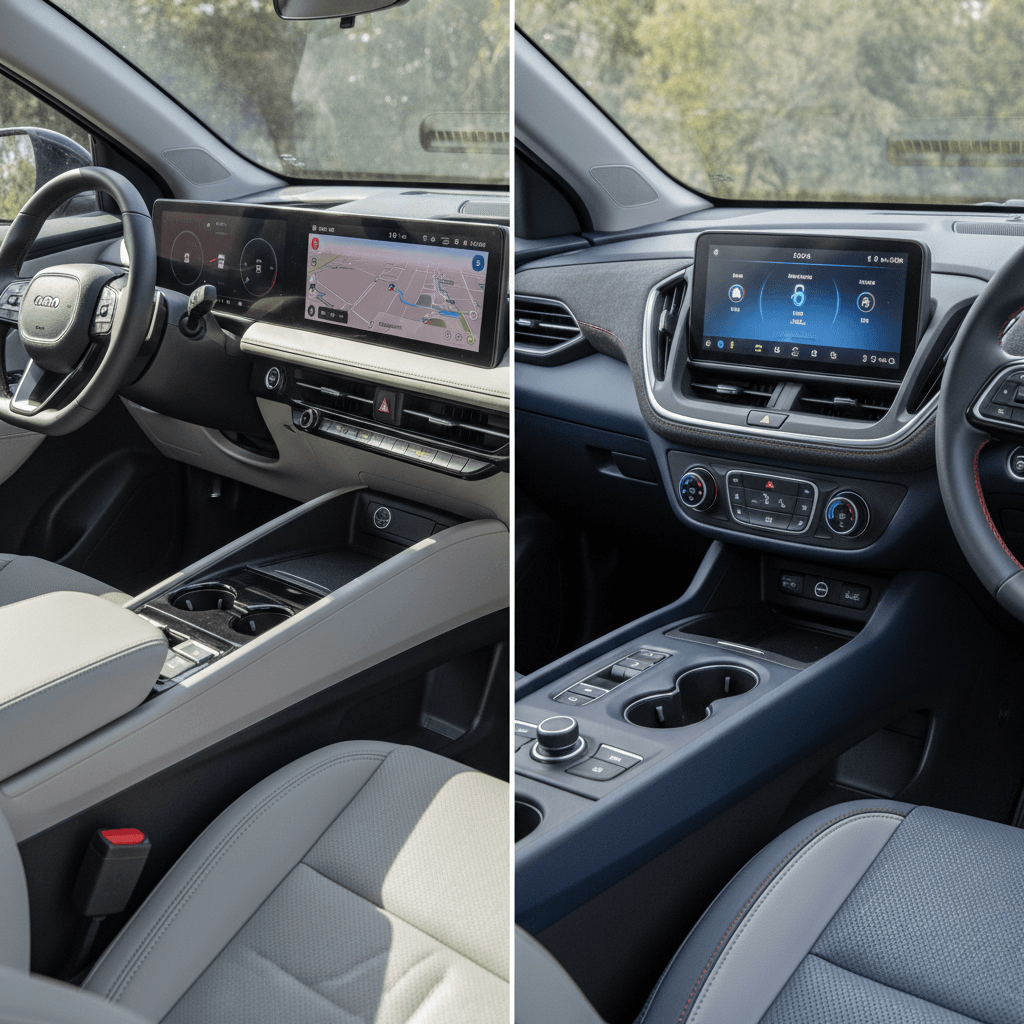
Inside, the Kia EV6 is modern, clean, and well‑equipped for the money, especially in Wind and GT-Line trims, but the Genesis GV60 is playing in a different league. You’re paying for materials, design theater, and tech frills that the Kia simply doesn’t bother with.
Kia EV6 interior
- Design: Sleek dashboard with a sweeping twin‑screen layout and a small, sporty steering wheel.
- Materials: Good mainstream quality: soft‑touch in key areas, some harder plastics lower down.
- Seats: Comfortable, supportive; higher trims add ventilation and driver’s memory, but rear seats are more functional than plush.
- Tech: Digital cluster and infotainment, available head‑up display, robust safety suite; interface feels familiar if you’ve driven recent Kias.
Genesis GV60 interior
- Design: Statement piece. Floating console, jewel‑like "Crystal Sphere" shifter on early models, ambient lighting, and bold color choices.
- Materials: More leather, softer plastics, and nicer switchgear; feels closer to Audi/BMW EVs than to mainstream crossovers.
- Seats: Softer cushioning, richer bolstering in Performance trims, often with more adjustability and massage/ventilation features.
- Tech: Large panoramic displays, advanced biometrics (face/fingerprint entry) on some years, high‑end audio options.
Tech aging curve
Practicality: Space, cargo, and daily use
In day‑to‑day life, kids, Costco, commutes, the Kia EV6 quietly takes the lead. It’s slightly larger overall, with better rear‑seat legroom and more usable cargo space. The GV60 is more of a stylish compact luxury runabout; think urban couples, empty‑nesters, or small families with lighter cargo needs.
Practicality comparison: EV6 vs GV60 (typical trims)
Approximate interior and cargo figures to illustrate how they differ in everyday use.
| Metric | Kia EV6 | Genesis GV60 | Real-world takeaway |
|---|---|---|---|
| Passenger space | More generous overall, especially legroom | More intimate, upright seating | EV6 suits taller families and road‑trip passengers better. |
| Cargo behind 2nd row | More cubic feet than GV60 | Noticeably less, especially with stylish rear slope | EV6 wins for strollers, dogs, and bulk shopping. |
| Rear seat comfort | Good space; slightly lower seating position | Good comfort but a bit cozier and more upright | GV60 feels more lounge‑like, EV6 feels more like a roomy hatchback. |
| Towing/roof racks | Select EV6 trims rated for light towing; good roof‑rack options | GV60 towing and rack options are more limited | If you camp, bike, or tow small loads, the EV6 is easier to outfit. |
Exact dimensions vary by model year and trim, but the pattern, EV6 more spacious, GV60 cozier, holds across the lineup.
Bring your life with you on the test drive
Ownership costs, warranty, and reliability
One of the quiet advantages of both the Kia EV6 and Genesis GV60 is generous warranty coverage. New, they’ve carried strong battery and powertrain warranties, which means many used examples are still well within coverage windows, especially low‑mileage 2023–2025 cars.
Warranty & cost-of-ownership highlights
What matters when you’re buying these EVs used.
Battery warranty
Depreciation & value
Maintenance & repairs
Battery health is non‑negotiable
How to choose between a used EV6 and GV60
Choosing between a used Kia EV6 and Genesis GV60 is less about spreadsheets and more about what you want your daily life to feel like. That said, a little structure helps. Start with how you’ll use the car, then layer in budget and personal taste.
Decision guide: EV6 vs GV60 in the real world
1. Define your primary use case
Is this a <strong>family workhorse, road‑trip machine, daily commuter, or luxury splurge</strong>? Heavy kid duty and cargo argue for the EV6. A quieter, shorter urban commute tilts toward the GV60.
2. Decide how much you value range
If you regularly do 200+ mile days or don’t yet trust public chargers, <strong>prioritize long‑range EV6 trims</strong>. If your driving is mostly local, the GV60’s slightly shorter range is plenty.
3. Weigh luxury vs savings
For the same money, you’ll usually get a <strong>newer or better‑equipped EV6</strong> than GV60. If soft leather, hushed cabins, and design drama make you happy every morning, the GV60 justifies the premium.
4. Consider service options near you
Check how close your <strong>nearest Genesis and Kia service centers</strong> are. In many parts of the U.S., Kia’s footprint is meaningfully larger, which can make the EV6 lower‑stress to own.
5. Look at total cost, not just payment
Factor in insurance quotes, tire costs, tax incentives (state/local), charging access, and expected depreciation. A Recharged specialist can help model <strong>total cost of ownership</strong>, not just the sticker.
Buying checklist for a used EV6 or GV60
Whether you land on a used Kia EV6 or Genesis GV60, the smartest buyers all do the same homework. Use this checklist as your playbook when you shop, especially if you’re browsing nationwide listings or buying online.
Essential inspection steps
Verify battery health and DC fast‑charge history
Ask for a <strong>battery‑health report</strong> and usage history. Lots of high‑power DC fast charging isn’t a deal‑breaker, but you want to see healthy remaining capacity and no repeated rapid‑charge sessions from 0–100%.
Confirm remaining warranty coverage
Use the <strong>VIN and in‑service date</strong> to confirm how much battery and powertrain warranty remains. A car with 5 years / 60,000 miles of EV coverage left is much less risky than one almost out of time.
Check for software updates and recalls
Both EV6 and GV60 have had software tweaks over time, charge curves, safety systems, infotainment. Confirm the car is <strong>up to date</strong> and that all open recalls have been addressed.
Inspect tires, brakes, and suspension
Heavy, torquey EVs are hard on tires. Uneven wear can hint at alignment or suspension issues. Budget realistically if the car is close to needing a full set of quality EV‑rated tires.
Test real-world charging
If possible, plug the car into both a Level 2 charger and a DC fast charger. You’re checking that it <strong>connects reliably, ramps up to expected power levels, and doesn’t throw errors</strong> mid‑session.
Review history reports and prior use
Get a vehicle‑history report and ask how the car was used. A lightly used corporate lease with highway miles is very different from a short‑trip city car with curb‑rash on every wheel.
Where Recharged fits in
Ready to find your next EV?
Browse VehiclesFAQ: Used Kia EV6 vs Genesis GV60
Frequently asked questions
Bottom line: Which used EV should you buy?
If you strip away the badges and brochure adjectives, the story is simple: a used Kia EV6 is the head choice, and a used Genesis GV60 is the heart choice. The EV6 gives you more range and space per dollar, a big national dealer network, and a driving experience that’s quietly excellent. The GV60 wraps the same basic hardware in a richer interior, a calmer ride, and a sense of occasion every time you climb in.
If you’re budget‑conscious, do a lot of miles, or need family practicality, start with a long‑range EV6 and compare a few trims. If you’ve always promised yourself a small luxury SUV and want your first (or next) EV to feel special, a well‑chosen GV60 Advanced or Performance is easy to love.
Either way, don’t buy blind. Let battery health, warranty coverage, and your real‑world needs make the call, not just glossy photos. Recharged can help you compare used Kia EV6 vs Genesis GV60 listings side by side, decode their Recharged Scores, arrange financing or trade‑in, and deliver your pick to your driveway. That way, whichever sibling you choose, you start EV ownership on the right foot.