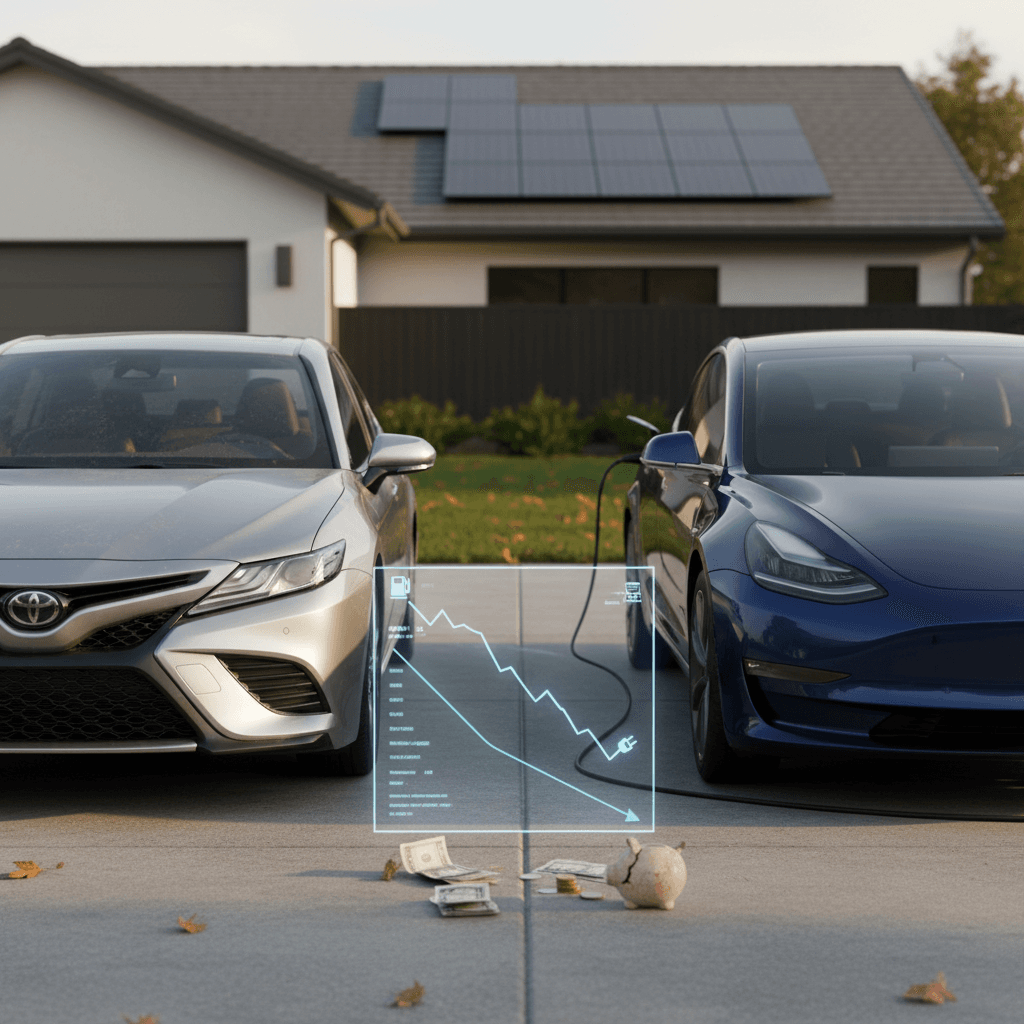
You’re not the first Camry driver to eye a Tesla in the next lane and wonder, “Would switching from my Toyota Camry to a Tesla Model 3 actually save me money?” The answer is: it can, but only once you look past the sticker prices and into the messy reality of fuel, electricity, maintenance, insurance, incentives and resale. This guide walks through the real cost savings step‑by‑step, with special focus on how a used Tesla Model 3 changes the equation.
Quick takeaway
Why switching from a Toyota Camry to a Tesla Model 3 is a budget question, not a status move
Camry: the sensible benchmark
The Toyota Camry is the default American sedan for a reason. It’s cheap to run, holds its value, and any corner shop can work on it. So if a Tesla Model 3 can’t beat a Camry on total cost of ownership, it probably can’t beat much of anything.
Model 3: cost wrapped in tech sheen
The Tesla Model 3 brings instant torque, over‑the‑air updates, and access to Tesla’s Supercharger network. But under the tech halo, it’s just another monthly payment plus running costs. To see if switching makes sense, you have to strip away the sheen and work through the numbers.
In this article, we’ll compare a typical late‑model Toyota Camry (gasoline) against a Tesla Model 3, using realistic assumptions for an average U.S. driver. We’ll look at purchase price and payments, fuel vs electricity, maintenance and repairs, insurance, tax incentives, and resale value. Along the way, we’ll highlight where a used Model 3 bought through Recharged can tilt the math in your favor.
The ground rules: mileage, fuel prices and electricity rates
Key assumptions for Camry vs Model 3 cost comparison
You can adjust these numbers to match your own reality, but you need a baseline. We’ll assume a driver putting 12,000 miles per year on the car, paying around $3.75 for a gallon of regular and $0.15 per kWh for home charging. Our time horizon is five years, long enough for fuel and maintenance trends to matter but not so long that we’re guessing about the distant future.
Make the numbers your own
Purchase price and payments: new vs used Camry and Model 3
Sticker price is where most online debates about switching from a Toyota Camry to a Tesla Model 3 get stuck. Yes, the Tesla typically starts higher than a comparable Camry, but that’s only the opening bid. What matters to your budget is your monthly payment after down payment, trade‑in and incentives.
Typical price ranges: Camry vs Model 3 (new and used)
Illustrative U.S. price bands for late‑model sedans as of early 2026. Exact pricing varies by trim, mileage, options and market.
| Vehicle | Age / condition | Typical price range | Notes |
|---|---|---|---|
| Toyota Camry | New, mid trim | $30,000 – $33,000 | Popular LE/SE trims with common options. |
| Toyota Camry | 3–4 years used | $20,000 – $25,000 | Clean Carfax, average mileage. |
| Tesla Model 3 | New, RWD | $38,000 – $42,000 | Before destination and options. |
| Tesla Model 3 | 3–4 years used | $24,000 – $32,000 | Mileage, battery health and options matter a lot. |
Approximate transaction ranges before tax, title and fees.
Don’t ignore interest rates
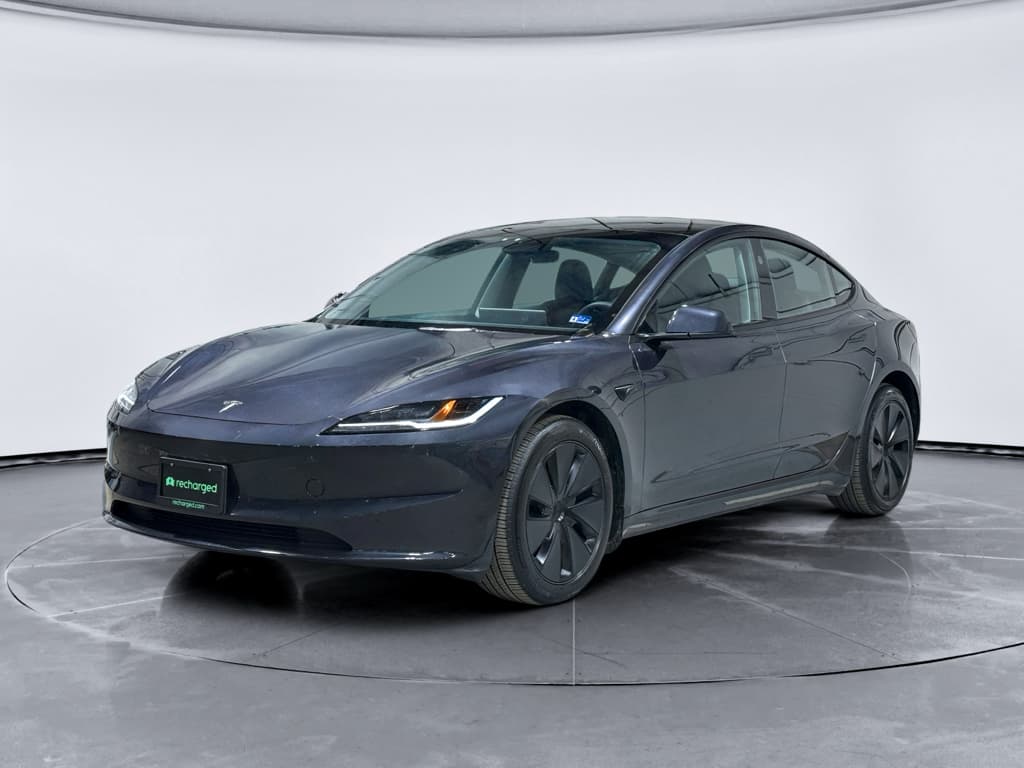
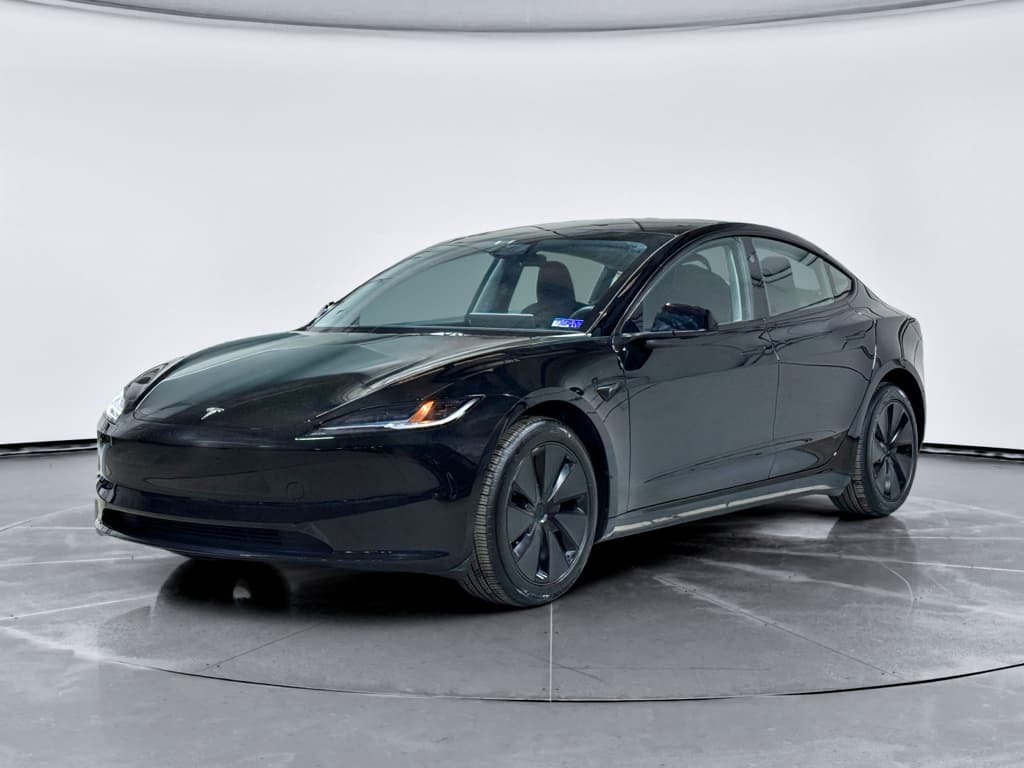
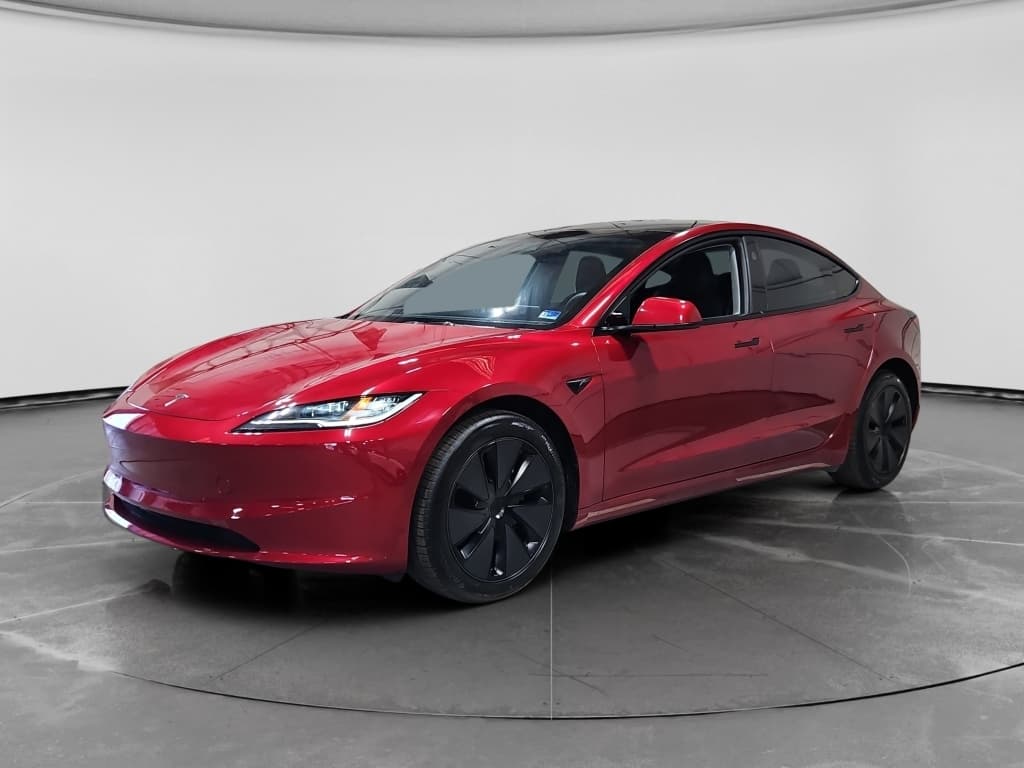
Where a marketplace like Recharged comes in is at the intersection of price and risk. A used Tesla Model 3 with a verified battery report and transparent pricing lets you target that $24,000–$30,000 band without guessing what you’re getting. That narrows the price gap to a used Camry and leaves more room for the EV’s operating‑cost advantage to shine.
Gas vs electricity: where most Model 3 savings actually come from
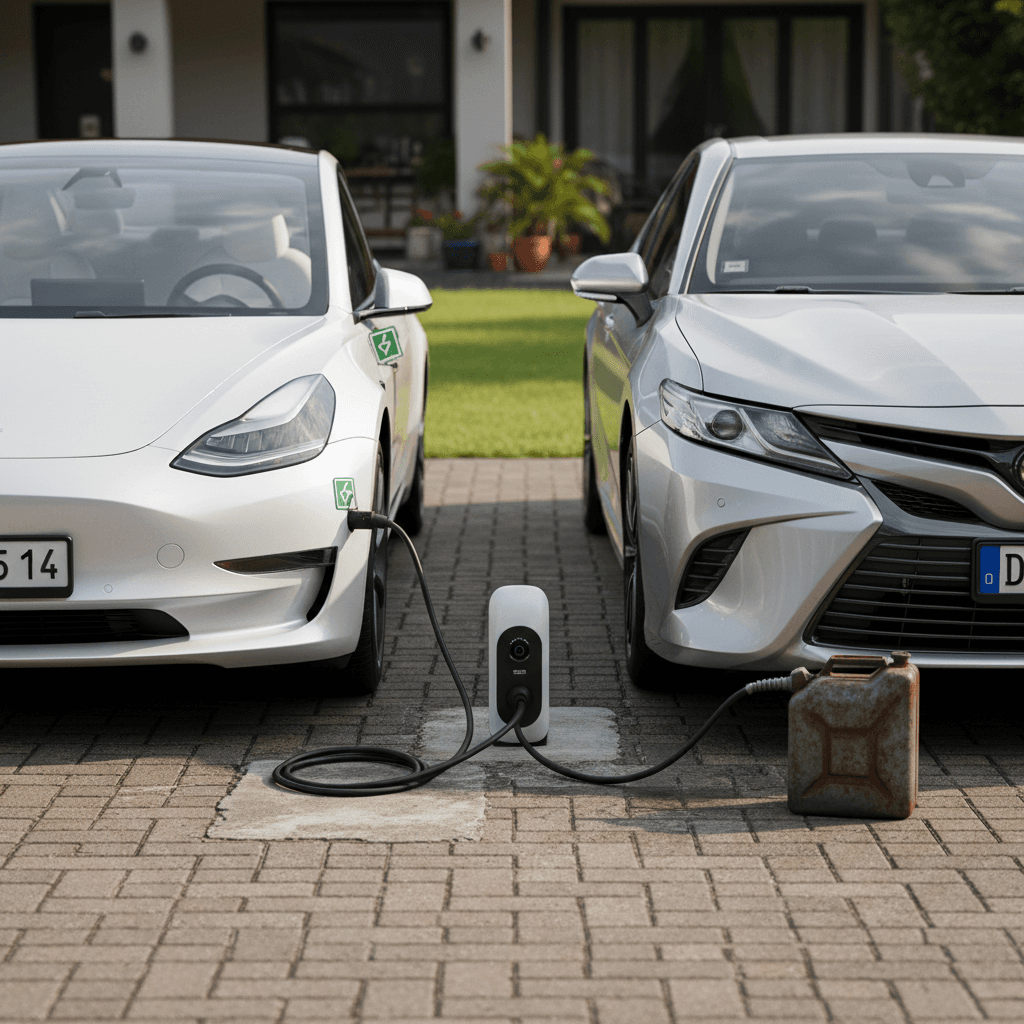
Fuel is where switching from a Toyota Camry to a Tesla Model 3 can feel like dropping a car loan from your budget. It’s not magic; it’s physics and efficiency. A modern Camry is pretty thrifty, but a Model 3 uses energy far more efficiently and your electricity is usually cheaper per unit of energy than gasoline.
Annual fuel vs electricity cost: Camry vs Model 3
Using 12,000 miles per year, $3.75/gal gasoline, $0.15/kWh electricity and realistic efficiency figures.
| Metric | Toyota Camry (gas) | Tesla Model 3 (EV) |
|---|---|---|
| Real‑world efficiency | 32 mpg (mixed) | 0.27 kWh/mi (≈ 3.7 mi/kWh) |
| Energy cost assumption | $3.75 per gallon | $0.15 per kWh (home) |
| Energy per 12,000 miles | 375 gal | 3,240 kWh |
| Annual energy cost | ≈ $1,410 | ≈ $486 |
| 5‑year energy cost | ≈ $7,050 | ≈ $2,430 |
Your actual costs will vary with speed, climate, tire choice and driving style.
Fuel savings in plain English
If you lean heavily on DC fast charging, whether Tesla Superchargers or third‑party networks, your electricity cost can rise toward, or even into, gas‑car territory. That doesn’t kill the EV case, but it means your home‑charging percentage becomes the swing factor in your Camry vs Model 3 fuel savings.
Maintenance and repairs: Camry’s reputation vs EV simplicity
Toyota built its brand on cars that refuse to die. A Camry will happily outlast marriages, college loans and several sets of tires. But a Tesla Model 3 doesn’t play the same game; it plays a different one. With no oil changes, no transmission fluid, and far fewer moving parts, routine maintenance drops dramatically, even if some repairs, when they occur, can be pricey.
Typical annual maintenance: Camry vs Model 3
Broad brushstrokes, not a quote from your mechanic.
Toyota Camry (gas)
- Oil and filter changes: 2–3 per year
- Transmission service (periodic)
- Spark plugs, belts, exhaust over time
- Brake pads/rotors (less often on highway commuters)
- Typical routine maintenance: $500–$800/year
Tesla Model 3 (EV)
- No oil changes, no exhaust, no timing belts
- Cabin air filter, tire rotations, brake fluid checks
- Brakes last longer thanks to strong regen
- Out‑of‑warranty repairs can be costly but less frequent
- Typical routine maintenance: $250–$500/year
The big‑ticket elephant: battery and high‑voltage repairs
Over a five‑year span, it’s reasonable to assume a Camry will cost you a bit more in regular maintenance but may be cheaper to fix in the event of a fender‑bender or sensor issue. The Model 3 flips that: lower routine maintenance, higher parts and labor when something non‑trivial breaks. For most owners, the maintenance savings still tilt toward the Tesla, but the spread isn’t as dramatic as fuel.
Insurance, taxes and fees: the hidden line items
Insurance is where the romantic vision of gliding silently in a Model 3 meets actuarial tables. Teslas tend to cost more to insure than mainstream sedans like the Camry, thanks to higher repair costs and expensive sensors packed into bumpers and glass.
- In many markets, a Tesla Model 3 can run 10–30% higher in insurance premiums than a comparable Camry, all else equal.
- State and local taxes often scale with vehicle value. A more expensive car means a larger one‑time hit at purchase and sometimes higher annual personal property taxes.
- Registration fees can also be higher for heavier or more expensive vehicles, but the difference between a Camry and Model 3 is usually modest compared to fuel and maintenance swings.
Call your insurer before you switch
Depreciation and resale value: how a used Model 3 shifts the math
Depreciation is the silent partner in your cost of ownership. Toyota Camry depreciation is boring in the best way: slow and predictable. Tesla Model 3 values have been more volatile, with rapid early depreciation followed by periods of strong demand that buoy used prices.
New vehicles: Camry’s steady glide path
Buy a new Camry and, five years later, you likely still have a car that’s worth a comfortable chunk of your original purchase price. The drop from year one to year five is predictable and already baked into mainstream leasing and finance assumptions.
Used Model 3: someone else ate the steep drop
Buy a 3–4‑year‑old Tesla Model 3 and most of that initial depreciation has already happened. At that point, the remaining value is driven by mileage, battery health and cosmetic condition. That’s where a verified battery report and expert inspection, like the Recharged Score, become more valuable than an extra thousand dollars off the sticker.
Why depreciation matters more than MSRP
Why a used Tesla Model 3 from Recharged can lower your real cost
Buying used is where the switching‑from‑Camry story gets genuinely interesting. A new Tesla Model 3 versus a new Camry often looks like a lifestyle choice with a side of savings. A used Model 3 versus a used Camry can be a straight‑up financial argument, if you know what you’re getting.
How Recharged helps de‑risk a used Tesla Model 3
Cost savings are only real if the car is healthy.
Verified battery health
Fair market pricing
End‑to‑end convenience
Ready to find your next EV?
Browse VehiclesBecause battery health is the soul of EV value, transparency here can easily be worth thousands of dollars. A cheap Model 3 with a weak pack is not a bargain if it forces you into early pack replacement or constant public charging. Recharged’s diagnostics and EV‑specialist support are designed to prevent exactly that kind of false savings.
Three real‑world budget scenarios: where you win, where you don’t
Let’s put all of this into human terms: your monthly budget. Below are simplified, illustrative scenarios comparing switching from a Toyota Camry to a Tesla Model 3. These are not quotes; they’re frameworks you can adapt.
Illustrative monthly budget scenarios
1. Suburban commuter with home charging
You drive 1,200 miles a month, can install a Level 2 charger in your garage, and qualify for a competitive EV loan. Your Model 3 payment might be $80–$120 higher than a similar‑age Camry, but <strong>fuel savings (~$75/month) plus lower maintenance</strong> can narrow or erase that gap. In this world, the Tesla often wins on total monthly outlay.
2. Low‑mileage urban driver without home charging
You only drive 500 miles a month and rely on paid public charging. Your fuel bill in a Camry is already low, and Supercharger rates eat into EV savings. Here, the <strong>Camry’s lower payment and cheaper insurance</strong> may still win unless you find an especially sharp used Model 3 deal.
3. High‑mileage road warrior
You’re clocking 20,000+ miles a year. Gas is painful. Home charging is available and your utility offers time‑of‑use rates. In this case, the <strong>fuel savings from a Model 3 are enormous</strong>, and even a higher payment can be fully offset. The more you drive, the more the EV’s efficiency pays you back.
Beware the “payment trap”
Checklist: Are you financially ready to switch from Camry to Model 3?
Before you swap keys, run through this list
Confirm your real annual mileage
Look at odometer readings year‑over‑year, not guesses. If you barely crack 7,000 miles a year, fuel savings from switching may not justify a much higher payment.
Audit your charging situation
Do you have reliable home or workplace charging? If not, map out local DC fast chargers and their prices. High reliance on paid fast charging shrinks or erases EV cost savings.
Get real insurance quotes
Call or visit your insurer’s app and quote both a late‑model Camry and a Tesla Model 3 with identical coverage. Build that difference into your cost comparison.
Compare used to used, new to new
Don’t compare your paid‑off, 10‑year‑old Camry to a brand‑new Model 3. Instead, compare what you’d logically replace the Camry with, new or used, to the Tesla you’re eyeing.
Plan for a repair fund
Set aside a modest monthly amount, say $50–$75, for future repairs, whether you stay with a Camry or move to a Model 3. EVs break less often, but when they do, it can be expensive.
Explore financing and trade‑in options
Use Recharged to <strong>pre‑qualify for financing</strong>, get an instant offer on your Camry, or explore consignment. Squeezing interest rates and maximizing your trade‑in value can be worth more than any single line item in this article.
FAQ: Switching from Toyota Camry to Tesla Model 3 cost savings
Common questions about Camry vs Model 3 costs
Bottom line: when a Tesla Model 3 actually saves you money over a Camry
Switching from a Toyota Camry to a Tesla Model 3 isn’t a simple upgrade from beige to bleeding‑edge. It’s a reshuffling of where your money goes: less to fuel and routine maintenance, more to the car itself and, often, to insurance.
If you drive a lot, can charge at home, and buy a well‑priced used Model 3 with strong battery health, the math often tilts in favor of the Tesla on five‑year total cost of ownership. If you drive little, rely on public fast charging, or would otherwise buy a modest used Camry, the gas car can still be the financially cooler head.
The smart move is to run your own numbers: mileage, gas and power prices, real insurance quotes, and side‑by‑side offers on the cars you’d actually buy. Platforms like Recharged exist to make that process less of a leap of faith, pairing transparent pricing, verified battery health and EV‑savvy support with financing, trade‑in options and nationwide delivery.
If you do the homework and the Tesla Model 3 still wins on paper, that’s when you can let your heart have a say. Because there’s a quiet kind of satisfaction in driving the car that’s both more fun and, over time, kinder to your wallet than the Camry that defined sensible for a generation.