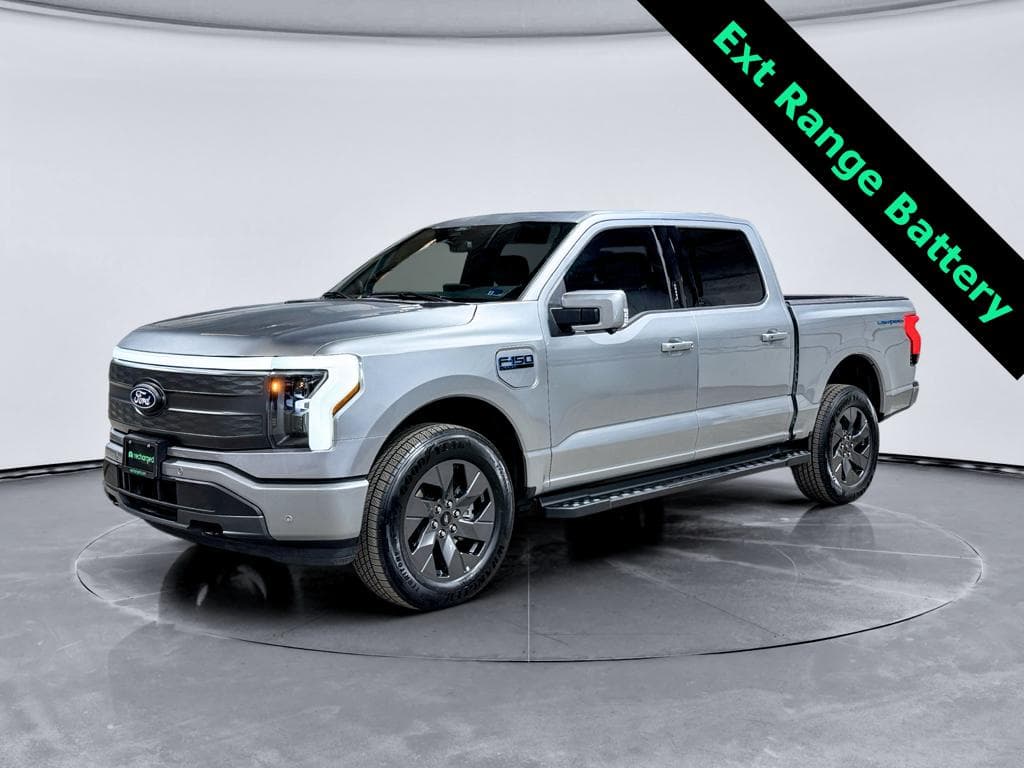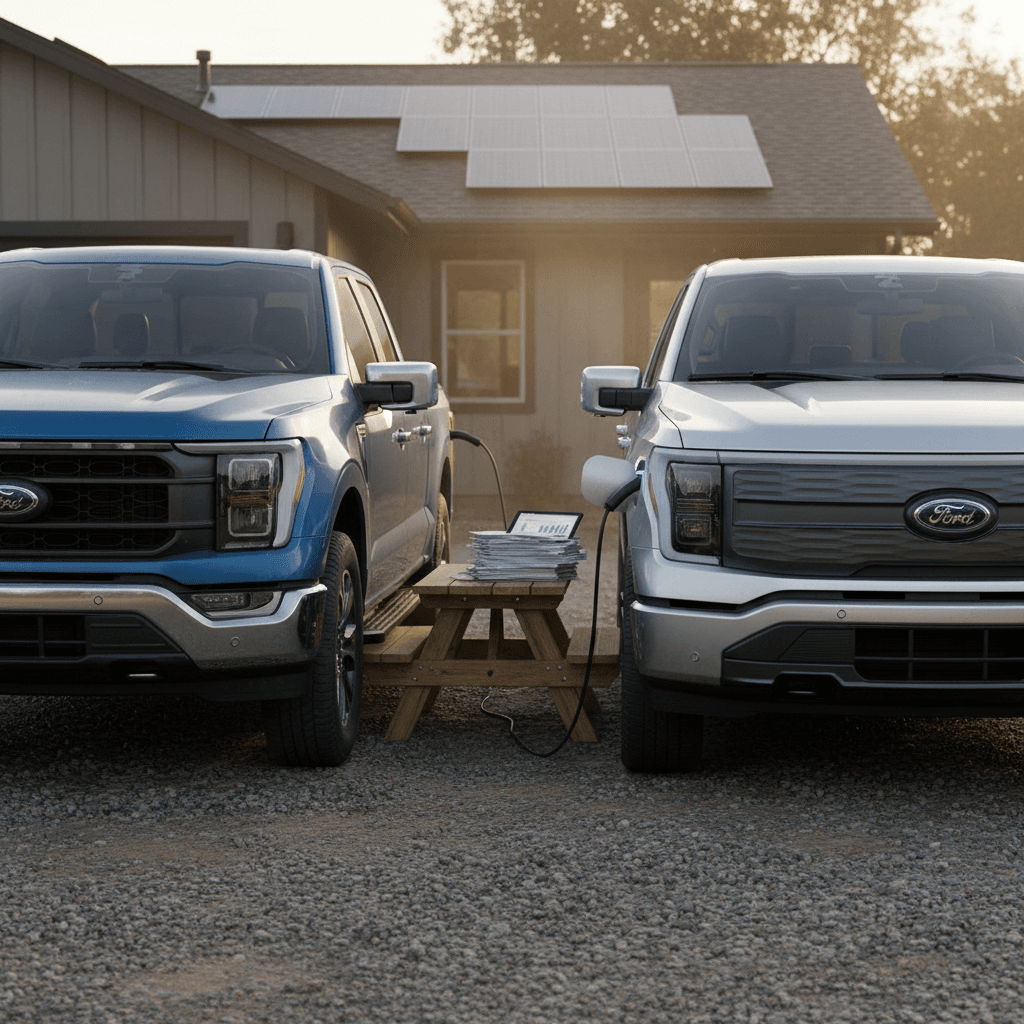
If you’re driving a gas or hybrid Ford F-150 and considering a move to the all‑electric F-150 Lightning, the first question is usually simple: will it actually save you money? This guide walks through real‑world numbers on fuel, electricity, maintenance, and purchase price so you can see the true cost savings of switching from a Ford F-150 to a Ford F-150 Lightning.
Key takeaway in 30 seconds
Why F-150 Owners Are Eyeing the F-150 Lightning
The F-150 has been the default American truck for decades. The F-150 Lightning takes that formula and swaps the gas or diesel powertrain for a large battery pack and dual electric motors. For a lot of owners, the appeal isn’t just torque, it’s the promise of lower running costs, especially as gas prices jump around and electricity stays relatively predictable.
Quick Snapshot: F-150 vs F-150 Lightning Costs
Your numbers will vary
How Much Energy the F-150 Lightning Uses
To compare costs, start with energy use. Recent extended‑range 4WD F-150 Lightning models consume roughly 48 kWh per 100 miles in combined EPA testing, which equates to about 2.1 miles per kWh. In real‑world highway driving at 70–75 mph, many owners see 65–80% of EPA range, but that still keeps the truck in roughly the same efficiency ballpark for cost calculations.
- Think of kWh as the EV version of gallons of gas, how much energy you’re putting in.
- 48 kWh/100 miles means driving 100 miles uses 48 “units” of electricity from the grid or your home.
- If your electricity is 20¢/kWh, that 100‑mile trip costs about $9.60 in energy (48 × $0.20).
A quick EV cost rule of thumb
Fuel vs. Electricity: Cost Per Mile Breakdown
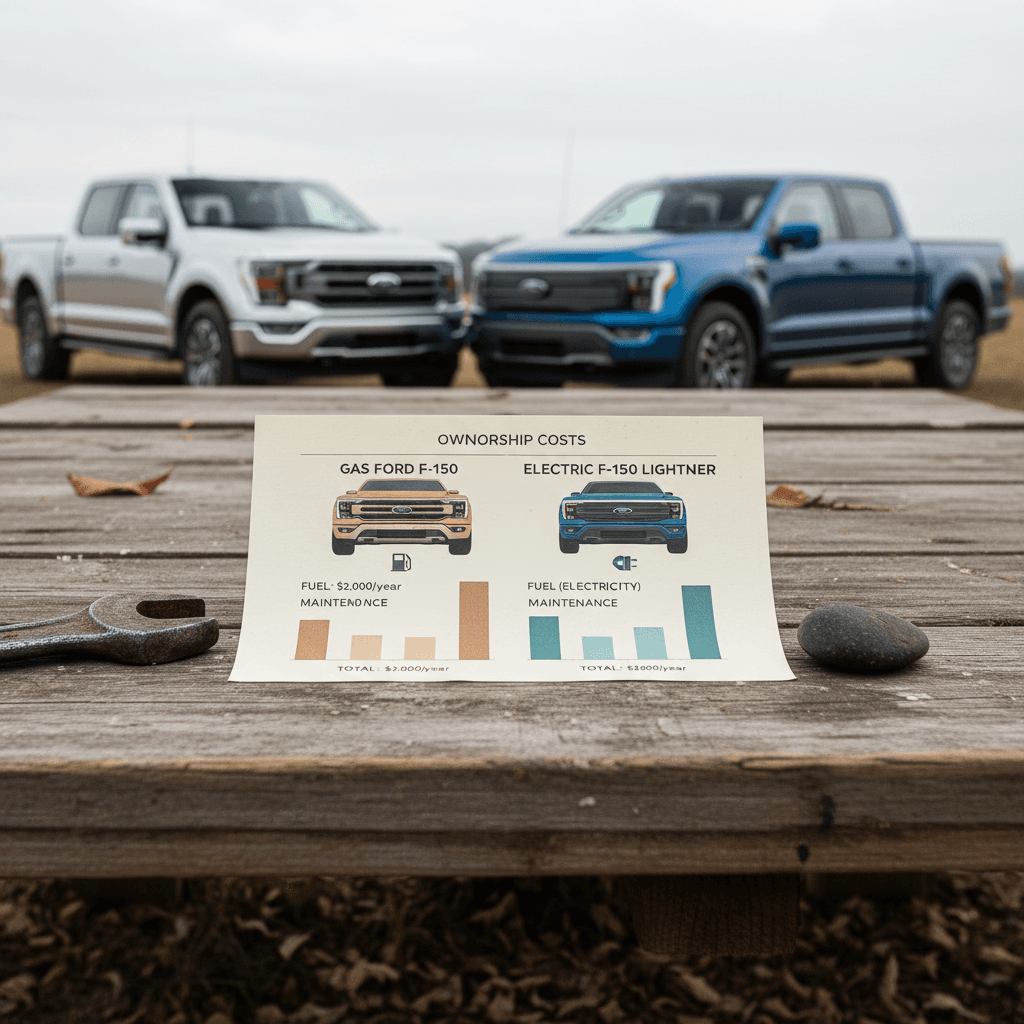
To see what switching from a Ford F-150 to an F-150 Lightning does to your operating costs, you need to compare **gasoline dollars per mile** with **electricity dollars per mile**. We’ll use simple scenarios based on common U.S. averages.
Per‑Mile Energy Cost: F-150 vs F-150 Lightning
Approximate energy cost per mile for a conventional Ford F-150 versus an F-150 Lightning under different gas and electricity prices.
| Scenario | Gas Price ($/gal) | Electricity Price ($/kWh) | Gas F-150 Cost / Mile | F-150 Lightning Cost / Mile |
|---|---|---|---|---|
| Baseline U.S. average | $3.75 | $0.17 | $0.21 | $0.08 |
| Higher electricity state | $3.75 | $0.25 | $0.21 | $0.12 |
| Cheap gas year | $3.00 | $0.17 | $0.17 | $0.08 |
| High gas spike | $4.50 | $0.17 | $0.25 | $0.08 |
Assumes a conventional F-150 averaging 18 mpg and an F-150 Lightning using 48 kWh per 100 miles (0.48 kWh per mile).
Rule of thumb: the 10× test
Annual energy cost: gas F-150
- Assume 12,000 miles per year.
- 18 mpg average; 12,000 ÷ 18 ≈ 667 gallons.
- At $3.75/gal, annual fuel ≈ $2,500.
Annual energy cost: F-150 Lightning
- Same 12,000 miles per year.
- 0.48 kWh per mile → 5,760 kWh a year.
- At $0.17/kWh, annual electricity ≈ $980.
- Annual savings on energy alone: roughly $1,500.
Public fast charging changes the math
Maintenance and Repair Savings
Beyond fuel, the next big piece of switching from a Ford F-150 to a Ford F-150 Lightning is maintenance. Electric powertrains have far fewer moving parts and no engine oil, spark plugs, or exhaust system. Over time, that usually translates to lower upkeep.
Where the Lightning Saves You on Maintenance
Same full‑size truck format, very different wear items.
No oil changes
Simpler drivetrain
Brakes last longer
Ongoing Costs: What You Still Pay for Either Truck
Tires
Full‑size trucks are heavy, and the Lightning is heavier still. Budget for quality tires on either F-150. EVs can wear tires faster if you lean on instant torque often.
Fluids and filters
You’ll still change cabin air filters, washer fluid, and potentially some driveline fluids over time on the Lightning, but the list is much shorter than on a gas F-150.
Alignment and suspension
Potholes, off‑roading, and heavy payloads affect any truck. Alignments, shocks, and suspension components are common expenses on both gas and electric F-150s.
Out‑of‑warranty repairs
Electronics, infotainment, motors, or battery‑related components can fail just as engines and transmissions can on gas trucks. Extended coverage or a certified used EV can help manage the risk.
How much can maintenance savings add up?
Upfront Price, Tax Credits, and Used Lightning Prices
The main pushback you’ll hear from truck buyers is that the F-150 Lightning carries a higher sticker price than a comparable gas F-150. That’s true when you look at new‑vehicle MSRPs. But you also have to factor in federal tax credits where applicable and rapidly evolving used‑EV pricing.
- New F-150 Lightning: Depending on trim, a new Lightning often lists higher than a similarly equipped gas F-150, though dealer discounts and incentives move around.
- Federal EV tax credits: Certain F-150 Lightning configurations and buyers may qualify for federal credits, which effectively lower the net price the year you buy.
- Used Lightning market: Early‑build Lightnings are now showing up on the used market at significant discounts compared with original MSRP, especially once they’re a few years old or have higher mileage.
Leaning on the used market to improve the math
When Does a Lightning Actually Save You Money?
The heart of the question, "Should I switch from a Ford F-150 to an F-150 Lightning for cost savings?", comes down to how long it takes **fuel and maintenance savings** to offset any higher purchase price.
Scenario 1: High‑mileage driver
You drive 18,000 miles per year, mostly highway, and can charge at home:
- Gas F-150 fuel at 18 mpg and $3.75/gal ≈ $3,750/year.
- Lightning electricity at 0.48 kWh/mi and $0.17/kWh ≈ $1,470/year.
- Annual energy savings ≈ $2,300 plus maintenance benefits.
- If the Lightning costs $10,000 more up front, energy savings alone can cover that in ~4–5 years.
Scenario 2: Low‑mileage, expensive electricity
You drive 8,000 miles a year and pay $0.25–0.30/kWh for power:
- Gas F-150 fuel (18 mpg, $3.75/gal) ≈ $1,670/year.
- Lightning electricity (0.48 kWh/mi at $0.28/kWh) ≈ $1,075/year.
- Annual energy savings ≈ $600, with some maintenance upside.
- If you paid a large premium up front for the Lightning, payback could stretch well past a typical 5‑year ownership window.
Think in total cost of ownership, not just payments
Beyond Dollars: Driving Experience and Capability
Cost isn’t the only reason drivers consider switching from a Ford F-150 to a Ford F-150 Lightning. Performance, capability, and daily convenience play a role too, and they can indirectly affect your ownership costs and satisfaction.
How the F-150 and F-150 Lightning Feel Different to Own
Same badge, different day‑to‑day experience.
Instant torque
Home "fueling"
Pro Power Onboard
Range, towing, and cold weather matter
How to Run the Numbers for Your Situation
The smartest way to decide whether switching from a Ford F-150 to an F-150 Lightning makes financial sense is to plug in your own commute, fuel receipts, and utility bills. Here’s a simple framework you can follow in 10–15 minutes.
5 Steps to Compare Your F-150 vs F-150 Lightning Costs
1. Gather your current fuel and mileage data
Look at a few months of credit‑card statements or fuel‑tracking apps to see how many gallons you buy and how many miles you drive in an average month with your F-150.
2. Find your all‑in electricity rate
Grab a recent power bill and divide the total dollar amount by total kWh used to get your real cost per kWh, including fees and taxes, not just the advertised energy rate.
3. Estimate Lightning energy use
Use 0.48 kWh per mile (48 kWh per 100 miles) as a starting point, then adjust up if you tow frequently, drive fast highways, or live in an extreme‑temperature climate.
4. Compare yearly energy and maintenance costs
Calculate your annual gas spend for the F-150 and your estimated annual electricity cost for the Lightning, then add rough maintenance: higher for the gas truck, lower for the EV.
5. Look at the total ownership picture
Factor in the difference in purchase price (new or used), likely resale values, and how long you plan to keep the truck. A Lightning you own for 7–10 years has more time to pay you back than one you flip in 3 years.
Need help running the numbers?
FAQ: Switching from F-150 to F-150 Lightning Cost Savings
Common Questions About F-150 vs F-150 Lightning Costs
Is Switching to an F-150 Lightning Worth It?
Switching from a Ford F-150 to a Ford F-150 Lightning often delivers meaningful fuel and maintenance savings, plus a quieter, more responsive driving experience and the convenience of home charging. The payoff is clearest if you drive above‑average miles, can charge at low residential electricity rates, and buy smart, whether that’s taking advantage of incentives on a new truck or shopping for a well‑priced used Lightning with a strong battery‑health report.
If you’re on the fence, run the numbers for your exact gas and electricity prices and how long you tend to keep your trucks. Then compare specific vehicles side by side. A transparent used‑EV marketplace like Recharged can make that easier by showing fair pricing, verified battery health, and total‑cost‑of‑ownership insights, so you know whether an F-150 Lightning really is the right next step for your driveway and your budget.