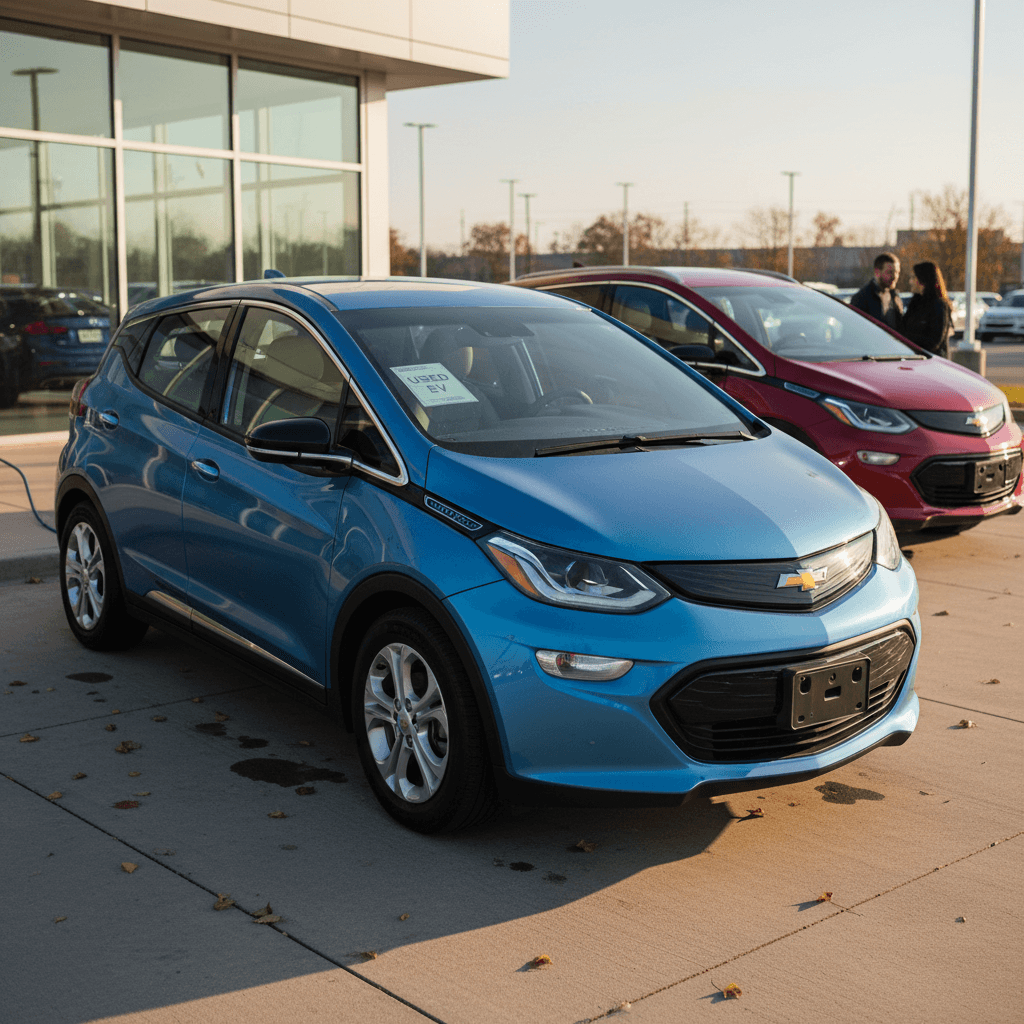
If you’re eyeing a used 2022 Chevy Bolt EV, you already know the headline: great range and value, messy recall history. The question is what really matters today. Is 2022 Chevy Bolt EV reliability good enough to trust as your daily driver, or are you parking a rolling question mark in your garage?
Short answer
2022 Chevy Bolt EV reliability at a glance
2022 Bolt EV reliability snapshot
On paper, the 2022 Bolt EV is a pretty compelling proposition. You get 259 miles of range, simple electric hardware, and an 8‑year/100,000‑mile battery warranty backing the most expensive component. Owner-reported reliability is strong, Kelley Blue Book shows a 4.6/5 reliability rating with around 90% of owners recommending the car. Consumer Reports, which is typically tougher, puts the 2022 Bolt at about average reliability overall compared with other 2022 model‑year vehicles.
The catch
The battery recall: does it still matter for 2022 Bolts?
To understand 2022 Chevy Bolt EV reliability, you have to start with the recall story. Earlier Bolt model years suffered rare but serious battery fire incidents tied to manufacturing defects in LG-supplied cells. GM ultimately expanded the recall to cover all 2017–2022 Bolt EVs and 2022 Bolt EUVs, including many that were still on dealer lots at the time.
- Defect: Internal battery cell manufacturing flaws that could, in rare cases, cause thermal runaway and fire near full charge.
- Recall fix: GM software limits and then, in many cases, full battery pack replacement or module replacement plus updated monitoring software.
- Ongoing cleanup: A small additional recall in 2024 targeted 2020–2022 cars whose diagnostic software wasn’t loaded correctly, leaving a few vehicles at elevated fire risk despite prior repair work.
- Owner experience: For many drivers, the practical result was a new or reworked battery pack, and in some cases, slightly different real‑world range.
Why a 2022 can be a *better* bet than older Bolts
That said, you should not assume any used 2022 Bolt EV is “all good” just because of the model year. You want to verify recall completion by VIN, confirm the correct software is installed, and, ideally, see objective battery health data rather than just trusting a dashboard range estimate.
Common 2022 Bolt EV problems & trouble spots
Aside from the battery saga, the 2022 Bolt EV is mechanically simple. No engine, no transmission, no exhaust, no oil changes. Most trouble spots show up in the supporting cast: electronics, charging hardware, and squeaks rather than major drivetrain failures.
Most common 2022 Bolt EV reliability complaints
What tends to go wrong, and how worried you should be
Infotainment glitches
Some owners report frozen or rebooting screens, Bluetooth drops, or laggy CarPlay/Android Auto. These are usually fixed with software updates or, in rare cases, screen replacement under warranty.
Charge port & charging issues
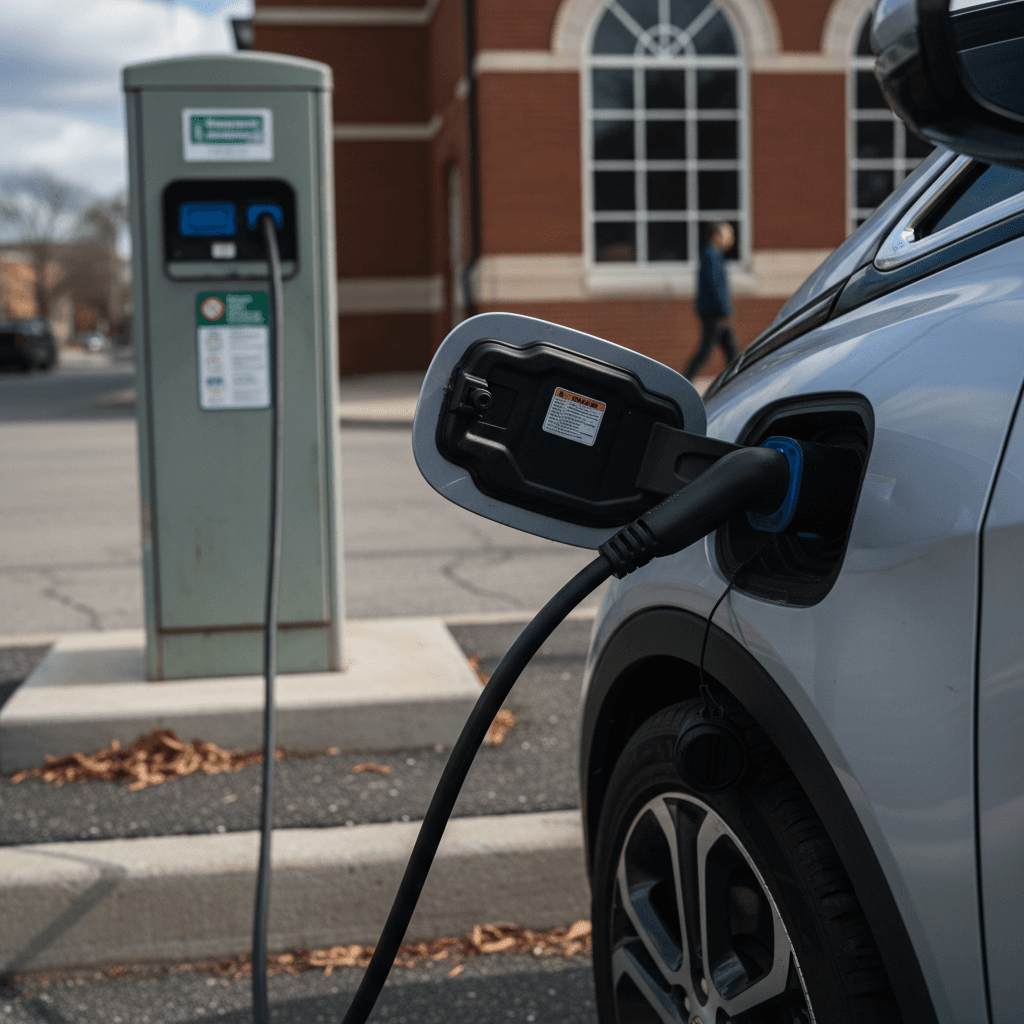
Complaints range from bent pins in the charge port to cars refusing to charge on a particular Level 2 station. Sometimes it’s a finicky public charger; sometimes the car needs a port repair or software update.
Noise, squeaks & trim
A hatchback with stiff suspension and big battery is not a Mercedes. Expect the occasional rattle, wind noise, or cheap-feeling trim, especially on rough roads. Annoying, but rarely disabling.
Less common but worth watching
Issues that show up in surveys but aren’t epidemic
DC fast‑charging performance
All Bolts are capped at about 55 kW on DC fast charge. That’s not a defect, but some owners interpret slower road‑trip charging as a “problem.” Confirm your expectations if you travel often.
Range vs. EPA sticker
At highway speeds or in cold weather, some drivers see 170–200 miles instead of the EPA 259‑mile rating. That’s normal EV behavior, but a rude awakening if you bought only on the brochure number.
Isolated hardware failures
As with any mass‑market car, there are scattered reports of onboard chargers, HVAC components, or sensors failing early. The good news: most of this is covered while the car is under warranty.
How Recharged handles these issues
Owner reviews: how 2022 Bolt reliability feels day to day
Spreadsheets tell one story, owners tell another. For the 2022 Bolt EV, actual drivers are, on the whole, enthusiastic. Kelley Blue Book owner reviews give the 2022 Bolt 4.6 out of 5 stars for reliability, with roughly 90% saying they’d recommend the car to others.
Positive reliability themes
- “Just works” daily driving: Many owners report years of use with nothing but tire rotations.
- Low maintenance: No oil changes, no transmission issues, minimal dealer visits.
- Solid build for a cheap GM hatch: Multiple reviewers are pleasantly surprised that the doors don’t sound tinny and the interior holds up better than expected.
- Great value per mile: Cheap electricity plus few repairs equals very low running costs.
Negative reliability themes
- Electronics gremlins: Frozen infotainment screens, occasional sensor weirdness, rare but annoying.
- Charging hiccups: A few owners report failed charge sessions or port damage blamed on the driver.
- Range expectations: Highway and cold‑weather range can disappoint drivers who assumed EPA numbers were guaranteed.
- Recall anxiety: Some owners remain uneasy about long‑term battery safety despite the fixes.
“Great little EV. Fast, spacious and fun… Best car I’ve ever driven… I’ve had it for 3 years and I’ve done absolutely nothing [in maintenance]. Just plug it in and it works.”
Battery health, degradation and fire risk
If you’re going to worry about one part of a 2022 Chevy Bolt EV, make it the high‑voltage battery. It’s the most expensive component in the car and the one that spent time in the national spotlight.
- Most 2022 Bolt EVs are now several years old, and in typical daily use many show modest degradation, often still delivering well over 200 miles of practical range.
- The recall-era replacement packs mean a lot of 2022 cars effectively have a younger battery than their model year suggests.
- Thermal‑runaway fire risk has been greatly reduced by hardware fixes and software monitoring, but GM has still issued targeted follow‑up campaigns when it found vehicles where the software wasn’t installed correctly.
- Battery failures remain rare relative to the number of Bolts on the road, but the consequences are serious enough that you should insist on documentation and diagnostics.
Don’t skip battery checks on a used Bolt
Running costs, maintenance, and repairs
One big reason the 2022 Bolt EV inspires fierce loyalty is that once you get past the recall headlines, it’s a surprisingly cheap car to live with. Reliability here is less about “will it start?” and more about “how often do I have to think about it at all?”
Where 2022 Bolt EV reliability saves you money
Fewer moving parts, fewer headaches
No oil, no belts
No oil changes, timing belts, spark plugs, or exhaust. Routine service is mostly tire rotations, cabin filters, and the occasional brake fluid change.
Brakes that last ages
Strong regenerative braking means pads and rotors can last far longer than in a gas car. Many owners go tens of thousands of miles with minimal brake wear.
Stable, predictable costs
Electricity is usually cheaper than gas, and the Bolt’s simple drivetrain means fewer surprise repair bills compared with a turbocharged gas crossover.
Where costs can spike is when something rare but pricey fails out of warranty, most notably the battery or onboard charger. That’s where the 8‑year/100,000‑mile electric propulsion warranty is your safety net. For a 2022 model, that coverage typically runs through at least 2030 for the original owner, and the high‑voltage warranty is transferable to subsequent owners, making a used 2022 Bolt less frightening than the recall headlines suggest.
How Recharged helps on total cost of ownership
Ready to find your next EV?
Browse VehiclesBuying a used 2022 Bolt EV: reliability checklist
If you’re shopping a used 2022 Chevy Bolt EV, you’re not just buying a drivetrain, you’re buying its recall history, charging habits, and the previous owner’s level of mechanical sympathy. Here’s how to stack the odds in your favor.
Used 2022 Bolt EV reliability checklist
1. Confirm all battery recalls by VIN
Ask the seller for paperwork showing <strong>battery recall completion</strong> and check the VIN against GM’s recall lookup. If software fixes were required in 2024, make sure they’re documented too.
2. Get an objective battery health report
Don’t rely only on the dash guess‑o‑meter. Look for a <strong>formal battery health scan</strong> that shows usable capacity and cell balance. The Recharged Score Report includes this as standard.
3. Inspect and test the charge port
Examine the J1772/CCS combo port for <strong>bent or discolored pins</strong>, cracked plastic, or a loose charge door. Then test charge on both Level 2 and DC fast if possible.
4. Check for infotainment and electronics quirks
During a long test drive, cycle through <strong>CarPlay/Android Auto, Bluetooth, cameras, and driver‑assist features</strong>. Watch for freezing, random reboots, or warning lights.
5. Listen for rattles and suspension noise
On rough roads, pay attention to <strong>squeaks, clunks, or buzzes</strong> from the hatch, dash, or suspension. Cosmetic noise isn’t fatal, but it affects perceived quality and resale value.
6. Review service history & warranty status
Ideally you’ll see regular tire rotations, software updates, and recall work. Confirm how many miles remain on the <strong>8‑year/100k battery warranty</strong> based on the in‑service date.
Make the seller prove it
How the 2022 Bolt EV stacks up against other EVs
Electric vehicles as a group tend to have more software and electronics issues than comparable gas cars, even as they crush internal combustion in mechanical simplicity. In that context, the 2022 Chevy Bolt EV lands somewhere in the middle of the EV pack.
2022 Chevy Bolt EV vs. other popular EVs (reliability lens)
Not a spec sheet, just a feel for how the 2022 Bolt behaves compared with common alternatives.
| Model | Overall reliability feel | Biggest worry | Ownership sweet spot |
|---|---|---|---|
| 2022 Chevy Bolt EV | Average to slightly above average | Battery recall history & electronics glitches | Affordable city/commuter car with low running costs |
| Tesla Model 3 (similar years) | Slightly better drivetrain, more software quirks | Screen‑centric controls & build quality | Tech‑forward, strong fast‑charge network |
| Hyundai Kona Electric / Kia Niro EV | Generally solid but some battery recalls | Charging curve & occasional HV component issues | Comfortable, conventional small crossovers |
| VW ID.4 / Ford Mustang Mach‑E | More early‑production issues | Software bugs, door modules, 12‑V batteries | Roomier family vehicles with growing‑pain quirks |
Generalized reliability impressions based on owner surveys and industry data.
In other words, the 2022 Bolt EV is not the Toyota Corolla of EVs, but it’s also not an experimental science project. Once its battery story is properly sorted, it settles into a life of quietly going about its business, especially if you use it primarily for commuting and local driving rather than constant cross‑country runs.
Is the 2022 Chevy Bolt EV a good used buy?
Great choice if…
- You want an affordable, efficient city or commuter EV with enough range to forget about daily charging math.
- You have reliable home Level 2 charging and don’t road‑trip by car every other weekend.
- You’re comfortable trading some interior polish for low operating costs and a small footprint that fits anywhere.
- You buy from a seller (or marketplace like Recharged) that can document recall work and battery health in detail.
Maybe look elsewhere if…
- You’re extremely risk‑averse about battery fire headlines, even with recall fixes and warranties in place.
- You need frequent fast long‑distance travel; the Bolt’s modest DC fast‑charge speeds will test your patience.
- You want an SUV‑like seating position, big cargo bay, or luxe interior, this is a compact hatchback first and foremost.
- You can stretch to a newer EV with faster charging and newer tech but similar total cost of ownership.
Viewed with clear eyes, the 2022 Chevy Bolt EV is a quietly competent used EV with a very loud backstory. Its headline reliability sin, the LG battery defect, has largely been addressed through packs and software that make today’s cars safer and, in some cases, fresher than their model years suggest. If you do your homework on recalls, demand real battery data, and buy from a seller who takes EV diagnostics seriously, a 2022 Bolt EV can be one of the lowest‑cost, lowest‑drama ways into electric ownership.