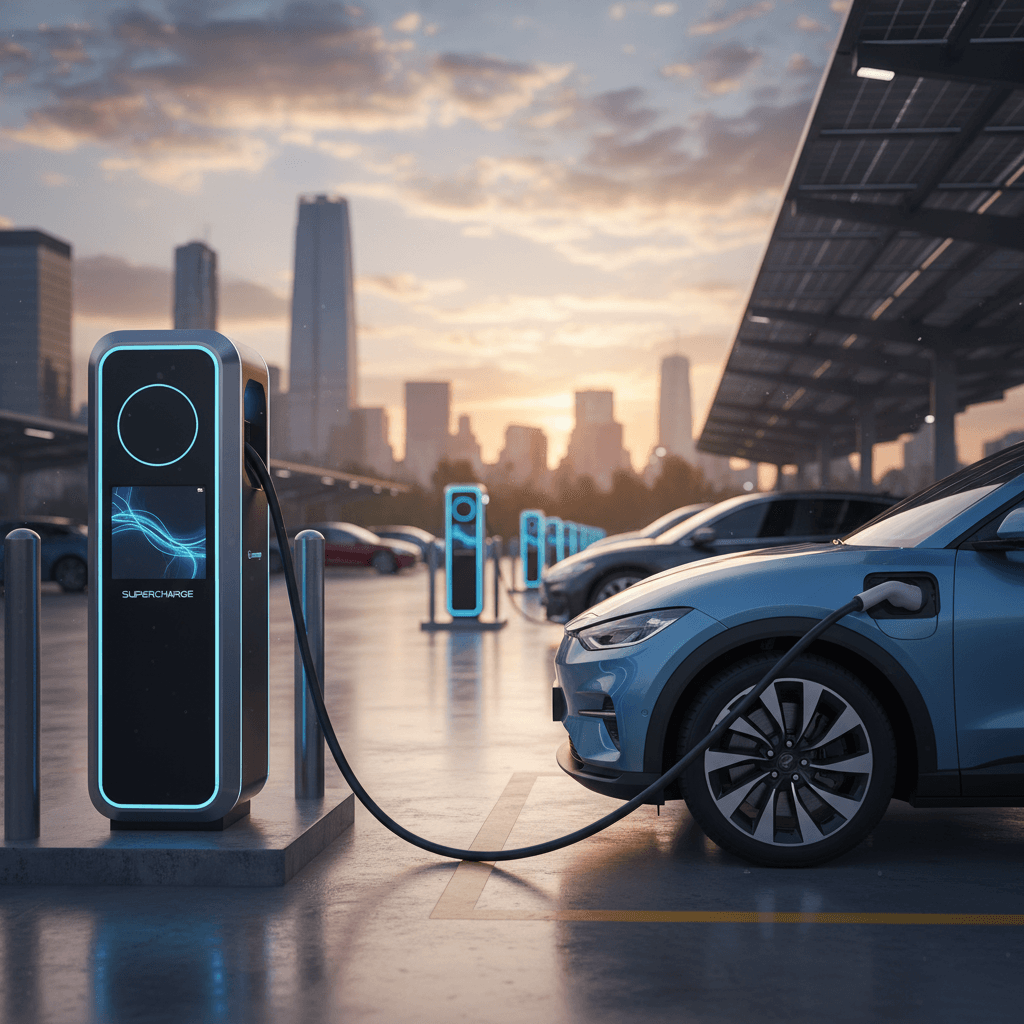
You’ve got the battery gauge dropping, traffic all around you, and your phone screen full of “supercharge near me” results that may or may not be useful. The good news: fast EV charging in the U.S. has grown dramatically, and with the right tools, finding a real, working charger near you gets a whole lot easier.
Fast charging is evolving, quickly
Why You Keep Searching “Supercharge Near Me”
When you type “supercharge near me” into your phone, you’re usually asking three questions at once: Where is the closest fast charger? Will it actually work with my car? And how long will I be stuck there? That mix of urgency and uncertainty is exactly why it pays to understand how Tesla Superchargers and other fast‑charging options work.
Fast Charging in 2025: What the Landscape Looks Like
Search smarter, not harder
Tesla Superchargers 101: What “Supercharge Near Me” Really Means
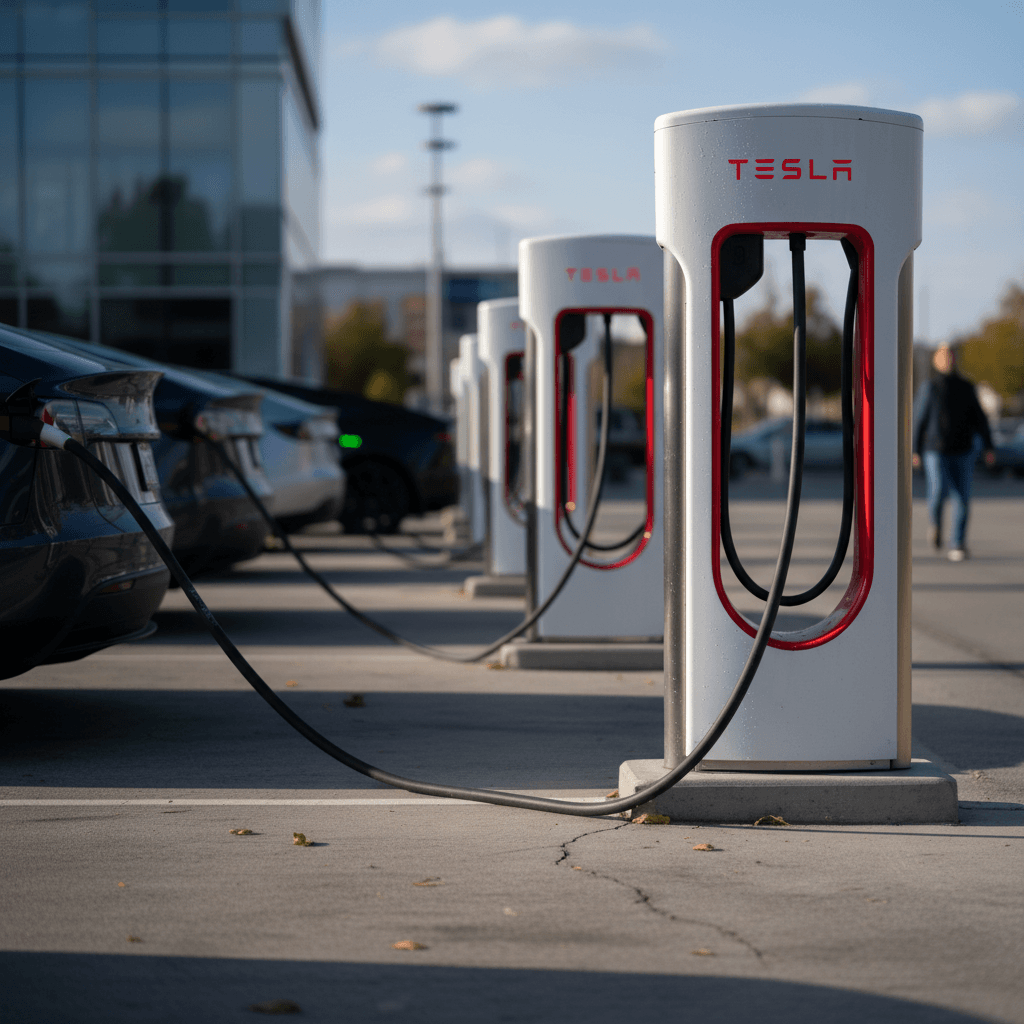
Strictly speaking, a “Supercharger” is Tesla’s own DC fast‑charging network. These are the red‑and‑white stalls you see near highway exits, shopping centers, and some urban garages. A typical stop adds a big chunk of range, often 150–200 miles, in around 15 minutes if you arrive with a low battery and a warm pack.
- Level 2 charging (AC, 240V): 20–40 miles of range per hour of charging; great for home and overnight stops.
- DC fast charging (often 50–350 kW): 150+ miles in 15–30 minutes under ideal conditions; best for road trips and quick top‑ups.
- Tesla Superchargers: Tesla’s own brand of DC fast chargers, now using the North American Charging Standard (NACS) connector in the U.S.
Not every “fast charger” is a Supercharger
How to Find a Supercharger Near Me (Tesla and Non‑Tesla)
Three Reliable Ways to Find Fast Chargers Near You
Use a mix of in‑car tools, apps, and maps for the best results.
Your EV’s built‑in navigation
Many newer EVs (including Teslas) can automatically find nearby DC fast chargers:
- Filters by connector type for your car.
- Often includes real‑time stall availability.
- Some systems precondition the battery en route.
On a Tesla, tap the lightning‑bolt icon on the map to see nearby Superchargers, then select a site to navigate.
Tesla app & official maps
If you drive a Tesla, the official app and the Supercharger map on Tesla’s website remain the most accurate way to find a Supercharger near you.
- Shows live stall availability.
- Lists max charging speed and amenities.
- Lets you filter for sites open to other EVs.
Third‑party charging apps
Apps like PlugShare, Chargeway, and many network‑specific apps show both Tesla and non‑Tesla fast chargers.
- Filter by DC fast only.
- Filter by NACS, CCS, or CHAdeMO.
- Read recent user check‑ins and reliability notes.
Use Google Maps as a backup
Fast Charging Beyond Tesla: Other Networks Near You
Even if there’s no Tesla logo in sight, your EV still has options. Networks like Electrify America, EVgo, ChargePoint, and smaller regional providers have been racing to fill in the DC fast‑charging map around the country, especially along interstate corridors and in metro grocery store and retail parking lots.
Major U.S. Fast‑Charging Networks at a Glance
What you’ll typically see when you tap “EV charging near me” in 2025.
| Network | Typical Connectors | Where You’ll See Them | Good To Know |
|---|---|---|---|
| Tesla Supercharger | NACS (and some legacy Magic Dock CCS) | Highways, malls, urban garages | Gold standard for reliability and power; now opening to more non‑Tesla EVs with adapters or native NACS ports. |
| Electrify America | CCS, some CHAdeMO | Walmart centers, highway exits, shopping areas | Often 150–350 kW; reliability varies by site, so read recent check‑ins. |
| EVgo | CCS, CHAdeMO, some NACS | Urban parking lots, grocery stores | Good for city dwellers; session pricing can be complex with time‑based and energy‑based rates. |
| ChargePoint DC | Mostly CCS, some CHAdeMO | Mixed: dealerships, fleets, retail | Stations may be owned by different site hosts, so pricing and availability vary widely. |
| Smaller regionals | CCS, CHAdeMO, NACS | Municipal lots, utilities, co‑ops | Check your local utility or state DOT website for maps of subsidized high‑speed chargers. |
Exact numbers and coverage change constantly, but this table gives you a sense of how the big networks compare.
Why variety is good for you
Can My EV Use a Tesla Supercharger in 2025?
This is the question behind almost every “supercharger near me” search from a non‑Tesla driver. The answer in 2025 is, “Often yes, but it depends on your plug and your adapter situation.” Many automakers, Ford, GM, Rivian, Hyundai, Kia and others, are adopting the North American Charging Standard (NACS), the same connector Tesla uses in the U.S.
If you drive a Tesla
- All modern Teslas in North America use the NACS connector and can plug straight into most Superchargers.
- Your car’s navigation and the Tesla app show compatible Superchargers and estimate arrival charge levels.
- You generally don’t need any adapter for Superchargers, only for some third‑party networks.
If you drive a non‑Tesla EV
- Most 2021–2025 EVs sold in the U.S. use CCS for DC fast charging.
- Many brands now offer, or will soon offer, a CCS‑to‑NACS adapter so you can use Tesla Superchargers.
- Some Tesla sites still have Magic Dock hardware, but access has been reduced; plan on bringing your own adapter where possible.
Don’t assume a Magic Dock will save you
Quick Adapter Reality Check
1. Confirm your EV’s DC fast standard
Check your owner’s manual or the charging flap. Most newer U.S. EVs are CCS; Nissan Leaf uses CHAdeMO; Teslas use NACS.
2. See if your automaker provides a NACS adapter
Many brands are shipping free or discounted NACS adapters to owners so they can use Superchargers. Check your owner portal or dealer.
3. Verify Supercharger access before you go
In the Tesla app or map, filter for locations open to “Other EVs” or NACS‑compatible vehicles. Don’t drive 40 miles on hope.
4. Have a backup fast‑charge plan
Before any trip where you’ll rely on fast charging, identify at least one non‑Tesla DC fast charger near your Supercharger stop, just in case.
What You’ll Pay at a Supercharger or Fast Charger
Costs vary by state, network, and even time of day, but a few patterns emerge once you’ve used fast chargers for a while. When you search “ev fast charging near me,” you’ll generally see per‑kWh pricing, time‑based pricing, or a mix of both, plus idle fees if you linger after your battery is full.
Typical pricing models
- Per kWh: You pay for the energy you actually take on (for example, $0.32/kWh).
- Per minute: Common where regulations require it; higher power often means a higher per‑minute tier.
- Session fees & idle fees: A flat start fee plus penalties if you stay plugged in after charging completes.
Fast‑charging is usually more expensive per mile than home charging, but still often cheaper than gasoline on a similar vehicle.
Rules of thumb for your wallet
- Stopping from 10–60% is usually the sweet spot for speed and cost.
- Charging above ~80% can be much slower, which hurts if you pay by the minute.
- Membership plans on some networks give lower per‑kWh rates if you fast‑charge often.
Always check the price details in your app before you start a session, it’s easy to tap “Start” and miss that one site is dramatically pricier than the others nearby.
Planning a Trip Instead of Just Searching
It’s one thing to find a charger when you’re running low around town. It’s another to cross three states with kids, luggage, and a schedule. The more you lean on “supercharge near me” in the middle of a trip, the more stressful things feel. The cure is simple: plan stops ahead, even loosely, so you’re choosing good chargers instead of scrambling for whatever’s nearby.
Three Ways to Turn “Supercharge Near Me” into a Real Plan
Mix these approaches for smoother road trips and long days of driving.
Use your car’s route planner
Many EVs can automatically place fast‑charging stops along your route based on elevation, speed, and weather.
- Gets you to chargers with safe margins.
- Often prioritizes higher‑power stations.
- In some Teslas, preconditions the battery before arrival.
Pre‑mark favorite chargers
On longer routes, pick out 2–4 chargers you’d actually like to visit based on amenities, coffee, food, clean restrooms.
- Saves time deciding on the fly.
- Makes stops more pleasant (and safer at night).
- Helps you avoid sketchy or poorly lit lots.
Plan around peak times
Urban fast chargers can be jammed during commute hours and weekend afternoons.
- Shift big charges to off‑peak times when possible.
- Use slower Level 2 at hotels while you sleep.
- Keep one backup stop in your pocket at all times.
Watch for weather and terrain
Quick Checklist Before You Plug In
Five Things to Do Before You Start a Fast‑Charge Session
1. Confirm it’s DC fast, not Level 2
In your app, look for 50 kW or higher and labels like DCFC, CCS, or NACS. Don’t waste time pulling into a 6 kW Level 2 when you’re in a hurry.
2. Check recent user comments
Especially on non‑Tesla networks, glance at the latest check‑ins. If multiple people report “out of order” this week, pick another site.
3. Verify plug type and adapter
Make sure the charger’s connector matches your car, or that you’ve got the right adapter ready before you back in.
4. Note pricing and potential idle fees
Tap through the rate details; a small difference per kWh can add up on longer sessions. Idle fees can spike the bill if you wander off for too long.
5. Set a charge target, not just 100%
If the next leg is short, aim for 60–70% and get back on the road. You’ll charge faster overall and save money when billed by the minute.
FAQ: “Supercharge Near Me” and Fast EV Charging
Frequently Asked Questions About Finding Fast Chargers
How Recharged Helps You Own the Right EV for Your Charging Life
Fast charging is no longer a rare luxury. Whether you’re a Tesla owner living on Superchargers or a first‑time EV driver leaning on public DC fast charging, you can turn that anxious “supercharge near me” search into a predictable, almost boring part of your day. The key is understanding your connector, your adapters, and the apps that actually reflect what’s working right now.
At Recharged, we build that thinking into every used EV we list. Each car comes with a Recharged Score Report so you know the battery you’re buying, plus expert EV‑specialist support to help you match the vehicle to your charging situation, home, work, and road‑trip plans. You can shop and finance entirely online, trade in or sell your current car, and even have your next EV delivered to your driveway, all with clear pricing and transparent battery health. So the next time you type “supercharge near me,” it’s not out of panic, it’s just part of a trip you’ve already planned.