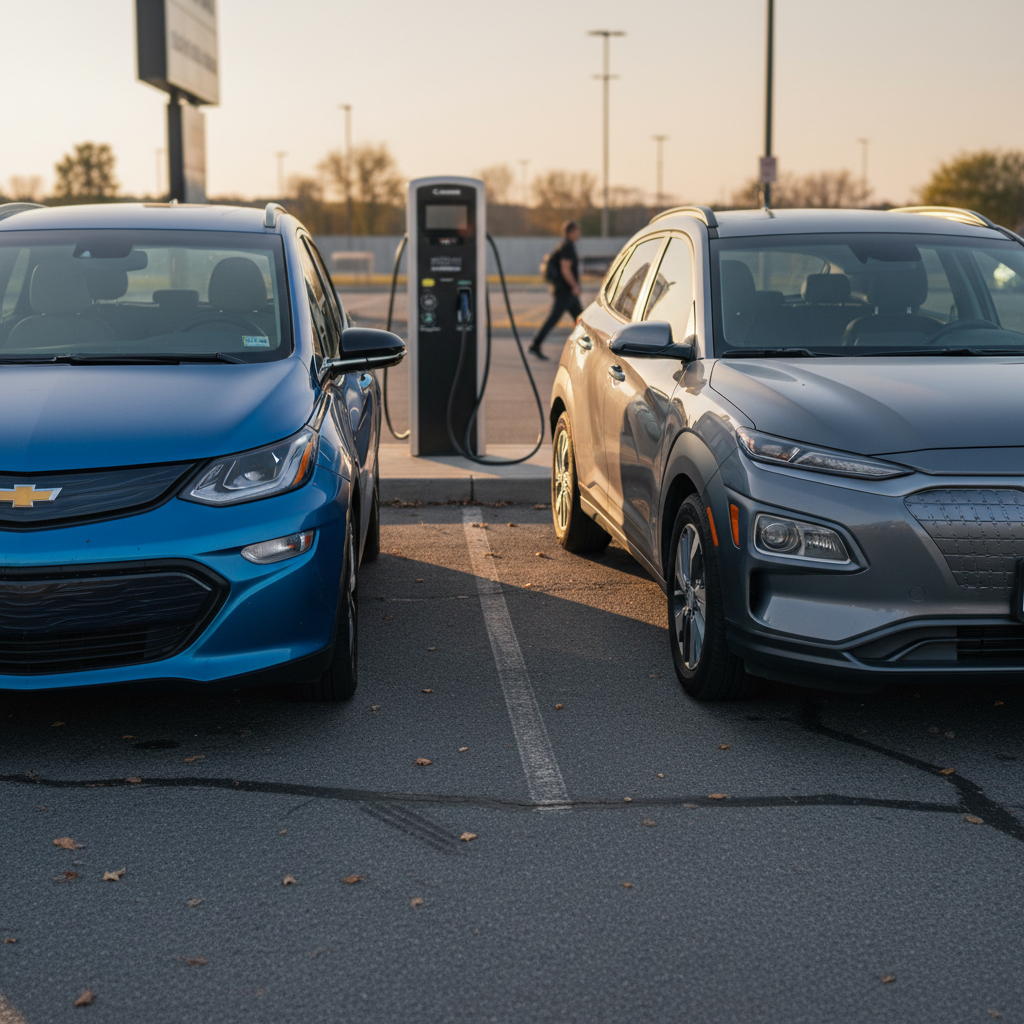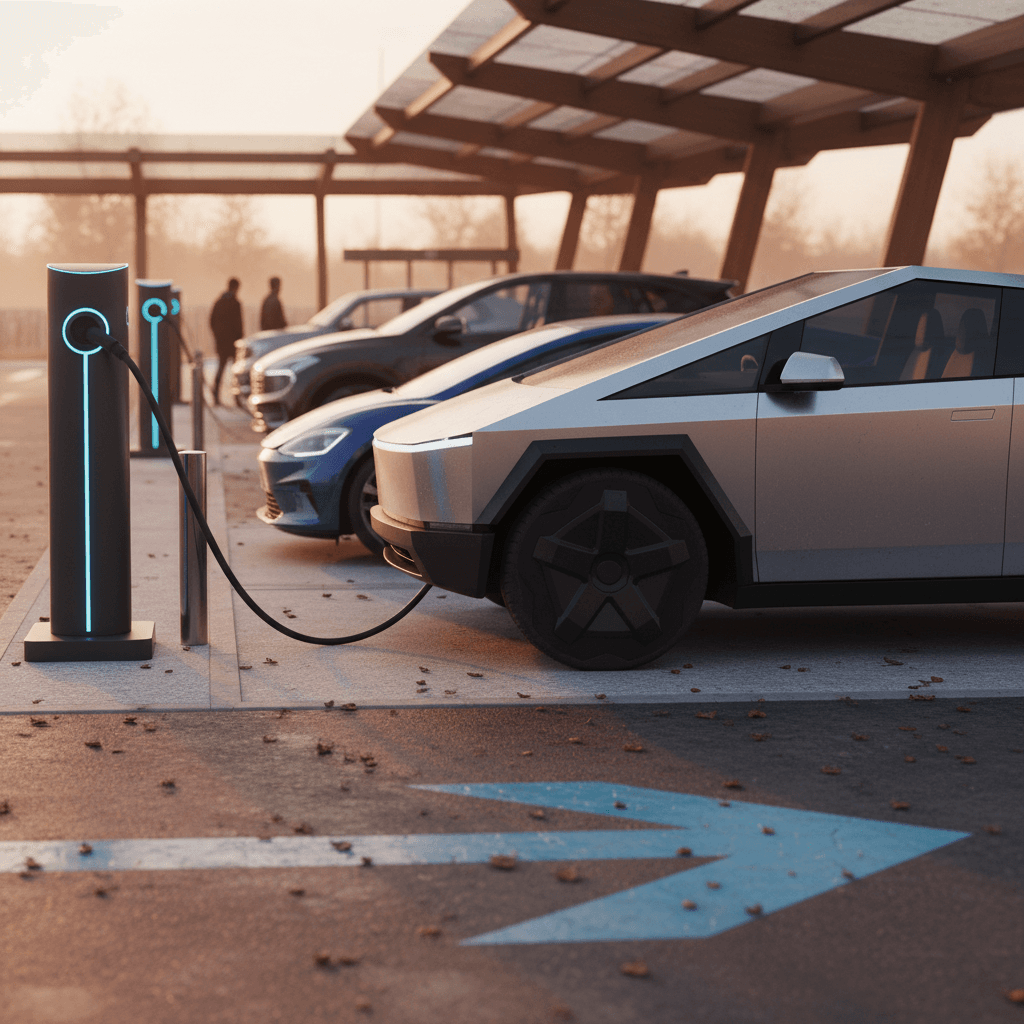
If you’ve ever sat at a slow charger watching the minutes crawl by, it’s no surprise you’re now Googling “supercharge EV near me.” The good news: in 2025, it’s easier than ever to find genuinely fast charging, whether that means a Tesla Supercharger, a CCS/CHAdeMO DC fast charger, or a high‑power Level 2 station close to home or work.
Quick definition
Why you’re searching “supercharge EV near me”
Drivers type “supercharge EV near me” into their phones for a few common reasons: they’re low on range, planning a road trip, or trying to figure out if a used EV will actually work with their routine. Underneath that is one simple question: where can I get the most miles back in the least amount of time, right now? This guide focuses on exactly that, finding and using fast charging in the real world, without jargon.
- You’re at a low state of charge and need a quick top‑up to get home or to the next city.
- You’re planning a road trip and want to map fast chargers along your route.
- You’re test‑driving or shopping for a used EV and want to understand real‑world charging options.
- You don’t have reliable home charging and depend on public fast chargers.
Local vs. road‑trip charging
Fast‑charging basics: What “supercharge” really means
Before you chase the nearest pin on a map, it helps to know what you’re actually looking for. Fast charging breaks down into a few key categories, each of which might show up when you search for a place to “supercharge” your EV.
Charging levels you’ll see when you “supercharge” your EV
Know the difference so you don’t pull into a 6 kW charger expecting 250 kW speeds.
Level 1 (120V)
Uses a regular household outlet and adds roughly 2–5 miles of range per hour. Good for emergencies or overnight, but not what you want when you search “supercharge EV near me.”
Level 2 (240V)
Found at homes, workplaces, and many public locations. Typically 6–19 kW, or about 20–40 miles of range per hour. Not true “supercharging,” but a high‑power Level 2 near your job can be a quiet hero.
DC fast charging
This is what most drivers mean by supercharging. Power ranges from 50 kW up to 350 kW, adding roughly 150–200+ miles in 20–30 minutes, depending on your EV and state of charge.
Battery health note
How to find Superchargers and other fast chargers near you
Most “supercharge EV near me” searches lead you to apps that aggregate fast chargers from multiple networks. In 2025, the best approach is to combine one or two general apps with your automaker’s tools and, if you can use it, the Tesla app.
Best tools to find fast EV charging near you
Use at least one general app plus, if possible, your automaker’s or Tesla’s app.
PlugShare
Platform‑agnostic map of public chargers, including Tesla, Electrify America, EVgo, ChargePoint, and more. Filters help you see only DC fast chargers compatible with your car.
- Community check‑ins and reviews
- Filter by plug type (CCS, NACS, CHAdeMO)
- Great for planning new routes
Charging‑network apps
Apps like Electrify America, EVgo, ChargePoint, and others show station status, pricing, and sometimes allow reservations.
- Good for checking live availability
- Often required for payment
- Useful if you rely on a specific network
Tesla app & in‑car nav
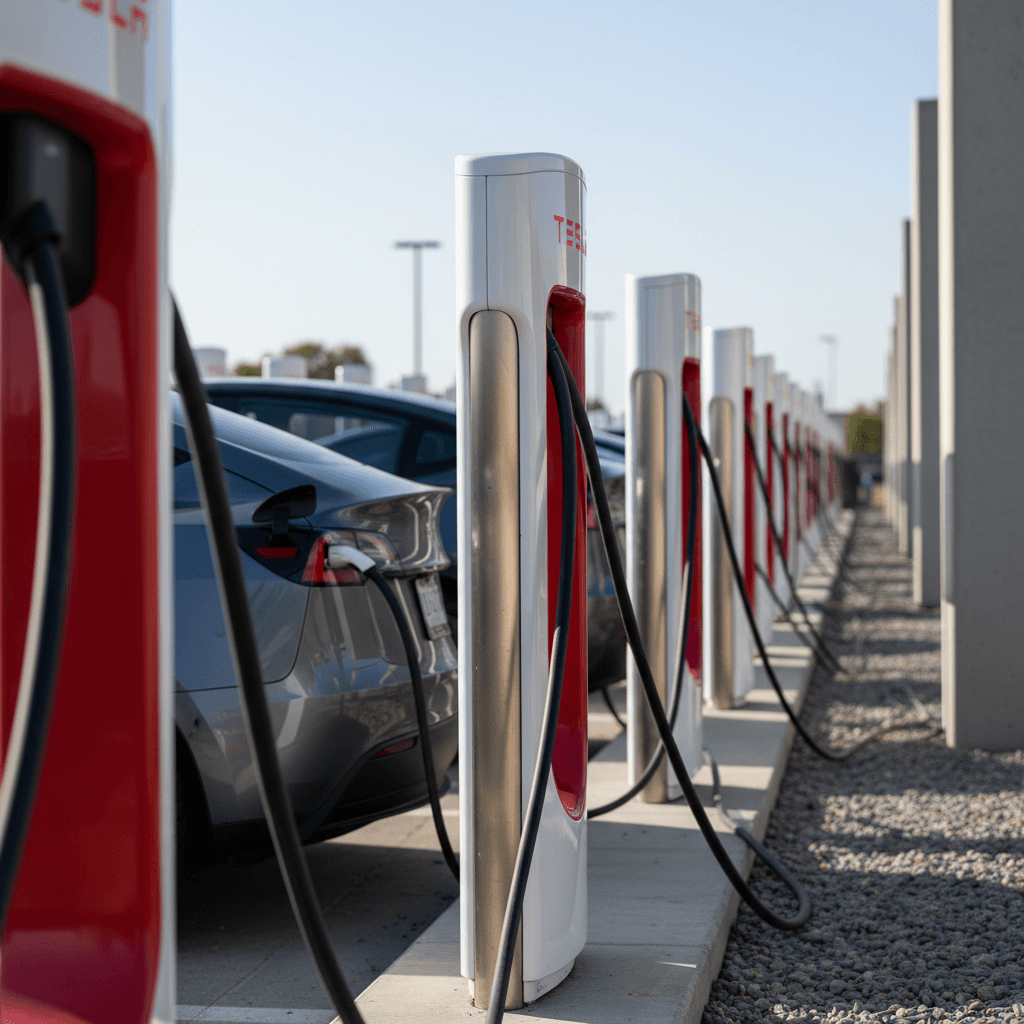
If your EV can use Tesla Superchargers, the Tesla app is non‑negotiable. It shows which stalls are open to non‑Teslas and powers the start/stop and payment process.
- Filter: “Superchargers open to non‑Teslas”
- Live power & stall availability
- Pricing and idle‑fee warnings
Use EV‑aware route planners
Using Tesla Superchargers with a non‑Tesla EV
In 2025, more non‑Tesla drivers than ever are pulling into Tesla Superchargers. That’s because virtually every major automaker selling EVs in North America has adopted the North American Charging Standard (NACS), Tesla’s connector design, and is rolling out access through adapters or native NACS ports.
Supercharger access snapshot (North America, 2025)
1. Confirm your EV is supported
Check your automaker’s site or app to confirm Supercharger access and whether you need a NACS adapter. As of late 2025, most new EVs from Ford, GM, Hyundai, Kia, Honda/Acura, Mercedes‑Benz, and others either include a NACS port or have an official adapter available.
If you drive an older CCS‑only model, you’ll typically buy an OEM‑approved adapter and apply any rebates the automaker offers.
2. Use the Tesla app correctly
- Download the Tesla app and create an account.
- Add your non‑Tesla EV’s details (make, model, plate).
- Add a payment method.
- Tap Charge > filter for Superchargers open to non‑Teslas.
- Navigate to a supported site and follow on‑screen stall instructions.
When you plug in, the app starts the session automatically; you don’t pay at the charger itself.
Watch connector reach & parking orientation
What it costs to supercharge your EV
Pricing is one of the biggest surprises when drivers first move from gas to fast charging. When you search “supercharge EV near me,” you’re really asking two things: what’s close and what will it cost? The answer depends on the network, state regulations, and whether you have a membership.
Typical fast‑charging costs in 2025 (ballpark ranges)
Actual pricing varies by network, state, and membership; always check the app before you plug in.
| Charger type / network | How you’re billed | Typical cost range | Best use case |
|---|---|---|---|
| Tesla Supercharger (member pricing) | $/kWh or $/minute (state‑dependent) | Often competitive with or below other DC networks | Frequent long‑distance travel, Tesla or supported non‑Tesla EVs. |
| Tesla Supercharger (no membership) | $/kWh or $/minute | Slightly higher than member rate | Occasional fast charging when you don’t road‑trip much. |
| Electrify America / EVgo DC | Mostly $/kWh | Varies widely by region; often similar to or higher than Supercharger prices | Non‑Tesla EVs on highways, especially CCS‑only older models. |
| High‑power public Level 2 | $/kWh or session fee | Typically much cheaper than DC fast charging | Overnight at hotels, workplace or shopping‑center top‑ups. |
| Home Level 2 (off‑peak) | Your utility’s kWh rate | Usually the lowest cost per mile of any option | Daily charging; treat DC fast charging as your backup. |
Use these numbers as directional guidance when comparing fast‑charging options.
Memberships can pay off quickly
Planning a trip so you can supercharge with confidence
Fast charging shines on road trips, but only if you plan ahead. Today’s EV route planners make it far easier to answer the question, “Where can I supercharge my EV near me, and near every stop along my route?” long before you back out of your driveway.
Road‑trip planning checklist for fast charging
1. Start your plan at 10–20% battery, not 0%
Most EVs charge fastest between roughly 10–60% state of charge. Route planners will often aim to keep you in that “fast lane” instead of charging to 100% every stop.
2. Use an EV‑specific route planner
Tools like A Better Routeplanner, PlugShare, and many built‑in nav systems can automatically route you through DC fast chargers that match your plug type and preferred networks.
3. Always have a backup charger
Stations occasionally go offline or get crowded. Keep a second fast charger option 10–30 miles past your first choice so you’re never forced to limp in at 0%.
4. Consider hotel charging
Booking hotels with Level 2 charging can cut the number of DC fast‑charging stops you need. You wake up with a full battery and less pressure to hunt for a ‘supercharge EV near me’ stop first thing in the morning.
5. Align stops with food and restrooms
A 20–35 minute charging stop feels shorter when you’re already grabbing a meal, stretching your legs, or taking kids/pets to the bathroom.
6. Watch weather and terrain
Cold temps, high speeds, and mountain climbs all reduce range. Build in extra buffer, arriving at chargers with 15–20% instead of 3–5% is a lot less stressful.
Don’t plan to arrive at 0%
Checklist: Before you head to any fast charger
Whether you’re visiting a Tesla Supercharger or another DC site, a couple of minutes of prep can save you time, money, and frustration once you get there.
Quick pre‑departure checklist
Confirm plug type & adapter
Make sure you know whether your car uses CCS, NACS, or CHAdeMO, and pack any necessary adapters (Tesla, OEM, or third‑party) before you leave.
Check station status in the app
Glance at the app to confirm the site is online and not completely full. If it looks crowded, identify an alternate fast charger on your route.
Know your payment method
Have your payment set up in the Tesla app or the specific network’s app. Some networks still require RFID cards or in‑app activation, don’t discover that at the stall.
Plan your arrival SOC
Aim to arrive with 10–30% battery. Below that gives you faster charging, but don’t cut it so close that a detour or headwind puts you at risk.
Set expectations
Decide in advance whether you need a full charge or just enough to reach the next stop. Often, adding 40–60% is faster overall than waiting for that last slow 20%.
Check amenities
Use the map or user photos to see what’s nearby. Restrooms, coffee, and food make every fast‑charging session feel shorter.
How Recharged helps you get a fast‑charging‑ready used EV
If you’re shopping used, the ability to “supercharge your EV near me” isn’t just about maps, it’s about the car you buy. Not every used EV supports the same fast‑charging speeds, connector types, or battery health. That’s where Recharged focuses a lot of effort.
What Recharged checks so you can fast‑charge with confidence
Fast charging is only as good as the battery and hardware behind it.
Verified battery health
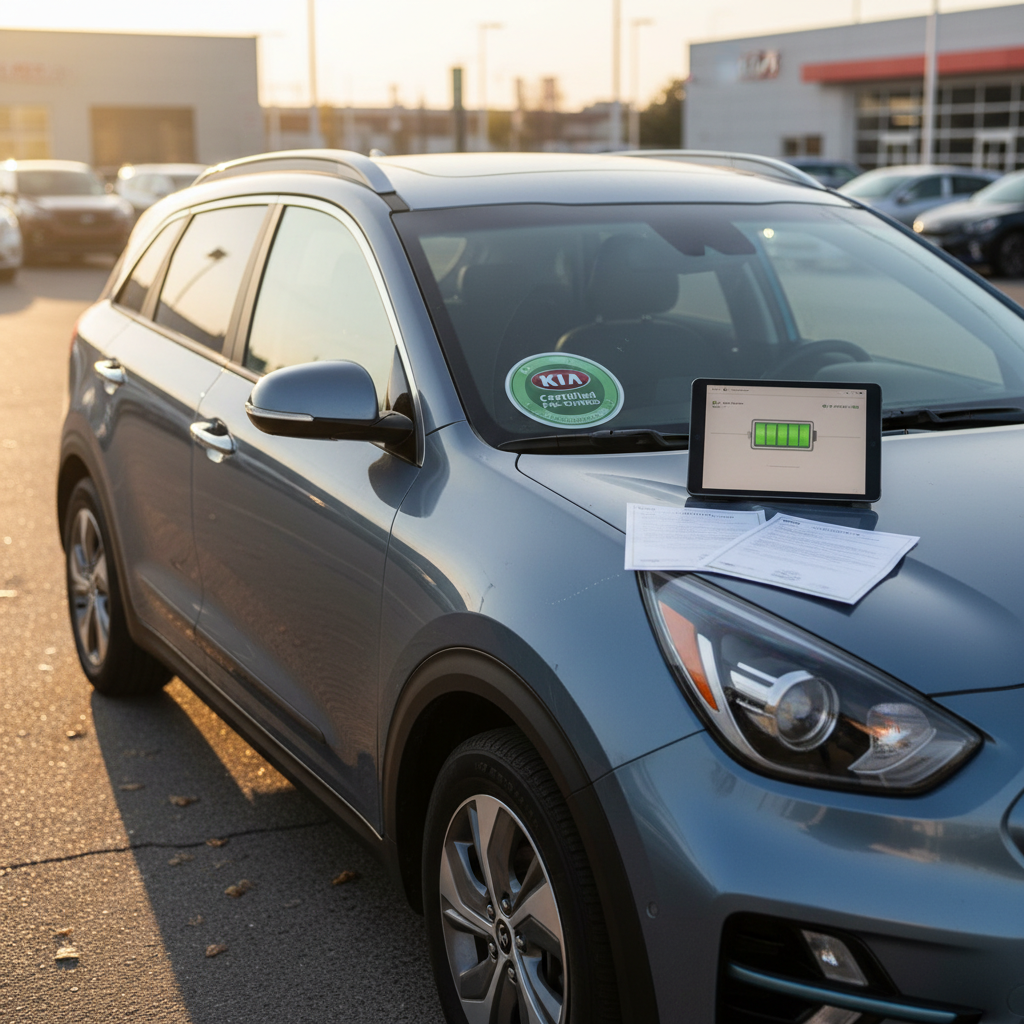
Every vehicle on Recharged comes with a Recharged Score Report that includes verified battery health diagnostics, so you’re not guessing how your pack will respond to frequent DC fast charging.
Charging capability & connectors
Listings clearly highlight maximum DC and Level 2 charging speeds, plus connector type (CCS, NACS) and adapter compatibility. That way, when you search “supercharge EV near me,” you know roughly how fast your car can actually pull power.
Ownership support
Recharged offers EV‑specialist support, financing, trade‑ins, and nationwide delivery. Our team can walk you through how to use fast charging, what memberships make sense, and how to plan your first road trip in a used EV.
Ready to find your next EV?
Browse VehiclesTest drive with a charging stop
“Supercharge EV near me” FAQ
Frequently asked questions
Key takeaways
When you search “supercharge EV near me”, you’re really asking how to get reliable, fast charging without a lot of drama. In 2025, that means understanding the basics of DC fast charging, using the right mix of apps (including Tesla’s, if your EV supports Superchargers), and choosing an EV whose battery and hardware are ready for the task.
If you’re already an EV owner, set up your charging apps, test a few nearby fast‑charging sites, and build a short list of favorites so you’re never scrambling at 5% battery. If you’re still shopping, consider how fast‑charging fits into your life and look for a used EV with transparent battery health and DC fast‑charging support. That’s exactly what Recharged was built to provide, so your next “supercharge EV near me” search is just a quick pit stop, not a source of anxiety.