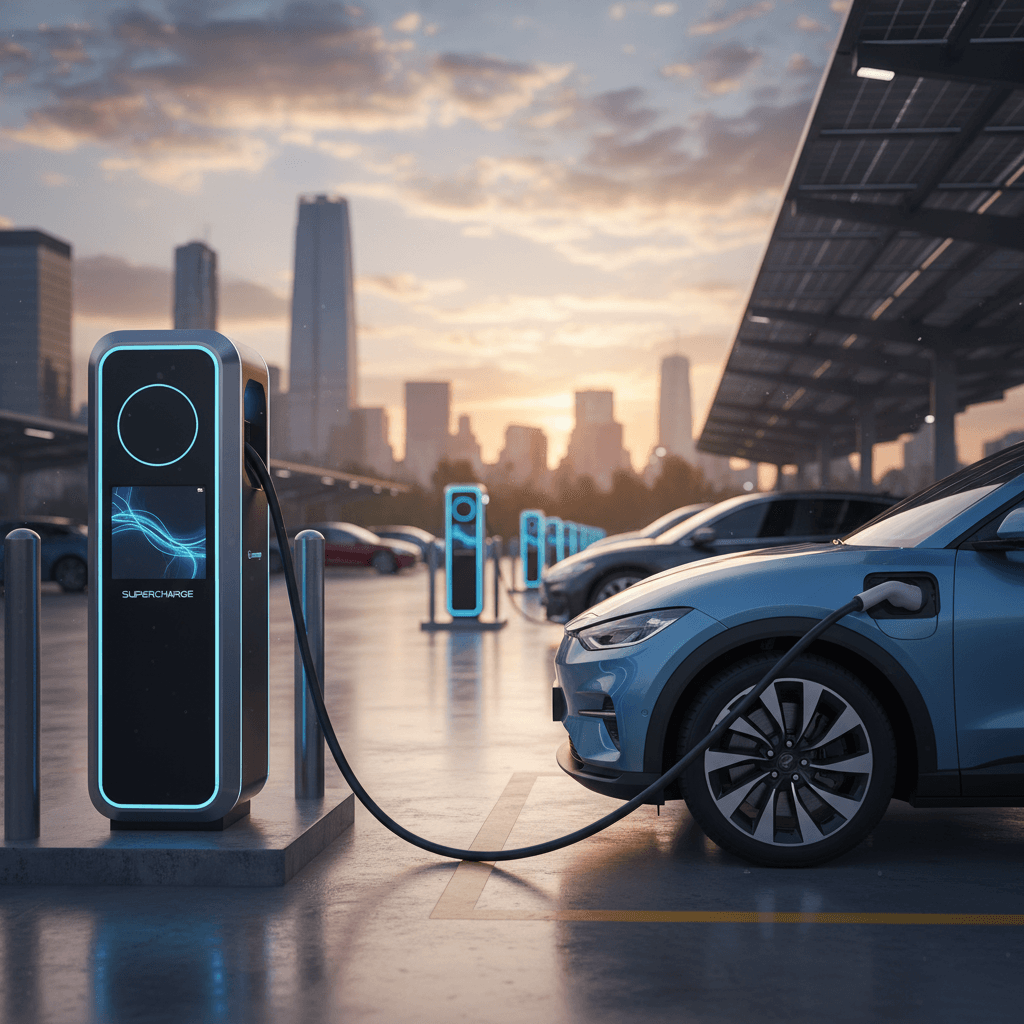
You typed “super fast charging near me” because you don’t want to babysit your car for hours. You want to plug in, grab a coffee, and get back on the road. In 2025, that’s more realistic than ever, if you know which chargers to look for, how to find them, and how your specific EV fits into the picture.
Quick definition
Why “super fast charging near me” matters in 2025
EV ownership has shifted from early adopters to everyday drivers. That means more people who live in apartments, more long‑distance trips, and more families relying on one car. Public DC fast charging is the backup plan that makes all of that possible. And thanks to the industry’s shift toward Tesla’s North American Charging Standard (NACS), you increasingly have access to the same high‑speed infrastructure no matter what badge is on your grille.
Fast charging in the U.S. at a glance (2025)
Reality check
What actually counts as “super fast” charging?
Level 1 & Level 2 (not "super fast")
- Level 1: 120V wall outlet, ~3–5 miles of range per hour.
- Level 2: 240V (home or public), ~20–40 miles of range per hour.
- Great for overnight charging; too slow for quick road‑trip stops.
DC fast charging ("super fast")
- DC fast charging bypasses your onboard AC charger and feeds DC power directly into the battery.
- Power ratings often range from 50 kW up to 350 kW.
- The right station can add 150+ miles in the time it takes to eat lunch.
- 50 kW: Entry‑level DC fast charging. Fine for smaller batteries but slower for big packs.
- 100–200 kW: The current “sweet spot” for most mainstream EVs.
- 250–350 kW: Top‑tier stations. Your car may not always take full power, but it shortens charging stops when conditions are right.
Power vs. what your car can accept
How to find super fast charging near you (apps, maps, and in‑car tools)
When you’re low on range, the last thing you want is to bounce between apps that don’t agree. The good news: by 2025, a few tools cover almost everything. Use at least two of them so you’re never betting your trip on a single map.
Best ways to search “super fast charging near me”
Combine an EV‑specific app with your car’s built‑in navigation for the best results.
Built‑in EV navigation
Ford, GM, Hyundai/Kia, Tesla, Rivian, VW and others now bake fast‑charger routing into their nav systems.
- Shows compatible plugs only.
- Often preconditions the battery for faster charging.
- Some apps handle payment automatically.
Third‑party maps
Apps like PlugShare and A Better Routeplanner (ABRP) are still essentials.
- Filter for DC fast chargers only.
- See photos, check‑ins, and reliability ratings.
- Plan complex routes with elevation and weather.
Network‑specific apps
Most big networks have robust apps in 2025:
- Electrify America, EVgo, ChargePoint, Tesla, Ionna (new JV), and more.
- Show real‑time stall availability and live power levels.
- Help you start/stop sessions and see pricing before you plug in.
How to filter for truly fast chargers
1. Filter by connection type
Choose <strong>CCS</strong>, <strong>NACS</strong> (Tesla standard), or CHAdeMO only if you drive a compatible older Nissan LEAF or similar. Avoid Level 2 when you’re in a hurry.
2. Set minimum power
If your car supports it, filter for chargers rated at <strong>100 kW or higher</strong>. Note that in remote areas you may need to accept 50 kW sites.
3. Check recent check‑ins
On community apps, look for stations with <strong>recent successful sessions</strong>. A charger that was fine six months ago might be flaky today.
4. Confirm access rules
Some fast chargers are inside paid parking garages, dealership lots, or hotel properties. Read notes to avoid getting stuck behind a closed gate at night.
5. Verify payment options
Make sure you have the right app, RFID card, or tap‑to‑pay method ready before you arrive, especially at smaller regional networks.
Major fast‑charging networks compared
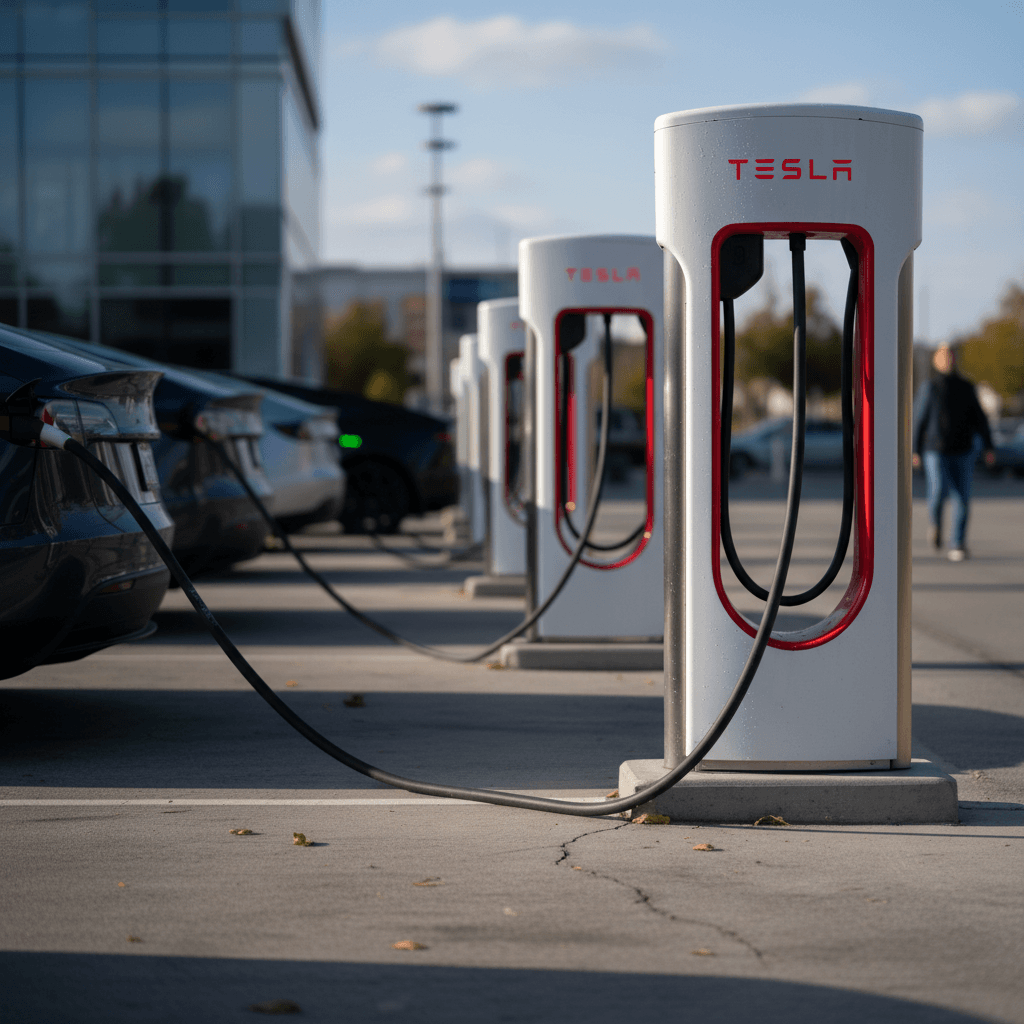
In the U.S., a handful of brands dominate the super fast charging landscape. Tesla’s Superchargers are becoming more accessible to non‑Tesla EVs, while networks like Electrify America, EVgo, and the new Ionna joint venture compete to add high‑power CCS and NACS sites along major corridors.
Fast‑charging networks you’re most likely to see
Availability and pricing vary locally, but this table shows how the big players generally stack up in 2025.
| Network | Typical power | Primary plugs (2025) | Strengths | Things to watch |
|---|---|---|---|---|
| Tesla Supercharger | 150–250 kW (some 350 kW V4) | NACS; some sites open to CCS via built‑in adapter | Large, reliable network with simple experience; increasingly open to non‑Teslas. | Not every site is open to non‑Tesla EVs yet; pricing varies by time and membership. |
| Electrify America | 150–350 kW | CCS, some CHAdeMO; rolling out NACS | Very high‑power units on major interstates; plug‑and‑charge with some OEMs. | Reliability varies by site; watch idle fees and time‑of‑day pricing. |
| EVgo | 50–350 kW | CCS, CHAdeMO; adding NACS at select sites | Good urban coverage; strong partnerships with GM, Nissan, others. | Many sites have only 1–2 stalls; some urban locations have tight parking. |
| ChargePoint DC | 50–200 kW (some higher) | CCS, CHAdeMO; NACS coming | Wide variety of site hosts, dealers, workplaces, retail. | Station quality depends heavily on the individual site owner. |
| Ionna (new JV) | Up to 350 kW | CCS and NACS | Backed by major automakers; focused on highway travel hubs. | Network is still ramping up, so coverage is hit‑or‑miss outside key corridors. |
Use each network’s app for current pricing and stall status before you drive off the highway.
Don’t use unapproved high‑power adapters
Tesla Superchargers, NACS, and what it means for you
Until recently, if you searched “Tesla Supercharger near me,” the realistic answer, unless you drove a Tesla, was: look but don’t touch. In 2025, that’s changing fast. Most major automakers have either started shipping EVs with NACS ports or are providing factory‑backed adapters so their CCS cars can use Tesla sites.
- Ford, GM, Rivian, Volvo/Polestar, Mercedes‑Benz, Hyundai/Kia, Honda/Acura, Porsche and others are rolling out NACS access via adapters and new charge ports.
- Many Supercharger sites now show a filter in the Tesla app for “Superchargers open to non‑Teslas”. Use it to avoid driving to a closed site.
- Charging sometimes requires the Tesla app even if you have an adapter; some brands are integrating Supercharger access directly into their own apps in 2025.
How to check if a Supercharger will work for you
Access to public fast chargers, and especially Tesla’s Superchargers, has become a central part of how shoppers evaluate EVs. A car that fits your life but can’t fast‑charge where you drive is going to feel like the wrong choice very quickly.
Cost and time: what to expect from super fast charging
Fast charging is the EV equivalent of grabbing fuel at a highway station: convenient, but rarely the cheapest way to travel. Knowing roughly what a stop will cost, and how long you’ll be parked, keeps the experience predictable.
Typical DC fast‑charging experience for a modern EV
Your numbers will vary, but these ballpark figures help you plan.
How long you’ll stay
- Arrive low (10–20% state of charge) and charge to ~60–80% for the best speed.
- Many EVs add 150–200 miles in about 20–30 minutes at a high‑power site.
- Above ~80%, charging slows sharply, better to unplug and drive.
What it might cost
- Public fast charging is often billed per kWh or per minute.
- On a road trip, it’s common to see $15–$30 per stop, depending on battery size, pricing and how low you arrive.
- Home charging is usually cheaper per mile, so think of DC fast charging as a convenience fee.
Why speed isn’t constant
- Fastest rates happen when the battery is warm and low.
- Cold weather, high state of charge, or sharing power with another stall can cut speeds.
- Some older EVs top out at 50–75 kW even on big chargers.
Cold‑weather tip
When you should use super fast charging vs. Level 2
Great use cases for DC fast charging
- Road trips: You’re covering hundreds of miles in a day.
- Apartment life: No reliable home charging, but you have a convenient fast‑charge hub nearby.
- Unexpected detours: Weather, traffic, or a missed charger leaves you low on range.
- Test drives and new‑to‑you EVs: Learning how your car behaves on longer trips.
When to avoid relying on DC fast charging
- Daily commuting when you have access to Level 2 at home or work, slower, cheaper, better for the battery.
- Very short drives where the battery never fully warms up.
- When local networks are unreliable: Level 2 can be a safer fallback if fast chargers nearby have poor uptime.
The ideal setup
Fast charging with a used EV: battery health and expectations
If you’re shopping for a used EV, or you already own one, the question isn’t just “Where can I find super fast charging near me?” It’s also “How will my battery respond when I get there?” Older packs or high‑mileage cars may not hit the same peak speeds as a brand‑new model, and that’s normal.
Why battery health matters
This is where Recharged’s Recharged Score battery health diagnostics can give you a leg up. Every used EV we sell comes with a verified battery health report, so you know whether that convenient 200 kW station near you will actually deliver close to its potential in the real world. Our specialists can also walk you through how fast your specific model typically charges based on age and mileage.
Questions to ask about a used EV
- What is the car’s maximum DC fast‑charge rate when new?
- How often did the previous owner fast‑charge?
- Does the car support battery preconditioning on the way to a fast charger?
- Is the warranty still in effect for the high‑voltage battery?
How Recharged can help
- Recharged Score Report with battery health and real‑world range estimates.
- Transparent, fair‑market pricing that reflects charging performance.
- EV‑specialist guidance on road‑trip planning and public charging strategy.
- Financing, trade‑in, and nationwide delivery for a seamless upgrade.
Pre‑trip checklist: be ready for fast charging
Before you hit "super fast charging near me" on a road trip
1. Confirm your plugs and adapters
Know whether your car uses CCS, NACS, or CHAdeMO and carry any <strong>OEM‑approved adapters</strong> you need for Tesla or other networks.
2. Update apps and accounts
Install or update apps for the networks you’ll use (Tesla, Electrify America, EVgo, etc.), and add a payment method so you’re not stuck creating an account in the parking lot.
3. Plan primary and backup stops
Use your in‑car nav plus a third‑party app to pick <strong>at least one backup fast charger</strong> for each long leg of your trip.
4. Check station status morning‑of
Fast chargers do go down. A quick status check the day you leave can save you from surprise detours.
5. Aim to arrive low, not empty
Target arriving with <strong>10–20% state of charge</strong>. That’s where your EV charges fastest, but still gives you a cushion if a station is busy.
6. Know local parking rules
Some sites enforce <strong>idle fees</strong> or towing after a grace period. Set a phone alarm or rely on push alerts so you move your car promptly.
FAQ: super fast charging near me
Frequently asked questions about super fast charging near you
Key takeaways: turning “near me” into “no problem”
Finding super fast charging near you used to feel like a scavenger hunt. In 2025, with Tesla’s NACS standard going mainstream and networks racing to add high‑power stations, it’s finally becoming routine, as long as you pick the right tools and the right car.
- Use your car’s built‑in navigation plus at least one EV‑specific app to find and verify DC fast chargers.
- Favor stations rated at 100 kW or more when your EV can use the extra speed.
- Treat fast charging as a road‑trip tool and backup plan; let Level 2 handle everyday charging when you can.
- If you’re buying used, pay close attention to battery health and fast‑charging capability, not just the window sticker range.
If you want an EV that fits your charging reality, not the other way around, Recharged can help. Every vehicle on our marketplace comes with a Recharged Score battery health report, fair‑market pricing, and EV‑specialist guidance on charging at home and on the road. That way, the next time you search for “super fast charging near me,” you’ll know exactly where to go, how long you’ll be there, and what it will cost.