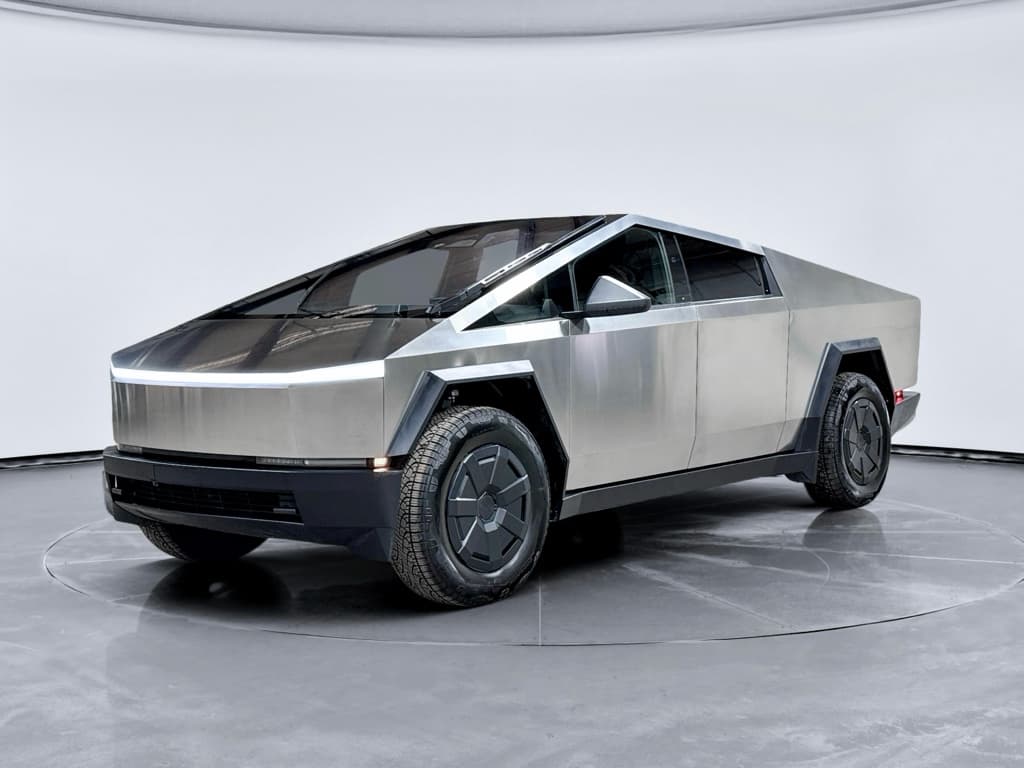
If you just took delivery of a Tesla Cybertruck and you’re itching to haul bikes, you’ll quickly discover that **Cybertruck bike rack options** don’t look like a typical pickup catalog. Between the exoskeleton body, integrated bed cover, and unique hitch packaging, you need to be a little more deliberate about how you carry one or four bikes without wrecking your tailgate, range, or warranty.
Short on time?
Why Cybertruck bike racks are a bit different
On paper, Cybertruck looks like it should shrug off any bike rack you throw at it. It tows up to 11,000 lbs and has a maximum tongue weight listed at **1,100 lbs (500 kg)** in the owner’s manual. But Tesla has also circulated guidance that the factory 2" receiver should see **no more than about 160 lbs and two bicycles** when you’re using it purely as a bike carrier. That disconnect is where a lot of forum drama starts, and why it pays to understand how you carry the load, not just how much it weighs.
How Cybertruck differs from a legacy pickup
- Integrated bed and tonneau: The powered tonneau and sail panels limit traditional ladder‑style racks that clamp over bed rails.
- High, short receiver: The rear hitch sits tight to the body with a short receiver tube, changing how some 4‑bike platforms clear the bumper and tailgate.
- Steep departure angle: Great for off‑road, but it means long, low racks can drag more easily on driveways and trails.
- Camera and sensor coverage: A big rack and bikes can block the rear camera, taillights, or license plate far more than on a conventional truck.
What stays the same
- Standard 2" hitch receiver: Most quality hitch‑mount racks designed for SUVs and trucks will fit Cybertruck’s receiver.
- Utility tracks in the bed: The OEM bed rails accept clamp‑on bike and cargo systems similar to other pickups.
- Roof mounting points: The roof still supports crossbars, so you can mount standard T‑slot bike trays once you have a rack system.
- Physics: Tongue weight limits and lever arms matter just as much here as on a body‑on‑frame truck.
Key Cybertruck hauling numbers that matter for bike racks
Key Cybertruck weight limits and safety basics
Before you start shopping for a **Cybertruck bike rack**, anchor on three constraints: **vertical load on the hitch**, **leverage distance**, and **what happens in a panic stop**. Cybertruck’s frame can clearly handle serious loads, but a hanging rack piled with e‑bikes can put a big bending moment on the receiver that isn’t obvious from just looking at weight numbers.
- Assume that Tesla’s **conservative bike guidance overrides the raw 1,100‑lb tongue rating** when you’re not towing a trailer.
- Remember that **rack weight counts too**, a 60‑lb 4‑bike platform plus four 55‑lb e‑bikes is 280 lbs before you even hit a bump.
- The farther the bikes sit from the hitch pin, the more force they apply over bumps and potholes.
- Stopping from highway speed with 200+ lbs of bikes behind the axle can dramatically increase hitch loads compared with gentle cruising.
- If you’re regularly maxing things out, a **bed or overland rack** is structurally a better solution than pushing a hitch platform to the edge.
Mind Tesla’s fine print
Hitch-mounted bike racks for Cybertruck
For most owners, a **2" hitch‑mount tray rack** is the most straightforward Cybertruck bike solution. It keeps bikes out of the airstream compared with a roof setup, works with almost any frame style, and lets you tilt the rack to drop the tailgate. The key is choosing something that plays nicely with Cybertruck’s short receiver and weight recommendations.
Common hitch rack styles for Cybertruck
How the three main designs behave on the Cybertruck’s short receiver
Platform (tray) racks
Bikes sit in wheel trays and clamp at the tires or frame.
- Best for e‑bikes and heavy MTBs.
- Less sway than hanging racks.
- Often heavy (50–70 lbs) on their own.
Hanging (mast) racks
Bikes hang by the top tube on arms.
- Lighter and cheaper.
- Can struggle with step‑through frames.
- More sway and frame contact.
Hitch + add‑on systems
Modular platforms that expand to 3–4 bikes.
- Great if family needs grow.
- Watch total weight carefully.
- May block license plate and taillights when fully loaded.
Look for these hitch-rack features
How popular hitch rack styles line up for Cybertruck
Use this as a framework when comparing specific brands and models.
| Rack type | Typical capacity | Pros for Cybertruck | Watch out for |
|---|---|---|---|
| 2‑bike platform, heavy‑duty | 2 x 60–70 lb bikes | Best match for Tesla’s hitch guidance; stable, easy loading for e‑bikes. | Still heavy; may partially block taillights or plate. |
| 3–4 bike platform | 3–4 x 50 lb bikes | Great for families hauling analog bikes. | Total rack + bike weight can exceed Tesla’s comfort zone; more leverage and bounce. |
| 2–4 bike hanging rack | Up to 4 lighter bikes | Lighter rack weight and lower cost. | Frame contact, more sway, and tough with long‑travel MTBs or step‑throughs. |
Always check the rack maker’s own compatibility guide, then compare their specs against Cybertruck’s hitch guidance and your bike weights.
Tesla has historically sold a **Tesla‑branded hitch rack built by Yakima** for other models, and owners are already using similar Yakima, Thule, and 1Up‑style platforms on Cybertrucks. The takeaway isn’t that you need a “Cybertruck‑specific” rack, it’s that you should size the rack to your heaviest two bikes, then think very carefully before adding more weight or extensions.
Don’t guess on e-bike weight
Bed-mounted and track-mounted bike racks
If you’re hauling more than two bikes regularly, or you’re over the hitch weight you’re comfortable with, **bed‑mounted systems** play to Cybertruck’s strengths. The stainless exoskeleton and integrated utility tracks are far better at handling static loads than a single receiver tube being hammered over potholes.
Popular bed and track-mounted approaches
From single‑bike security to full adventure setups
Track-mounted crossbars
Systems like the RIDE88 QR3 pair a telescoping crossbar with **side‑track adapters** bolted into Cybertruck’s utility rails.
- Secure mounting without drilling.
- Easy to remove when you need full bed volume.
- Holds bikes higher, improving departure angle.
Modular over‑bed racks
Products like CYBERTRUCKco’s Moto or Sport racks and Putco’s TEC rack span the bed with uprights and crossbars.
- Great for mixed cargo (bikes, kayaks, RTTs).
- Many offer T‑slots for standard bike trays.
- Higher cost, more visual impact.
Simple fork or wheel mounts in bed
Bolt‑on fork mounts or wheel‑chocks let you clamp bikes directly to the bed floor or rails.
- Clean, low‑profile solution.
- Best if you don’t need covered cargo space.
- May require drilling or custom plates.
Bed systems shine when you’re carrying **three or more bikes, downhill rigs, or a mix of bikes and motos**. You’re spreading weight along the chassis, keeping it low, and avoiding the pendulum effect you get with a long hitch rack. The trade‑off is that you’re giving up some of the lockable, weather‑sealed tonneau space that makes Cybertruck so practical day‑to‑day.
When a bed system is the right tool
Roof and overland rack options for bikes
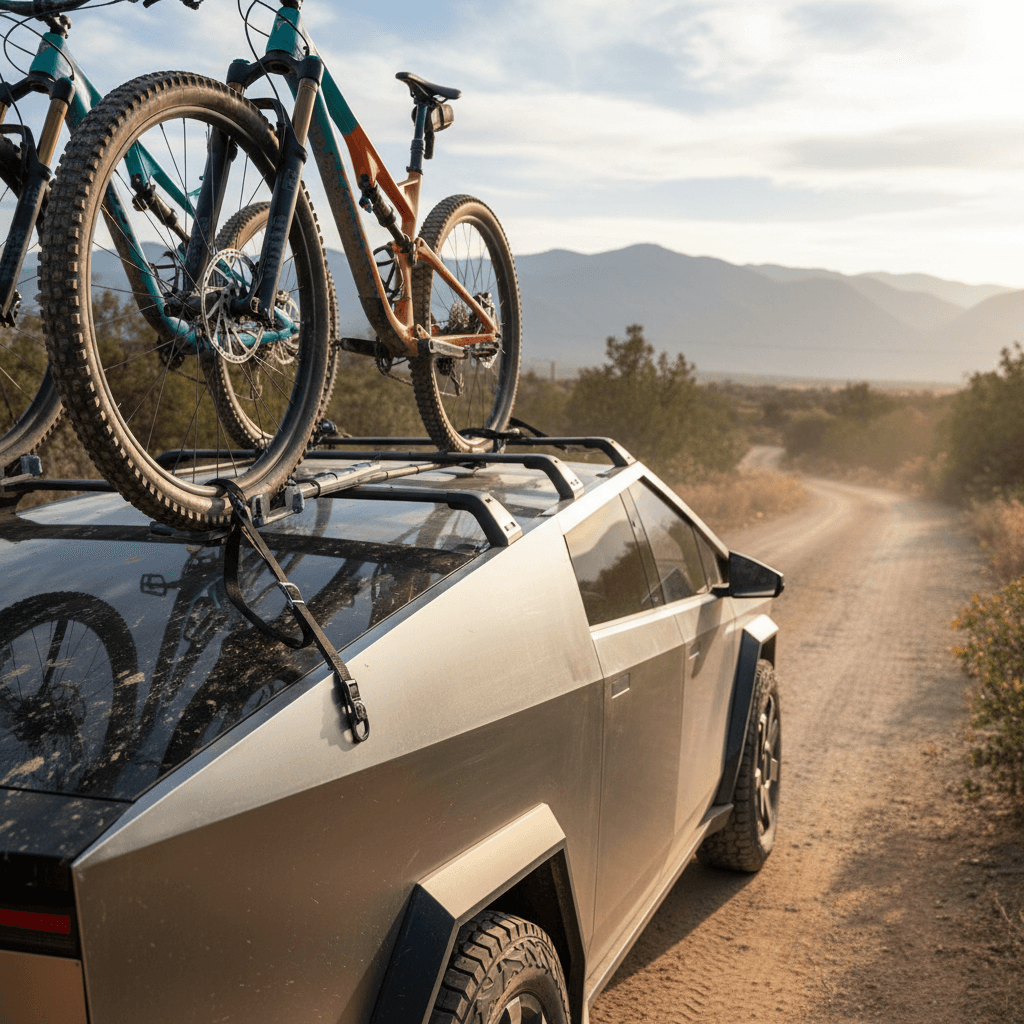
Cybertruck’s angular roof and integrated sail panels rule out traditional clamp‑around towers, but Tesla and the aftermarket have rushed in with purpose‑built systems that use the factory mounting points. Once you have crossbars up top, you’re basically in normal rack‑system territory: standard T‑slot bike trays, fork mounts, or through‑axle carriers all come back into play.
- **Tesla Cybertruck Crossbars:** Tesla’s own crossbars use the factory mounting points and **T‑slots** for attaching bike racks, ski racks, and cargo boxes. They’re rated around **200 lbs** of dynamic load, which is plenty for several bikes plus trays if you spread the weight and obey the manufacturer’s limits.
- **Aftermarket roof systems:** Companies like RPM Tesla, Wolfstorm, Mars Adventure Gear and others are offering roof and expedition racks that also tie into the Cybertruck’s mounting points. Many ship with or accept standard aero‑style crossbars that work with mainstream bike trays.
- **Overland rack + roof combo:** Some expedition systems span from the bed up over the cab, letting you mix roof‑level bike trays with a rooftop tent and side‑mounted accessories. It’s overkill for a couple of Sunday rides, but ideal if your Cybertruck doubles as an overland rig.
Watch your total height
Choosing the right Cybertruck bike rack for you
With so many **Tesla Cybertruck bike rack options**, the trick is aligning the hardware with your actual use, not your aspirational one. Start with **how many bikes you really carry most weeks**, what type they are, and where you drive. From there, the decision tree gets simpler.
Cybertruck bike rack recommendations by use case
Solo or couple, mostly local rides
Two non‑assist road or gravel bikes? A quality **2‑bike platform hitch rack** is ideal.
If bikes are light and budgets are tight, a hanging rack can work, just protect your frames.
Live in the city and rarely off‑road? Hitch is the easiest to park and store.
Family hauling 3–4 bikes
If all bikes are sub‑30 lbs and short‑wheelbase, a **3–4 bike platform** can work, but weigh everything and stay well under Tesla’s hitch guidance.
If two or more bikes are heavy e‑bikes, strongly consider a **bed or track‑mounted rack** instead.
Think about kid‑bike growth: a modular system that can drop from 4 bikes to 2 for daily use will save hassle.
E‑MTB and gravity riders
Heavy long‑travel or e‑MTBs stress hitch racks the most, go conservative.
A **bed rack or overland system** that clamps to the rails is structurally safer at high loads.
If you must use the hitch, pick a rack specifically rated for heavy e‑bikes and cap yourself at two bikes.
Adventure travel and overlanding
For mixed loads (bikes, kayaks, RTT), an **expedition rack** that uses factory mounting points is worth the investment.
Combine bed‑level mounts for heavy bikes with roof‑level trays for lighter ones.
Plan for **camping access**: make sure you can still open the tonneau or tailgate without pulling all the bikes off.
Think in systems, not one-off racks
Range impact and charging with bikes mounted
Any time you hang bikes into the airstream of an EV, you pay a range penalty. Compared with a clean Cybertruck, a hitch‑mounted bike rack with two mountain bikes can easily add double‑digit percent drag on the highway. Roof‑mounted bikes usually hurt even more at speed because they sit higher in faster airflow.
Practical range expectations
- Expect roughly 10–25% less range with two bikes on the hitch at freeway speeds, depending on conditions.
- Roof‑mounted bikes can push the penalty higher, especially with wide bars and big knobby tires.
- Off‑highway and low‑speed driving is more about weight than aero; extra bikes matter less there.
Charging and clearances
- Most Supercharger stalls load from the rear, verify you can plug in without hitting the bikes or rack.
- Some owners tilt or remove the hitch rack at chargers to avoid contact with bollards.
- At home, consider backing in so the charging cable doesn’t have to snake around the rack and bikes.
Plan your stops like a road cyclist
Installation checklist for any Cybertruck bike rack
Pre‑flight checklist before you haul bikes
1. Confirm weight math
Add up the **actual** weight of the rack plus every bike and accessory. Compare that to both the rack’s published capacity and Tesla’s conservative hitch guidance. If you’re close to the limit, step down in bike count or move to a bed system.
2. Verify receiver fit
Make sure your rack is designed for a 2" receiver and fully inserts to the hitch pin hole. Use the anti‑rattle hardware correctly and confirm that the rack or bikes don’t contact the bumper, sensors, or tailgate when tilted.
3. Test clearance and visibility
Load bikes, then check brake lights, turn signals, and the license plate from 20–30 feet back. If anything is blocked, look at auxiliary light/plate kits or a different rack configuration.
4. Enable the right vehicle mode
On other Tesla models, towing and accessory modes adjust stability control and sensors. With Cybertruck, follow the **owner’s manual instructions** for towing and hitch‑mounted accessories so you’re not fighting parking sensors or lane‑keeping with bikes on.
5. Use proper torque and hardware
Whether you’re bolting to bed tracks, roof mounts, or crossbars, use the fasteners and torque specs the rack maker calls for. Over‑tightening on an aluminum rack is just as bad as under‑tightening on steel.
6. Recheck after 10–20 miles
On your first trip, stop after 10–20 miles to re‑tighten straps, re‑torque bolts, and confirm nothing has shifted. Make “walk the bikes” part of your charging or coffee‑stop routine.
FAQ: Tesla Cybertruck bike rack options
Frequently asked questions about Cybertruck bike racks
The bottom line on Cybertruck bike racks
Cybertruck’s brutalist styling hides a pretty simple truth: it’s a very capable bike hauler as long as you treat **weight, leverage, and visibility** with more respect than you might with an old‑school pickup. For one or two bikes, a stout 2" platform rack is still the easiest answer. As your bike count, e‑bike weight, or off‑road ambitions go up, a **track‑mounted or overland rack system** becomes the smarter choice. Get the fundamentals right once and the truck will do the rest.
If you’re still deciding whether a Cybertruck, or any EV, is the right tool for your riding life, it can help to zoom out from accessories to the vehicle itself. A used EV with healthy battery life, realistic range, and a body style that plays nicely with the racks you want is often better value than stretching for something new. That’s exactly the gap Recharged was built to fill: transparent **battery health reports, fair pricing, financing, trade‑in options, and EV‑savvy guidance** so you can focus on where you’re riding next, not whether your setup will work.