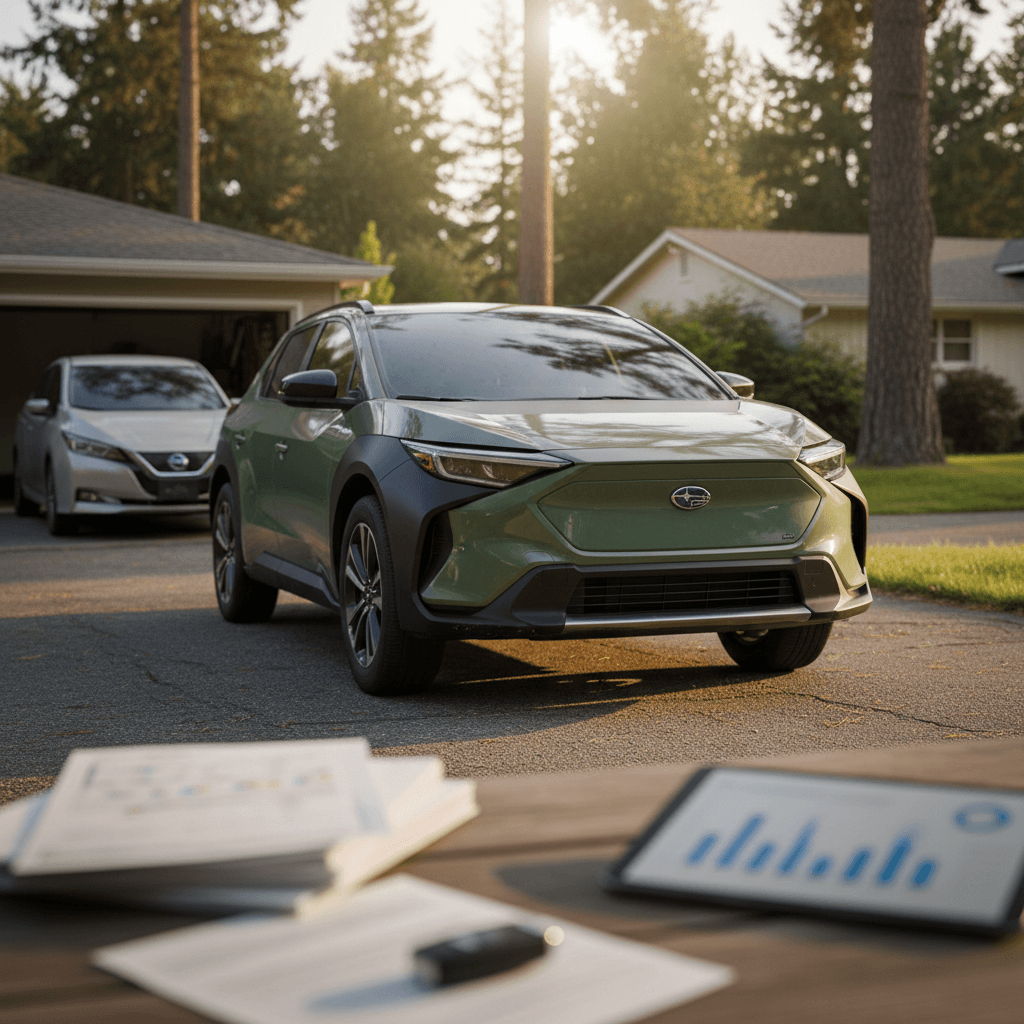
If you’re looking at a **Subaru Solterra resale value guide for 2026**, you’re not alone. Subaru’s first EV has been on U.S. roads long enough that early leases are ending, prices have dropped from new levels, and used Solterras are finally showing up in meaningful numbers. The question is simple: **is the Solterra a good value play in the used EV market, or a depreciation trap?**
Quick take
Why Subaru Solterra resale value matters in 2026
The Solterra launched for the 2023 model year into a fast‑moving EV market. Since then, competing compact electric SUVs have multiplied and some brands have aggressively discounted new models. Subaru joined that movement for the **2025 Solterra**, cutting MSRP by roughly **$6,500 versus 2024 pricing**, which directly pressures used values around it.
- Early buyers paid close to $45,000–$52,000 new before incentives on 2023–2024 models.
- For 2025, Subaru repositioned the Solterra starting just under $40,000, making nearly-new used examples compete with fresher, cheaper new inventory.
- At the same time, overall used EV prices have softened from their 2022 peak as supply has improved and incentives shifted.
For **current owners**, that means being realistic about what your Solterra is worth in 2026, and what you can do to protect its value. For **shoppers**, it means you may be able to buy a low‑mileage, all‑wheel‑drive EV at a meaningful discount versus equivalent new crossovers.
How the Solterra fits into the 2026 used EV market
Solterra in the 2026 used EV landscape
Put simply, the Solterra doesn’t hold value like a Toyota RAV4 Hybrid or Subaru Outback, but it also hasn’t collapsed like some niche luxury EVs. It sits in the **middle of the EV resale pack**, with some unique pros (AWD, Subaru brand loyalty) and cons (charging performance, earlier pricing) that are worth unpacking.
Subaru Solterra depreciation by model year
Actual resale values vary by region, condition, and incentives at the time of sale, but several pricing tools and auction data sets point in the same direction: **the Solterra’s heaviest hit comes in the first 3–4 years**.
Estimated Subaru Solterra depreciation into 2026
Approximate U.S. retail value ranges for typical‑mileage, clean‑title vehicles, assuming average equipment and no major damage. These are directional estimates, not offers to buy or sell.
| Model year (MY) in 2026 | Typical miles | Ballpark retail price | Approx. % of original MSRP |
|---|---|---|---|
| 2023 | 20,000–35,000 | $22,000–$27,000 | ~50–60% |
| 2024 | 10,000–25,000 | $24,000–$29,000 | ~55–65% |
| 2025 | 5,000–15,000 | $27,000–$32,000 | ~70–80% |
| 2026 (early build) | Under 10,000 | $32,000+ | ~80–90% |
Depreciation curves are steeper for early, higher‑MSRP model years; individual vehicles can fall above or below these bands depending on battery health and history.
These are guideposts, not guarantees
Notably, some public tools peg a **5‑year Solterra residual around 40% of original MSRP**, which translates to roughly a **60% value loss after five years**. That’s on the aggressive side, but it matches what we’ve seen from several early‑generation EVs that launched before the recent wave of price cuts and tax‑credit changes.
Key factors that move Subaru Solterra values up or down
What helps, or hurts, Solterra resale the most
Beyond mileage and age, these six levers drive most of the price difference between seemingly similar cars.
Battery & charging history
Buyers increasingly ask about **DC fast‑charging habits**, home charging, and any signs of range loss. A Solterra that mostly lives on Level 2 at home and still delivers close to its expected range will command more money than one hammered on road‑trip fast chargers.
Accidents & title status
A clean Carfax/AutoCheck and original paint go a long way. Any structural damage or airbag deployment will **drag resale down sharply**, even if repairs look good.
Climate & region
Cold‑weather states love Subaru’s AWD reputation. In snow‑belt markets, Solterras may hold value slightly better, especially with **good tires** and no rust. In hot‑climate states, buyers may ask more questions about **battery heat exposure**.
Trim, wheels & options
Touring models with larger wheels and more features look great on listings, but the bigger wheels can hurt range and tire costs. Premium trims are cheaper to buy and may be more attractive to **value‑focused used buyers**.
Maintenance & recalls
Documented software updates, recall work (including 12‑volt battery fixes), and regular tire rotations build confidence. Gaps in service records or ignored recalls can scare off the best buyers.
New‑car pricing shifts
When Subaru cut Solterra MSRPs for 2025, it effectively pulled the floor out from under some 2023–2024 used prices. Future price moves, incentive changes, or new EV competition could have similar ripple effects.
Pro move for sellers
Real‑world price examples: what Solterras are actually selling for
Listing prices only tell half the story; the real test is what Solterras actually transact for. Recent used‑car price indexes show **late‑model Solterras averaging around the mid‑$20,000s**, with individual deals stretching above or below that depending on trim and miles.
Scenario 1: 2023 Solterra Premium
Think of a typical 2023 Premium AWD with ~25,000 miles, clean history, and basic options:
- Dealer retail: often **$24,000–$27,000**
- Private‑party: slightly lower, **$23,000–$26,000**
- Trade‑in: may land in the **high teens to low $20Ks**, depending on dealer appetite for EVs
Scenario 2: 2024 Solterra Touring
Now picture a 2024 Touring with ~15,000 miles, larger wheels, and all the tech:
- Dealer retail: commonly **$27,000–$31,000**
- Private‑party: **mid‑ to high‑$20Ks** if well‑optioned and clean
- Trade‑in: often low‑ to mid‑$20Ks, heavily influenced by local EV demand
Why your offer may be lower than online estimates
Battery health & charging: how they affect resale
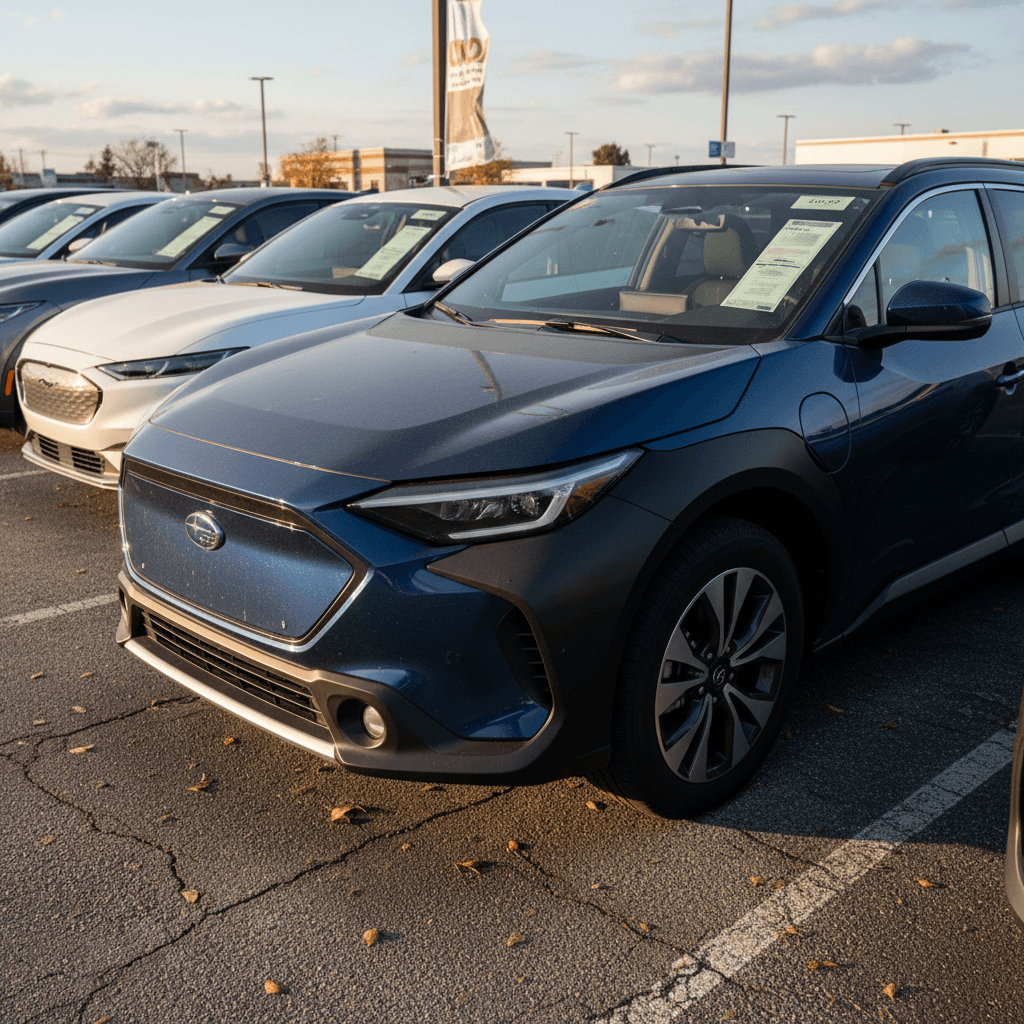
For any used EV, including the Solterra, **battery health is the single most important long‑term value driver**. So far, there’s no widespread evidence of high‑voltage pack failures or severe degradation in typical‑mileage Solterras. Most complaints center on **slow DC fast charging, conservative range estimates, and 12‑volt battery issues**, not the main traction pack itself.
- Owners commonly report that the Solterra’s DC fast‑charge curve steps down quickly and can be underwhelming for long road trips, which suppresses enthusiasm among road‑warrior buyers.
- Range readouts can swing noticeably with temperature and driving style, which some owners initially mistake for battery degradation.
- Several model years have seen complaints and legal action around **12‑volt battery drain** and related no‑start conditions; this affects peace of mind and perceived reliability more than raw capacity.
How Recharged measures battery health
Ready to find your next EV?
Browse VehiclesSteps Solterra owners can take to protect value through battery care
1. Favor Level 2 charging
Use a home Level 2 charger or slower public AC charging for everyday use when possible. Save DC fast charging for long trips; that reduces stress on the pack over time.
2. Avoid extreme state‑of‑charge swings
When you can, try not to leave the pack sitting at 0% or 100% for long periods. Regularly cycling between roughly 20–80% is easier on the chemistry, especially in high heat.
3. Keep software up to date
Subaru and Toyota have released software updates that affect charging behavior, range prediction, and battery displays. Staying current helps both **usability** and **buyer confidence**.
4. Document your charging setup
If you have a professionally installed home charger and a history of steady overnight Level 2 charging, keep those invoices and notes. They tell the next owner this Solterra has lived an easier life.
How to get the best price when selling your Solterra
You can’t control Subaru’s corporate pricing strategy or broader used‑EV trends. You *can* control how your individual Solterra looks to the next buyer or dealer. Focus on eliminating question marks and showcasing the car’s strengths: AWD traction, safety tech, and a gently used battery.
Seller checklist: maximize your Solterra’s 2026 resale value
Get a battery‑health report
If possible, obtain a third‑party battery‑health assessment (for example, via a **Recharged Score Report**). Being able to say, “Here’s independent proof the pack is still strong,” separates your listing from generic ads.
Clean, repair, and de‑ding
Fix curb rash on wheels, touch up obvious chips, address warning lights, and get a **professional detail**. In photos and at appraisal time, perceived condition moves numbers fast.
Complete recalls and service
Schedule any open recalls, especially around charging or 12‑volt battery behavior, and print the documentation. A Solterra with outstanding campaigns will see lower offers and more buyer hesitation.
List smart, not just fast
Research similar Solterras within 250 miles and price yours competitively, with room to negotiate. Emphasize AWD, recent maintenance, range you actually see on your commute, and any included home chargers or winter tire sets.
Compare sale channels
Get quotes from at least three places: an instant‑offer service, a Subaru dealer, and an EV‑focused marketplace. The spread can be several thousand dollars, especially for clean, low‑mile examples.
How Recharged can help you sell
Shopping for a used Solterra in 2026: what to look for
If you’re on the buying side, 2026 could be a sweet spot: early‑run Solterras are now meaningfully cheaper than new, and many will have already received software updates and recall fixes. The trick is separating solid, gently used examples from cars that may become headaches.
- **Charge and range test:** On a test drive, pay attention to how quickly the range estimate drops versus miles driven, and whether the car accepts expected power from DC fast chargers in your area.
- **12‑volt behavior:** Ask specifically about any history of dead‑battery incidents, no‑starts, or electrical gremlins. Review service invoices for repeated 12‑volt replacements.
- **Tires and wheels:** Touring‑trim 20‑inch wheels look great but can wear tires faster and hurt winter performance. Inspect tread depth and sidewalls closely.
- **AWD & X‑Mode use:** If you’re buying the Solterra for snow or trails, test X‑Mode on a loose surface and listen for unusual noises from the dual‑motor system.
- **Connectivity & software:** Confirm that Subaru’s connected‑services app, over‑the‑air updates, and driver‑assist features work as expected. Quirky software can be more than just an annoyance in an EV.
Red flags that should make you pause
Subaru Solterra vs rivals: resale comparison
When you cross‑shop the Solterra against its closest rivals, Toyota bZ4X, Hyundai Ioniq 5, Kia EV6, Tesla Model Y, you’re really comparing **trade‑offs between brand strength, charging performance, and supply.**
How Solterra resale stacks up against key rivals (2026 snapshot)
High‑level look at where the Subaru Solterra tends to land versus other compact electric SUVs on the used market.
| Model | Typical 3‑yr depreciation | Used‑buyer perception | Key resale strengths | Key resale weaknesses |
|---|---|---|---|---|
| Subaru Solterra | Moderate‑high | Mixed but improving | Standard AWD, Subaru loyalty, comfort in snow | Slow DC charging, earlier pricing, brand’s EV learning curve |
| Toyota bZ4X | Moderate | Cautiously positive | Toyota reliability halo, shared platform with Solterra | Early recall history, FWD variants less desirable in snow states |
| Hyundai Ioniq 5 | Moderate | Generally strong | Fast charging, design, tech‑forward image | Mixed long‑term reliability perceptions, higher supply in some markets |
| Kia EV6 | Moderate | Strong among enthusiasts | Sporty feel, fast charging, styling | Some buyers worry about dealer experience and long‑term parts costs |
| Tesla Model Y | Low‑moderate | Very strong | Brand recognition, Supercharger access, software ecosystem | Build‑quality complaints, high supply in some areas |
These are generalized trends drawn from used‑market data and pricing tools; individual cars will vary.
The Solterra isn’t the obvious resale champion in this set, that’s typically the **Tesla Model Y** or a well‑spec’d **Hyundai Ioniq 5/Kia EV6** in markets that love fast charging. But if you prioritize AWD confidence, a traditional crossover feel, and lower buy‑in price, a used Solterra can hit a different sweet spot.
FAQ: Subaru Solterra resale value in 2026
Frequently asked questions about Solterra resale
Bottom line: is the Subaru Solterra a smart used buy?
If you bought a Solterra new, the 2026 resale picture may feel a little harsh. Early pricing, evolving incentives, and conservative charging performance have all worked against top‑tier residuals. But if you’re shopping used, those same forces can work in your favor: **you’re not paying for the steepest years of depreciation**, and you can choose from cars that have already had their early glitches worked out.
The key is to treat every Solterra as an individual asset, not just a model name. Look closely at **battery health, charging behavior, service history, and region**, then compare several VIN‑specific offers or listings. Tools like Recharged’s **battery diagnostics, fair‑market pricing, and EV‑specialist guidance** make that process a lot less guess‑heavy. Done right, a used Solterra in 2026 can be a capable, all‑weather EV at a price that reflects tomorrow’s technology, discounted by yesterday’s learning curve.