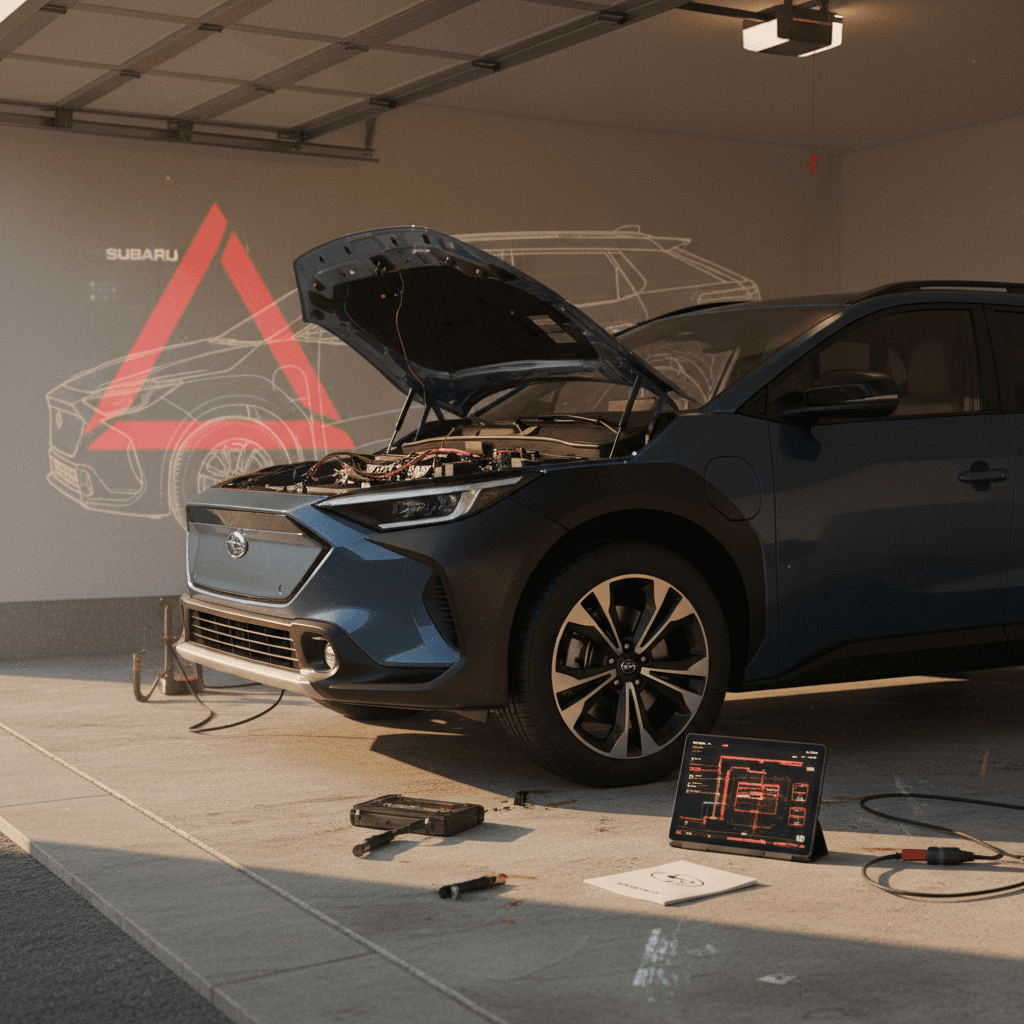
If you own, or are thinking about buying, a Subaru Solterra, you’ve probably heard about at least one recall. Because the Solterra is Subaru’s first modern EV and a close twin to Toyota’s bZ4X, every new issue draws extra attention. This guide pulls the full Subaru Solterra recalls list into one place, explains what each recall actually fixes, and shows you how to verify that any Solterra you drive is up to date and safe.
Quick takeaway
Overview: Why Subaru Solterra recalls matter
Early EVs tend to have more recalls than mature gasoline models because automakers are learning in public. The Subaru Solterra is no exception. Launch-year 2023 Solterras saw serious issues like wheel hub bolts that could loosen and a fast‑charging performance update, while later model years add mostly software‑driven fixes like defroster and driver‑assistance updates.
- Recalls are mandatory safety fixes overseen by regulators, and repairs must be performed free of charge.
- Most Solterra recalls are software updates that improve safety systems, charging behavior, or HVAC performance.
- A small number of early 2023 Solterras had critical wheel hub issues that led to a “do not drive” notice until repaired.
Don’t ignore recall notices
Subaru Solterra recalls list by model year
Here’s a high‑level Subaru Solterra recalls list, organized by model year. Exact campaign numbers can vary by market, but this captures the major U.S. actions most owners need to know about.
Subaru Solterra recalls list (U.S., major campaigns)
Summary of the most important Subaru Solterra recalls by model year. Always confirm with an official VIN lookup before assuming your vehicle is (or isn’t) affected.
| Model year | Key recalls | Primary concern | Type of fix |
|---|---|---|---|
| 2023 | Wheel hub bolt recall; DC fast‑charging / battery management software; HVAC / defroster software | Wheel loosening risk on some early builds; slower‑than‑intended DC fast charging; poor defrost performance in some conditions | Hardware inspection + retorque or component replacement; multiple software updates |
| 2024 | HVAC / defroster software; incremental driver‑assistance & charging‑logic updates | Defroster/defogger may stop working after specific compressor failure; refinement of charging and ADAS behavior | Software updates at dealer |
| 2025 | HVAC / defroster software (shared campaign with 2023–2025 Solterra); running updates to driver‑assist systems | Defroster effectiveness and visibility in cold or humid conditions | Software update, possible compressor replacement in some cases |
| 2026* | HVAC software carry‑over checks; early campaigns may emerge around new NACS fast‑charging hardware and updated battery | Visibility and charging performance as hardware changes roll out | Too new for a complete list, expect mostly software updates; watch for early service bulletins |
Not every vehicle in a model year is included in every recall. Use this as a roadmap, then confirm details with your VIN.
About this list
Major Subaru Solterra recall highlights explained
Let’s unpack the biggest Solterra recalls in more detail so you understand how serious each one is, how it’s fixed, and what it means if you’re shopping for a used example.
1. 2023 Solterra wheel hub bolt recall (“do not drive”)
The most dramatic Subaru Solterra recall involved wheel hub bolts that could loosen on certain early 2023 U.S. vehicles. Some cars were repaired at port facilities by a third‑party contractor, and Subaru later found those repairs may not have been done correctly. Out of caution, Subaru told affected owners not to drive their Solterras until the hubs were reinspected and properly torqued by a dealer.
- Applies primarily to early‑build 2023 Solterras that received port‑installed hub repairs.
- Main risk: a wheel could loosen or, in an extreme case, detach while driving.
- Fix: dealer inspects hub bolts, retorques to spec, and replaces components if necessary.
- Subaru covered not only the repair, but also towing to the dealer for affected vehicles.
If you’re test‑driving a 2023 Solterra
2. DC fast‑charging and battery‑management software recalls
Owners of early Solterras quickly discovered that real‑world DC fast‑charging speeds often lagged behind expectations, especially on 2023 models in U.S. markets. Subaru and its platform partner Toyota responded with software campaigns to adjust battery conditioning, pre‑heating behavior in cold weather, and charge‑rate curves.
- Most relevant to 2023 Solterra models; later years ship with improved logic from the factory.
- Symptoms before update: DC fast charging topping out around 30–40 kW even on capable chargers, or charge rates plunging quickly above 50–60% state of charge.
- Fix: updated battery management and thermal control software to allow higher peak charge rates and better cold‑weather performance.
- Result: 2024 Solterra models, with improved conditioning, can typically charge from about 10% to 80% in roughly 35 minutes on a strong DC fast charger, versus roughly an hour for early 2023 cars before updates.
How to tell if the charging update is done
3. HVAC / defroster software recall (2023–2025)
In late 2025, Toyota, Lexus, and Subaru jointly recalled tens of thousands of bZ4X, RZ, and Solterra EVs from the 2023–2025 model years for a climate‑control issue. A software bug in the HVAC control unit could put the system into a failsafe mode after a specific compressor fault, which in turn could shut off the heater and defroster. In cold or wet weather, that’s a visibility and safety problem.
- Affects U.S. 2023–2025 Solterra models built roughly between spring 2022 and mid‑2025 (exact dates depend on VIN).
- Main risk: windshield defroster and defogger stop working, making it hard to see in cold or humid conditions.
- Fix: dealer applies an HVAC ECU software update; some vehicles may also receive a new compressor for customer satisfaction.
- This is a classic example of a software‑fixable safety recall, easy to address as long as you actually bring the vehicle in.
Don’t wait for winter
4. Driver‑assistance & other software campaigns
Beyond the headline recalls, Subaru has quietly rolled out software campaigns that refine the behavior of EyeSight driver‑assistance features, instrument‑cluster warnings, and various modules shared with the bZ4X platform. These are less dramatic than a wheel or HVAC recall, but they still matter for everyday safety and drivability.
- Improved lane‑keeping and adaptive cruise behavior via EyeSight updates, especially as the 2024 Solterra added new features like Traffic Jam Assist and Front‑Cross Traffic Alert.
- Refinements to charging, thermal management, and dash warnings as Subaru gathered more real‑world data from early owners.
- In many cases these show up as service campaigns or limited recalls that are applied automatically when you visit the dealer.
Good news for late‑model Solterra shoppers
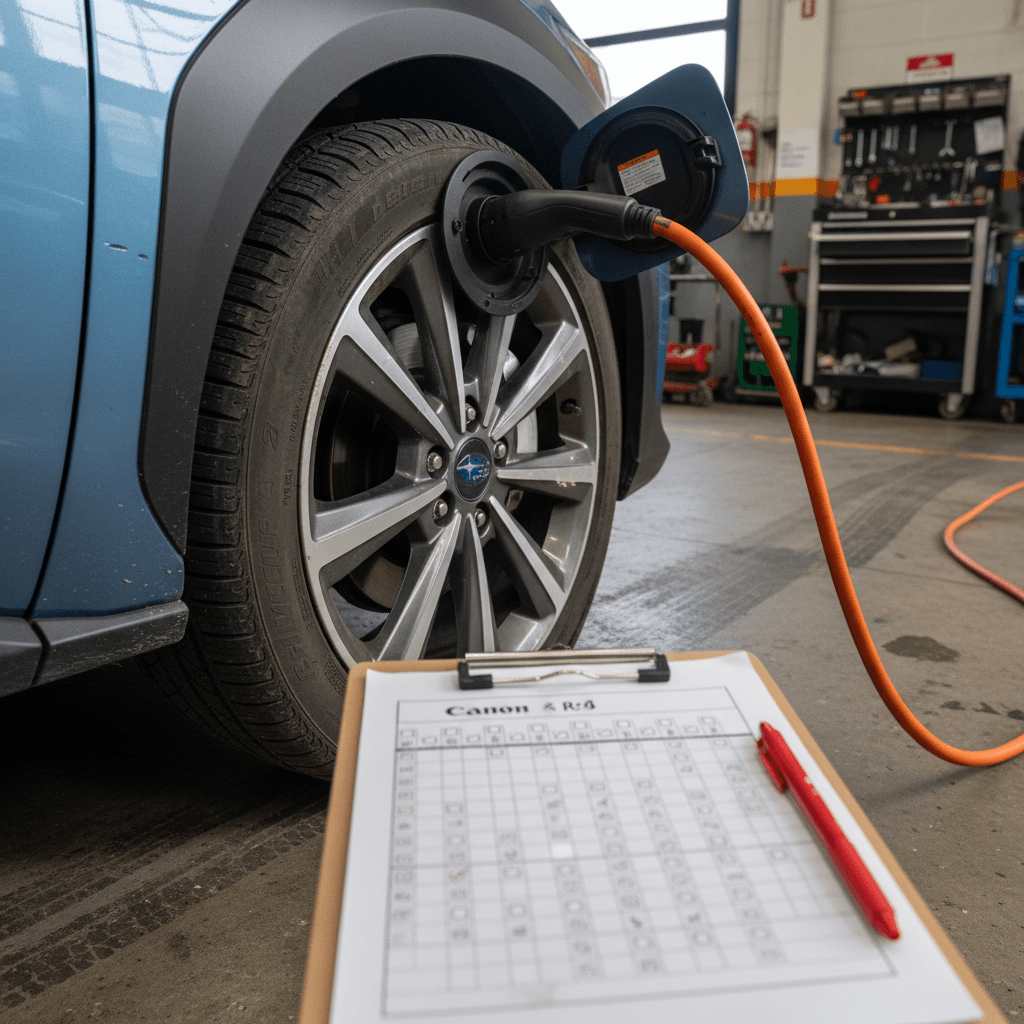
How to check your Solterra for open recalls
Whether you already own a Solterra or you’re evaluating a used one online, you should never rely on a generic Subaru Solterra recalls list alone. The definitive answer always comes from a VIN‑specific recall lookup.
Three ways to see recall status on a Subaru Solterra
Use at least one official source before you sign paperwork on a used EV.
NHTSA recall lookup
Go to the official federal recall site and enter the full 17‑digit VIN. It will show:
- All open safety recalls not yet completed
- Manufacturer campaigns reported to NHTSA
Subaru owner portal or dealer
Create an online Subaru account or call a dealer with the VIN. They can see:
- Open recalls and service campaigns
- Warranty and service history (when performed at Subaru)
Vehicle history reports
Tools like Carfax or AutoCheck sometimes show when recall work was completed, but:
- Treat them as supporting evidence, not the final word.
Step‑by‑step: Checking a Solterra for open recalls
1. Locate the VIN
You’ll find the VIN on the driver‑side dashboard near the windshield, inside the driver‑side door jamb, and on the registration or insurance card. For an online used listing, ask the seller to send it.
2. Run it through the NHTSA site
Enter the VIN on the federal recall lookup. Save or screenshot the results page so you have a timestamped record of what was open (or not) at the time.
3. Call a Subaru dealer
Ask the service department to confirm <strong>all recalls and service campaigns</strong> for that VIN and whether they’re marked as completed. Get the advisor’s name and note the date.
4. Verify paperwork
If the seller claims recalls are done, ask for <strong>service invoices</strong> showing the campaign codes and dates. This is especially important for 2023 wheel‑hub and charging‑software recalls.
5. Bake it into the deal
If recalls are open, either have the seller complete them before you buy or plan your first dealer visit around getting all updates done, ideally with a loaner vehicle if hardware work is involved.
What Subaru Solterra recalls mean if you’re buying used
Recalls don’t automatically make a vehicle a bad purchase. In fact, a well‑documented recall history can be a positive sign that the previous owner was diligent. What matters is which recalls apply to a specific Solterra and how thoroughly they’ve been addressed.
Where recalls are a red flag
- Wheel or suspension recalls with no proof of completion.
- Multiple missed appointments or notes that the dealer couldn’t complete the work.
- Open safety recalls plus a salvage or rebuilt title, which can complicate dealer support.
Where recalls can be a plus
- Service records showing all campaigns performed promptly.
- Software updates that unlock better charging performance and cold‑weather behavior.
- HVAC and driver‑assist updates that make the car safer and more livable than it was when new.
How Recharged approaches Solterra recalls
Why recall status matters so much on a used EV
Living with a recalled EV: Safety and practical tips
If your Solterra pops up as part of a recall campaign, don’t panic, but don’t procrastinate either. Some recalls are minor software tweaks, while others involve core safety systems. Here’s how to stay on the right side of that line.
- Read the actual notice. Subaru’s letter (paper or email) will indicate how urgent the recall is. “Do not drive” language is rare but should be taken literally.
- Schedule quickly, then ask about parts. For software‑only recalls, dealers can usually knock them out in a single visit. For hardware‑related campaigns, ask if parts are in stock and whether a loaner is available.
- Group service work. If you’re due for a tire rotation, brake inspection, or cabin filter, stack that with recall work so you spend less time at the dealer.
- Pay attention after the fix. On your first drive home, pay attention to charging behavior, climate performance, and warning lights. If anything feels off, call the service advisor while the visit is fresh in their system.
Digital records are your friend
FAQ: Subaru Solterra recalls
Frequently asked questions about Subaru Solterra recalls
The Subaru Solterra has followed a familiar EV trajectory: bumpy early years with high‑profile recalls, followed by steady software and hardware improvements. If you understand the key campaigns, the wheel‑hub fix, charging and battery‑management updates, and HVAC/defroster software, and you verify that a specific VIN is fully up to date, the Solterra can be a compelling, all‑wheel‑drive EV in the used market. Whether you buy through a private party, a dealer, or a specialist marketplace like Recharged, treating the recall record with the same seriousness as the battery‑health report will help you end up in the right car, at the right price, with clear expectations.