Buy an EV

  • EVs for sale
  • Learn about EVs
  • Articles
  • Charging

Sell or trade

  • How it works

Financing

  • Get pre-qualified
  • Credit application

Contact us

  • Book a consultation
  • Call us at (804) 390-5910
  • Email us at hello@recharged.com
  • Visit our Experience Centers
    • Richmond, VA
    • Fairfax, VA
    • Charlotte, NC

© 2025 Recharged. All Rights Reserved.

7-Day Return Policy·Privacy Policy·SMS Opt-In·Do Not Sell or Share My Information·
TikTokYouTubeInstagramLinkedInFacebook
    Subaru Solterra Depreciation Rate: What Owners Should Expect
    Ownership & Costs·9 min read·By Recharged Editorial Team

    Subaru Solterra Depreciation Rate: What Owners Should Expect

    subaru-solterraev-depreciationused-ev-valuescompact-electric-suvev-cost-of-ownershipbattery-healthresale-valueused-ev-buying

    Table of Contents

    • Subaru Solterra depreciation at a glance
    • How fast does a Subaru Solterra depreciate?
    • Solterra vs other EVs (and Toyota bZ4X) on depreciation
    • Why the Subaru Solterra depreciation rate looks like it does
    • New vs used Solterra: where depreciation works in your favor
    • How battery health affects Solterra resale value
    • Tips to reduce your Solterra’s depreciation hit
    • Should you worry about Solterra depreciation?
    • FAQ: Subaru Solterra depreciation rate

    If you’re looking at a Subaru Solterra, you’re probably drawn to Subaru’s all-weather confidence and the appeal of going electric. But one big question hangs over every new EV purchase: what is the Subaru Solterra depreciation rate, and how much value will it lose? In the Solterra’s case, the answer is more encouraging than you might think, especially if you’re shopping used.

    Key takeaway

    Early data suggests the Subaru Solterra is depreciating at a rate similar to, or slightly better than, the average new EV, especially over the first three years. Compared with its Toyota bZ4X twin, however, the Solterra tends to lose more value over a full five-year period.

    Subaru Solterra depreciation at a glance

    Subaru Solterra depreciation snapshot

    ≈22%
    3-year depreciation*
    One analysis of a 2023 Solterra shows about a 22% drop in value after three years of typical use.
    ≈55%
    5-year depreciation
    Long-range forecasts suggest a Solterra could lose about 55% of its value over five years, roughly in line with EV norms.
    $24,078
    5-year loss (2025)
    Kelley Blue Book’s 5-year Cost-to-Own for a 2025 Solterra estimates about $24k in depreciation over five years.
    Top 25%
    Cost-to-own rank
    KBB places the Solterra in the upper tier of compact crossovers for overall 5‑year ownership costs, depreciation included.

    Read the fine print

    Depreciation forecasts are just that, forecasts. Your actual experience will depend heavily on purchase price, mileage, incentives, region, and how the broader EV market performs.

    How fast does a Subaru Solterra depreciate?

    Depreciation is the difference between what you paid for the Solterra and what you can sell or trade it for later. Most vehicles lose value fastest in the first 2–3 years, then the curve flattens. Early data for Subaru’s electric SUV points to a similar pattern, but not the nightmare drop some shoppers fear.

    • First year: The steepest hit, largely because you’ve converted a "new" Solterra into a "used" one the second you title it. Incentives and discounts can soften this, but MSRP buyers feel it most.
    • Years 2–3: Depreciation slows. A 2023 Solterra has been estimated to lose around 22% of its original value over three years, which is actually better than many new EVs that were heavily discounted later.
    • Years 4–5: Depreciation continues but at a more gradual pace. Long-term projections for newer EVs suggest total 5‑year depreciation around the mid‑50% range for the Solterra.

    For example, cost‑to‑own modeling for a 2025 Subaru Solterra shows roughly $24,000 of value lost over five years. Spread out, that’s about $4,800 per year, but in reality more than half of that loss happens in the first couple of years, then depreciation levels off.

    Why your purchase price matters more than MSRP

    If you buy a Solterra after Subaru or dealers have added big discounts, your personal depreciation rate can be much lower than the “official” percentages that assume full MSRP.

    Solterra vs other EVs (and Toyota bZ4X) on depreciation

    To understand the Subaru Solterra depreciation rate, it helps to see it in context, both against the broader EV market and its closest rival, the Toyota bZ4X. EVs as a group tend to depreciate faster than comparable gas SUVs, but there are meaningful differences between models.

    How the Solterra’s value retention compares

    Approximate 5‑year depreciation expectations based on early market data and cost‑to‑own forecasts.

    ModelDrivetrain focusEstimated 5‑year depreciationValue retention notes
    Subaru SolterraStandard AWD≈55% lossSits near the EV average; higher depreciation than its Toyota twin but better than some smaller, niche EVs.
    Toyota bZ4XFWD or AWD≈46.5% lossEarly projections show stronger value retention than Solterra over 5 years, helped by Toyota brand perception and more flexible trims.
    Typical compact gas SUVGas AWD/FWD≈45–50% lossGas crossovers generally still hold value slightly better than today’s EVs, but the gap is narrowing.
    Average EV (all segments)Mixed≈55–60% lossMany EVs see a steep early drop due to tech changes, incentives, and price cuts on new models.

    These are directional estimates, not guarantees. Actual results vary by trim, mileage, and local demand.

    Why the bZ4X looks better on paper

    Shared platform or not, market perception matters. Toyota’s brand strength and history in hybrids help the bZ4X on resale charts, while the Solterra leans more on Subaru loyalists and its standard AWD story.

    Why the Subaru Solterra depreciation rate looks like it does

    Every EV’s depreciation profile is a mix of brand strength, incentives, tech changes, and plain old supply and demand. The Solterra is no exception. Here are the key forces shaping its value curve today and over the next few years.

    Main drivers of Solterra depreciation

    What pushes values down, and what helps hold them up

    1. Brand & model awareness

    Subaru buyers are loyal, but the Solterra is Subaru’s first modern EV. That means fewer shoppers specifically hunting for a used Solterra than, say, a used Tesla Model Y. As awareness grows, used demand typically improves.

    2. New‑car pricing & incentives

    When Subaru reduced Solterra pricing for the 2025 model year and used incentives to move inventory, that lowered the ceiling for used values. Buyers who paid MSRP early on felt more depreciation than shoppers who came later.

    3. EV tech pace

    Battery tech, range, and charging speeds are improving quickly. A major refresh (like the 2026 Solterra’s longer range and NACS charging port) can make earlier years look dated on paper, which usually adds pressure to used prices.

    4. Use case & AWD demand

    The Solterra’s standard dual‑motor AWD and Subaru’s outdoorsy image help it stand out from commuter‑oriented EVs. In snow‑belt and mountain regions, that capability can support stronger resale than national averages suggest.

    5. Gas prices & incentives

    High gas prices, generous state or utility EV incentives, and HOV lane access all improve EV demand. If those pull back, values can soften. The opposite is also true when incentives or fuel prices move in EVs’ favor.

    6. Mileage & condition

    Like any vehicle, low‑mileage, well‑maintained, accident‑free Solterras hold value best. Because the model is still relatively new, high‑mileage examples stand out, and are priced accordingly.

    Good news for current and future owners

    Despite the headwinds EVs have faced recently, early numbers suggest the Solterra is holding up reasonably well for a first‑generation electric SUV, especially if you bought it at a discount or you’re shopping the used market now.

    New vs used Solterra: where depreciation works in your favor

    Whether the Subaru Solterra depreciation rate is a problem or an opportunity depends on which side of the transaction you’re on. New‑car buyers eat the steep early drop; used‑car buyers benefit from it.

    Buying new: what to consider

    • Biggest hit up front: Expect the sharpest drop in the first 24–36 months, especially if you pay close to sticker.
    • Look for incentives: Cash rebates, low‑APR financing, or lease support can effectively "pre‑pay" some depreciation on your behalf.
    • Think 6–8 year horizon: The longer you keep the Solterra, the less those early losses matter on a per‑year basis.
    • Watch for major refreshes: Big updates, like the 2026 Solterra’s range and fast‑charging improvements, tend to reset used pricing on earlier model years.

    Buying used: where you win

    • Let someone else take year‑one loss: A 1–3‑year‑old Solterra often sells far below original MSRP, even if it’s low‑mileage.
    • Flatter curve ahead: Once an EV has already dropped 20–30%, future depreciation tends to be more gradual and predictable.
    • Value vs new tech: A well‑priced used Solterra with good battery health may be a better buy than a more expensive newer EV with only modest tech gains.
    • Leverage data: Tools like the Recharged Score give you objective insight into battery health and pricing, taking much of the guesswork out of used EV shopping.

    How Recharged helps you buy on the flat part of the curve
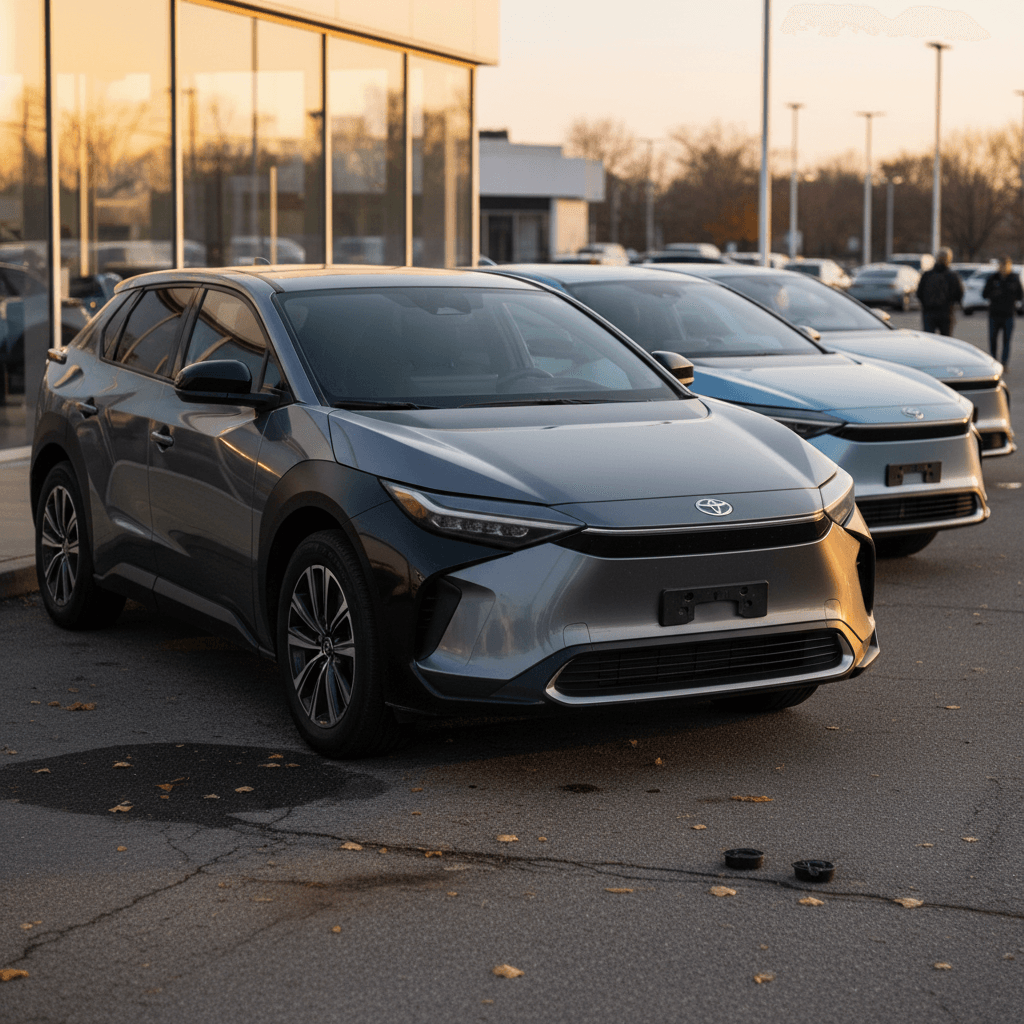
    Recharged focuses on used EVs, including models like the Solterra, with pricing benchmarked against real‑world market data. Every vehicle comes with a Recharged Score Report showing verified battery health and fair‑market value, so you’re not guessing where you are on the depreciation curve.
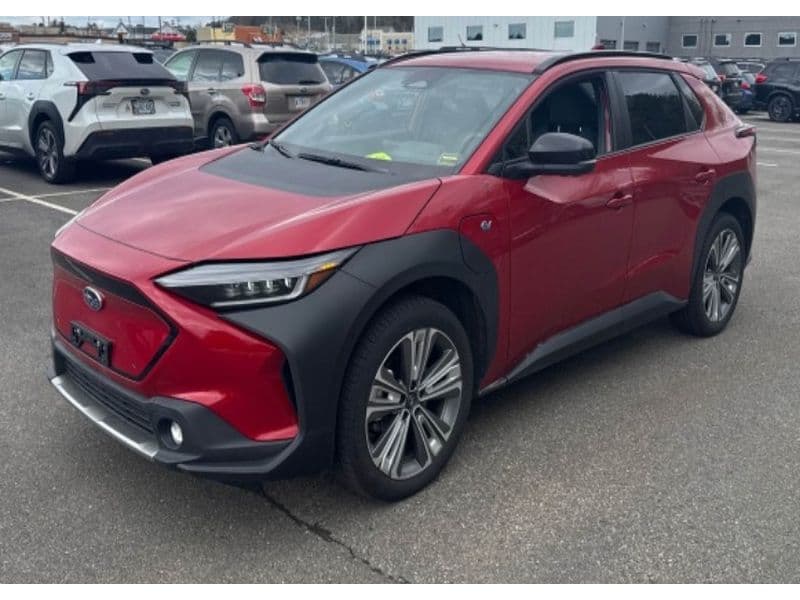
    Row of used Subaru Solterra electric SUVs lined up on a dealership lot
    Shopping used lets you take advantage of the Solterra’s early‑year depreciation instead of paying for it yourself.

    How battery health affects Solterra resale value

    For any EV, battery health is the single most important factor behind the scenes of depreciation. The Solterra’s pack is designed to last for many years, but perceived or real battery degradation can move prices by thousands of dollars between otherwise similar vehicles.

    Battery‑related factors that influence a Solterra’s value

    Degradation vs peers

    A Solterra whose battery has lost only a small percentage of its original capacity will command more money than one that shows noticeable range loss, even if mileage is similar.

    Fast‑charging history

    Frequent DC fast charging isn’t inherently bad, but extreme use (especially in hot climates) can accelerate wear. Buyers are starting to ask about this, and documented charging habits can support your asking price.

    Software & recalls

    Keeping the Solterra updated and addressing any battery‑related service campaigns promptly prevents lingering issues that can spook used‑car buyers.

    Independent battery reports

    Objective battery‑health diagnostics, like the Recharged Score, give both buyers and sellers a clear, third‑party view of pack condition, helping good cars sell faster and for more money.

    Why detailed EV inspections matter

    Two Solterras can show identical mileage on the odometer and still have very different real‑world range and battery health. That’s why a data‑driven inspection and a clear battery report are far more valuable than a quick test drive around the block.

    Tips to reduce your Solterra’s depreciation hit

    You can’t stop depreciation, but you can absolutely influence how hard it hits your wallet. These strategies help whether you already own a Solterra or you’re planning to buy one soon.

    Practical ways to protect your Solterra’s value

    Simple steps that add up at trade‑in time

    Time your purchase smartly

    If you’re buying new, aim for end‑of‑model‑year or times when manufacturers are clearly supporting EV sales with extra incentives. Your effective purchase price, not MSRP, sets the starting point for your depreciation curve.

    Keep spotless history & records

    Avoid accidents when you can, fix cosmetic damage promptly, and keep digital and paper service records together. A clean Carfax‑style history and organized receipts are worth real money on resale.

    Mind your mileage

    EV buyers still shop mileage first. If you have flexibility, use another vehicle for very long road trips and keep yearly miles reasonable on your Solterra to preserve value.

    Stay ahead on maintenance

    EVs need less service than gas SUVs, but they’re not maintenance‑free. Tires, brakes, and software updates all matter. A well‑maintained car signals "low risk" to future buyers.

    Charge thoughtfully

    Avoid leaving the battery at 100% or near 0% for long periods, especially in extreme temperatures. Moderate daily charge limits (for example, 80–90%) support long‑term battery health and preserve range.

    Know your exit options

    Before you buy, compare trade‑in, private sale, and instant‑offer scenarios. Marketplaces that specialize in EVs, like Recharged, often understand the true value of a healthy‑battery Solterra better than generalist outlets.

    Common mistakes that magnify depreciation

    Overpaying on day one, skipping EV‑specific inspections, and ignoring cosmetic or minor mechanical issues until you sell are three of the fastest ways to turn normal Solterra depreciation into an expensive surprise.

    Should you worry about Solterra depreciation?

    Depreciation is real money, but it doesn’t have to be a deal‑breaker. For many shoppers, the Subaru Solterra hits a sweet spot: standard AWD, Subaru safety features, and zero tailpipe emissions. Its depreciation is neither class‑leading nor catastrophic, it’s roughly in line with the broader EV market and a bit softer than its Toyota sibling over five years.

    If you’re buying new and plan to keep the vehicle for 6–10 years, the early‑year drop is mostly a paper loss. If you’re buying used, the Solterra’s depreciation can actually be your friend: you’re getting a capable electric SUV for significantly less than the original buyer paid, with a more gradual value curve ahead of you.

    The smartest move is to treat depreciation as one piece of a bigger puzzle: purchase price, incentives, cost to charge, insurance, and how long you plan to keep the car. When you’re comparing specific used Solterras, a data‑driven battery‑health report and transparent pricing, like you get with a Recharged Score, can turn a complicated depreciation question into a clear, confident decision.
    FAQ: Subaru Solterra depreciation rate

    Frequently asked questions about Solterra depreciation

    EVs on Recharged

    See all →
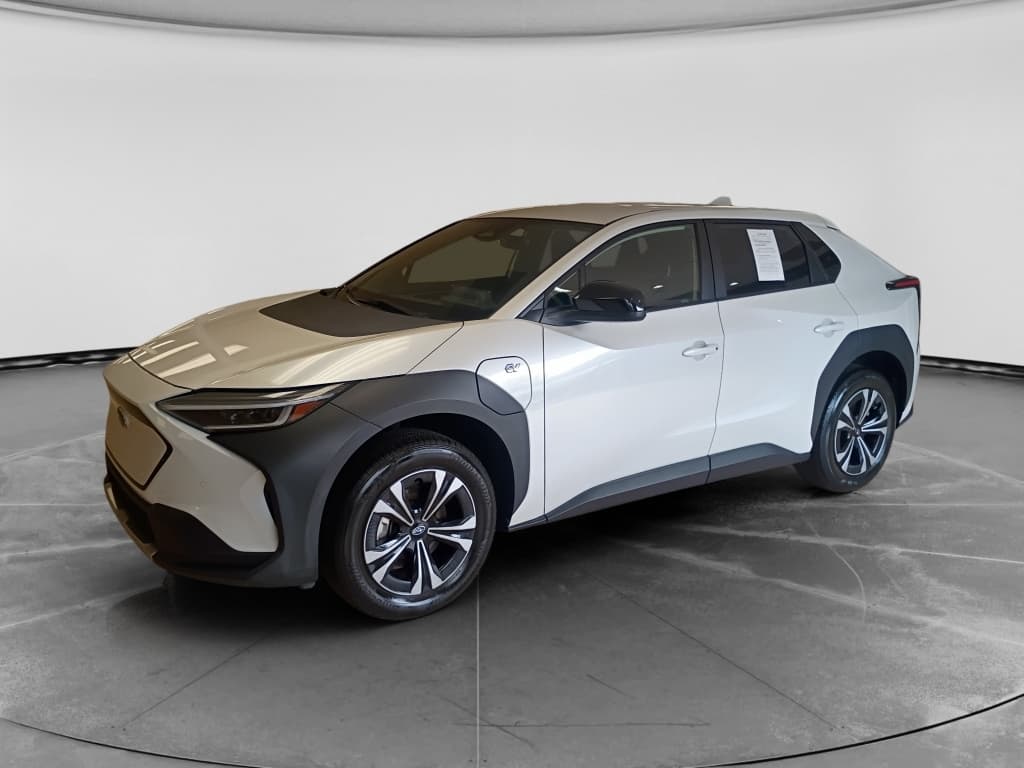
    2023 Subaru Solterra

    2023 Subaru Solterra

    Premium•20K mi•228 mi range
    5.0/5Recharged Score
    $21,996
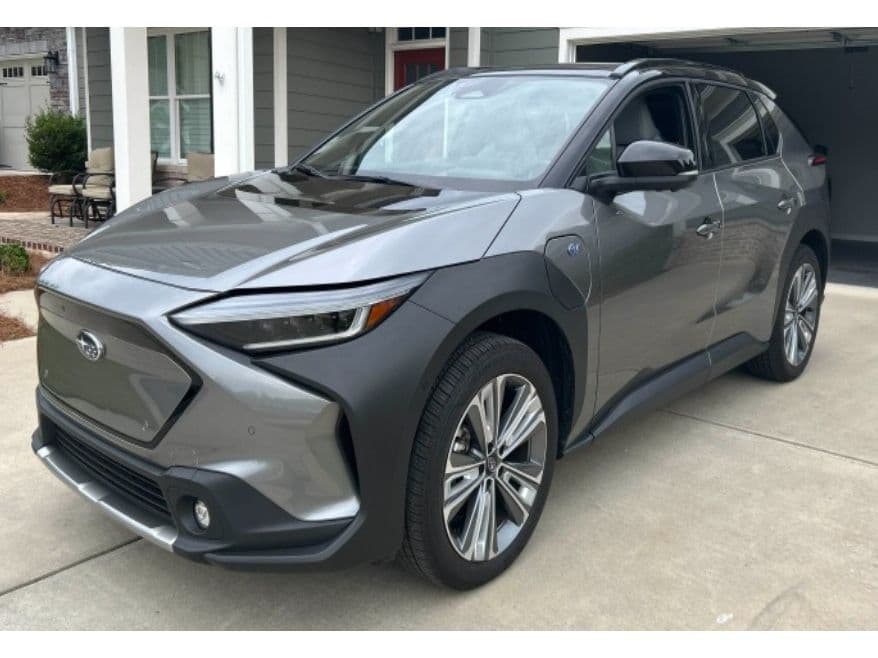
    2023 Subaru Solterra

    2023 Subaru Solterra

    Touring•9K mi•222 mi range
    Pending Recharged Score
    $25,999
    Coming Soon
    2023 Subaru Solterra

    2023 Subaru Solterra

    Limited•16K mi•222 mi range
    Pending Recharged Score
    $23,598

    Related Articles

    2023 Lexus RZ Review: Luxury Feel, Short Range
    Reviews & Comparisons·9 min

    2023 Lexus RZ Review: Luxury Feel, Short Range

    2023 Lexus RZ review covering range, charging, interior, driving impressions, pricing and how it stacks up as a used EV option for U.S. shoppers.

    lexus-rzlexus-rz-450eluxury-ev-suv
    Tesla Touchscreen Replacement Cost: 2025 Pricing & Repair Guide
    Maintenance·10 min

    Tesla Touchscreen Replacement Cost: 2025 Pricing & Repair Guide

    Learn what a Tesla touchscreen replacement really costs in 2025, when insurance helps, and how repair vs. replacement compares for Model 3, Y, S, and X.

    teslatesla-model-3tesla-model-y
    Chevy Blazer EV Cargo Space Dimensions: Practical Guide for EV Shoppers
    Reviews & Comparisons·8 min

    Chevy Blazer EV Cargo Space Dimensions: Practical Guide for EV Shoppers

    See Chevy Blazer EV cargo space dimensions with seats up and folded, plus usability tips and how it compares to other electric SUVs.

    chevy-blazer-evcargo-spaceelectric-suv