If you’re considering a Chevy Blazer EV, you’re probably wondering whether its cargo space dimensions are big enough for your life, strollers, sports gear, Costco runs, road trips, or even a move to a new apartment. On paper, the Blazer EV’s cargo numbers look competitive, but the real story is how usable that space is and how it stacks up against other electric SUVs.
Quick takeaway
Chevy Blazer EV cargo space overview
Chevrolet positions the Blazer EV as a mid‑size electric SUV, roughly in the same ballpark as a Tesla Model Y or Ford Mustang Mach‑E. That means you get a two‑row layout, a relatively long wheelbase, and a squared‑off rear hatch that helps maximize cargo volume. Unlike some smaller crossovers, the Blazer EV is designed to handle family‑duty hauling as well as daily commuting.
- Two‑row mid‑size electric SUV (no third row)
- Wide rear hatch opening for easier loading
- Fold‑flat second row for longer items
- Under‑floor storage for cables and small items
- No front trunk (frunk) on U.S. versions as of now
Measure your garage and gear
Chevy Blazer EV cargo dimensions: seats up vs folded
Automakers love to quote big cargo numbers, but they rarely explain what they mean. For the Chevy Blazer EV, you’ll typically see measurements for cargo volume behind the second row and maximum cargo volume with the second row folded. Think of these as “daily life” capacity and “moving day” capacity.
Chevy Blazer EV cargo space by configuration (approximate)
Typical cargo space figures for the Blazer EV across common seating configurations. Always check the specific trim you’re shopping for, as exact numbers can vary slightly.
| Configuration | Seats in Use | Approx. Volume (cu ft) | Best Use Case |
|---|---|---|---|
| Behind 2nd row | 5 | ~25–30 | Groceries, strollers, sports gear |
| Max with 2nd row folded | 2 | ~55–60 | IKEA runs, small furniture, bikes (front wheel off) |
| Under‑floor storage | N/A | +1–2 (usable) | Charging cable, emergency kit, small valuables |
Blazer EV cargo space is competitive with other mid‑size electric SUVs and especially useful with the rear seats folded.
About the numbers
The Blazer EV’s numbers place it squarely in the mid‑pack of electric SUVs: more useful than smaller crossovers like a Hyundai Kona Electric, but not quite as cavernous as the most cargo‑maximized models in the class. If you routinely travel with four passengers and a week’s worth of luggage, it should be sufficient if you pack intelligently and use soft‑sided bags.
Key interior measurements beyond cubic feet
Cubic feet are only part of the story. When you’re deciding if the Chevy Blazer EV’s cargo space dimensions work for you, pay attention to shape and critical clearances that affect strollers, golf clubs, or boxes.
Blazer EV cargo dimensions that affect real‑world use
Focus on the openings and flat load floor, not just the spec sheet.
Load floor length
Width between wheel wells
Cargo opening height
Pro shopping move
Blazer EV cargo space vs other electric SUVs
If you’ve looked at other electric SUVs, you know the class is crowded. The Blazer EV’s cargo space is competitive, but not class‑leading. It trades a tiny bit of outright volume for a more aggressive, sporty design and generous rear‑seat legroom.
Chevy Blazer EV cargo space vs popular electric SUVs (approximate)
How the Blazer EV’s cargo space compares with other well‑known electric SUVs. Figures are rounded and may vary slightly by model year and trim.
| Model | Behind 2nd Row (cu ft) | Max w/ Seats Folded (cu ft) | Cargo Character |
|---|---|---|---|
| Chevy Blazer EV | ~25–30 | ~55–60 | Balanced; wide hatch and flat floor |
| Tesla Model Y | ~30 | ~70 | Very strong; deep well and frunk |
| Ford Mustang Mach‑E | Mid‑20s | Mid‑50s | Similar to Blazer EV; slightly narrower |
| Hyundai IONIQ 5 | Mid‑20s | Mid‑50s | Boxy, useful shape; sliding rear seat |
| Volkswagen ID.4 | High‑20s | High‑50s | Practical square opening; family‑oriented |
Blazer EV cargo space falls in the middle of the pack, larger than many compact EVs but slightly smaller than the cargo‑champion Model Y.
Where the Blazer EV shines
What actually fits in the Blazer EV
Specs are helpful, but what most shoppers really want to know is, “Will my stuff fit?” Based on typical Chevy Blazer EV cargo space dimensions and the shape of the rear opening, here’s a practical look at how you can use the space.
Common hauling scenarios for Blazer EV owners
Grocery and Costco runs
With the rear seats up, the Blazer EV easily swallows several large grocery bags or warehouse‑club hauls. The under‑floor compartment is great for smaller items that might roll around.
Stroller plus diaper bag
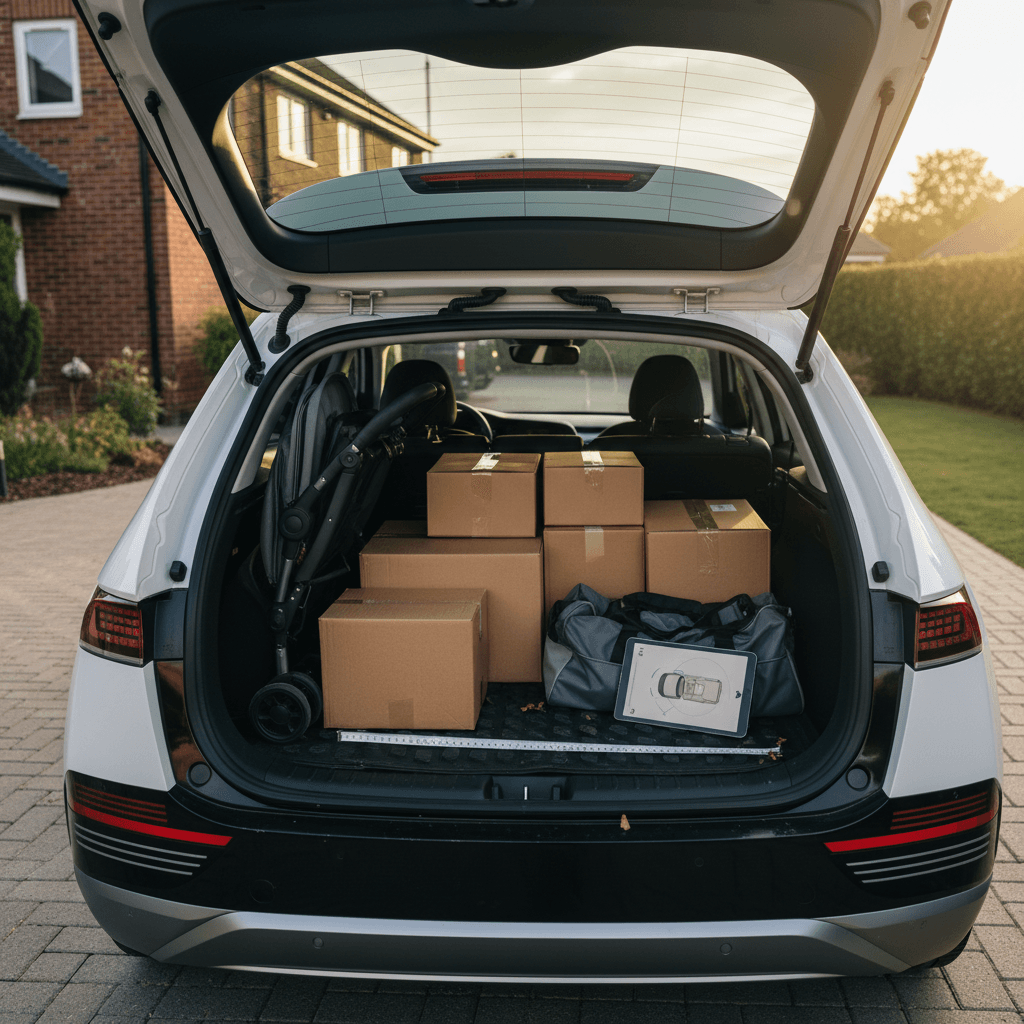
Most mid‑size strollers fit sideways or diagonally behind the second row, with room left over for a diaper bag and a few shopping bags. Jogging strollers may require the larger side folded or the wheel removed.
Golf clubs and sports gear
A standard golf bag fits diagonally with the seats up; two bags are more comfortable with one side of the rear seat folded. For kids’ sports gear, you’ll have plenty of room for duffels and collapsible chairs.
Bikes and outdoor equipment
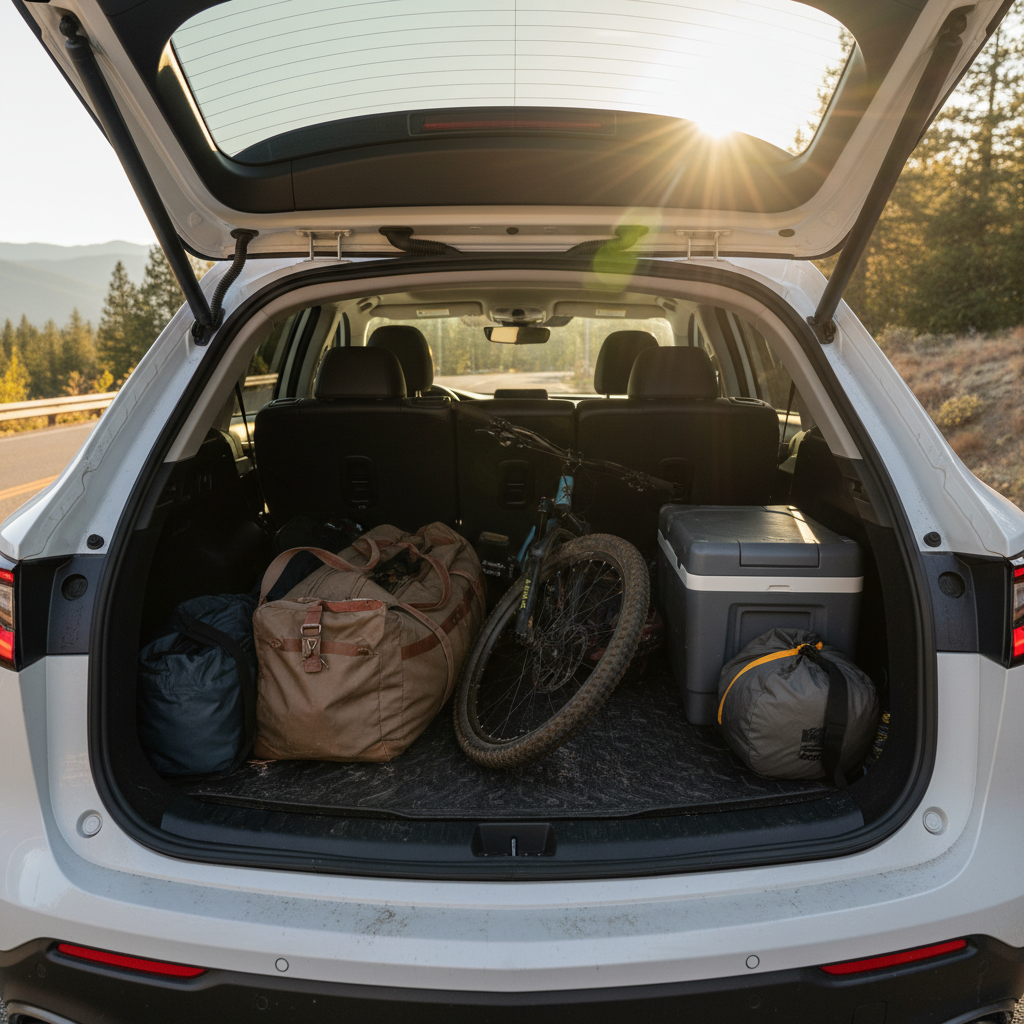
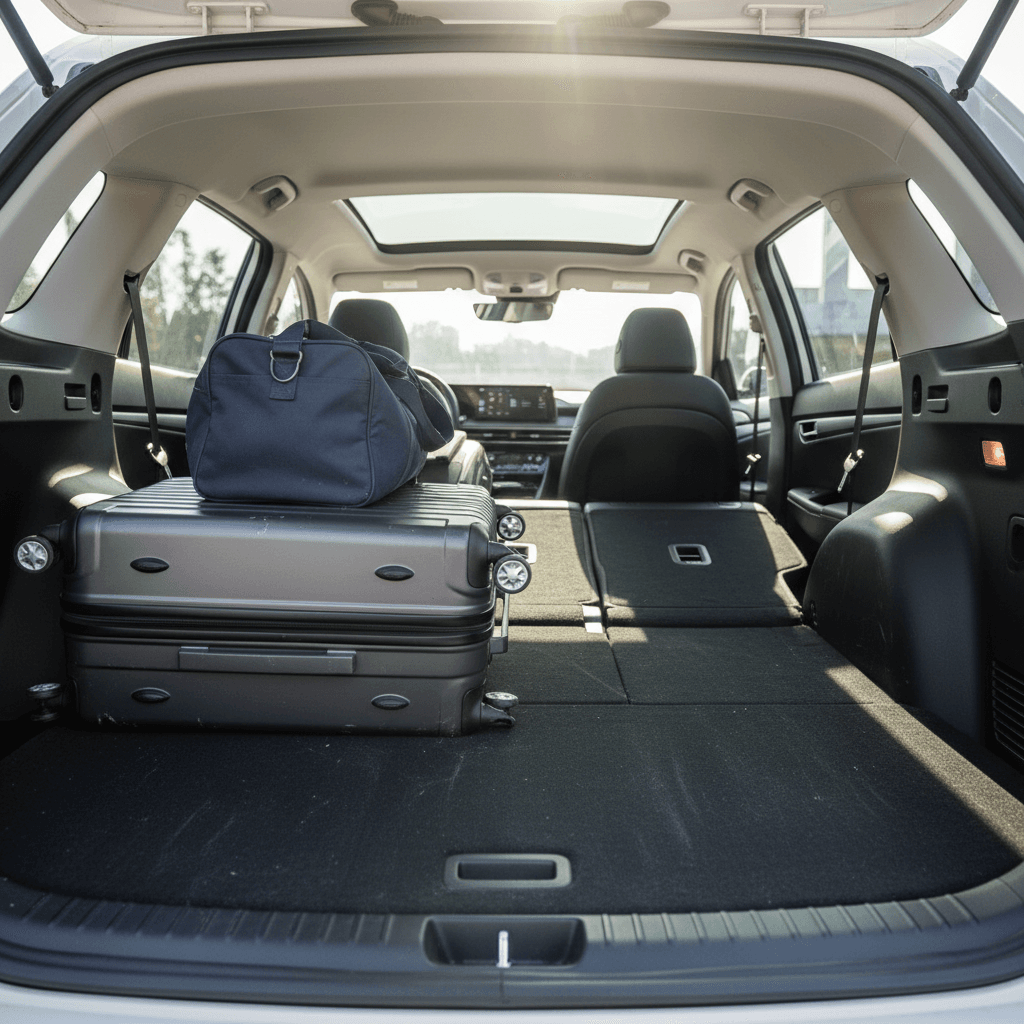
With the second row folded, you can slide in one or two adult bikes with the front wheels removed. Camping gear, tents, bins, coolers, fits well thanks to the flat load floor and nearly vertical hatch.
Flat‑packed furniture or boxes
The long, level floor and wide opening make it realistic to haul bookcases, small dressers, or moving boxes. Just remember to protect the interior plastics and secure tall items with straps.
Watch the rear visibility
Family, pets, and road‑trip practicality
If you’re moving from a gas Blazer or another mid‑size SUV, the Blazer EV’s cargo space will feel familiar. The big question is whether it can replace a larger three‑row SUV or minivan for your family’s longer trips. For many households with one or two kids, the answer is yes, with smart packing.
Everyday family use
- One or two car seats plus a stroller are realistic with room left for groceries.
- The cargo cover helps hide valuables in school pickup lines or parking lots.
- Under‑floor storage keeps charging cables and emergency kits out of the way.
Road trips
- Soft‑sided duffel bags pack more efficiently than hard suitcases.
- Folding one part of the rear seat opens extra length for skis or a cooler.
- Plan charging stops where you can quickly shuffle cargo if needed, for example, to reach a cooler buried under bags.
Traveling with pets
What to check on a used Blazer EV’s cargo area
If you’re shopping a used Chevy Blazer EV, the cargo area can tell you how the vehicle was treated. Heavy use isn’t necessarily a deal‑breaker, but it’s worth factoring into price and negotiating.
Cargo‑area inspection tips for used Blazer EVs
1. Inspect the load floor and side panels
Look for deep gouges, cracked plastics, or warped floor panels. Light scratches are normal; heavy damage could indicate frequent overloading or careless use.
2. Test the split‑folding rear seats
Fold each section down and back up. Seats should move smoothly and lock firmly. If they don’t, you could have hidden damage or worn latch mechanisms.
3. Check the power liftgate (if equipped)
Make sure the liftgate opens fully, closes without slamming, and stops if you interrupt it. Watch for misaligned gaps that might indicate a rear impact.
4. Look under the cargo floor
Confirm the under‑floor compartment is present and dry, with no signs of standing water or mildew. Verify that the portable charge cord and any included accessories are there.
5. Smell for moisture or pet odors
A musty smell can hint at past leaks; strong pet odors may require deep cleaning. Both are worth noting when you discuss price or ask for reconditioning.
How Recharged evaluates used EVs
How Recharged can help you compare cargo and battery health
Cargo room is a big part of whether a Chevy Blazer EV fits your life, but it’s only half the equation. Range, battery health, and overall condition matter just as much, especially in the used market. That’s where a transparent, EV‑specific retailer makes your job much easier.
Why shop for a Blazer EV with Recharged
Space for your stuff plus confidence in your battery and pricing.
Verified battery health
Transparent condition reports
Easy buying experience
Ready to find your next EV?
Browse VehiclesIf you’re cross‑shopping multiple EVs, the ability to see cargo photos, battery health, and pricing side‑by‑side can be the difference between guessing and making a confident decision. That’s exactly the experience Recharged is built to provide.
Chevy Blazer EV cargo space FAQ
Frequently asked questions about Blazer EV cargo space
Bottom line: Is the Blazer EV big enough for you?
If you’re looking for a mid‑size electric SUV that can handle family life, weekend adventures, and the occasional big‑box furniture run, the Chevy Blazer EV’s cargo space dimensions should be up to the task. It won’t rival a three‑row SUV or minivan for maximum volume, but it strikes a smart balance between rear‑seat comfort and usable storage.
The smartest move is to think in terms of what you actually carry: strollers, bikes, dog crates, or gear bins, then compare their measurements to the Blazer EV’s usable length, width, and height. If you’d like to see how the Blazer EV stacks up against other used EVs on your shortlist, Recharged can help you compare not just cargo space, but also battery health, pricing, and ownership costs, all in one place.