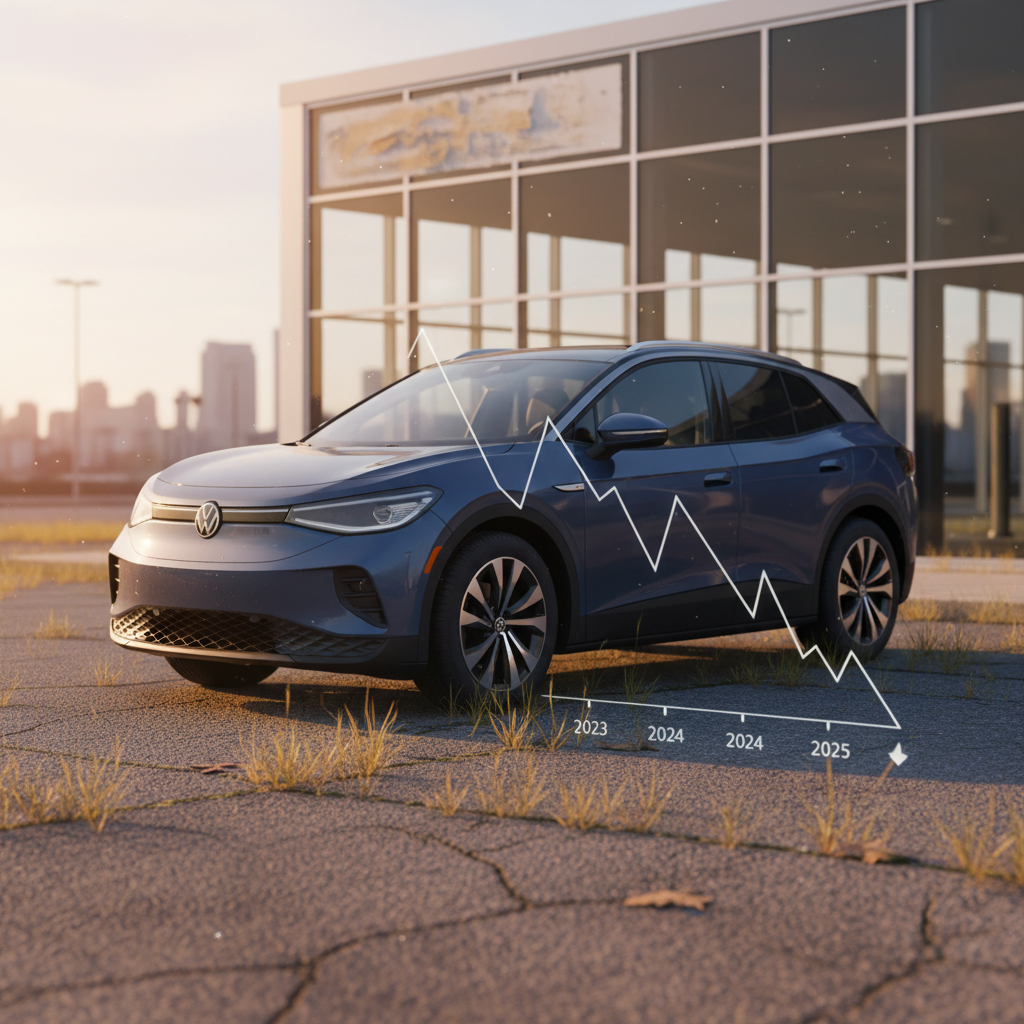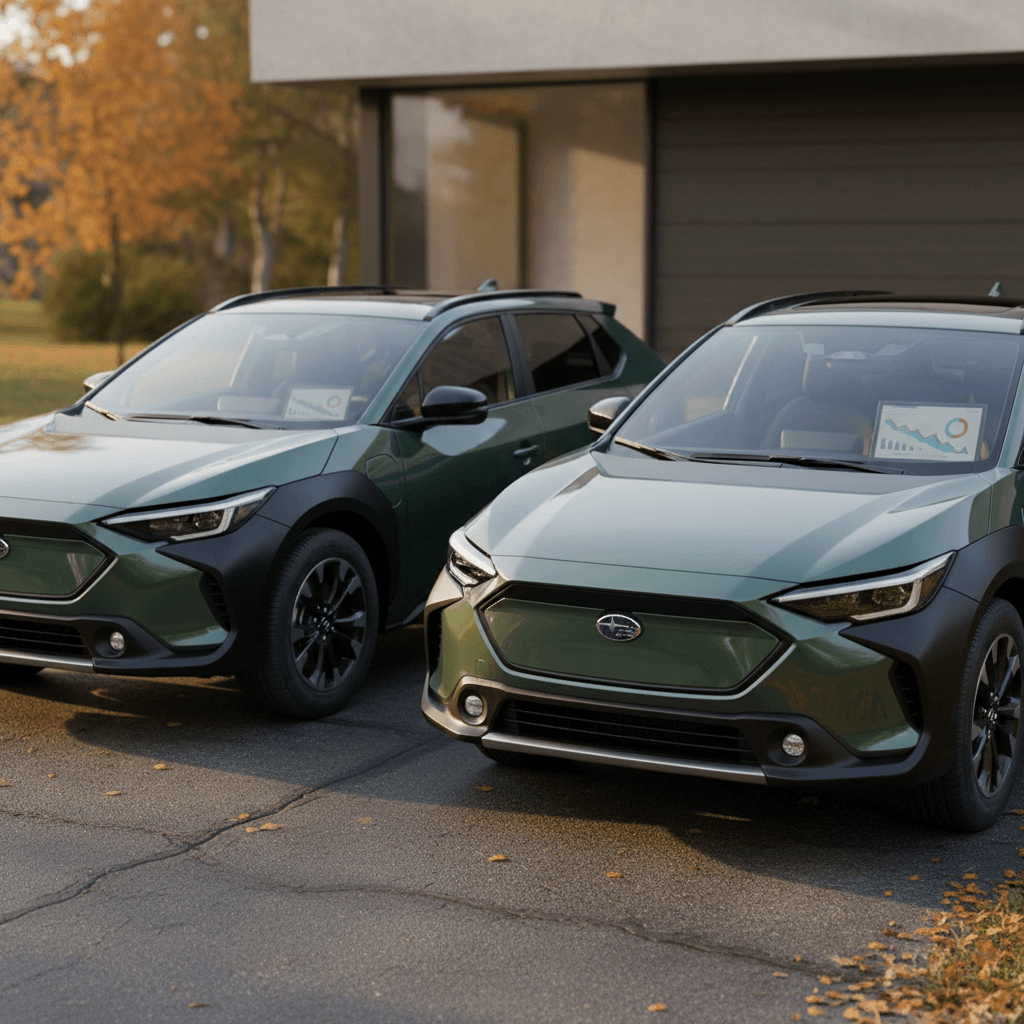
If you’re looking at a Subaru Solterra today, especially as a used EV, you’ve probably heard the horror stories about its resale value. The Subaru Solterra depreciation curve over 5 years has been steeper than many shoppers expected, but that’s not the whole story. For the right buyer, that sharp drop can actually turn into a bargain.
Quick context
Solterra 5‑year depreciation at a glance
Subaru Solterra value snapshot
Public data and Subaru’s own lease residuals suggest a 5‑year depreciation hit of roughly two‑thirds of the original MSRP for many Solterras. That’s in line with what we see in the broader EV market, where several studies now show electric vehicles losing close to 60% of their value in 5 years, with some compact SUVs doing a bit worse. The Solterra appears to be in that “worse than average, but not catastrophic” band rather than an outright outlier.
MSRP vs. what people actually paid
How the Subaru Solterra depreciation curve works
Depreciation is just the difference between what a vehicle cost new and what it’s worth later. For EVs, and especially for newer models like the Solterra, that curve is rarely a smooth line. Instead it tends to be front‑loaded: big drops in the first 24–36 months, then a slower slide after that.
- Large early discounts and lease incentives reset used pricing almost immediately.
- Rapid EV tech improvements make yesterday’s battery and charging specs feel old fast.
- Shifting tax credit rules change what shoppers are willing to pay for a used EV vs. a new one.
- Market awareness of weaker fast‑charging performance on some models (including Solterra) pushes buyers toward better‑known alternatives.
With the Solterra, those forces stack on top of each other. Subaru and Toyota leaned heavily on lease programs that captured federal tax credits on the back end, then passed much of that value to consumers as low payments. At the same time, later model years have seen price adjustments. The result: used values for 2023–2024 Solterras had to fall quickly just to stay competitive with discounted new inventory and rivals.

Year‑by‑year Solterra value forecast
No one can promise exactly what your Solterra will be worth in 2031, but we can sketch a reasonable 5‑year depreciation curve based on current transaction data, lease residuals, and how similar compact electric SUVs behave. To keep things simple, let’s assume a mid‑trim Solterra with an MSRP of about $40,000–$42,000 after Subaru’s recent price cuts.
Illustrative 5‑year Subaru Solterra depreciation curve
Approximate retained value for a typical Solterra with a ~$41,000 MSRP, assuming average mileage and condition in the U.S. market.
| Time from new | Approx. market value | Value vs. original MSRP | What this stage feels like |
|---|---|---|---|
| Year 1 | $26,000–$29,000 | ~30–35% drop | Big reset as incentives and used supply hit; painful if you bought early at full sticker. |
| Year 2 | $23,000–$25,000 | ~40–45% drop | Market finds its footing; some buyers start to see the Solterra as a value play. |
| Year 3 | $18,000–$21,000 | ~50–55% drop | Leased cars begin coming back; values line up with other compact EV SUVs. |
| Year 4 | $15,000–$18,000 | ~60–65% drop | Curve starts to flatten; battery health and fast‑charge behavior matter more than trim. |
| Year 5 | $13,000–$16,000 | ~65–70% drop | Pricing stabilizes; well‑maintained, lower‑mileage examples stand out and command a premium. |
These figures are directional, not guarantees. Local supply, miles, and condition can move your real‑world number up or down.
About the numbers
How Solterra compares to other EV SUVs
Subaru Solterra
- Segment: Compact electric SUV with standard AWD.
- 5‑yr depreciation: Roughly 65–70% from MSRP in many realistic scenarios.
- Key drag factors: Modest range, slower DC fast charging, lower brand recognition in EVs.
- Upside: Strong Subaru loyalty, standard AWD, real‑world practicality for suburban use.
Typical compact EV SUV
- 5‑yr depreciation: Many compact electric SUVs now land around 58–60% depreciation at five years.
- Leaders: Tesla Model Y and some Korean models (Ioniq 5, EV6) often do a bit better.
- Laggards: First‑wave EVs with older batteries and slow charging can lose 65%+ in 5 years.
- Context: EVs as a group are depreciating faster than comparable gas SUVs right now.
In other words, the Solterra is not uniquely terrible, it’s operating in a segment where 5‑year depreciation is already aggressive. But its combination of middling charging performance, modest range, and a crowded market of discounted rivals means its curve is on the steeper side of the EV pack, at least for early model years.
The silver lining for shoppers
Why the Solterra depreciates faster than many rivals
Four main drivers of Solterra depreciation
None of these are fatal flaws, but together they push the curve down.
Underwhelming fast charging
Real‑world DC fast‑charging speeds lag many rivals. For buyers who road‑trip, that’s a major strike compared with alternatives from Tesla, Hyundai, or Kia.
Range & efficiency
The Solterra’s EPA range is competitive on paper, but not standout. In cold climates or at highway speeds, owners report range that feels closer to the bottom of the class.
Incentives & discounts
Aggressive leasing programs, price adjustments, and factory incentives quickly pulled transaction prices down, forcing used values to follow.
Brand & awareness
Subaru has a loyal base, but in EVs it’s still a newcomer. Many cross‑shoppers simply default to more familiar names for their first EV.
Put simply, the Solterra launched at a price that made sense in theory, then ran into a market that moved underneath it, falling new EV prices, more capable competition, and a used market suddenly full of off‑lease electric crossovers. Depreciation is how all of that gets expressed in one number.
Leasing vs buying to manage Solterra depreciation
Because the Subaru Solterra depreciation curve over 5 years is front‑loaded, how you structure the deal matters as much as what you pay. For many shoppers, leasing has been the safer way to enjoy a new Solterra without taking on all the downside risk.
When leasing makes sense
- You want the latest safety and driver‑assist tech and plan to swap cars every 3–4 years.
- You can access strong lease incentives or tax credit pass‑throughs that lower payments.
- You’re unsure about long‑term EV battery life and prefer to hand the car back.
- You live in a market where used Solterras are still thin on the ground.
When buying (especially used) wins
- You’re shopping a 2–3‑year‑old Solterra that has already taken the big depreciation hit.
- You plan to keep the car 6–10 years and squeeze value out of the flattened part of the curve.
- Up‑front price, not monthly payment, is your primary concern.
- You can verify battery health and charging behavior before committing, something Recharged helps with through our Recharged Score.
Strategy for value‑focused buyers
Using depreciation to your advantage when buying used
For new‑car buyers, a steep depreciation curve is bad news. For used‑car shoppers, it’s the entire opportunity. The same dynamics that spooked some first‑wave Solterra owners, price cuts, incentives, and negative headlines, are now what make the model interesting on the secondary market.
- You can often find a Solterra that’s 2–3 years old, with modest miles, for roughly half of its original MSRP.
- Insurance and taxes are usually lower because they’re based on current market value, not what the first owner paid.
- If you plan to keep the car for another 5–7 years, most of your depreciation is already “baked in.”
- A thorough inspection and battery health report matter more than whether the badge on the hood is trendy.
This is exactly the kind of scenario where a specialized used‑EV retailer like Recharged can help. Every Solterra we list includes a Recharged Score Report with verified battery health, market‑correct pricing, and expert guidance on what the depreciation curve realistically looks like for that specific VIN.
How Recharged evaluates Solterra value & battery health
What goes into a Solterra’s Recharged Score
Beyond book values: how we look at the real‑world depreciation curve.
Battery diagnostics
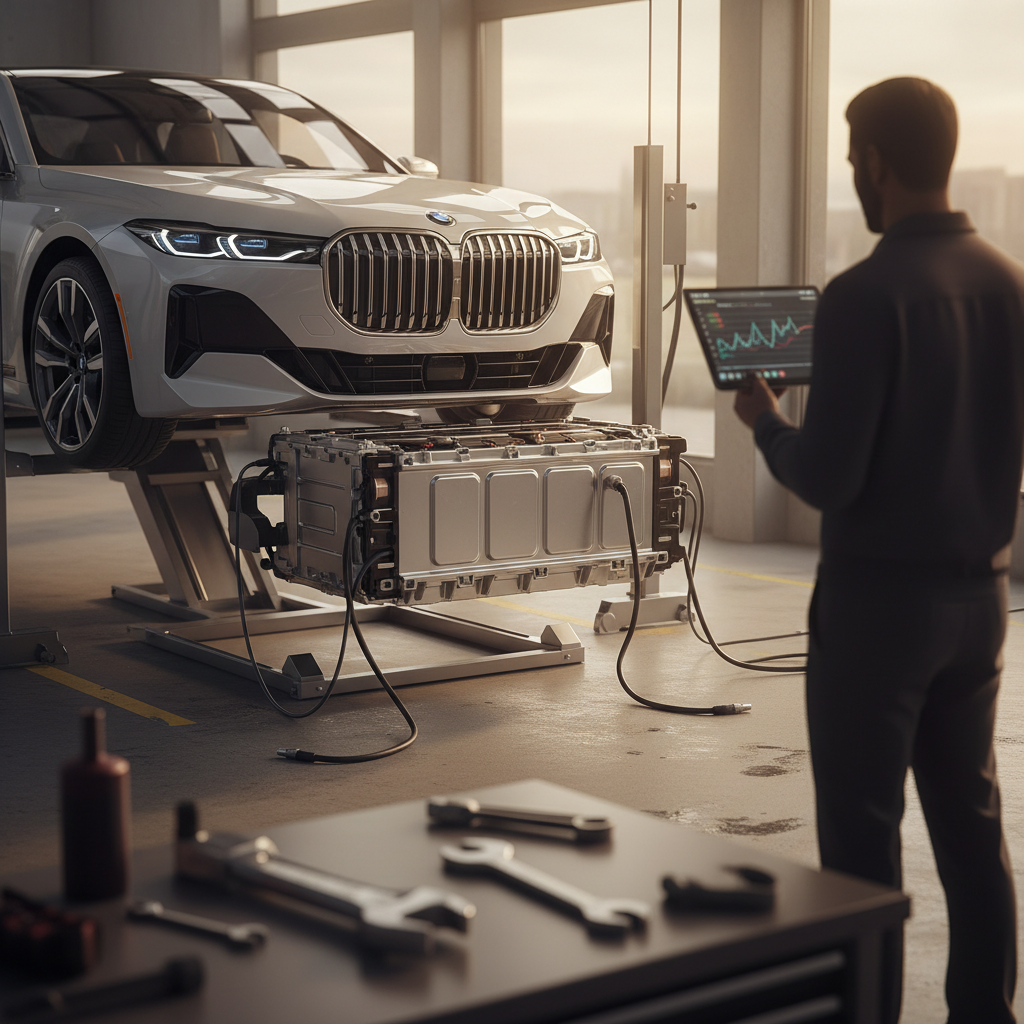
We test usable capacity and charging behavior to understand how much of the original battery performance is still there, not just what the dash estimate says.
Mileage & use profile
Short‑trip city use is very different from high‑speed road‑tripping. We factor in how a Solterra has been driven and charged over time.
Regional market data
Colorado isn’t Florida. We look at local sale prices, demand, and incentives to price each Solterra competitively in its real market.
Condition & history
Accident history, open recalls, and maintenance records all influence where a specific car sits on the expected depreciation curve.
Model‑year trends
We track how each Solterra model year is performing in wholesale and retail channels so you’re not guessing about future resale.
Fair‑market pricing
Our goal is simple: list a Solterra at a price where the remaining years of ownership represent solid value compared with gas SUVs and rival EVs.
Ready to find your next EV?
Browse VehiclesIf you’re trading out of a Solterra, our team applies the same data‑driven lens on the other side. Whether you request an instant offer or consignment, we’ll explain where your vehicle sits on the curve today and how that translates into a fair offer or asking price.
Checklist: How to shop a used Subaru Solterra
Smart steps for evaluating a used Solterra
1. Start with the depreciation story
Look at original MSRP versus today’s asking price. A 2–3‑year‑old Solterra priced at roughly half of its sticker is in the expected zone; if it’s much higher, you’ll want a compelling reason why.
2. Review battery health, not just range
Ask for a <strong>battery health report</strong> or capacity test. On Recharged, this is built into the Recharged Score so you can see how the pack has aged compared with peers.
3. Test real‑world charging behavior
If possible, observe a DC fast‑charge session. You want to confirm the car reaches and maintains charging speeds consistent with its model year and software level.
4. Check for repairs & recalls
Review the vehicle history report for structural damage, flood history, or major repairs. Make sure any open recalls, especially EV‑system related, have been addressed.
5. Compare against other EV SUVs
Put the Solterra’s asking price next to alternatives like the Tesla Model Y, Hyundai Ioniq 5, or Kia EV6 in similar age and mileage. If Solterra is cheaper, that depreciation is working in your favor.
6. Think about your time horizon
If you plan to keep the car 6–8 years, focus less on short‑term resale and more on total cost of ownership, electric fuel savings, maintenance, and insurance included.
Don’t skip an EV‑specific inspection
FAQ: Subaru Solterra depreciation curve over 5 years
Frequently asked questions
Bottom line: Is the Solterra a good value?
Seen strictly through the lens of the Subaru Solterra depreciation curve over 5 years, early adopters got the short end of the stick. The model launched into a turbulent EV market and was quickly undercut by incentives and more advanced rivals. But that same turbulence is what makes today’s Solterra a quietly appealing used buy if you understand where it sits on the curve.
If you want the latest long‑range EV for frequent cross‑country trips, the Solterra isn’t the star of the segment. If you’re a value‑oriented driver who mostly needs a safe, all‑weather, family‑friendly crossover with low running costs, a well‑priced used Solterra can make solid financial sense, especially once most of the depreciation is behind you.
Wherever you fall, don’t go in blind. Use real‑world data, insist on transparent battery health information, and compare options across the EV SUV segment. At Recharged, our used Solterras come with a Recharged Score Report, fair‑market pricing, financing support, and nationwide delivery, so you can focus less on guessing the curve and more on deciding whether this particular car fits your life.