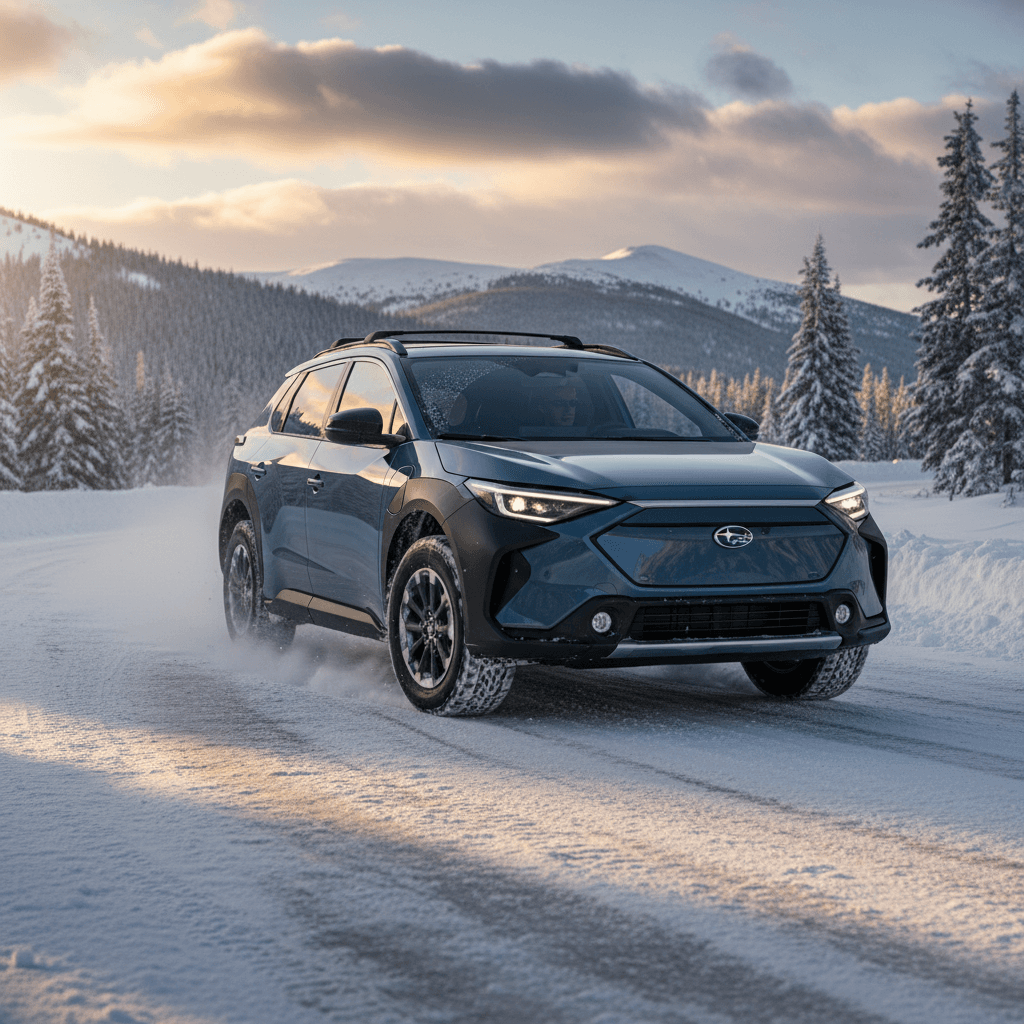
If your life includes plow berms, black ice, and driveways that resemble ski jumps, you’re probably wondering whether the Subaru Solterra is actually one of the best EVs for snow and ice, or just another crossover wearing a North Face jacket in the showroom. The short answer: driven and set up correctly, the Solterra is genuinely excellent in winter, but it’s not magic. The details matter: tires, modes, and expectations about range.
Quick verdict
Is the Subaru Solterra good in snow and ice?
On paper and in real‑world owner reports, the Solterra behaves like you’d expect a Subaru to behave when the sky turns to freezer burn. Every Solterra sold in the U.S. uses a dual‑motor, symmetrical all‑wheel‑drive system with about 215 hp and 249 lb‑ft of torque, paired with roughly 8.3 inches of ground clearance, right in classic Subaru territory for plowing through ruts and drifted side streets.
- Standard dual‑motor AWD on every trim (no guessing the right package)
- X‑MODE with Snow/Dirt and Deep Snow/Mud modes that tailor throttle, braking and traction control for low‑grip surfaces
- Ground clearance comparable to many gas Subarus, enough to straddle frozen ruts and parking‑lot crust
- Smooth, immediate torque that helps you ease away cleanly on slick surfaces when you’re gentle with the pedal
Owners in snow‑belt states routinely describe the Solterra as “a Subaru in the snow,” which is high praise. Where it differs from your old Outback is not traction, it’s winter range and charging behavior. Like every EV, the Solterra will lose a noticeable chunk of range in deep winter, and you have to plan around that.
Why Solterra looks so promising on paper for winter
Subaru Solterra specs that matter in winter
Walk around a Solterra and you immediately see the Subaru‑ification of a shared platform. It’s the same basic EV as Toyota’s bZ4X underneath, but Subaru leans into the outdoors brief: taller stance, chunkier cladding, slightly better approach and departure angles, and crucially, its AWD is standard and calibrated for all‑weather use, not just the suburban school run.
Winter‑friendly features baked into every Solterra
Why this EV feels at home in sleet, slush and snowbanks
Symmetrical dual‑motor AWD
Generous ground clearance
X‑MODE with snow tuning
Think of it as an electric Outback
X‑MODE and traction: how it actually behaves on slippery roads
Under the marketing gloss, X‑MODE is simply smart traction tuning for low‑grip situations. In the Solterra, you get a dual‑mode system: Snow/Dirt and Deep Snow/Mud, plus hill‑descent control. It’s not meant to turn the car into a rock crawler; it’s there to help you claw out of an unplowed side street or a steep, icy driveway without drama.
Snow/Dirt mode
- Softens throttle response so small pedal inputs don’t translate into wheelspin.
- Increases sensitivity of traction and stability control to catch slip early.
- Ideal for packed snow, light ice, slush and gravel at normal road speeds.
Use this as your default in winter storms where the road is messy but not bottomless.
Deep Snow/Mud mode
- Allows a bit more wheelspin to help the tires dig and clear tread blocks.
- Optimizes power delivery for low‑speed slogging, like breaking trail through 6–10 inches of fresh snow.
- Best below suburban speeds, where traction, not speed, is your priority.
Think of this as the mode you engage when you’re backing out of a plowed‑in space or pushing through the unplowed section of a rural road.
What owners report in real storms
Electronics vs. deep snow reality
Winter range, heat and charging: what to expect
Here’s where the magical snow‑subduing Subaru image collides with electric‑car physics. The Solterra’s pack is around 72 kWh. In mild weather, you can see roughly 220–230 miles of EPA‑style range. In deep winter, single digits Fahrenheit, snow tires, heat blasting, many owners report practical ranges more like 150–180 miles, sometimes less if you’re running 75 mph into a headwind.
4 things that chew up Solterra range in winter
None of them are unique to Subaru, but you need to plan for them
Cold battery chemistry
Snow tires & rolling resistance
Cabin and battery heating
Higher speeds on cold air
The good news: newer Solterras avoid some of the worst cold‑weather fast‑charging issues that early Toyota bZ4X AWD models had, where DC charging could slow dramatically below freezing. Still, you should assume slower fast‑charge sessions in very cold weather and plan extra time if you’re road‑tripping to the ski hill.
How to get the most out of your Solterra in winter
1. Precondition while plugged in
Use the app or in‑car settings to warm the cabin and battery while you’re still on the charger. You’ll start with a warm pack and full battery instead of burning range to heat everything.
2. Start trips soon after charging
If you’ve just charged to 80–100%, the pack is already warm. Heading out right away maximizes efficiency and improves DC fast‑charging behavior at your next stop.
3. Dial back highway speed
Cutting your cruising speed from 75 mph to 65 mph can save a surprising amount of range in cold air. On a 150‑mile winter trip, that might be the difference between one stop and none.
4. Use seat and wheel heaters first
Seat and steering‑wheel heaters draw far less energy than cranking the cabin heat. Use them liberally and then nudge the HVAC temp down a few degrees.
5. Plan conservative buffers
In true winter, treat your Solterra like a 150‑mile EV, not a 220‑mile one. Build in 20–30% buffer when you’re routing to a charger or mountain house.
Tires, clearance and hardware: set your Solterra up for real winter
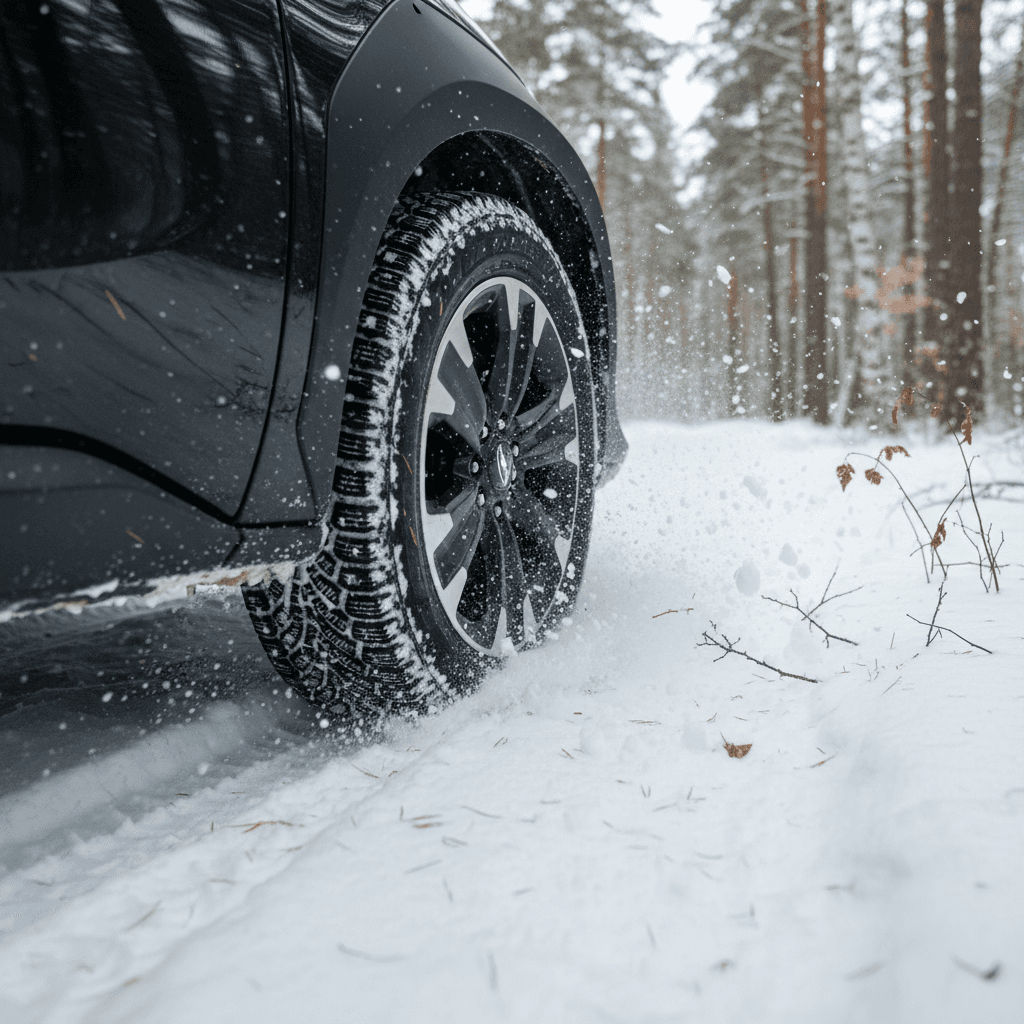
The Solterra gives you the raw ingredients for winter, AWD, ride height, traction modes. Whether it’s great in snow and ice depends heavily on what’s wrapped around those 18‑ or 20‑inch wheels and how you drive.
Key hardware choices for snow and ice
Where to spend and what you can leave stock
Dedicated winter tires
Wheel size & sidewall
Respect the 8.3 in clearance
Don’t trust all‑season tires in real winter
Solterra vs Toyota bZ4X: which is better for snow and ice?
Because the Subaru Solterra and Toyota bZ4X share the same e‑TNGA platform and much of the same hardware, winter performance is more sibling rivalry than night‑and‑day. But there are a few differences that matter if you live where the snow blower gets more use than the lawn mower.
Subaru Solterra vs Toyota bZ4X for winter driving
How the twins stack up when the forecast turns ugly
| Feature | Subaru Solterra (U.S.) | Toyota bZ4X (U.S.) | Winter takeaway |
|---|---|---|---|
| AWD availability | Standard dual‑motor on all trims | Optional; FWD also sold | Solterra makes it impossible to forget AWD, every model has it. |
| Ground clearance | ~8.3 in | ~8.1 in | Numbers are close, but Subaru tunes its stance for light off‑pavement duty. |
| Snow‑specific modes | X‑MODE with Snow/Dirt + Deep Snow/Mud | Snow Mode on AWD trims | Subaru’s dual‑mode X‑MODE offers finer‑tuned control in deep snow scenarios. |
| Brand tuning & image | Subaru = all‑weather, ski‑lot culture | Toyota = quieter, more urban crossover feel | Solterra’s calibration and marketing both lean hard into winter use. |
| Cold‑weather charging history | Updates focused on winter range and comfort | Early AWD models had DC charging caveats below freezing | If you’re shopping used, you’ll want to understand year‑by‑year updates. |
Both are capable in snow, but Solterra leans more into the all‑weather Subaru persona.
Which one should a snow‑belt buyer lean toward?
How the Solterra compares to other winter EV SUVs
Stack the Solterra against other mainstream electric crossovers, Hyundai Ioniq 5, Kia EV6, Tesla Model Y, Volkswagen ID.4, and its winter personality comes into focus. It isn’t the longest‑range or quickest‑charging option, but its mix of traction hardware, clearance and Subaru DNA makes it a very honest snow car.
Solterra vs other popular winter‑duty EVs
Not a spec race winner, but a confidence machine
Vs Tesla Model Y
Vs Hyundai Ioniq 5 / Kia EV6
Vs VW ID.4 and similar
Where Solterra clearly shines
Used Subaru Solterra: buying tips for snow‑belt drivers
Shopping for a used Solterra specifically as a winter car is a different game from grabbing the cheapest EV on the lot. You’re buying a tool for February, not July. That means you care enormously about battery health, prior winter usage, and whether the previous owner set it up correctly for snow.
Checklist for evaluating a used Solterra for winter duty
1. Check real‑world range at moderate temps
Ask the seller, or look in the energy screens, what the car projects at 80–90% charge on a cool day (40–60°F). Significant deviation from typical numbers can hint at battery degradation or a hard life of DC‑fast‑charging.
2. Inspect tires and ask about winter sets
If the car comes with a second set of wheels and winter tires, that’s real value. If it’s still on worn‑down all‑seasons, budget for proper winter rubber immediately.
3. Look for underbody and suspension wear
A life of gravel, salted highways and snow‑bank parking can chew up control arm bushings and underbody coatings. A lift inspection is worthwhile if you’re buying a Solterra as your storm mule.
4. Understand software and recall history
Early Solterras and bZ4Xs had recall campaigns and software updates related to wheels and charging behavior. Verify that <strong>all recalls and updates</strong> have been completed before you sign.
5. Get battery health data, not just a test drive
A winter car that can’t reliably deliver its rated range is a liability. At Recharged, every EV we sell comes with a <strong>Recharged Score Report</strong> that includes third‑party‑verified battery health and pricing benchmarks, so you know what kind of winter range to expect before you buy.
Leaning toward a used Solterra?
FAQ: Subaru Solterra and winter driving
Subaru Solterra winter & snow FAQ
Bottom line: is the Subaru Solterra the best EV for snow and ice?
If you define “best” as the EV that will slog out of your unplowed driveway, shrug off that frozen rut at the end of the cul‑de‑sac, and get you to the hill when everyone else is panic‑braking on all‑seasons, the Subaru Solterra absolutely belongs on the short list of winter‑worthy electric SUVs. It’s not the king of range or DC fast‑charging, and it won’t out‑spec a Tesla Model Y on paper. But in the real world of slush, crust, and ugly March storm systems, it behaves exactly how a Subaru should.
Set it up with proper winter tires, learn how and when to use X‑MODE, and plan realistically for cold‑weather range, and the Solterra is a loyal snow partner. If you’re shopping used and want help finding a Solterra, or another AWD EV, that fits your winter life, Recharged can guide you through battery health, pricing, trade‑in options, and even delivery to your driveway, so the only thing you’re left to worry about is whether the plow will beat you out of the neighborhood tomorrow morning.