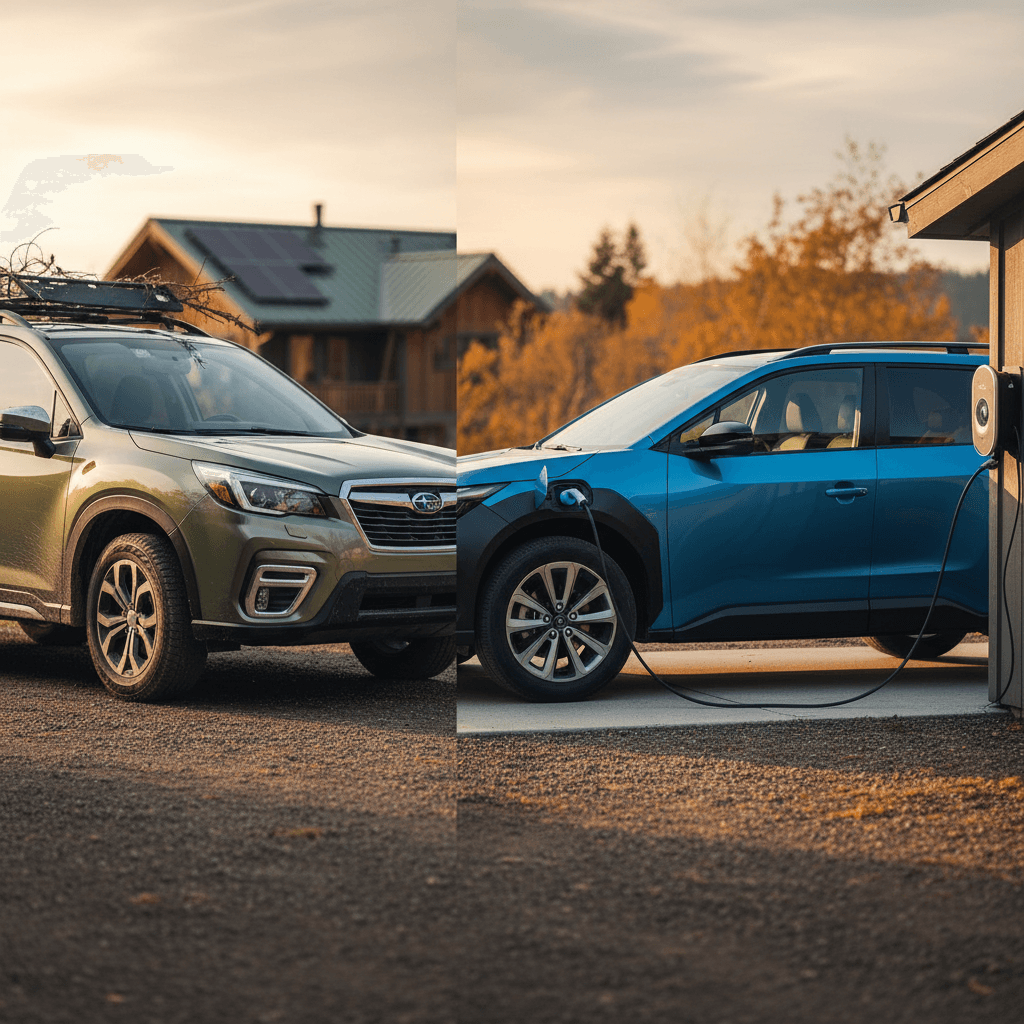
If you’ve driven a Subaru Forester for years, you probably love its all-weather confidence, practicality, and that familiar Subaru feel. Now Subaru’s first EV, the Subaru Solterra, is on your radar, and you’re wondering what it’s really like to switch from Forester to Solterra as a daily driver and family hauler.
Context: where Solterra fits in Subaru’s lineup
Who this Forester-to-Solterra review is for
This review is written for current or recent Subaru Forester owners who are EV-curious. You might be: - Coming out of a Forester lease and considering an EV next - Driving a 2014–2021 Forester and thinking about trading while values are still reasonable - Looking at a used Solterra as a way to go electric without paying new-car money We’ll focus on what actually changes in your day-to-day life when you swap a gas Forester for a Solterra: driving feel, space, range, winter behavior, costs, and what to look for in the used market.
Quick take: should a Forester owner switch to a Solterra?
Subaru Solterra at a glance (vs a typical Forester)
The short verdict for Forester owners
The catch
Driving feel: Subaru Forester vs Subaru Solterra
What will feel familiar
- All-wheel drive character: Like your Forester, Solterra uses dual electric motors and Subaru-tuned traction logic to keep things sure-footed on wet, snowy, or gravel roads.
- Ride comfort over outright sport: Both prioritize stability and confidence over sharp handling. The Solterra still feels very "Subaru" in how it deals with bad pavement.
- Higher seating position: You still get a good, upright view of the road, similar to a Forester.
What will feel different
- Instant torque: From a stop or low speeds, the Solterra jumps forward more eagerly than a Forester. It’s not a rocket ship, but it feels stronger off the line.
- Quieter, smoother power: No engine noise or gear changes, just a steady pull. Highway passing is relaxed but not as punchy as some higher-powered EVs.
- Regen braking: You’ll feel light to moderate deceleration when you lift off the accelerator, especially in stronger regen modes. It quickly becomes intuitive, but it’s new if you’re coming from a gas Subaru.
Test-drive tip for Forester owners
Space, cargo and family duty
On paper, the Solterra and Forester are close in footprint. In practice, they package space a bit differently. The Forester’s tall, square roofline and big glass make it feel exceptionally airy and easy to load. The Solterra’s sloping rear and EV-specific platform change how that space feels and works.
Forester vs Solterra: practical utility
How the Solterra stacks up for the jobs most Forester owners care about.
| Area | Forester (recent gen) | Solterra (2023–2024) | Owner takeaway |
|---|---|---|---|
| Seating | 2 rows, 5 seats | 2 rows, 5 seats | Very similar for passengers; both work for small families |
| Cargo behind 2nd row | About 28–30 cu ft | Mid-20s cu ft | Forester still wins on boxy, easy-to-pack space |
| Cargo with seats folded | ~70+ cu ft | Smaller on paper | Solterra’s sloping roof limits tall cargo a bit |
| Rear seat comfort | Excellent headroom | Good but slightly lower roof | Tall teens may notice the difference |
| Towing | Limited, varies by year | Very limited or not rated in US | If you tow regularly, stay with gas or hybrid for now |
Approximate values; always check exact specs by model year and trim.
Dog crates, skis and camping gear
Range and road-trip reality for ex-Forester owners
Range is where the EV experience really diverges from a Forester. A gas Forester can easily cover 400+ miles on a tank and refuel in a few minutes. A first-generation Solterra has an EPA-rated range of up to about 227 miles on the most efficient trim, with real-world highway range often closer to 180–210 miles depending on speed, weather and load.
- Around town and commuting: For typical daily driving under 60–80 miles, Solterra range is a non-issue if you can charge at home overnight.
- Weekend trips: For 120–180 mile round-trips (mountain cabin, lake house, kids’ tournaments), you’ll want to plan a charging stop, especially in winter.
- Long highway road trips: Expect to stop every 120–160 miles for a fast charge to keep a comfortable buffer, more often than you stop for gas today.
Cold weather hits EV range harder than your Forester
Charging 101 for Forester owners
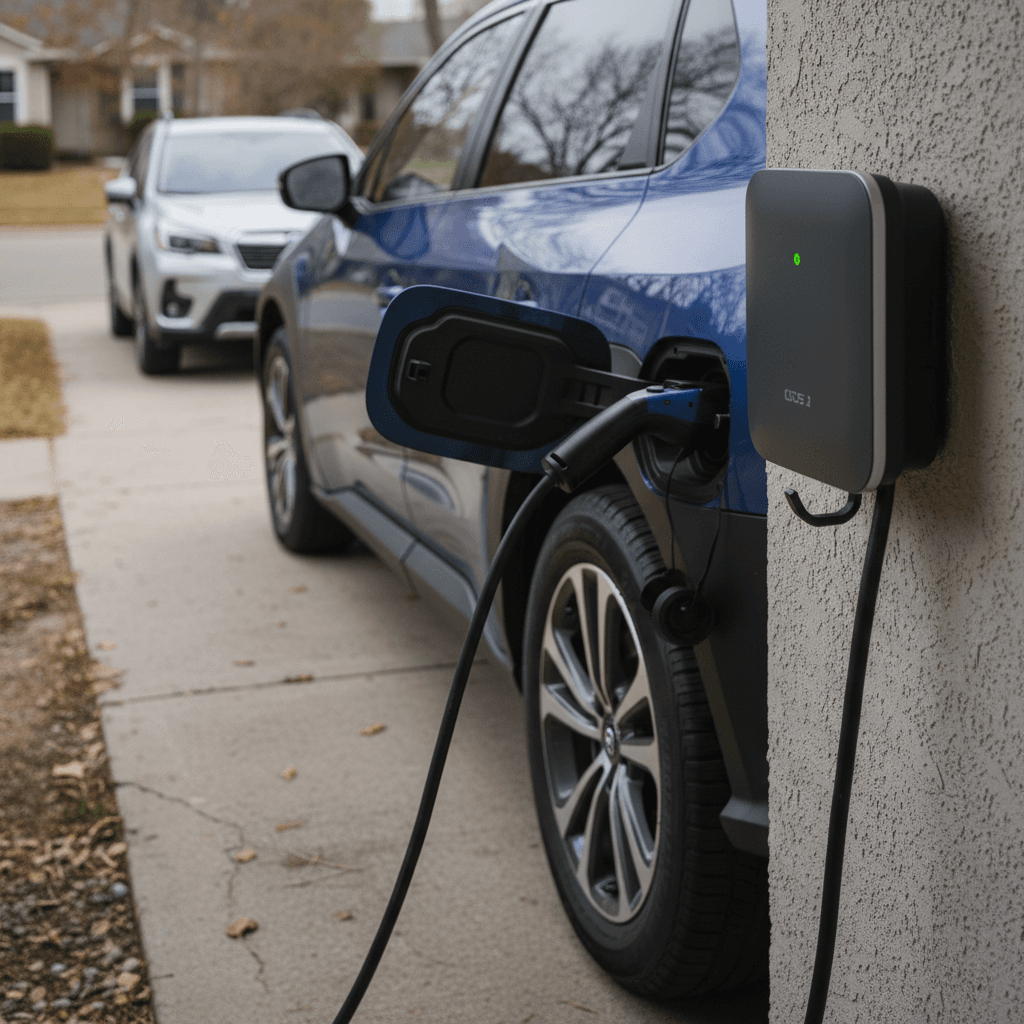
The biggest mindset shift from Forester to Solterra is how you "refuel." Instead of filling up once a week, you’ll likely plug in at home most nights and occasionally use public stations on road trips.
Solterra charging basics, explained for gas drivers
Three main ways you’ll charge after leaving your Forester behind
Level 1 (120V home outlet)
Think of this as a slow trickle. Plugged into a regular household outlet, the Solterra typically adds only a few miles of range per hour, fine for very light use, frustrating if you drive much.
Best for: Apartment dwellers with short commutes who can’t install Level 2.
Level 2 (240V home or public)
This is the sweet spot for most owners. At home, a 240V Level 2 charger can refill a low battery in roughly overnight, or top you off by morning from typical daily use.
Best for: Homeowners replacing a Forester as their main daily vehicle.
DC fast charging (road trips)
On the road, DC fast chargers can take a Solterra from about 10% to 80% in roughly 35–45 minutes on newer models when conditions are ideal. Earlier 2023 cars can be slower.
Best for: Highway segments and long trips where you’d normally stop for fuel and food.
Home charging checklist for ex-Forester owners
Confirm where you’ll park and plug in
If you have a driveway or garage with access to power, you’re in great shape. If you rely on street parking or a communal lot, you’ll need a realistic public-charging plan before you go electric.
Have an electrician inspect your panel
A licensed electrician can tell you if your home can support a 240V circuit for a Level 2 charger, what amperage it can handle, and what it will cost to install.
Decide on wallbox vs portable Level 2
Many Solterra owners choose a hardwired wallbox; others use a portable Level 2 unit plugged into a 240V outlet. A specialist retailer like Recharged can help you understand what matches your driving pattern.
Learn how public charging apps work
Download major network apps (like Electrify America, ChargePoint, and others in your area), set up payment, and test one or two stations before your first big trip.
Do not buy a Solterra without a charging plan
Costs: gas vs electric and maintenance
One of the biggest reasons Forester owners eye a Solterra is cost of ownership. Gas, oil changes, and routine engine-related maintenance add up over time. An EV simply has fewer moving parts and shifts your biggest expense from fuel to electricity.
Fuel vs electricity
- Forester: Many owners see mid-20s mpg in mixed driving. At typical US gas prices, that adds up quickly if you rack up miles.
- Solterra: You’ll pay for kWh instead of gallons. Home charging (especially on off-peak rates) is usually much cheaper per mile than gasoline. Public DC fast charging can be closer to fuel-parity, but you’ll likely use it infrequently.
Maintenance and repairs
- Forester: Oil changes, exhaust, transmission, belts, and engine-related repairs over time.
- Solterra: No oil changes, no traditional transmission, and less brake wear thanks to regen braking. You still have tires, cabin filters, coolant for the battery system, and standard wear items, but the maintenance menu is simpler.
Used Solterra sweet spot for value
Reliability and winter performance
Forester owners often cite reliability and snow capability as top reasons they’ve stayed loyal to Subaru. The Solterra carries that reputation into the EV world, but with a few important caveats, especially for early-build cars and in cold climates.
- Subaru brand reliability is strong overall, but early Solterra reliability scores have been dragged down by software quirks, charging behavior (especially in cold weather), and a now-resolved recall related to wheel hub bolts.
- Many owners praise the Solterra’s snow traction. Dual-motor all-wheel drive, X-MODE, and a low center of gravity give it a planted, confident feel in winter conditions, much like a Forester, just heavier.
- Cold-weather charging speed is a known weak point, particularly on 2023 models. Subaru added improved battery conditioning on the 2024 Solterra to charge significantly faster at freezing temperatures compared with earlier cars.
- Like any EV, expect more range loss in winter than you’re used to with your gas Forester. Preconditioning while plugged in, using seat and wheel heaters instead of blasting cabin heat, and sticking to moderate highway speeds all help.
If you live in a very cold climate
Which Solterra makes the most sense coming from a Forester?
Most Forester owners gravitate toward trims that balance value, safety and comfort rather than flashy options. The same logic applies with Solterra.
Trim-level guidance for ex-Forester shoppers
What to prioritize when you’re used to a well-equipped Subaru, not a luxury badge
Look for: core safety & driver aids
Subaru loads the Solterra with advanced driver-assistance tech similar in spirit to EyeSight. Features like adaptive cruise control, lane-keeping assistance and blind-spot monitoring will feel like natural upgrades from a newer Forester.
Nice-to-have: comfort & winter features
Heated seats, heated steering wheel and a good heat pump system matter more in an EV than a gas car, because they help preserve range in winter. If you live in a cold region, treat these as almost mandatory.
Must-have for many: all-weather traction tech
All Solterras have dual-motor AWD, but off-road oriented drive modes and hill descent control are worth seeking out if you already use your Forester for dirt roads, ski trips and trailheads.
2026-and-newer Solterra: bigger step up
Buying a used Solterra: what Forester owners should watch for
Used Solterras are now filtering into the market from first owners who leased early or traded out for longer-range EVs. That can create opportunity, if you know what to look for.
Key checks when moving from a used Forester to a used Solterra
1. Battery health and fast-charging history
Unlike a Forester, the Solterra’s battery is its most valuable component. Ask for a battery health report and pay attention to any history of repeated DC fast charging at very high states of charge, which can accelerate degradation over time.
2. Software updates and recalls
Confirm that all factory software updates and recalls (including early hub-bolt issues) have been completed. Updated charging and battery management software can materially improve ownership experience.
3. Real-world range test
On your test drive, reset the trip computer, drive a mix of city and highway, and compare estimated remaining range against miles driven. You’re looking for consistency rather than absolute perfection.
4. Charging test at Level 2
If possible, plug into a Level 2 charger and verify that the car recognizes the station quickly, starts charging without error codes, and delivers a reasonable rate based on what the station can supply.
5. Tires, brakes and suspension
Solterra is heavier than your Forester. Check for uneven tire wear, tired shocks, or noisy suspension components, especially on cars that have seen a lot of rough-road or city miles.
6. Included charging equipment
Verify which charging cables and adapters come with the vehicle. Replacing missing OEM cords or buying quality aftermarket gear adds to your real cost of entry.
Leverage a third-party EV inspection
How Recharged helps Forester owners go electric with confidence
Moving from a trusted Forester to your first EV is a big step. Recharged was built to make that transition simpler and more transparent, especially in the used-EV space where questions about battery health, range and pricing can feel murky.
What Recharged brings to a Forester-to-Solterra switch
Tools and services designed around used EVs, not adapted from gas-car playbooks
Recharged Score battery health report
Every Solterra we list comes with a Recharged Score Report that includes verified battery health data, real-world range insights and fair market pricing, so you’re not guessing how the pack has aged compared with when it was new.
Financing & trade-in for Forester owners
Recharged can help you finance a used Solterra and apply your current Forester as a trade-in or get an instant offer. That lets you see your full cost to switch, including taxes and fees, before you commit.
Nationwide delivery & EV-specialist support
From our digital showroom and Richmond, VA Experience Center, our EV specialists walk you through fit, range expectations and charging plans, then arrange nationwide delivery once you’re confident it fits your life.
Ready to find your next EV?
Browse VehiclesA smoother first EV experience
FAQ: Subaru Forester owner switching to a Subaru Solterra
Common questions from Forester owners
Bottom line: is a Subaru Solterra a good upgrade from a Forester?
If you love what your Forester stands for, safety, all-weather confidence, practical space, and you’re ready to cut your gas bill, the Subaru Solterra can be a genuinely satisfying evolution. It’s quieter, quicker off the line, and cheaper to run, while still feeling recognizably like a Subaru.
The trade-offs are clear: shorter range, slower DC fast charging, and more planning on long trips than with a gas tank. If your life is built around long, spontaneous highway days or deep backcountry runs far from charging, you may be better sticking with a Forester (or waiting for a next-generation Solterra with more range).
But if most of your miles are commuting, hauling kids, weekend hikes, and the odd regional road trip, and you can install home charging, the Solterra is a credible electric successor to the Forester badge. Partner with an EV-focused retailer like Recharged, lean on tools like the Recharged Score battery report, and your first electric Subaru can feel less like a gamble and more like the natural next step in your Subaru story.