If you’re shopping for an EV in 2026, depreciation isn’t just a footnote, it’s the *single biggest* ownership cost. Electric cars still tend to lose value faster than gas models on average, but a handful of **slowest depreciating electric cars** are starting to stand out, especially in the used market. Knowing which models hold value, and why, can save you thousands when it’s time to sell or trade.
Depreciation is still the #1 cost
Why EV depreciation looks different in 2026
Over the last few years, EV resale values have been on a roller coaster. Pandemic-era shortages briefly pushed used EV prices *above* MSRP in some cases. As supply normalized and automakers, especially Tesla, cut new-vehicle prices, used EVs got hit with an unusually steep correction. By 2024–2025, multiple studies were showing average five‑year depreciation for EVs in the high‑50% range, significantly worse than trucks and many hybrids.
EV depreciation snapshot heading into 2026
The story going into 2026 is more nuanced. Some EVs are **still depreciating brutally**, especially early‑generation models, short‑range city EVs, and heavily discounted luxury cars. But others have emerged as relatively **stable value holders**, especially popular crossovers and trucks with strong real‑world range, robust charging, and confident brand stories.
How EV depreciation works: basics you should know
Main drivers of EV depreciation
What makes one electric car hold value while another tanks?
Battery health & range
Used buyers pay for **usable range**, not the original window sticker claim. A pack with 90%+ State of Health (SOH) and 230–300 miles of real‑world range will always command more money than one that can only manage 120–150 miles.
Charging speed & plug type
Models that charge quickly on DC fast chargers, and support standards like **NACS** and **CCS** via adapters, age better. Slow‑charging or CHAdeMO‑only models face shrinking demand and steeper depreciation.
Brand & demand
Like gas cars, strong brands with big installed bases and active communities hold value better. Tesla, Hyundai/Kia’s latest E‑GMP models, and some premium European brands benefit here.
Pricing behavior also matters. When automakers cut new‑car prices or layer hefty incentives on the hood, they instantly drag used values down. That’s exactly what happened when new EV inventory surged in 2023–2025. The flipside: if an automaker has limited supply or loyal demand, used values can stay surprisingly firm, even as the broader EV market slides.
New EV today, big hit tomorrow
Slowest depreciating electric cars for 2026: data‑informed shortlist
No one ranking tells the whole story, and numbers shift as new price cuts and incentives roll through. But looking across recent resale studies and real‑world transaction data, several **slow‑depreciating electric cars** consistently show stronger value retention than the EV average heading into 2026, especially when you buy them used rather than new.
Slowest depreciating electric cars for 2026 (estimated 5‑year picture)
These models generally show better‑than‑average resale performance among EVs. Percentages are directional, based on recent multi‑year data and market behavior, not precise forecasts.
| Model | Segment | Approx. 5‑Year Value Retained* | Why it holds value |
|---|---|---|---|
| Tesla Model 3 | Compact sedan | ~45–50% | Huge installed base, efficient, access to Tesla Supercharger network, strong software support |
| Tesla Model Y | Compact SUV | ~40–45% | America’s best‑selling EV; family‑friendly packaging and SUV body style buoy demand |
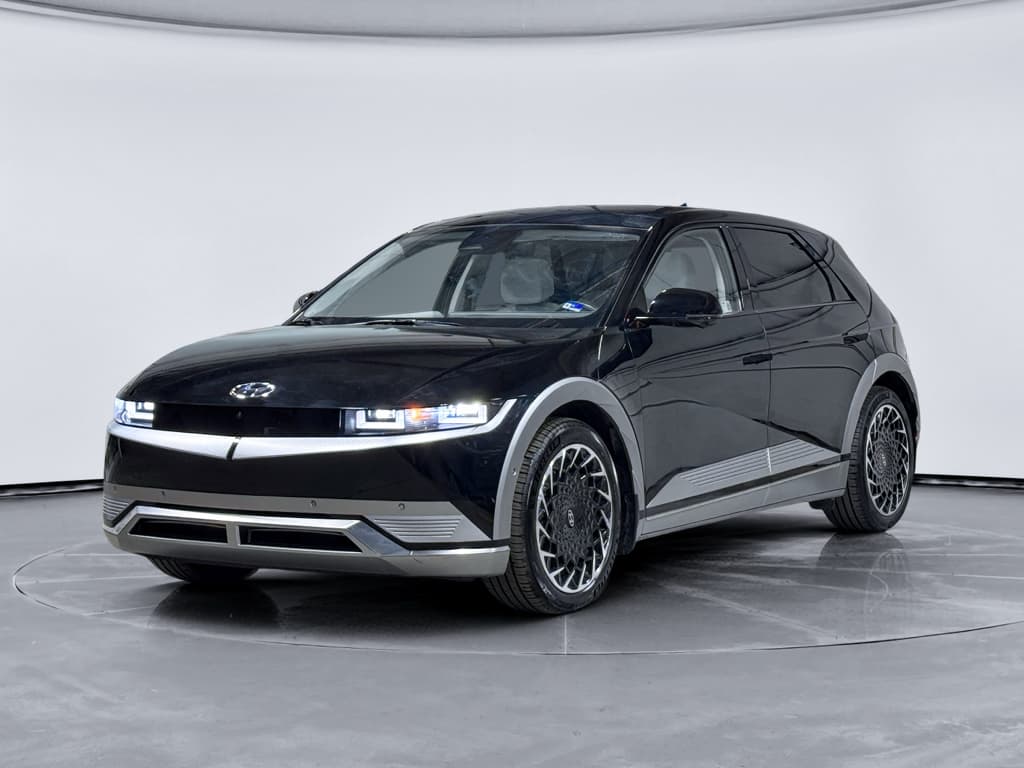
| Hyundai Ioniq 5 | Compact SUV | ~40–45% | Striking design, ultra‑fast charging, limited supply keeps used prices relatively firm |
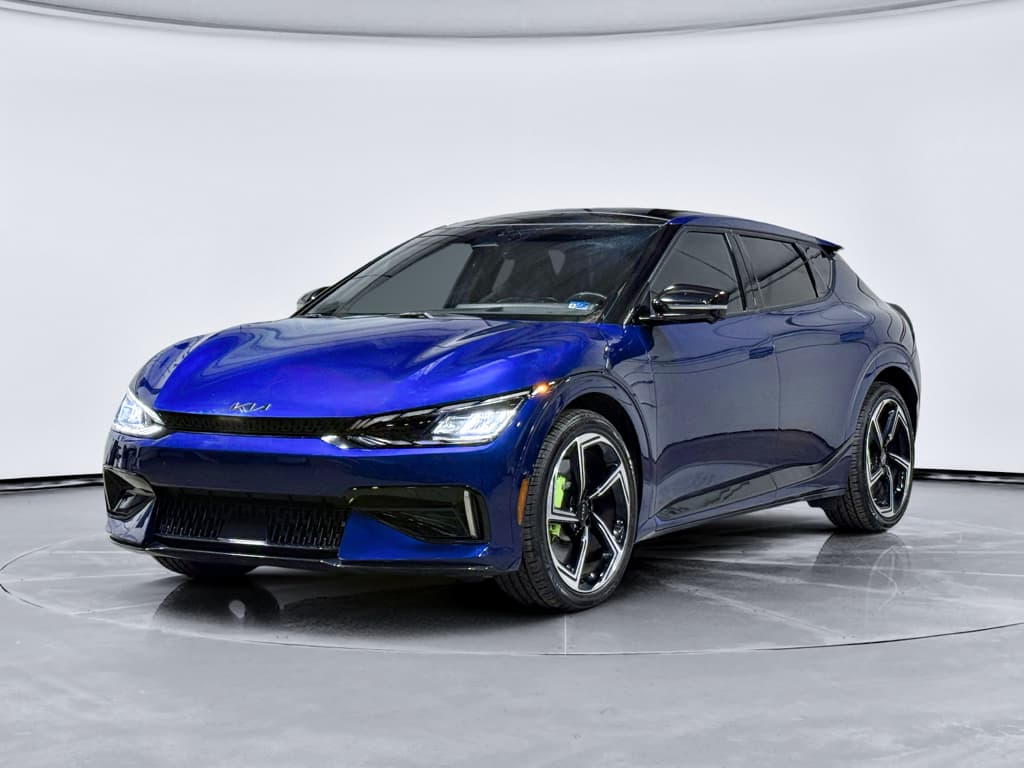
| Kia EV6 | Compact SUV | ~40–45% | Similar platform to Ioniq 5, sporty image, strong charging performance |
| Ford Mustang Mach‑E | Compact SUV | ~45–55% (3‑yr) | Crossover format plus Mustang branding, wide dealer network, familiar badge |
| Porsche Taycan | Luxury performance sedan/wagon | ~50–55% (3‑yr) | Porsche badge plus performance appeal; high MSRP but solid percentage retention among luxury EVs |
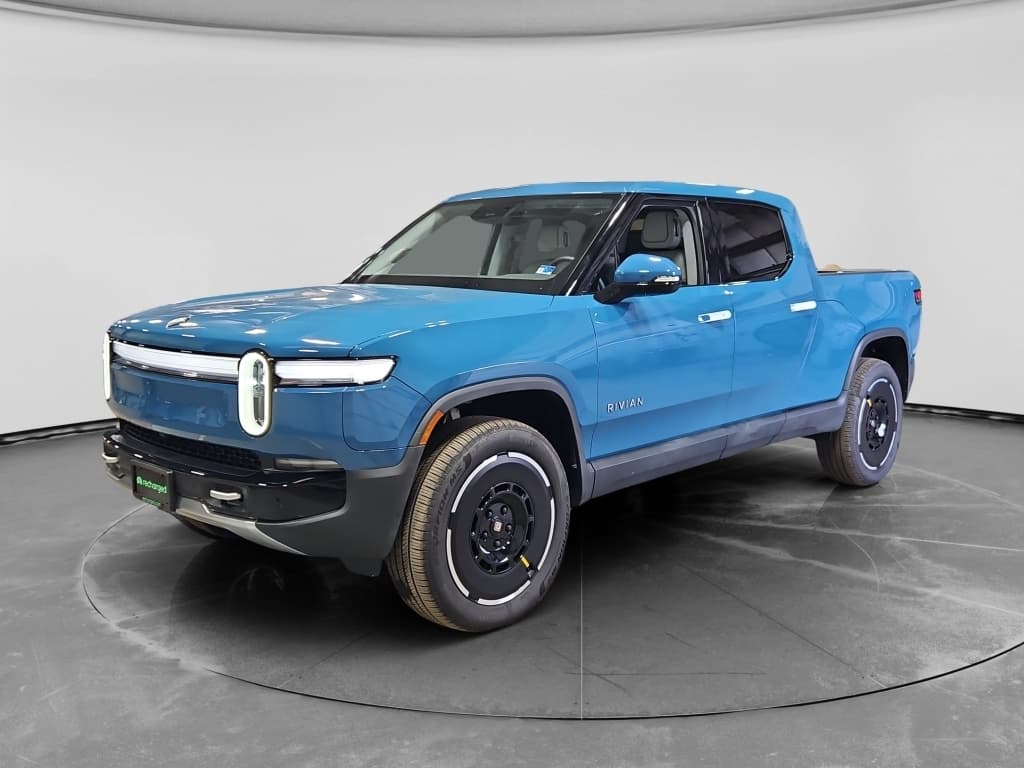
| Rivian R1T / R1S | Adventure truck/SUV | ~50% | Adventure positioning, limited supply, and strong early demand keep resale relatively strong so far |
| Chevrolet Bolt EUV (late‑gen) | Compact hatch/SUV | ~40–50% | Affordable, efficient, and eligible for used EV tax credits; recall fixes restored buyer confidence |
All figures are approximate and assume typical mileage and condition.
Percent vs. dollars lost
Model‑by‑model breakdown: why these EVs hold value
Tesla Model 3 & Model Y
Tesla’s mass‑market models still set the tone for the used EV market. Despite headline‑grabbing price cuts that hammered early buyers, the **Model 3** and **Model Y** typically retain a bigger slice of their value than many rivals after the dust settles. Several factors explain it:
- Access to the **Supercharger** network, which is rapidly opening to non‑Tesla brands but remains most seamless for Teslas.
- Continuous **over‑the‑air software updates** that keep even older cars feeling modern.
- A massive used‑buyer pool familiar with the brand and willing to pay a premium for the ecosystem.
Going into 2026, used prices for 3–5‑year‑old Model 3 and Y units have reset lower than a few years ago, but relative to other EVs, they’ve stabilized into the “better than average” camp.
Hyundai Ioniq 5 & Kia EV6
Hyundai and Kia’s E‑GMP twins, the **Ioniq 5** and **EV6**, are still relatively new, but resale data so far is encouraging. These models combine eye‑catching design with **ultra‑fast 800‑volt charging**, roomy interiors, and generous warranties.
- They attract both tech‑savvy early adopters and families who simply want a practical SUV.
- Limited supply and strong reviews have kept used prices from collapsing like some early‑generation EVs.
- As more brands adopt the NACS charging standard, adapter support and charging flexibility should further help their long‑term appeal.
If you want a non‑Tesla that doesn’t fall off a value cliff, these two should stay near the top of your test‑drive list.
Ford Mustang Mach‑E
The **Mustang Mach‑E** benefits from Ford’s massive dealer footprint and the familiarity of the Mustang nameplate. Early data suggests Mach‑E owners can typically expect **3‑year value retention around the mid‑50% range**, better than many compact EVs that launched around the same time.
- SUV practicality and usable range make it an easy sell on the used lot.
- Ford’s expanding charging partnerships and NACS adoption reduce long‑term charging anxiety.
- Higher‑trim and performance variants often retain value better than base models due to lower production volumes and stronger enthusiast interest.
Porsche Taycan & Rivian R1T/R1S
Among luxury EVs, the **Porsche Taycan** and **Rivian R1T/R1S** stand out for relatively strong percentage retention compared with peers. Rivian’s adventure‑truck positioning has so far kept depreciation closer to high‑end gas trucks than to struggling luxury EV sedans, and early trade‑in data shows milder two‑year drops than some rivals.
- Porsche’s brand cachet and performance focus support Taycan demand, even as prices correct from early hype.
- Rivian’s niche, capable off‑roaders with long range and distinctive styling, gives it a loyal early owner base.
- Both lines still suffer in absolute dollars lost, but they tend to outperform similarly priced luxury EVs from legacy brands.
EVs that depreciate fast: great to buy used, risky to buy new
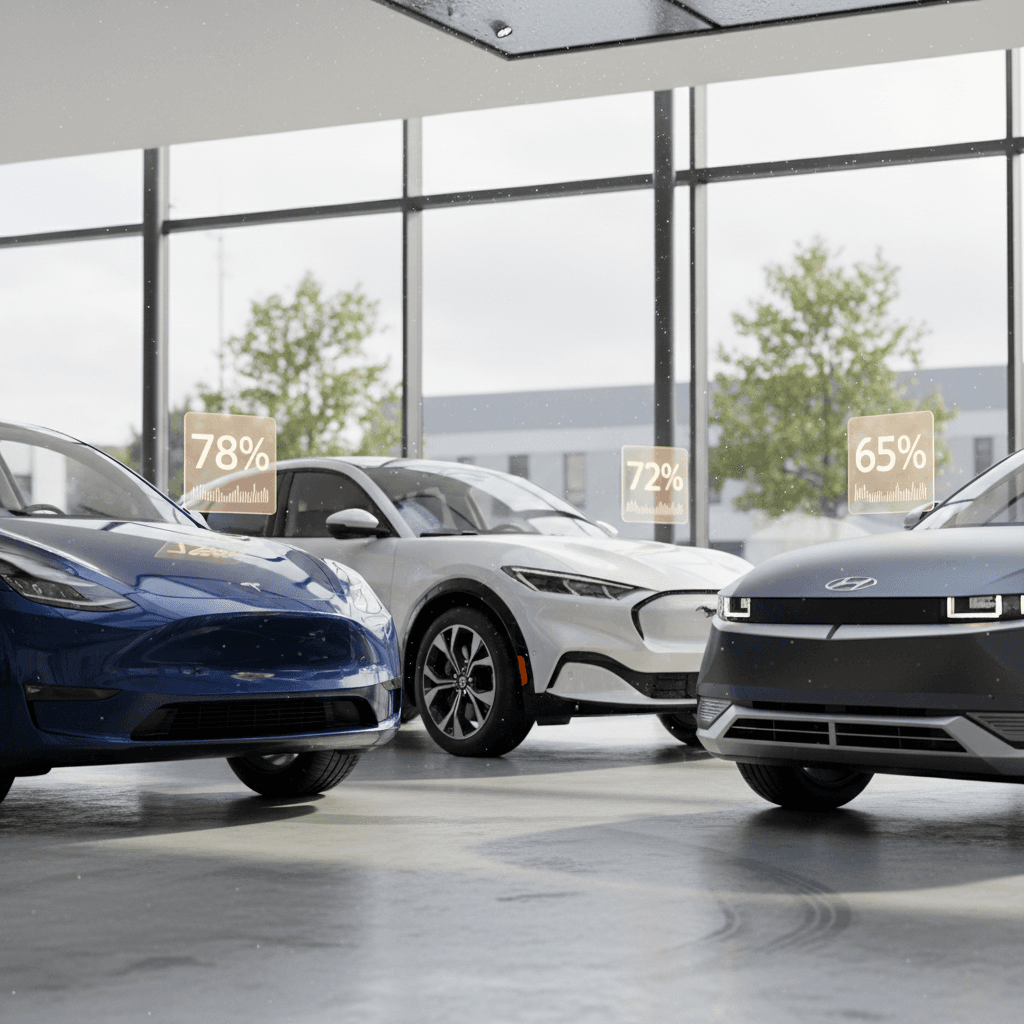
The spread between best and worst EV performers is huge. Some models lose **over 70%** of their value in five years; others retain roughly half. From a buyer’s standpoint, that means certain EVs are **fantastic value buys on the used market**, but often poor bets to buy new if you plan to sell within a typical 4–6‑year window.
Examples of fast‑depreciating EVs (recent 5‑year data)
These models have shown some of the steepest depreciation in recent studies, good news if you’re buying used and plan to keep the car, but a red flag if you’re paying new‑car money and counting on strong resale.
| Model | Segment | Approx. 5‑Year Value Lost | Notes |
|---|---|---|---|
| Jaguar I‑Pace | Luxury SUV | ~70%+ | Steep discounts, reliability questions, and limited brand traction in EV space |
| Audi Q8 e‑tron (e‑tron) | Luxury SUV | ~70% | Early‑gen luxury EV tech and heavy leasing create a flood of used supply |
| Mercedes EQS | Luxury sedan | ~60%+ | High MSRP, aggressive discounting and fast product cycles hurt used values |
| Nissan Leaf (older gens) | Compact hatch | ~60–65% | Short range, CHAdeMO fast charging, and early battery reputation weigh on resale |
| Tesla Model S/X (recent gens) | Luxury sedan/SUV | ~55–65% | Price cuts and rapid tech updates make older high‑MSRP models look expensive used |
Approximate 5‑year value loss based on recent multi‑source analyses.
How to approach fast‑depreciating EVs
Battery health: the hidden driver of resale value
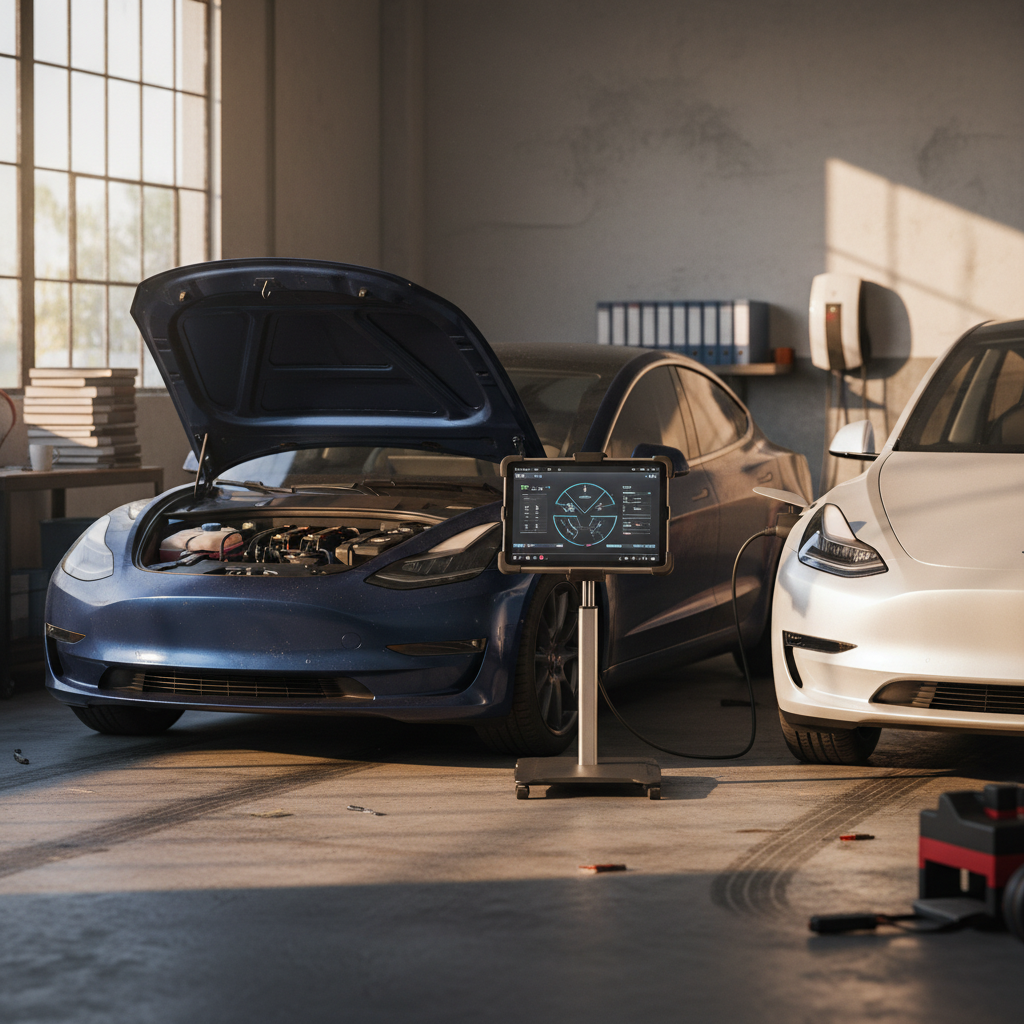
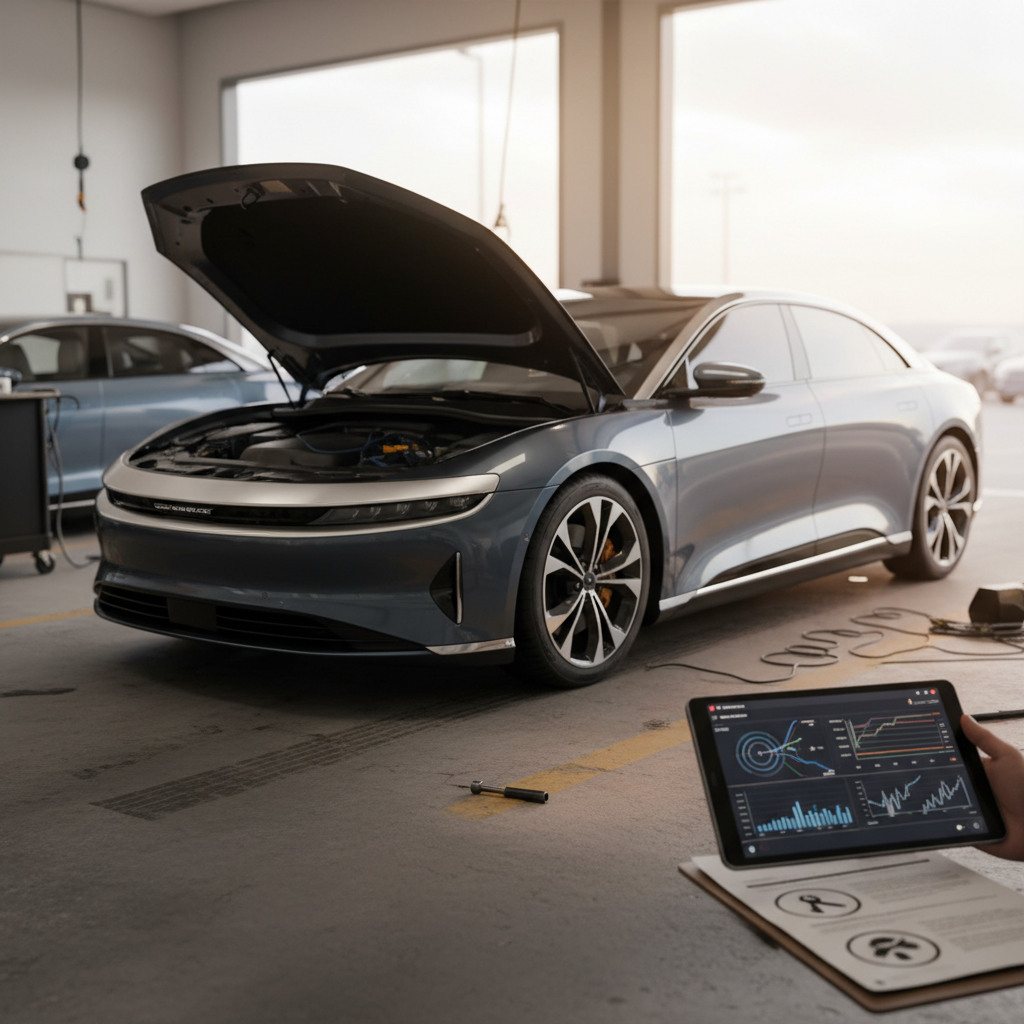
Underneath all the brand stories and incentives, one factor quietly determines whether an electric car is worth paying up for: **battery State of Health (SOH)**. Multiple 2024–2025 analyses peg average EV battery degradation around **1–2% per year**, with Tesla often closer to ~1% and some early‑generation packs faring worse. A used EV with 90% SOH drives, and sells, very differently from one with 72% SOH, even if they left the factory with the same rated range.
Battery checks before you buy any used EV
1. Ask for a formal battery health report
Request an OEM diagnostic printout or a third‑party report (for example, using a service that reads battery data). If the seller can’t provide proof, assume the worst and keep shopping.
2. Compare SOH to original range
Look up the original EPA range for the exact trim, then multiply by SOH. If a 310‑mile car shows 82% SOH, you should realistically expect around 250–260 usable miles in good conditions.
3. Check fast‑charging history
Moderate DC fast‑charging use is fine; heavy, constant fast charging on an early‑design battery can accelerate degradation. Ask how the car was charged day‑to‑day.
4. Verify remaining battery warranty
Most EVs carry an 8‑year / ~100,000‑mile (or higher) battery warranty. A car with several years of coverage left can be worth paying more for than a slightly cheaper, out‑of‑warranty alternative.
5. Road‑test the range estimate
On a mixed city/highway drive, does the estimated range drop roughly in line with miles driven, or much faster? An obviously “optimistic” gauge is a red flag.
Walk‑away thresholds
How to shop for a slow‑depreciating used EV
The goal isn’t just to pick the single “best” model from a list. It’s to combine a healthy battery, solid real‑world range, and a **track record of reasonable depreciation**, then buy at the right point in the curve. Here’s a practical framework for 2026 shoppers.
4‑step playbook for finding a slow‑depreciating used EV
Combine model choice with smart shopping tactics to protect your downside.
1. Start with the right short list
Focus your search on models with better‑than‑average resale so far: Model 3, Model Y, Ioniq 5, EV6, Mustang Mach‑E, Rivian R1T/R1S, and select luxury models like the Taycan.
2. Target 2–4‑year‑old cars
By year 3, the steepest part of the depreciation curve is usually over, but you’ll still have years of warranty coverage and modern tech. That’s the sweet spot for value.
3. Demand transparent battery data
Only consider cars with verified battery health and clear charging histories. With Recharged, every vehicle comes with a Recharged Score Report that includes independent battery diagnostics.
4. Compare total cost, not just price
Factor in taxes, interest, insurance, and projected depreciation. A slightly higher‑priced EV that holds value can be cheaper to own than a bargain that keeps sliding.
Where Recharged fits in
Ready to find your next EV?
Browse VehiclesCost comparison: fast‑ vs slow‑depreciating EVs
To see why depreciation matters so much, imagine two similarly priced EVs you’re considering in 2026. Both are around $40,000 today, but they sit on very different value‑retention curves.
Example A: Slow‑depreciating EV
You buy a 3‑year‑old crossover like a Tesla Model Y, Hyundai Ioniq 5, or Kia EV6 for $40,000. Based on recent data, let’s say it retains around **45% of its original value** after five years of total age.
- Original MSRP: $52,000
- Estimated value at 5 years old: ~$23,000
- Your 2‑year ownership drop (from 3 to 5 years old): roughly $7,000
Even if the exact numbers move with market conditions, the key is that **most of the hard fall already happened** before you bought it.
Example B: Fast‑depreciating EV
You buy a new or nearly new luxury EV with a history of heavy depreciation for the same $40,000 after incentives. Its segment has shown **60–70% value loss** over five years.
- Original MSRP: $75,000+
- Estimated value at 5 years old: $22,000 or less
- Your 2‑year ownership drop (from 1 to 3 years old): easily $12,000+
On paper the cars cost the same on day one, but the fast‑depreciating EV quietly costs you **thousands more** in lost value over a short holding period.
Don’t chase the shiniest tech at any price
Why buying used EVs often beats new in 2026
Because EVs depreciate faster than many gas vehicles early on, **smart shoppers increasingly let someone else take the first hit**. Once an EV is a few years old, the curve starts to resemble any other car: year‑to‑year changes become more gradual, barring a shock like massive price cuts on new inventory.
- You can often buy a 2–4‑year‑old slow‑depreciating EV for **40–50% less than its original MSRP** while still enjoying modern range and tech.
- Battery data from real‑world use is now available, so you’re not guessing how the pack will age.
- Used EV incentives and tax credits in the U.S. can further sweeten the math on qualifying models.
- Insurance and registration fees may be lower on a used EV than on a brand‑new one with the same badge.
This is exactly the part of the market Recharged is built for: **used EVs with transparent, data‑driven condition reports and fair market pricing**. Instead of reverse‑engineering depreciation model by model, you get a clear Recharged Score showing battery health, pricing relative to similar cars, and whether the car sits on the stronger side of the resale curve.
FAQ: slowest depreciating electric cars in 2026
Frequently asked questions
Key takeaways
EV depreciation in 2026 is a story of extremes. On one side are early‑generation city cars and heavily discounted luxury models that can lose more than 60–70% of their value in five years. On the other are **slowest‑depreciating electric cars**, practical crossovers and trucks with strong charging, good range, and loyal followings, that keep closer to half their value over the same stretch.
If you want to be on the right side of that equation, focus on **proven models**, buy in the 2–4‑year‑old sweet spot, insist on **verified battery health**, and think in terms of total cost of ownership, not just monthly payment. Platforms like Recharged are designed to make that easier by pairing transparent diagnostics with fair market pricing. Get those fundamentals right, and you’ll be in a far better position when it’s your turn to sell, trade, or consign your EV.