If you live in Virginia and you’re wondering, “Should I switch to an electric car?”, you’re not alone. EV adoption has taken off across the Commonwealth, from Northern Virginia and Richmond to Hampton Roads and Roanoke, and the math is getting harder to ignore: in many cases, an EV is simply cheaper to run than a gas car here.
Quick Virginia snapshot
Is it worth switching to an EV in Virginia?
Whether you should switch to an electric car in Virginia comes down to three things: how much you drive, where you can charge, and how long you’ll keep the vehicle. For a typical commuter in the Commonwealth who drives most days and can charge at home or work, an EV often wins on total cost of ownership over 5–8 years, especially if you buy a used electric vehicle at a discount to new.
Big reasons to switch
- Lower fuel cost per mile than gas, especially with off‑peak electricity.
- Less maintenance – no oil changes, fewer moving parts.
- Strong charging build‑out along I‑95, I‑64, and major corridors.
- Good used EV inventory in Virginia and nearby states, often with steep depreciation already priced in.
Reasons to pause (for now)
- No more big federal EV tax credits for most purchases after September 30, 2025, so new EVs feel pricier.
- If you can’t charge at home or work, you’ll lean heavily on public infrastructure.
- Some rural parts of the state still have thin fast‑charging coverage.
- Up‑front price can be higher than a similar used gas vehicle, even if running costs are lower.
Rule of thumb
How your Virginia driving habits affect the decision
Common Virginia driver profiles
Where you live and how you drive really matters
I‑95 / NOVA commuter
You run between Fredericksburg, Northern Virginia, and DC suburbs, often in traffic.
- Plenty of fast chargers on major corridors.
- Stop‑and‑go traffic actually helps EV efficiency.
- HOV lane perks have expired, so focus on fuel savings instead.
Richmond & Hampton Roads driver
Most trips are short – work, school, errands, weekend beach runs.
- Daily miles are predictable.
- Lots of Level 2 and DC fast chargers popping up around shopping centers and interchanges.
- A used EV with ~200+ miles of range easily covers your routine.
Rural & mountain driver
You live in Southwest or the Shenandoah region and drive longer stretches.
- Charging is improving but still patchy off interstates.
- Home charging is essential.
- Consider an EV as a second car, or pick one with longer range.
Cold weather note
EV vs. gas costs in Virginia
How EV costs stack up in Virginia
Think of electricity as buying energy in bulk. A typical EV that uses around 28 kWh to go 100 miles will cost roughly $2.80 for those 100 miles if you’re charging overnight at about $0.10 per kWh on an off‑peak plan. A comparable gas car getting 30 mpg at $3.30 per gallon costs about $11 to go the same distance. That’s almost 4x more just in fuel.
Sample annual fuel cost: Virginia commuter
Approximate comparison for 12,000 miles per year. Your actual numbers will vary with driving style, location, and energy prices.
| Vehicle type | Energy price assumption | Cost per 100 miles | Annual fuel cost (12,000 miles) |
|---|---|---|---|
| Gas sedan (30 mpg) | $3.30/gal gas | $11.00 | $1,320 |
| EV home charging (basic rate) | $0.15/kWh | $4.20 | $504 |
| EV overnight off‑peak | $0.10/kWh | $2.80 | $336 |
| EV mostly DC fast charging | $0.35/kWh equivalent | $9.80 | $1,176 |
Illustrative example only, not a quote from any specific utility or station.
What this doesn’t include
Virginia EV incentives and tax breaks in 2026
The incentive picture changed in late 2025, and that matters if you’re trying to time your switch. The well‑known federal EV tax credits for most new and used EV purchases ended for vehicles bought after September 30, 2025. That means in 2026 you can’t count on that extra $7,500 (new) or $4,000 (used) from the IRS on most purchases.
- Virginia does not currently offer a permanent, statewide EV purchase rebate program like some West Coast states.
- The General Assembly has instead leaned on one‑time tax rebate checks and broader tax relief, which may indirectly help your car budget but aren’t EV‑specific.
- Some localities and utilities offer targeted EV benefits, such as smart‑charging rebates or reduced electricity rates for overnight charging.
- If you lease, you may see some of the old federal benefit baked into lease pricing, but the so‑called lease "loophole" is closing, so you’ll want to read the fine print in 2026.
Utility incentives still matter
Charging an EV in Virginia: home, work, and public options
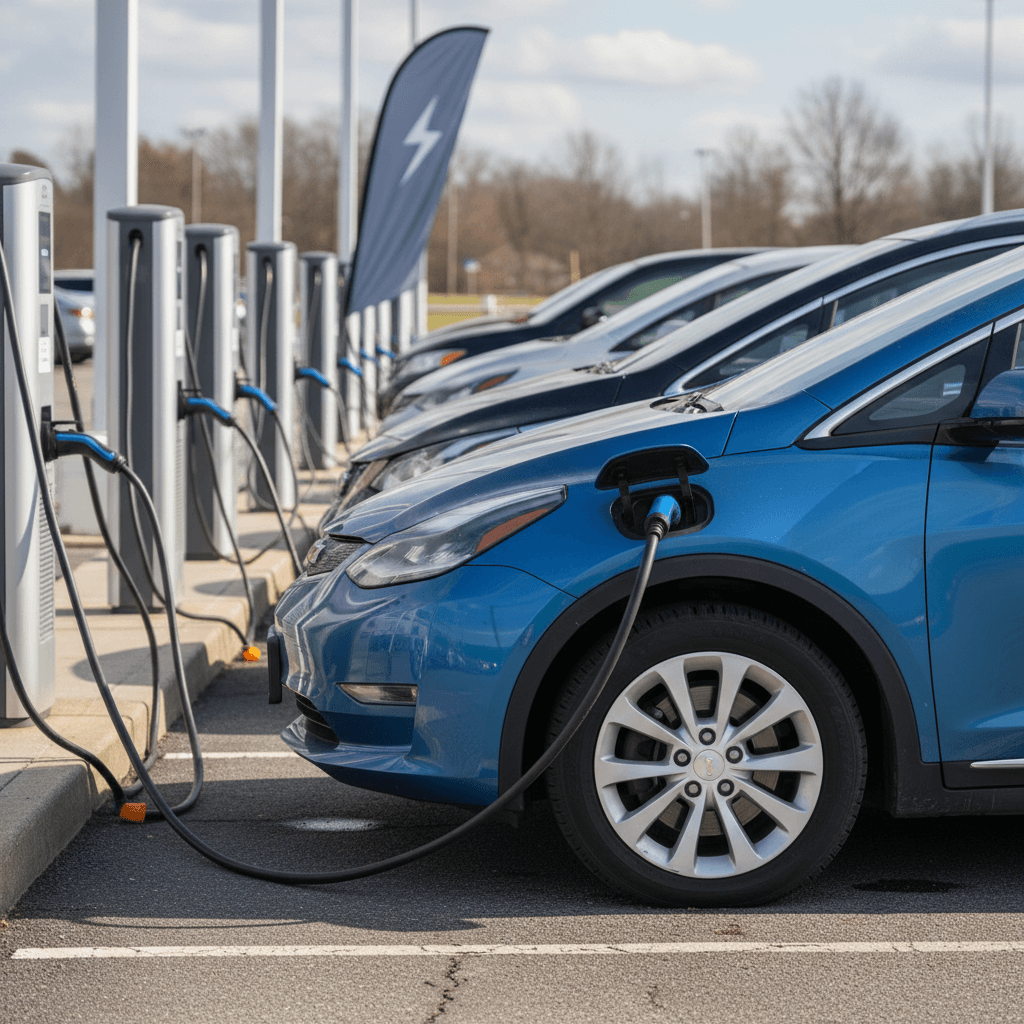
Your charging situation is probably the single biggest factor in deciding whether to switch. In Virginia, the picture breaks down into three main buckets: home charging, workplace charging, and public charging.
Which Virginia charging setup fits you?
1. I can charge at home on a 120V outlet
Every EV ships with a basic Level 1 charger that plugs into a standard household outlet. You’ll typically add 2–5 miles of range per hour. That’s slow, but for short daily drives (under ~40 miles) it can work, especially in apartments or older homes without 240V access.
2. I can install or already have a 240V outlet
If you own your home (or have a cooperative landlord), a 240V outlet and Level 2 charger is the gold standard. You can add 20–40+ miles of range per hour, easily re‑filling overnight. Dominion’s off‑peak plan and EV‑specific rate options can make this the cheapest way to fuel any vehicle you’ll ever own.
3. My workplace offers EV charging
More Virginia employers, especially in NOVA and Richmond, now offer Level 2 charging for employees. If you can reliably plug in at work, your home setup becomes less critical, though you’ll still want at least access to a standard outlet at home for peace of mind.
4. I’ll rely heavily on public charging
Public Level 2 and DC fast chargers are expanding along interstates and around cities. This works best if you live near a reliable station and don’t mind planning stops around errands. For most drivers, it’s still more convenient to treat public chargers as backup or road‑trip tools, not your primary fuel source.
Landlord & HOA realities
Is Virginia’s charging network good enough?
The short answer in 2026: for most Virginians, yes, especially if you live near the major corridors, but you still need to plan. Virginia now has well over 1,800 public charging locations and more than 5,000 plugs, with the number of Level 2 stations jumping significantly between 2022 and 2024. New highway fast‑charging sites funded by federal programs have begun coming online, even amid policy uncertainty.
Charging coverage by Virginia region
How confident should you feel today?
Northern Virginia & DC suburbs
- Dense network of Level 2 and DC fast chargers.
- Multiple competing networks (including Tesla for many non‑Tesla EVs now using adapters or built‑in NACS ports).
- Very workable even without home charging, if you’re flexible.
Richmond & Hampton Roads
- Fast‑growing public charging at shopping centers, grocery stores, and along I‑64/I‑295.
- Home charging still gives you the best experience, but public options cover most urban and suburban needs.
- Regional road trips (beach, Williamsburg, Charlottesville) are increasingly straightforward.
Rural corridors & mountains
- Strong coverage along interstates like I‑81 and major US routes.
- Off‑corridor towns may still have few or no fast chargers.
- Plan around the bigger nodes and assume Level 2 speeds once you get off the main roads.
Who’s building all this?
Who should switch to an EV in Virginia right now?
Great candidates to switch
- You drive 10,000–15,000+ miles per year.
- You have a garage or driveway where you can reliably plug in.
- Your daily round‑trip commute is comfortably under 150 miles.
- You’re planning to keep the car for at least 5 years, so you can fully benefit from lower operating costs.
- You live in or near a metro area (NOVA, Richmond, Hampton Roads, Charlottesville, Roanoke, Blacksburg) with strong charging coverage.
Probably wait or make it a second car
- You often drive very long rural routes with tight timing and few stops.
- You can’t install home charging and don’t have reliable workplace charging.
- You replace vehicles every 1–2 years and won’t realize the running‑cost advantage.
- You tow heavy loads regularly and can’t afford the hit to range or payload.
- You’re extremely sensitive to trip plan changes and don’t want to think about charging stops yet.
Where used EVs shine in Virginia
When a used EV makes more sense in Virginia
Given the loss of most federal credits in late 2025, 2026 is shaping up as a used‑EV year in Virginia. If you can forego that brand‑new‑car smell, a used EV can deliver nearly all of the benefits at a much lower entry price.
Why Virginia buyers are eyeing used EVs
What you gain, and what you need to watch
Lower up‑front price
Three‑year‑old EVs can sell for a fraction of their original sticker price, especially if they lost eligibility for past incentives or were leased.
Battery health transparency
With tools like the Recharged Score battery health report, you can see how the pack has aged before you buy, instead of guessing from mileage alone.
Modern tech, lower risk
Models from roughly 2020 onward often have better range, faster charging, and smarter thermal management than first‑generation EVs, which helps in Virginia’s hot summers and chilly winters.
Recharged focuses specifically on used EVs, combining verified battery diagnostics with fair‑market pricing and expert guidance. For Virginia shoppers, that means you can shop online, get a Recharged Score Report that spells out battery health and market value, and have the car delivered statewide, without guessing whether the pack will still serve you well five years from now.
Risks and misconceptions about EVs in Virginia
- “I’ll be stranded because there aren’t enough chargers.” In most of Virginia, especially along major highways and around metros, the bigger risk is arriving at a charger that’s busy or temporarily down, not a complete lack of stations. Planning apps and some buffer range largely solve this.
- “Batteries all die after 8–10 years.” Modern EV packs typically lose range gradually. For many drivers, a pack that has lost 10–20% of its original range is still completely usable for daily commuting. The key is knowing the current health of the battery when you buy.
- “Maintenance is zero.” EVs still need tires, alignment, cabin filters, brake fluid changes, and occasional software or hardware fixes. You’ll probably spend less overall than with a gas car, but budget for routine service.
- “They don’t work in winter.” EVs do fine in Virginia winters, though range drops in colder weather and you’ll see more variation in consumption. Pre‑conditioning the cabin while plugged in and using seat heaters instead of blasting cabin heat can help.
Two real risks to respect
Step-by-step: how to decide if you should switch
Practical decision checklist for Virginia drivers
1. Map your real‑world miles
Track your daily and weekly driving for a month. Note commute miles, weekend trips, and the longest routine day. Most EV shoppers overestimate how much range they actually need in Virginia.
2. Audit your charging options
List what's realistically available: home outlets, panel capacity for a 240V circuit, any workplace chargers, and nearby public stations. If you can’t see a clear way to charge at least a few nights per week, press pause.
3. Run a fuel and maintenance cost comparison
Compare your current gas spend with estimated EV electricity costs using your Dominion (or other utility) rates. Add in likely maintenance savings. Over 5–8 years, many Virginia drivers are surprised by how much an EV trims total ownership cost.
4. Decide on new vs. used
With big federal tax credits mostly gone after September 30, 2025, many Virginians are better off in used EVs in 2026. Look for models with enough range for your habits and strong reliability records.
5. Get battery health verified
For any used EV, insist on a third‑party battery health report. Recharged provides a Recharged Score Report with detailed state‑of‑health, fast‑charging history indicators, and pricing comparisons so you know exactly what you’re getting.
6. Plan your first year
Think about your biggest trips (beach, mountains, holidays) and how you’d charge. Test your local plugs, apps, and payment systems during low‑stress weekends so your first road trip isn’t the experiment.
FAQs about switching to an EV in Virginia
Frequently asked questions for Virginia drivers
Bottom line: should you switch to electric in Virginia?
For many Virginia drivers, especially those in **Northern Virginia, Richmond, Hampton Roads, and other well‑served regions who can charge at home or work, the answer in 2026 is increasingly “yes.” Even without the old federal tax credits, the combination of lower fuel and maintenance costs, a rapidly improving charging network, and a growing supply of well‑priced used EVs makes the switch compelling over a multi‑year ownership window.
If you’re in a more rural area with thin charging coverage or you can’t reliably plug in at home, it can be smart to wait a bit longer or add an EV as a second vehicle first. The key is to be honest about your driving patterns and your charging reality, not just the marketing headlines.
Recharged exists to make that decision less risky. With verified battery health reports, fair market pricing, EV‑specialist support, financing, trade‑ins, and nationwide delivery, plus an Experience Center in Richmond, you can explore used EVs that actually fit the way Virginians drive, without guesswork. If you’re ready to run the numbers on a used EV, starting with a transparent Recharged Score Report is one of the safest ways to see whether switching to electric makes sense for you right now.