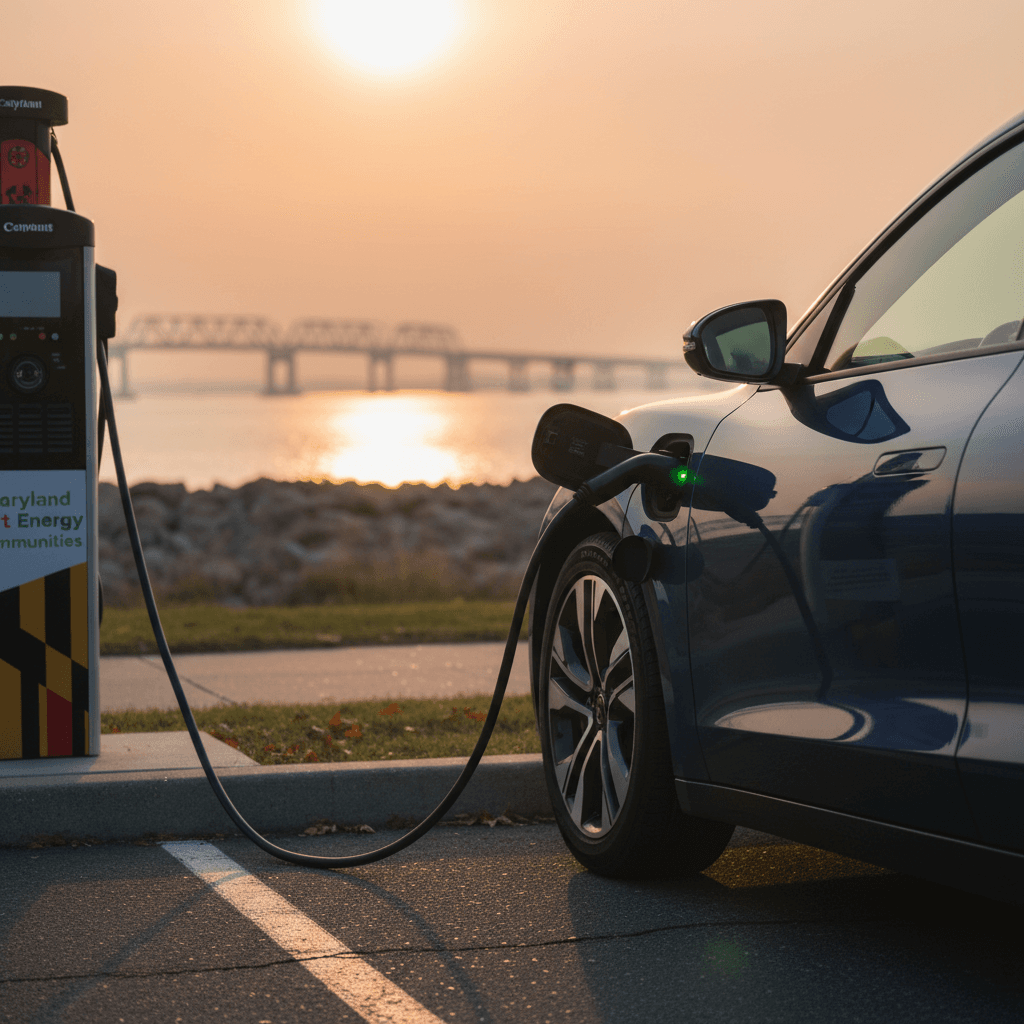
If you live in Maryland and you’re wondering, “Should I switch to an electric car?”, you’re not alone. Between strong state incentives, heavy Baltimore–D.C. traffic, and rising gas prices, Maryland is one of the better places in the country to make an EV work, if it fits your home, commute, and budget.
Maryland is ahead of the curve
Is an Electric Car Right for Maryland Drivers?
Before you get lost in range numbers and kilowatts, start with a simple question: does an EV match how you actually drive in Maryland? For a typical commuter running between Columbia and Baltimore, Rockville and D.C., or around the Beltway, an EV can be a near‑perfect fit. If you’re regularly towing a boat to Deep Creek Lake or driving 300‑mile days for work, the answer is more nuanced.
Maryland EV Ownership at a Glance
Start with your daily reality
Pros and Cons of Switching to an EV in Maryland
Key advantages in Maryland
- Lower running costs: Electricity is often cheaper per mile than gas, especially if you can charge off‑peak.
- Strong incentives: Federal and state programs can significantly reduce your upfront price.
- Stop‑and‑go traffic friendly: EVs excel in Beltway traffic, no idling, smooth power, and one‑pedal driving.
- Local air quality benefits: Fewer tailpipe emissions in dense I‑95 corridors.
Potential downsides to weigh
- Home charging may be tricky: Row houses and apartments in Baltimore, Silver Spring, or Bethesda can limit overnight charging.
- Winter range drop: Cold snaps around Frederick or Hagerstown will trim range.
- Road‑trip planning: Western Maryland and rural Eastern Shore require more charging planning than the I‑95 corridor.
- Upfront cost anxiety: Even with incentives, the purchase price can feel high without clear numbers.
Don’t skip the parking question
Maryland EV Incentives and Tax Credits
One big reason drivers ask whether they should switch to an electric car in Maryland is incentives. While programs change over time, there are usually two layers of help: a federal incentive and a mix of Maryland‑specific programs that may include purchase rebates, charger installation support, and utility discounts.
Typical Incentive Stack for Maryland EV Buyers
Programs change frequently. Always confirm current details before you buy.
| Incentive Type | Who It Applies To | What It Usually Helps With | Key Considerations |
|---|---|---|---|
| Federal clean vehicle credit | New EV buyers who meet income and vehicle rules | Reduces federal tax liability on qualifying new EVs | Depends on your tax situation and whether the model is eligible. |
| Used EV federal credit | Qualifying used EV buyers under income and price caps | Credit on eligible used EV purchases from dealers | Can make used EVs particularly attractive in Maryland. |
| Maryland state EV incentives | Maryland residents purchasing or leasing | Can reduce purchase price or help with chargers | Programs and funding levels change; check before signing. |
| Utility EV programs | Customers of local utilities (e.g., BGE, Pepco) | Off‑peak charging rates, rebates for home chargers | Can shift more of your charging to cheaper overnight hours. |
Think of this as a framework: not every buyer will qualify for every line item.
Where to verify current incentives
Charging an EV in Maryland: Home, Work, and Public Options
Charging is the heart of the decision. The more of your charging you can do at home or at work, the more sense an EV makes in Maryland. Public fast charging fills in the gaps for longer trips or for drivers without easy at‑home options.
Your Main Charging Paths in Maryland
Most drivers use a mix of these three over a typical month.
Home charging
Best for: Homeowners with a driveway or garage in suburbs like Columbia, Bowie, or Owings Mills.
- Level 1: Standard 120V outlet; slow but workable for light use.
- Level 2: 240V circuit; typically adds 20–40 miles of range per hour.
- Most convenient and often the cheapest energy cost.
Workplace charging
Best for: Office parks and campuses in areas like Bethesda, Rockville, or Hunt Valley.
- Lets you arrive home with a full battery.
- Often subsidized or discounted by employers.
- Great solution if home charging is limited.
Public & fast charging
Best for: Apartment dwellers, road‑trippers, and occasional top‑ups.
- DC fast chargers along I‑95, I‑70, and US‑50.
- Slower Level 2 chargers at shopping centers, garages, and park‑and‑rides.
- Plan stops into longer Chesapeake or Western Maryland trips.
Apartment or rowhouse in Baltimore or D.C. suburbs?

How Maryland Weather Affects EV Range
Maryland doesn’t have North Dakota winters, but cold snaps around Frederick or Hagerstown will still trim your EV’s range. On the flip side, summers can be humid and hot, which also uses some energy for climate control, but nowhere near enough to be a deal‑breaker for most drivers.
- Expect noticeably lower range on days well below freezing; plan a buffer for trips on I‑70 or I‑81.
- Heated seats and steering wheels use less energy than cranking cabin heat, use them when possible.
- Pre‑condition the car while it’s still plugged in to warm the cabin and battery before you leave.
- In coastal and central Maryland, weather‑related range loss is usually a planning issue, not a show‑stopper.
Don’t size your EV on summer range alone
Cost Comparison: EV vs Gas in Maryland
The key to answering whether you should switch to an electric car in Maryland is total cost of ownership, what it costs you all‑in over several years, not just the sticker price. That includes energy, maintenance, financing, and depreciation.
Where EVs often save you money
- Energy costs: Per‑mile electricity costs are typically lower than gas, especially with off‑peak rates.
- Maintenance: No oil changes, fewer moving parts, and less brake wear thanks to regenerative braking.
- Incentives: Federal and state programs plus utility rebates can shrink the effective purchase price.
Where you need to run the numbers
- Upfront price: EVs may still carry higher MSRPs, though used EV prices have become very competitive.
- Resale value: Battery health is central to future value, something many buyers worry about.
- Home charging install: Running a new 240V line in an older Maryland home can add a meaningful one‑time cost.
Quick Cost Checklist for Maryland Drivers
Estimate your monthly mileage
Use recent months’ fuel receipts or odometer readings. More miles per month generally increases the financial upside of an EV.
Compare your current fuel cost to electricity
Look at what you pay per kilowatt‑hour on your electric bill. Then compare your approximate cost per mile in your current vehicle to an EV’s projected cost per mile.
Factor in incentives and taxes
Include any federal and Maryland incentives you qualify for, plus sales tax, tags, and potential local fees for both gas and electric options.
Include home charging installation
If you own a home, get a ballpark estimate to install a Level 2 charger. Spread that cost over several years of ownership.
Consider how long you keep cars
If you keep vehicles 5–10 years, fuel and maintenance savings matter more than short‑term resale swings.
Used EVs tilt the math in your favor
Commuting Patterns: Baltimore, D.C. Suburbs, and Beyond
Maryland is full of routine, repeatable drives: daily Baltimore runs from the suburbs, MARC station drop‑offs, and D.C. commutes from Montgomery, Prince George’s, and Howard Counties. Those patterns are tailor‑made for EVs, provided you charge consistently.
How Different Maryland Commuters Fit an EV
Match your driving pattern to a charging strategy.
Beltway & I‑95 commuter
Profile: 20–60 miles round‑trip, lots of traffic.
- Home or workplace Level 2 charging makes EV ownership nearly effortless.
- Even a smaller‑battery EV usually covers your day with margin.
MARC / Metro feeder driver
Profile: Short drive to stations like New Carrollton, Greenbelt, or BWI.
- Daily miles are low; overnight Level 1 or shared charging can be enough.
- Public chargers at garages can top you off while you’re at work.
Western MD or Eastern Shore driver
Profile: Occasional longer rural trips.
- Home Level 2 is very helpful.
- Plan fast‑charge stops for infrequent long drives, especially in winter.
Try before you commit
Who Should Wait to Switch, and Who Shouldn’t
Marylanders who may want to wait
- You can’t reliably charge at home or work and nearby public chargers are sparse.
- You routinely drive 250+ miles in a day through rural areas where fast chargers are few.
- You’re planning to move within a year and don’t know what your parking/charging will look like.
Marylanders who are ready now
- You own a home in a suburb with a driveway or garage (Columbia, Ellicott City, Bowie, etc.).
- Your daily driving is under 120 miles and fairly predictable.
- You’re replacing an older, thirsty gas vehicle and plan to keep the next car several years.
If charging is a stretch, don’t force it
Why Used EVs Make Extra Sense in Maryland
Because Maryland has embraced EVs early, there’s a healthy and growing used EV market around Baltimore, D.C., and larger suburbs. That puts you in a good position to let the first owner pay a big chunk of depreciation while you focus on value and battery health.
Advantages of Buying a Used EV in Maryland
Especially when paired with transparent battery health data.
Lower upfront cost
Used EVs often undercut comparable new models by thousands of dollars, while still offering plenty of range for Maryland commutes. That can bring an EV into budget range that a new one might miss.
Battery health transparency
With tools like the Recharged Score, you get a verified view of a used EV’s battery condition, range, and market value. That makes it easier to shop confidently and compare vehicles beyond just mileage and model year.
How Recharged can help in Maryland
Step-by-Step: How to Evaluate Your Switch
Your Maryland EV Decision Roadmap
1. Map your real driving
Track your actual mileage for a few typical weeks, commutes, kids’ activities, weekend trips. Identify your longest regular days and occasional outliers.
2. Audit your charging options
List where you park at night and during the day, and what outlets or circuits are available. Check nearby public chargers you’d realistically use.
3. Run the cost numbers
Compare your current fuel, maintenance, and insurance to projected EV costs, including incentives, home charging installation, and potential financing terms.
4. Decide on new vs used
If you’re value‑focused, look hard at used EVs with verified battery health. If you need specific features or maximum range, explore new models and current incentives.
5. Test the experience
Rent or test‑drive an EV on your real routes. Practice charging, use navigation to find chargers, and see how it feels in traffic and on your commute.
6. Plan for long trips
If you do regular runs to Ocean City or Western Maryland, plot a couple of sample trips with charging stops. Make sure the network and your comfort level line up.
FAQs About Switching to an EV in Maryland
Common Questions from Maryland Drivers
Bottom Line: Should You Switch to an Electric Car in Maryland?
If you have reliable access to home or workplace charging and your daily Maryland driving is mostly within 150 miles, an electric car is very likely a smart move. You’ll trade gas‑station visits for overnight charging, cut your running costs, and get a smoother, quieter drive through Baltimore–D.C. traffic.
If your charging situation is uncertain or you frequently drive long rural routes, you may want to wait, or choose a plug‑in hybrid, until infrastructure or your living situation improves. In the meantime, keep an eye on Maryland incentives, used EV prices, and how the fast‑charging network grows along your usual paths.
When you’re ready to run the numbers, consider starting with a used EV backed by a Recharged Score report. It gives you clear, data‑driven insight into battery health, expected range, and fair value, so your decision to switch to an electric car in Maryland is grounded in facts, not guesswork.