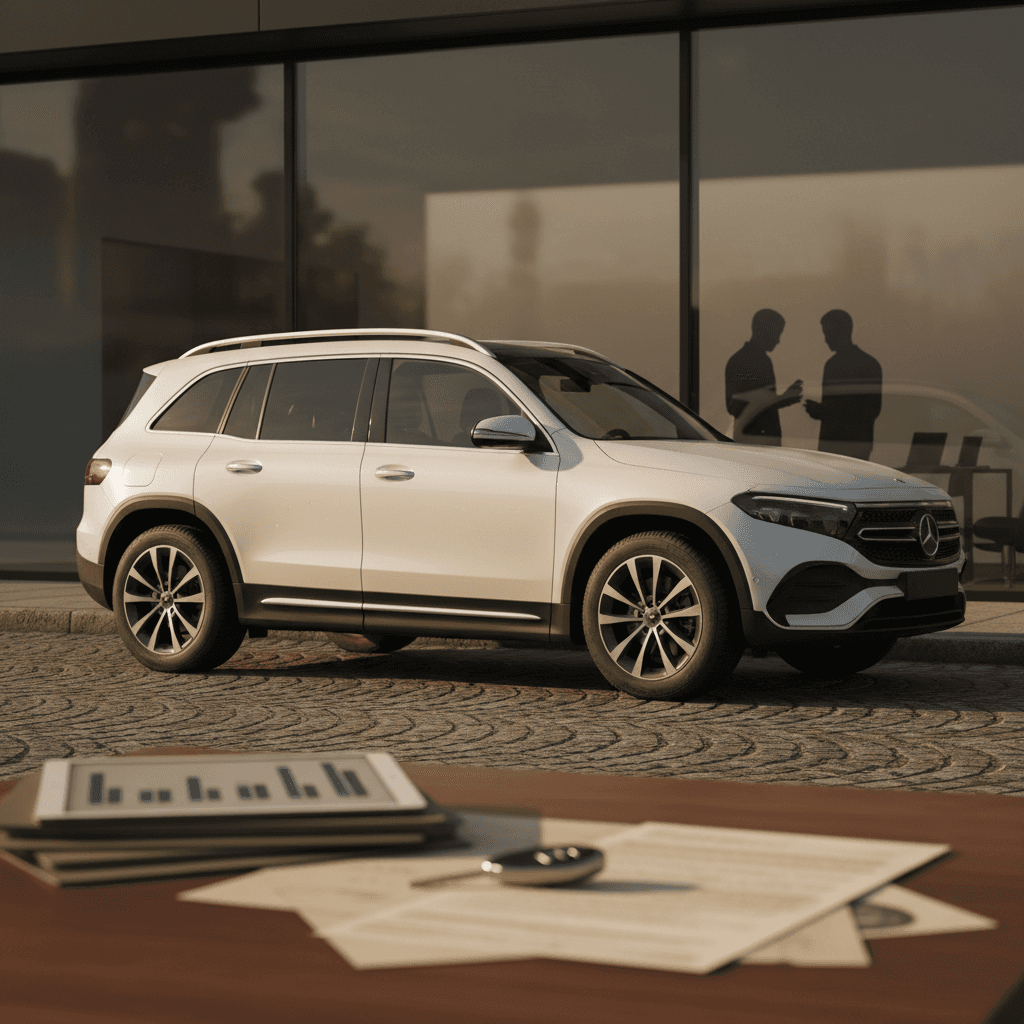
If you’re eyeing a used Mercedes EQB or wondering what your own EQB will be worth down the road, the big question is simple: what is a Mercedes EQB’s value after 5 years? As a relatively new compact luxury EV, the EQB is still proving itself in the used market, but early data, plus what we know from similar EVs, lets us draw some clear patterns.
Context: model years and timing
Why Mercedes EQB resale value matters
Resale value isn’t just about what you’ll get when you sell. It affects your total cost of ownership from day one. A Mercedes EQB that holds its value better means lower effective monthly cost, especially if you finance or lease. For buyers on the used side, understanding value after 5 years helps you decide whether you’re getting a bargain or overpaying for a badge and tech that’s already a generation old.
Who cares most about 5‑year EQB value?
Different owners, different reasons to track depreciation
Current EQB owners
Helps you time a sale or trade‑in before a major value drop, especially around warranty milestones.
Used EV shoppers
Lets you judge whether a 5‑year‑old EQB is priced fairly against similar luxury EVs and gas SUVs.
Fleet & business buyers
Impacts lease residuals, write‑offs, and whether an EQB makes sense versus other compact crossovers.
Quick rule of thumb
How much is a Mercedes EQB worth after 5 years?
Projected 5‑year value for a Mercedes EQB (U.S.)
New Mercedes EQB models typically carry MSRPs in the low‑to‑mid $50,000s, depending on trim and options. Based on current EV and luxury‑SUV trends, a typical 5‑year‑old EQB is likely to sell in the low‑to‑upper‑$20,000s, with cleaner, lower‑mile examples stretching into the low $30,000s.
- A lightly used, well‑equipped EQB that cost $55,000 new might trade around $26,000–$30,000 after 5 years.
- A base or mid‑trim EQB that cost $50,000 new could land closer to $23,000–$27,000 after 5 years.
- High miles, visible wear, or weak battery range can easily knock another several thousand dollars off those numbers.
Important caveat on projections
What drives Mercedes EQB depreciation over 5 years?
Like any vehicle, a Mercedes EQB loses value fastest in the first 3 years. Between years 3 and 5, depreciation typically slows, but a few EV‑specific factors kick in. If you’re buying or selling a 5‑year‑old EQB, these are the levers that matter most.
6 key factors that shape 5‑year EQB value
What appraisers and data models look at behind the scenes
Battery health & real‑world range
Used‑EV buyers don’t just look at EPA range, they care about how far the car goes today. A healthy pack with minimal degradation commands a clear premium.
Odometer & usage pattern
All else equal, an EQB with 40,000 miles is worth noticeably more than one with 85,000. Mostly highway miles can be a plus if the battery has been treated well.
Remaining warranty coverage
Mercedes’ battery and high‑voltage warranties run well beyond 5 years. Listings that highlight remaining coverage can sell faster and closer to asking price.
Software & tech age
Infotainment, driver‑assist suites, and charging capabilities evolve quickly. A 5‑year‑old EQB that’s eligible for updates or has modern features will out‑perform stripped or outdated specs.
Fuel & energy prices
When gas is expensive and electricity is relatively cheap, EVs look more attractive and used values generally firm up. The opposite can soften demand.
Competing models
New and used prices on rivals like the Tesla Model Y, Volvo XC40 Recharge, and Mercedes GLA/GLB shape what shoppers are willing to pay for an EQB.
How to spot a strong‑value EQB
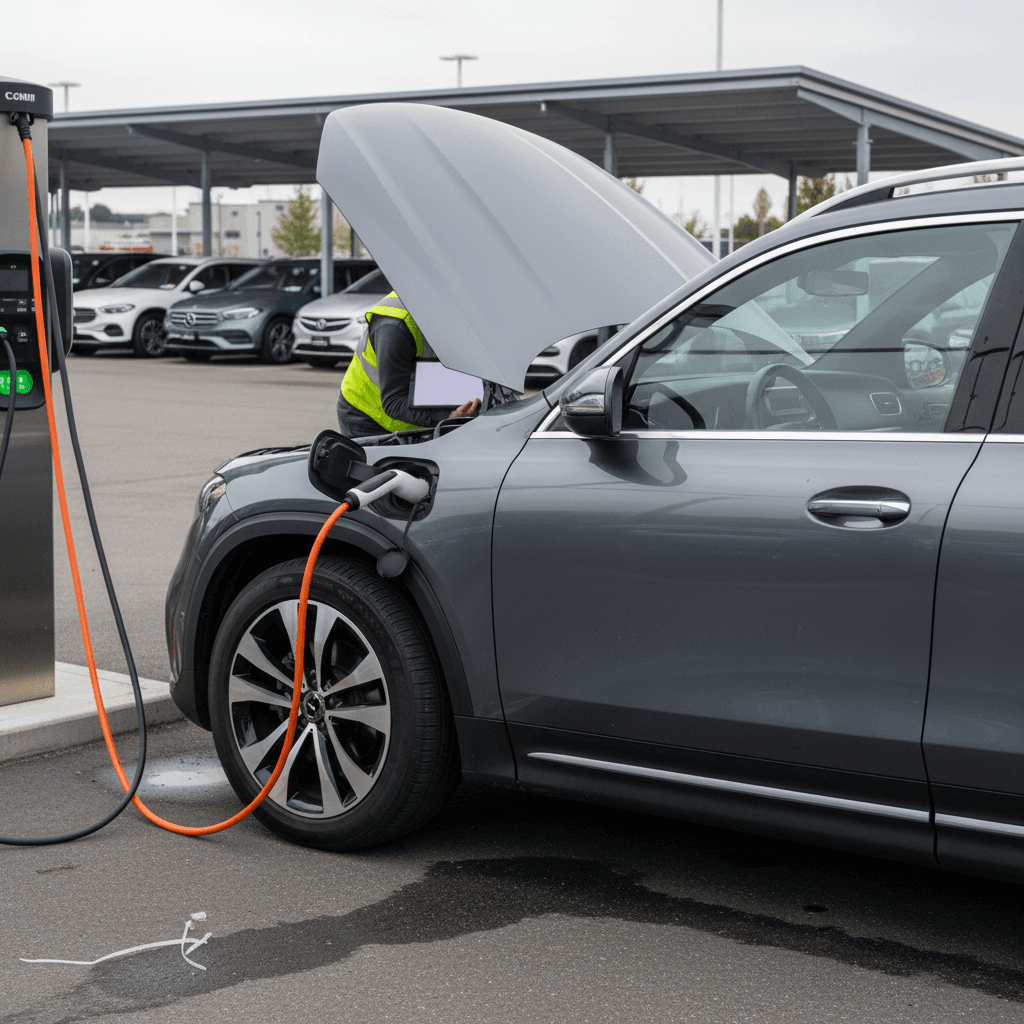
Battery health and range on a 5‑year‑old EQB
Battery health is the make‑or‑break issue for any 5‑year‑old EV. The EQB’s pack is engineered for longevity, and like most modern EVs, it uses thermal management and conservative buffers to keep degradation manageable. Still, two otherwise identical 5‑year‑old EQBs can be worth very different amounts if one delivers noticeably more real‑world range than the other.
What “normal” EQB battery aging looks like
- Mild degradation: Many modern EVs lose roughly 5–15% of original usable range in the first 5–6 years, depending on climate and usage.
- EQB implication: If a new EQB variant offered ~240 miles of rated range, a healthy 5‑year‑old example might realistically deliver ~200–220 miles in mixed driving.
- Red flags: Much bigger drops, say, losing 25–30% of range, suggest hard use, frequent DC fast charging, or thermal issues.
Battery habits that protect 5‑year value
- Avoiding frequent 100% charges: Charging to 80–90% for daily use is easier on the pack.
- Limiting fast‑charging abuse: Occasional DC fast charging is fine; doing it almost every day isn’t.
- Parking in moderate temperatures: Garaged vehicles in temperate climates age better than EQBs that sit outside in extreme heat or cold.
How Recharged handles EQB battery health
EQB vs gas Mercedes SUVs: 5‑year depreciation comparison
If you’re cross‑shopping a used EQB with a gas‑powered Mercedes like the GLA or GLB, it helps to look at how depreciation stacks up. Luxury vehicles often drop quickly early on but can stabilize once they hit a certain age and mileage band.
Projected 5‑year depreciation: EQB vs comparable Mercedes SUVs
High‑level comparison of how a Mercedes EQB may hold value next to similar‑size Mercedes crossovers with combustion engines.
| Model | Powertrain | Typical new MSRP | Estimated 5‑year retained value | 5‑year used price range |
|---|---|---|---|---|
| Mercedes EQB | Battery electric | $50,000–$55,000 | ≈45–55% | ≈$23,000–$30,000 |
| Mercedes GLB | Gasoline | $45,000–$50,000 | ≈50–58% | ≈$23,000–$29,000 |
| Mercedes GLA | Gasoline | $40,000–$45,000 | ≈50–60% | ≈$20,000–$27,000 |
Assumes similar MSRP, options, and usage patterns. These are directional ranges, not guaranteed resale values.
Takeaway for shoppers
Ownership costs in the first 5 years
Resale value is one side of the equation; what it costs you to own an EQB for 5 years is the other. Fuel savings, maintenance, tires, insurance, and potential incentives all add up. Many EQB owners find that even if depreciation is similar to a gas Mercedes, total cost per mile ends up lower thanks to cheaper “fuel” and fewer routine services.
Major EQB cost buckets in years 1–5
Energy vs fuel
In many U.S. regions, charging an EQB at home is materially cheaper per mile than fueling a comparable gas Mercedes. Public DC fast charging can be closer to gas cost, so your charging mix matters.
Maintenance & service
No oil changes, fewer fluids, and fewer moving parts help hold down routine maintenance. You’ll still face wear‑items: tires (often sooner on EVs), cabin filters, brake fluid, etc.
Insurance premiums
Insurance for a Mercedes EQB can run higher than a mainstream EV but broadly similar to equivalent Mercedes SUVs. Shop around and ask specifically about EV coverage and repair networks.
Tires and brakes
EV torque and weight can chew through tires faster, especially if you accelerate aggressively. On the flip side, regenerative braking can extend brake pad life significantly.
Charging equipment
Factor in the cost of a Level 2 home charger or upgrades to your electrical panel if needed. Spreading that investment over 5 years improves the math.
Use resale value to lower your effective monthly cost
Buying a 5‑year‑old Mercedes EQB: inspection checklist
If you’re shopping in 2027 or later, 5‑year‑old EQBs will start popping up in meaningful numbers, often as off‑lease returns. Here’s how to separate the smart buys from the problem children.
Pre‑purchase checklist for a 5‑year‑old EQB
1. Verify battery health and range
Ask for a <strong>battery health report</strong> or independent diagnostic, not just the dashboard range estimate. At Recharged, the Recharged Score Report includes pack health and projected range so you’re not guessing.
2. Check charging history
Heavy DC fast‑charging use can accelerate degradation. Review telematics or service records if available, and be extra cautious with ex‑fleet or rideshare vehicles.
3. Inspect for accident and flood damage
Run a vehicle history report and look for panel gaps, paint mismatch, or corrosion. EVs with structural or flood damage can have hidden high‑voltage issues and lower resale value later.
4. Review software and feature set
Confirm which driver‑assistance and infotainment features the EQB has and whether they’re up to date. Some buyers will pay more for the right option mix and current software.
5. Evaluate tire and brake condition
A 5‑year‑old EQB on its original tires likely needs a set soon, a $1,000‑plus expense on many luxury crossovers. Factor that into your offer.
6. Confirm warranty status
Check remaining coverage on the battery and high‑voltage components as well as the basic warranty, if any remains. Warranty peace of mind directly supports stronger resale down the road.
Don’t skip a high‑voltage safety check
Selling or trading in your 5‑year‑old EQB
If you own an EQB and are approaching the 5‑year mark, timing and preparation can add thousands to your sale or trade‑in value. You’re competing with newer EVs and updated tech, so you want your EQB to stand out for condition, documentation, and transparency.
Steps to maximize your EQB’s 5‑year value
- Detail inside and out: A professional detail can deliver an outsized return in perceived value.
- Service before you list: Address minor issues (warning lights, wipers, cabin filter) so buyers don’t see a to‑do list.
- Document everything: Gather service records, charger receipts, and any battery or range reports.
- Highlight home‑charging use: If you rarely fast‑charged, say so, buyers know that’s kinder to the battery.
Your selling options
- Private sale: Often yields the highest price but takes more time and effort.
- Dealer trade‑in: Convenient and fast, but offers can be conservative.
- Instant offer or consignment with Recharged: You can get a data‑driven instant offer or let Recharged market your EQB on consignment, with battery health and pricing transparency baked in.
How Recharged can help you sell
How Recharged evaluates used EQBs
Used‑EV shoppers are rightly cautious about range claims and hidden issues. Recharged was built to take the guesswork out of exactly that problem, especially for newer models like the Mercedes EQB that don’t yet have decades of resale history behind them.
What goes into a Recharged EQB valuation
Why our numbers are more than a gut feel
Deep vehicle history & condition review
Title status, accident history, mileage, cosmetic and structural condition, all the traditional used‑car fundamentals still matter for a 5‑year‑old EQB.
Battery health diagnostics
The Recharged Score includes third‑party pack analysis and range testing so we can price an EQB based on how it actually performs today, not just its original EPA rating.
Real‑time market data
We benchmark against current listings and recent transactions for similar EQBs and rival models, adjusting for trim, options, region, and demand.
Ready to find your next EV?
Browse VehiclesWhen you buy a Mercedes EQB through Recharged, you see transparent pricing tied directly to the vehicle’s condition, battery health, and market data. When you sell or trade in, that same framework helps justify your number, and explains it clearly to potential buyers.
Frequently asked questions about EQB value after 5 years
Mercedes EQB 5‑year value FAQ
Bottom line: should you buy a Mercedes EQB that’s 5 years old?
A 5‑year‑old Mercedes EQB is shaping up to be a compelling value play: luxury badge, modern EV driving experience, and depreciation that looks broadly similar to Mercedes’ gas crossovers, provided the battery checks out. If you focus on examples with strong battery health, clean histories, and documented maintenance, you can capture much of the EQB’s appeal at a significantly lower upfront cost.
If you’re shopping, be picky on condition and pack health rather than fixating only on model year. If you’re selling or trading in, invest a little time in presentation and documentation to protect your 5‑year value. And whether you’re on the buying or selling side, a platform like Recharged, with Recharged Score Reports, fair market pricing, EV‑specialist support, and nationwide delivery, can take a lot of the uncertainty out of valuing a used EQB in a fast‑evolving EV market.