You live in California, gas is flirting with $6–7 a gallon in some areas, EV ads are everywhere, and the state keeps talking about banning new gas cars by 2035. The question isn’t abstract anymore: should you switch to an electric car in California, now, later, or maybe not at all?
California is already an EV state
Is it time to go electric in California?
Let’s put the emotion to one side. The real answer to whether you should switch to an electric car in California comes down to four things: your driving pattern, your charging situation, your budget, and your tolerance for new tech. Get those right and an EV in California is almost cheating: quiet, quick, and dramatically cheaper per mile than gas, especially with today’s fuel prices.
When an EV is a no-brainer
- You drive 10,000–15,000+ miles a year.
- You can plug in at home or work most nights.
- You live in or near a metro with strong charging (Bay Area, LA, San Diego, Sacramento).
- You’re planning to keep the car for at least 4–6 years.
When you should think twice
- No reliable home or workplace outlet and limited public charging nearby.
- You rent short-term and can’t count on stable parking.
- You mostly drive very long rural routes with sparse charging.
- You replace cars every 1–2 years and hate market uncertainty.
How many Californians have already switched to EVs?
California’s EV moment, by the numbers
In practical terms, you’re not blazing a trail anymore. You’re joining a crowd. That matters because infrastructure, service knowledge, and resale markets all improve with scale. California is far ahead of most states on those fronts, even if public charging can still feel behind demand in some pockets.
EV vs gas costs in California in 2026
With California gas prices already among the highest in the country, and flirting with $7 a gallon in parts of the state in early 2026, fuel costs aren’t a background concern; they’re a main character. Electricity isn’t cheap here either, but per mile, an efficient EV still usually undercuts a comparable gas car by a wide margin.
Back-of-the-envelope fuel cost: EV vs gas in California
Illustrative comparison for a typical compact SUV in California in 2026. Actual costs vary by utility, driving style, and gas price swings.
| Scenario | Assumptions | Annual Fuel Cost | Cost per Mile |
|---|---|---|---|
| Gas SUV – conservative | 30 mpg, $4.50/gal | $1,800 | $0.15 |
| Gas SUV – painful | 30 mpg, $6.50/gal | $2,600 | $0.22 |
| EV – home charging | 0.30 kWh/mi, $0.30/kWh | $1,080 | $0.09 |
| EV – time-of-use off-peak | 0.30 kWh/mi, $0.18/kWh | $648 | $0.05 |
| EV – mostly DC fast charging | 0.30 kWh/mi, $0.45/kWh | $1,620 | $0.14 |
Assumes 12,000 miles per year. Gas price band reflects recent California averages and volatility; electricity rate approximates a common residential rate.
The punchline on fuel
Maintenance and repairs
EVs don’t need oil changes, timing belts, spark plugs, or smog checks. You’re mostly looking at tires, cabin filters, and brake fluid. Over 5–8 years, total maintenance tends to be noticeably lower than a comparable gas car, especially if you drive a lot.
Insurance and purchase price
Insurance for some EVs can run higher, especially for luxury models or if parts are pricey. And yes, the purchase price for a new EV can still be a premium, though used EV prices in California have become far more rational since the 2021–2022 bubble burst.
Incentives and tax credits: what’s still available?
This is the murkiest part of the picture, because incentives keep shifting. California famously shut down its broad Clean Vehicle Rebate Project (CVRP) for most buyers in late 2023, moving remaining state money toward lower‑income programs. On the federal side, the EV tax credit landscape has changed again, with many new‑EV credits ending for purchases after September 30, 2025.
- Federal new EV tax credits: For many buyers, credits for new EVs phase out after September 30, 2025. If you’re planning a brand‑new EV, timing matters. Always confirm current eligibility for the specific car and your tax situation before you sign.
- Income‑qualified California programs: Programs like Clean Cars 4 All and other local grants can significantly reduce the cost of a new or used EV for qualifying low‑ and moderate‑income households, sometimes stacking with other benefits.
- Utility rebates: Many California utilities offer their own incentives for EV purchase or home charger installation, plus discounted time‑of‑use rates for overnight charging.
- Used EV advantages: Even when headline rebates dry up, used-EV prices in California often “bake in” earlier incentives, giving you a better price relative to new.
Don’t buy on a promise that’s expired
Charging in California: home, work, and public options
For a California EV owner, charging is either boringly simple or annoyingly complicated. The difference is where you park and how often you road-trip.
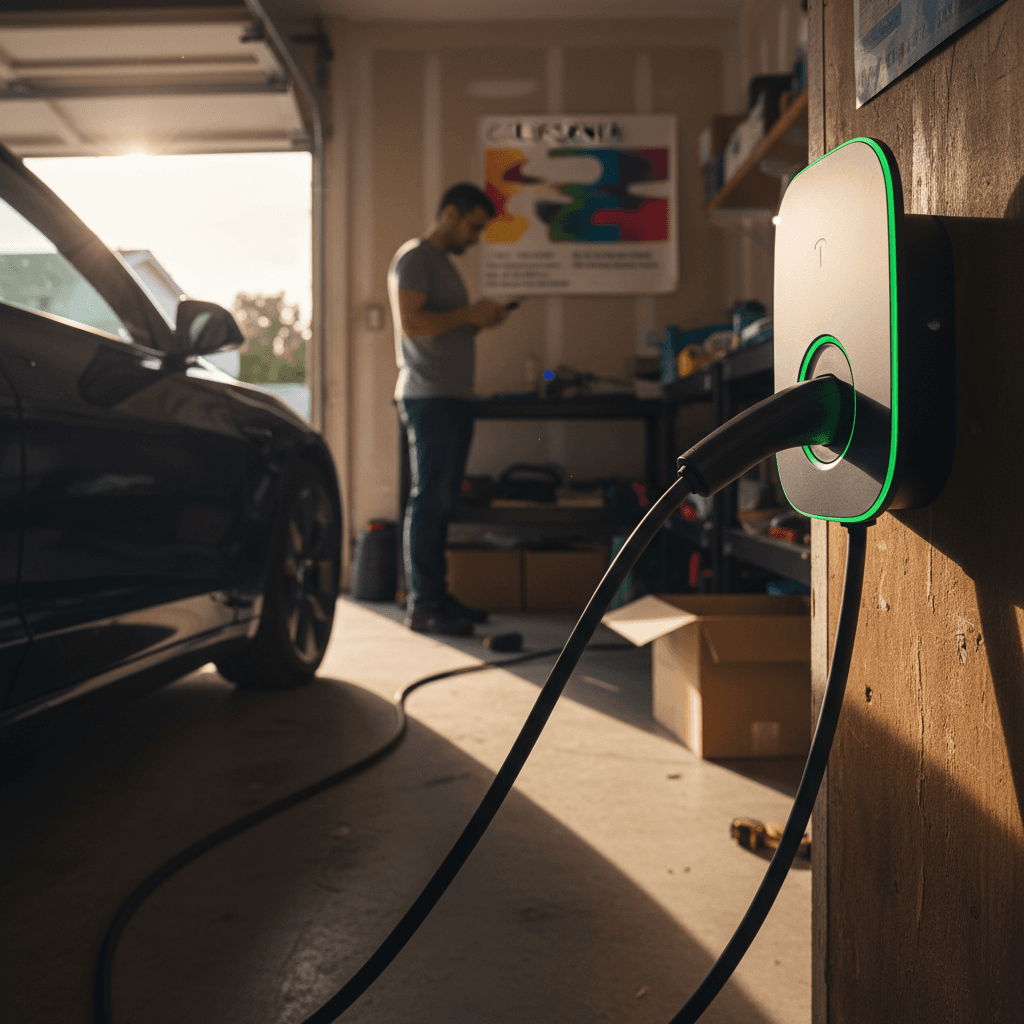
Three typical California charging lives
Figure out which one looks most like you.
Home-base hero
You have a driveway or garage and can put in at least a 120V outlet, ideally a 240V Level 2 charger. You plug in most nights, wake up full, and rarely think about public charging except on road trips.
Apartment striver
You street‑park or live in a building with limited EV spots. You rely on workplace charging, local DC fast chargers, or shopping‑center stations. It can work, but you’ll need a routine.
Road warrior
You routinely do 200–400‑mile days: sales calls, visiting family, Tahoe runs. The West Coast’s fast‑charging spine is real, but you’ll be living in apps and planning stops more carefully than in a gas car.
Check your real local infrastructure
Who should switch to an EV in California right now?
Let’s get specific. Here are the Californians for whom an EV, especially a used EV, is almost tailor‑made in 2026:
Great candidates for going electric now
1. Daily commuters with predictable routes
If you commute 20–80 miles a day and can charge at home or work, an EV turns stop‑and‑go traffic into something like spa time and slashes your per‑mile energy cost.
2. Households with two cars
Make one car electric and keep one gas or hybrid for edge cases. This combo wipes out most EV anxiety without forcing you to re‑engineer your life.
3. Homeowners (or stable long‑term renters) with parking
If you can install at least a 120V outlet today, and ideally a 240V Level 2 charger, EV ownership becomes incredibly convenient. The car just lives on a digital leash to your house.
4. Drivers logging 10,000–20,000 miles per year
The more you drive, the faster the fuel and maintenance savings outweigh any EV price premium. High‑mileage rideshare drivers and sales reps especially benefit, if they have reliable charging.
5. Tech‑comfortable early adopters and tinkerers
If you enjoy apps, software updates, and occasional quirks, you’ll be delighted by the seamless torque, one‑pedal driving, and over‑the‑air improvements EVs deliver.
Who might want to wait, or choose a hybrid?
EV evangelists hate to admit it, but there are still plenty of Californians for whom a full battery-electric vehicle is not the right next move. If that’s you, it’s better to know it now than to force a bad fit.
- You have no reliable overnight parking and no realistic path to getting it, think dense, older urban neighborhoods with street parking only and few public chargers.
- Your job involves unpredictable, long-distance rural driving well away from major corridors; a plug‑in hybrid (PHEV) can be a better bridge technology.
- You’re on a very tight budget and the only EVs in reach are very short‑range early models that could feel constraining in California’s sprawling metro areas.
- You keep cars only a year or two and hate the idea of figuring out residual values in a rapidly evolving segment. In that case, leasing, or a conventional hybrid, may be smarter.
The one scenario that really doesn’t work
Why used EVs are especially attractive in California
California is awash in first‑owner EVs coming off leases and loans, Teslas, Chevy Bolts, Nissan Leafs, Hyundai/Kia models, you name it. That means the used EV market here is unusually deep and price‑competitive, especially compared with states where EV adoption only recently woke up.
What used EVs give you that new EVs don’t
Particularly true in EV-heavy states like California.
Lower upfront price, same torque
EV drivetrains age well. A three‑year‑old EV can feel 95% as quick and modern as a new one, but with someone else’s depreciation already paid for.
Real‑world range is known
With a used EV, you can see how the battery has actually aged in California’s heat and hills, instead of guessing from an EPA sticker.
Charging reality, not promises
By the time an EV hits the used market, the local charging network around you has either proved itself or not. There’s less speculation and more Yelp‑style truth.
Greener without being precious
Re‑using an existing EV can be an even more resource‑efficient choice than building a new one, depending on how and where it was made.
Where Recharged fits in
Ready to find your next EV?
Browse VehiclesHow to evaluate a used EV: battery and price
With gas cars, you obsess over miles and oil‑change records. With EVs, the battery is the engine, the fuel tank, and half the resale story. Here’s how to approach it without losing your mind.
Used EV sanity checklist
1. Look at usable range today, not just when new
Start with your real daily and weekly driving: how many miles do you actually need in a worst‑case day? Then compare that to the car’s current real‑world range, not the original brochure number.
2. Ask for objective battery health data
Many modern EVs can report battery state‑of‑health via onboard diagnostics. At Recharged, our Recharged Score battery health diagnostics turn that into a simple, independent report so you’re not guessing.
3. Understand the battery warranty
Most OEMs warrant EV batteries for around 8 years and 100,000–150,000 miles, often against dropping below a certain capacity percentage. See how much warranty runway is left for the car you’re considering.
4. Compare total cost of ownership, not just price
Fold in energy costs (home vs public charging), insurance, expected maintenance, and potential incentives. A used EV with a clean battery story can pencil out cheaper than a similarly priced gas car over five years.
5. Inspect charging history and habits
Frequent fast‑charging at high states of charge can age some packs faster. When possible, choose cars that mostly lived on Level 2 home or workplace charging.
Step-by-step decision checklist
Your EV decision in four passes
1. Reality check: your life today
Where does your car sleep at night? Garage, driveway, carport, street?
Can you realistically add at least a dedicated 120V outlet, and ideally 240V, within the next year?
How many miles do you drive in a typical day, and your worst day?
How many long road trips (200+ miles) do you do per year?
2. Money: total cost, not just sticker
Calculate rough annual fuel cost for your current or planned gas car vs an EV using your local gas price and utility rate.
Get a realistic insurance quote for at least two EV models you’d consider.
Decide whether you’re shopping <strong>new</strong>, <strong>used</strong>, or <strong>certified used</strong>.
Check current federal, state, and utility incentives you actually qualify for.
3. Models and range
List 3–5 EVs that fit your budget and style (new or used).
For each, write down EPA range and look up real‑world user reports (especially in California climates).
Mentally chop 20–30% off EPA range to account for speed, weather, hills, and battery aging. Does it still cover your worst‑case day comfortably?
Check charging port and adapter situation on the routes you actually drive.
4. Buying path
Decide whether you prefer to <strong>buy from a dealer, marketplace, or private seller</strong>.
If you’re leaning used, look for EV‑specialist sellers that provide independent battery health reports, like the Recharged Score.
Figure out whether you’ll finance, pay cash, or lease. Factor in interest rates and expected resale.
If you’re in California but shopping online, confirm delivery options and how registration and incentives are handled.
FAQs: switching to an EV in California
Frequently asked questions about going electric in California
Bottom line: should you switch?
In California in 2026, an electric car is no longer a science experiment. It’s a rational appliance with a streak of theater: instant torque, silent launches up freeway ramps, the smug joy of sailing past gas stations charging $6‑plus a gallon. If you have stable parking and a place to plug in, drive more than a few thousand miles a year, and can live with planning for the occasional long trip, an EV is very likely the right next car for you.
If you’re boxed into street parking, spend your life in sparsely served rural corridors, or are living month‑to‑month on your car budget, forcing an EV to fit your life may not be wise, yet. The good news is that you don’t have to choose between purity and practicality. A well‑priced used EV, especially in an EV‑dense state like California, can deliver most of the upside with less financial drama.
When you’re ready to run the numbers on a real car instead of hypotheticals, browsing used EVs with verified battery health and fair pricing is the logical next step. That’s what Recharged is built for: to turn “Should I switch?” into a clear, confident yes, or an informed, perfectly respectable not yet.