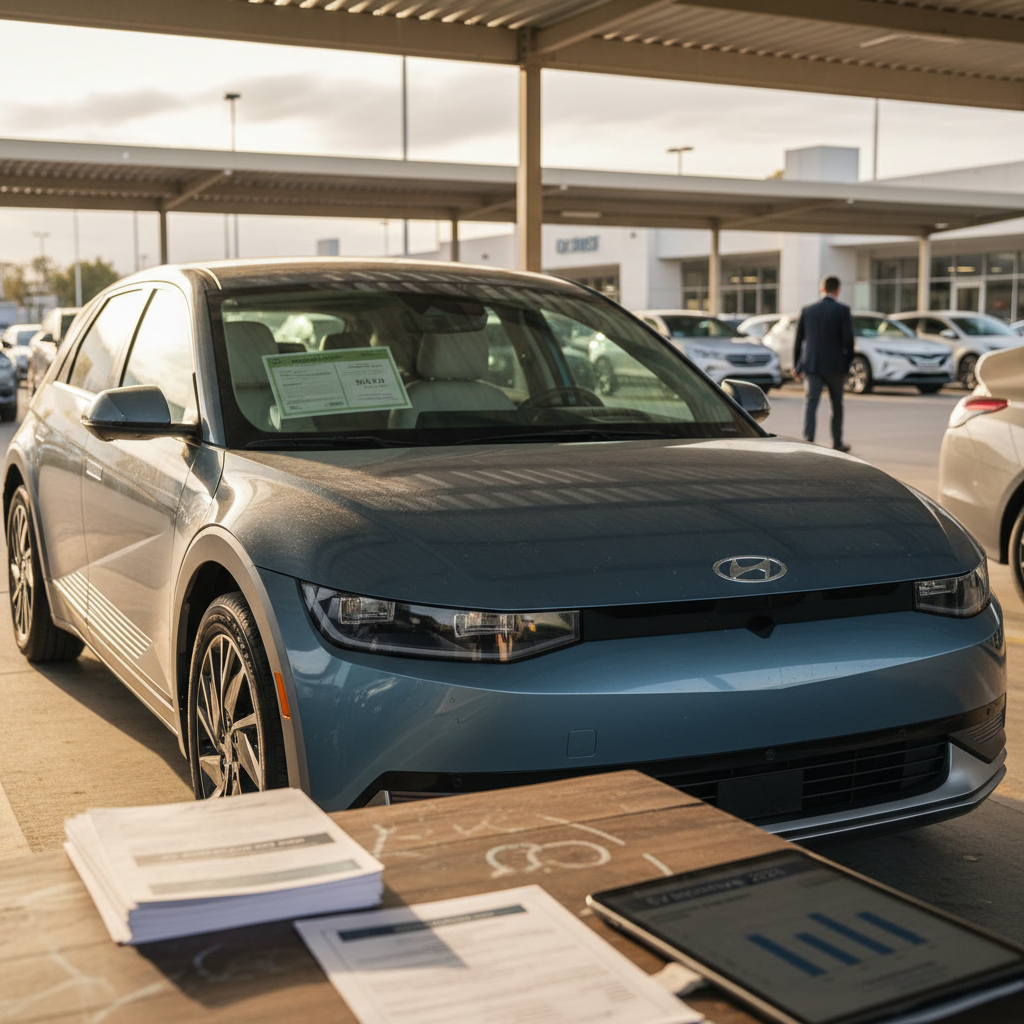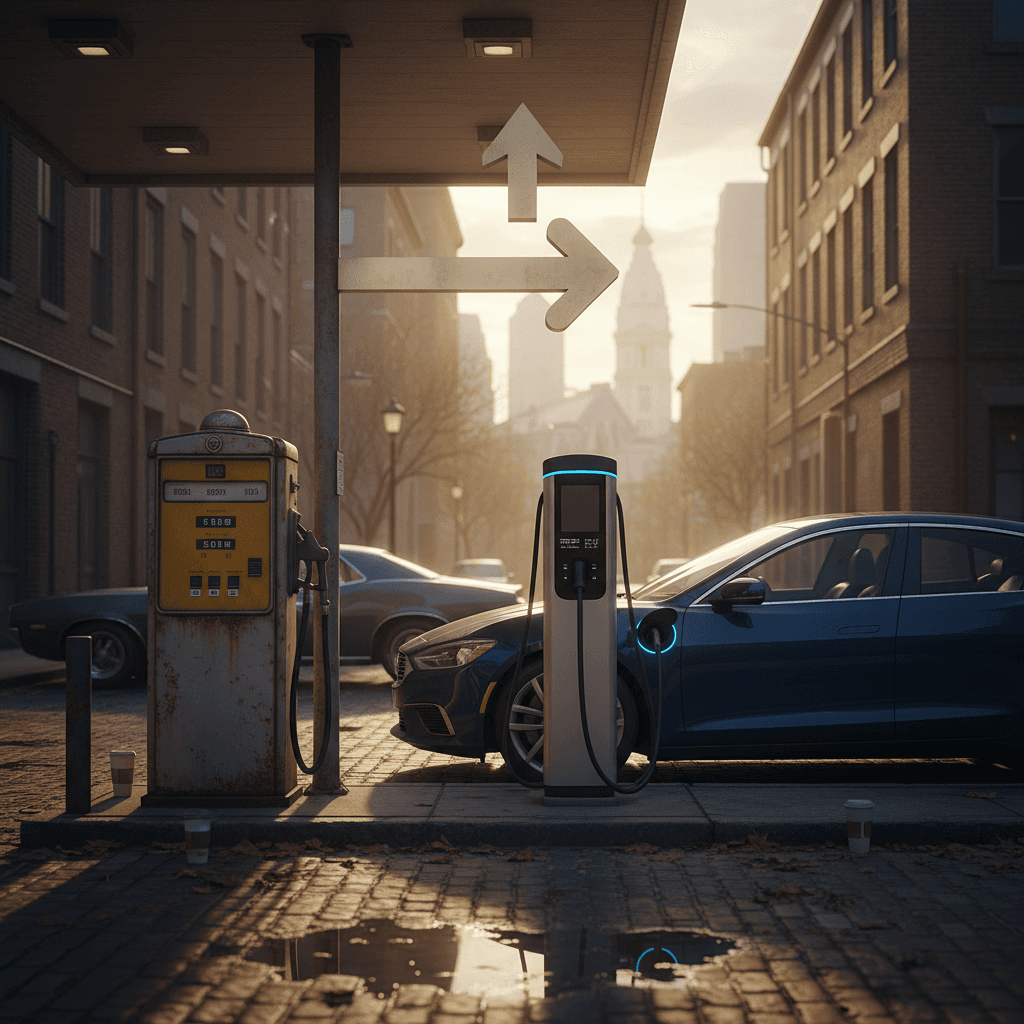
In 2026, many Philadelphia drivers are feeling squeezed at the pump. With national gas prices touching around $4 per gallon again and Pennsylvania’s fuel taxes among the highest in the country, it’s natural to ask how gas prices vs EV charging cost in Philadelphia in 2026 really compare. The answer: if you can charge at home, an EV typically cuts your “fuel” bill roughly in half, or more, compared with a similar gas car, even before you factor in maintenance savings.
Key takeaway for busy Philly drivers
Why cost comparison matters in Philly in 2026
Philadelphia is a classic stop‑and‑go city: tight streets, traffic, short hops, and lots of idling. That’s the worst‑case scenario for gas cars and close to a best‑case for EVs, which recapture energy with regenerative braking. At the same time, PECO’s electric rates have climbed in recent years, and public fast charging around the region isn’t cheap, so you can’t just assume “electric = always cheaper.” You need local 2026 numbers.
What drives your fuel costs in Philadelphia
Four local realities that tilt the scales
High PA gas taxes
Pennsylvania consistently ranks among the states with the highest gasoline tax burden. When national prices spike, Philly drivers often feel it even more at the pump.
Competitive electricity market
PECO’s default rate is just one option. Many households can shop for fixed‑rate supply plans, which helps keep home charging costs predictable, even as gas prices swing.
Stop‑and‑go traffic
Short city trips destroy gas mileage but don’t hurt EV efficiency as much. Regenerative braking can make your miles per kWh surprisingly strong in Center City traffic.
Growing EV infrastructure
The Philly metro now has hundreds of public charging locations, including DC fast chargers along I‑95 and in the suburbs, giving you more options if you can’t charge at home.
2026 Philadelphia baseline: gas and electric rates
Typical 2026 energy costs for Philly drivers
To make apples‑to‑apples comparisons, we’ll use conservative, realistic numbers for Philadelphia in 2026, not best‑case marketing claims. For gasoline, we’ll assume $4.30 per gallon as a representative local price for regular. For electricity, we’ll use $0.13 per kWh as a middle‑of‑the‑road home rate, recognizing that some PECO customers pay closer to $0.11 on fixed plans and others closer to $0.15–$0.16. For public DC fast charging, we’ll assume $0.40 per kWh as a typical blended rate around the region.
These are 2026 estimates, not guarantees
Cost per mile: gas vs EV in Philadelphia (2026)
Most drivers don’t think in terms of kilowatt‑hours. You care about cost per mile. So let’s start there, using representative vehicles and the 2026 Philadelphia prices above.
2026 cost per mile: Philly gas vs EV
Illustrative cost‑per‑mile comparison using realistic 2026 prices and city‑heavy efficiency.
| Vehicle type & fueling | Key assumptions | Cost per mile |
|---|---|---|
| Gas compact sedan (e.g., Corolla) | 30 mpg city mix, $4.30/gal | ≈ $0.14/mi |
| Gas small SUV (e.g., CR‑V/RAV4) | 25 mpg city mix, $4.30/gal | ≈ $0.17/mi |
| Efficient EV home‑charged | 3.5 mi/kWh, $0.13/kWh | ≈ $0.04/mi |
| Less efficient EV home‑charged | 3.0 mi/kWh, $0.13/kWh | ≈ $0.045/mi |
| Efficient EV DC fast‑charged | 3.0 mi/kWh, $0.40/kWh | ≈ $0.13/mi |
| Mixed: 80% home, 20% fast | 3.3 mi/kWh, $0.13 home, $0.40 fast | ≈ $0.06–$0.07/mi |
City driving in Philadelphia tends to favor EVs because stop‑and‑go hurts gas mileage more than electric efficiency.
Rule of thumb for 2026
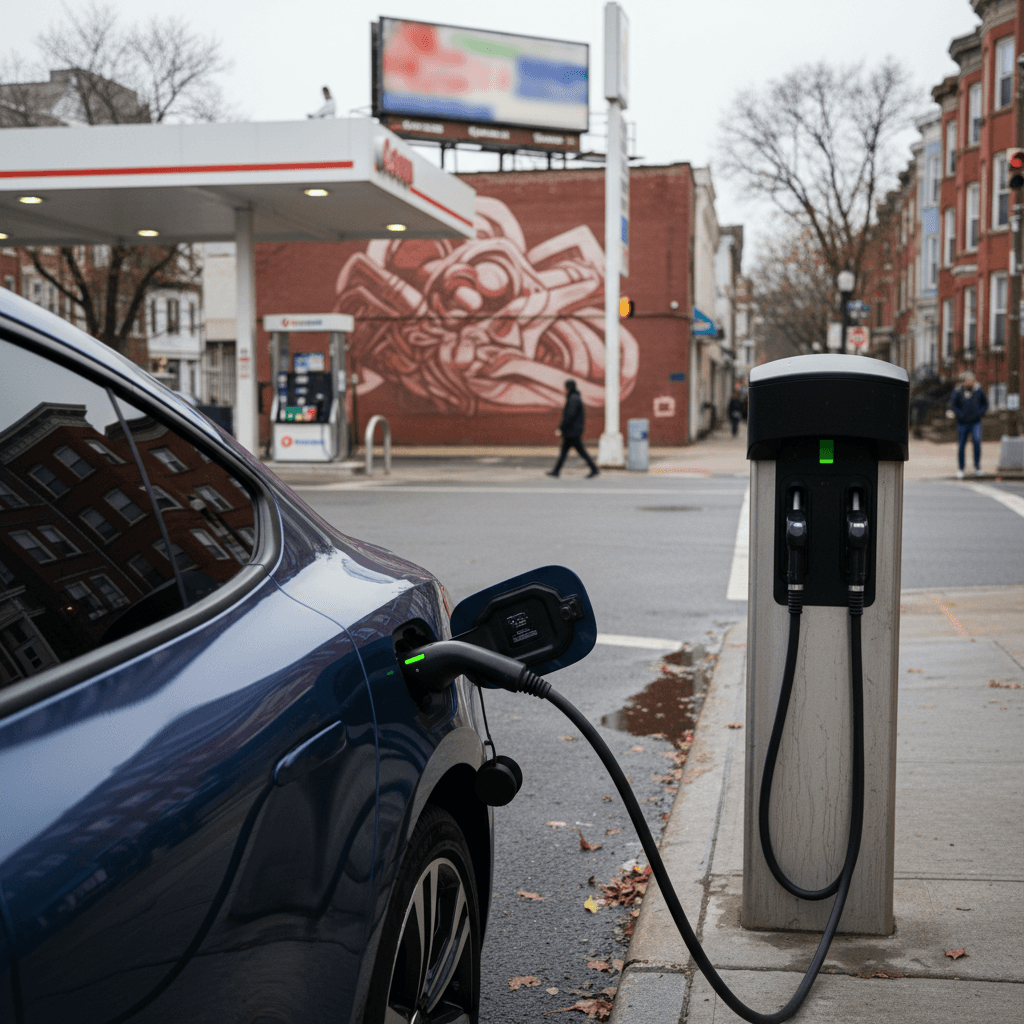
Monthly fueling costs for real Philly drivers
Per‑mile cost is useful, but what you really feel is the hit to your monthly budget. Let’s walk through three common Philadelphia driving patterns with 2026 numbers: a Center City commuter, a suburban family, and a ride‑share driver.
1. Center City commuter
Profile: Apartment or rowhouse dweller, 800 miles/month (40 miles/day x 20 workdays).
- Gas compact (30 mpg): about $115/month in gas.
- EV, mostly home charging (3.3 mi/kWh, $0.13/kWh): roughly $32/month.
- EV, 50% home / 50% DC fast (~$0.27 blended kWh): about $65/month.
2. Suburban family
Profile: Mix of commuting, errands, and kids’ activities, 1,200 miles/month.
- Gas small SUV (25 mpg): about $206/month in gas.
- EV crossover, home charging: around $48–$55/month.
- EV, 25% DC fast for road trips: typically $65–$75/month.
3. Ride‑share or delivery driver
Profile: 2,000+ miles/month, often mixed city and highway.
- Gas hybrid sedan (45 mpg): roughly $191/month.
- EV with 70% home, 30% DC fast: around $90–$110/month.
- EV using almost all DC fast: may climb to $150–$170/month, close to a gas hybrid.
How to estimate your own monthly cost
Home charging vs public charging in Philadelphia
Where you charge matters as much as what you drive. A Philadelphia driver with a driveway or garage and a basic Level 2 charger sees very different economics than someone relying on curbside or DC fast charging. Here’s how the options stack up.
Charging options and typical Philly 2026 costs
Think in cost, convenience, and speed, not just kW numbers
Home Level 1 (120V outlet)
Best for: Low‑mileage city drivers.
- Slow: 3–5 miles of range per hour.
- Cost: same as your home rate (often $0.11–$0.16/kWh).
- Great if you park overnight and drive under ~30–40 miles/day.
Home Level 2 (240V)
Best for: Most owners with private parking.
- Faster: 20–35 miles of range per hour.
- Still uses your home rate.
- Delivers the highest savings and convenience for Philly commuters.
Public Level 2
Best for: Apartment/rowhouse residents without home charging.
- Speeds similar to home Level 2.
- Pricing varies: some free at workplaces, others ~$0.20–$0.30/kWh.
- Good backup even if you mostly charge at home.
DC fast charging (50–350 kW)
Best for: Road trips and occasional top‑ups.
- Very fast: 150–200+ miles in ~30 minutes on modern EVs.
- Most expensive: often ~$0.35–$0.48/kWh in and around Philly.
- Convenient but can erase most of your savings if used daily.
Beware the “fast‑charge only” lifestyle
How rising gas prices and electric rates shift the math
Both gasoline and electricity have been on a roller coaster. In early 2026, national gas prices moved back above $4 per gallon after geopolitical shocks, while Pennsylvania electricity rates have inched upward after several supply‑rate increases. The question Philly drivers ask is, “What happens if gas or electricity jumps again?”
If gas jumps, EV savings widen fast
Because your EV’s cost per mile is primarily tied to your electricity rate, a spike at the pump hits gas drivers immediately while hardly moving your EV math.
- If gas rises from $4.30 to $5.00/gal, that same 30‑mpg compact moves from ~$0.14/mi to ~$0.17/mi.
- Meanwhile, an EV at 3.3 mi/kWh and $0.13/kWh stays around $0.04/mi.
- Your monthly savings on 1,000 miles jump from about $100 to roughly $130.
If electricity rises, savings shrink but remain
Let’s say your effective home rate moves from $0.13 to $0.18/kWh while gas stays at $4.30.
- EV at 3.3 mi/kWh now costs about $0.055/mi instead of $0.04/mi.
- That’s still well below the $0.14–$0.17/mi you’re paying for gas in Philly traffic.
- On 1,000 miles, you’d spend about $55 on electricity vs. $140–$170 on gas.
Think in ranges, not precise pennies
Beyond fuel: insurance, maintenance, and used EV prices
Fuel is just one part of the total cost of owning a car in Philadelphia. Insurance, maintenance, parking, and depreciation matter just as much. The good news for EV shoppers in 2026 is that used EV prices have normalized after the COVID‑era spike, and long‑term maintenance often tilts in your favor.
Other cost factors that favor EVs in Philly
Especially when you’re looking at a used EV rather than new
Lower routine maintenance
EVs don’t need oil changes, spark plugs, or exhaust work. You still pay for tires, brakes, cabin air filters, and alignment, but the list of recurring engine‑related items is shorter.
Insurance can vary
Some insurers price EVs a bit higher, others treat them similarly to comparable gas cars. In Philadelphia’s dense urban environment, your ZIP code and driving record usually matter more than fuel type.
Battery health matters
With a used EV, the battery is the single biggest component. A healthy pack means predictable range and fewer surprises; a weak pack can limit usability and impact resale value.
Why a verified battery report is worth it
How Recharged helps Philly drivers lower EV costs
Choosing an EV isn’t just about chasing the lowest theoretical cost per mile. It’s about finding a car that fits how and where you drive, then structuring the deal so your all‑in monthly cost makes sense. That’s where Recharged comes in.
Ways Recharged can tilt the math in your favor
1. Start with a fair, data‑driven price
Recharged benchmarks every used EV against the market and backs it with a transparent pricing breakdown, so you’re not overpaying up front, one of the biggest risks with any used car purchase in 2026.
2. Verify battery health with the Recharged Score
Every Recharged vehicle comes with a Recharged Score battery health report, so you know how much usable range you’re really getting, not just what the window sticker claimed when the car was new.
3. Model your monthly payment and fuel savings
Recharged’s financing tools and EV‑specialist support help you compare monthly payments, likely charging costs, and estimated fuel savings versus your current gas car, based on your real driving pattern.
4. Trade‑in and instant offer options
You can trade in a gas car you’re ready to move on from, get an instant offer, or use consignment. That makes the switch from gas to EV simpler and can reduce your out‑of‑pocket up front.
5. Nationwide delivery and Richmond Experience Center
Browse and buy digitally from anywhere, or visit the Recharged Experience Center in Richmond, VA if you want to see vehicles and talk through charging and cost questions in person.
FAQ: Gas vs EV charging costs in Philadelphia 2026
Common questions from Philadelphia drivers
Bottom line: Should you go EV in Philly in 2026?
If you’re comparing gas prices vs EV charging cost in Philadelphia in 2026, the pattern is clear. When you can charge at home or at a reasonably priced workplace or public Level 2 station, an EV typically cuts your fueling cost by half or more and smooths out the wild swings you’ve been seeing at the pump. If your lifestyle forces you to depend on DC fast charging for most of your miles, the financial edge narrows and you’ll want to run the numbers carefully.
For many Philly households, especially those with off‑street parking or consistent workplace charging, switching to a used EV is one of the most effective ways to lower total transportation costs over the next several years. The key is choosing the right car, understanding its battery health and real efficiency, and pairing it with a smart charging plan. That’s exactly where a data‑driven marketplace like Recharged can help you make a confident, dollars‑and‑cents decision.