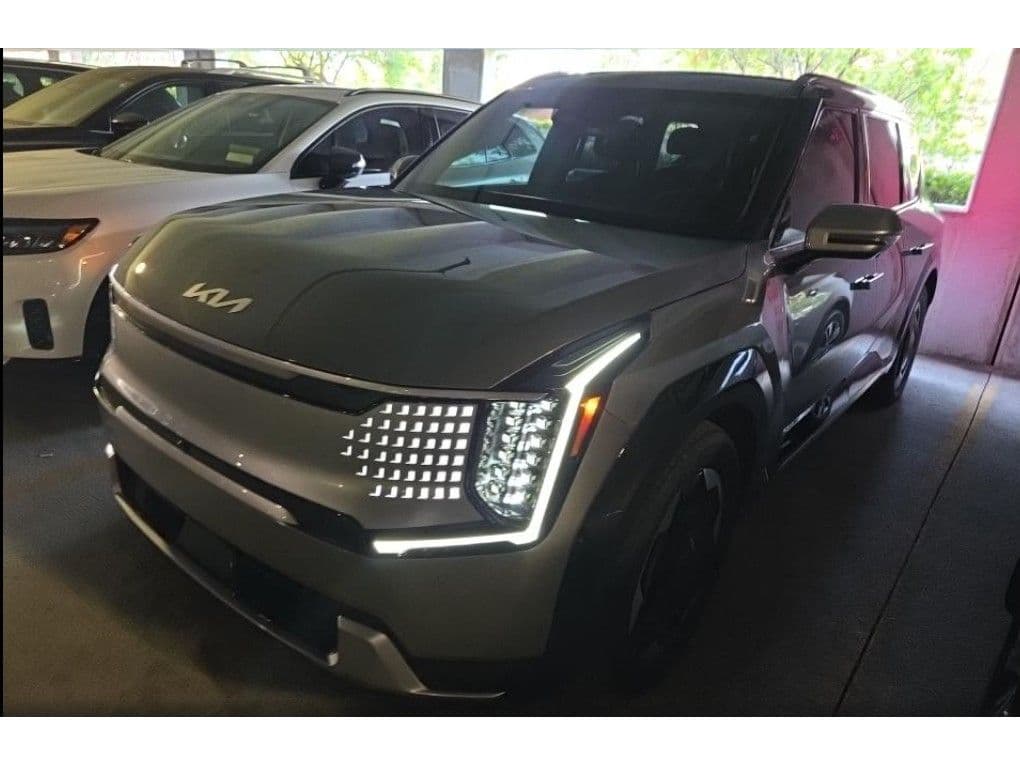
You’re not imagining it: if you’re searching “sell my Kia EV9” in 2026, the numbers look a little wild. A three-row electric SUV that stickered in the mid‑$60,000s not long ago might now get offers in the $30Ks. The good news is that you still have meaningful control over where your EV9 lands in that range, if you understand how today’s EV market works and choose the right way to sell.
The EV9 is still a young used EV
Why EV9 resale looks weird right now
The Kia EV9 launched with big hype and big MSRPs, then ran straight into the reality of an EV market in flux: fast-changing federal tax credits, manufacturer discounts, and buyers skittish about new tech. That cocktail has pushed early used EV9 prices down faster than many owners expected.
Kia EV9 resale snapshot in early 2026 (big picture)
Why offers can feel insulting
What is my Kia EV9 worth in 2026?
Let’s talk ranges, not fantasies. As of early 2026, real‑world data from valuation sites and used‑EV marketplaces shows many 2024 Kia EV9s transacting somewhere in the mid‑$30,000s to mid‑$40,000s, depending on mileage, condition, trim, and how desperate the seller or buyer is. Fully loaded GT‑Line and Land trims with low miles can still sit at the top of that band; base Light and Light Long Range models with higher miles or blemished history can slip below it.
Illustrative Kia EV9 value bands in early 2026
These are directional ranges to help you sanity‑check offers, not formal appraisals. Local supply, options, and buyer demand can move you up or down.
| Model year & trim (example) | Miles | Condition snapshot | Likely retail asking range | Typical dealer / instant‑offer range |
|---|---|---|---|---|
| 2024 EV9 Light RWD | 18,000 | Clean, basic options | $33,000–$38,000 | $28,000–$32,000 |
| 2024 EV9 Land AWD | 22,000 | Well‑equipped, minor wear | $37,000–$43,000 | $32,000–$36,000 |
| 2024 EV9 GT‑Line AWD | 12,000 | Loaded, one‑owner | $42,000–$48,000 | $35,000–$40,000 |
| 2025 EV9 Wind AWD | 15,000 | Popular spec, clean history | $38,000–$45,000 | $33,000–$38,000 |
Use this table as a reality check when you start seeing trade‑in and cash offer numbers.
Reality check your offers in minutes
Factors that move your EV9’s price up or down
What buyers really pay for on a used Kia EV9
Trim, miles, and battery health matter more than that panoramic sunroof you love.
1. Mileage & usage
EV buyers watch miles closely, especially on newer, high‑tech models. An EV9 with 10,000–20,000 miles will almost always pull stronger offers than one with 35,000+ miles, even if the options are similar.
Also expect questions about how you’ve used it: mostly highway commuting, or heavy towing and road‑tripping?
2. Battery health & fast‑charge history
Unlike a gas Telluride, your EV9 lives and dies on its battery. A pack that still shows strong usable capacity and hasn’t been abused with constant 10–100% DC fast charges is worth real money to educated buyers.
A battery health report, like the Recharged Score, de‑risks the car and often supports a higher price.
3. Trim, options & wheels
Wind, Land, GT‑Line, and all those two‑tone paints sounded confusing at launch. Today they translate directly into resale tiers. All‑wheel drive, big screens, premium audio, and towing packages usually help value.
Massive 21–22 inch wheels look great but can scare off buyers who know replacement tire costs.
4. Accident history & cosmetic condition
A clean Carfax and original paint are still the gold standard. Minor, well‑repaired damage isn’t a deal‑breaker, but anything involving the battery pack or high‑voltage components will spook buyers and lenders.
On the cosmetic side, curb‑rashed wheels and scratched seatbacks are value leaks you can often fix cheaply.
5. Location & local EV demand
Three‑row EVs sell stronger in metro areas with lots of public charging and higher EV adoption, think coastal states and EV‑dense cities. In regions where fast chargers are scarce, a big EV SUV can be a tough sell.
Nationwide marketplaces like Recharged help you escape a weak local market by finding the right buyer elsewhere.
6. Interest rates & incentives history
Many EV9s were sold with aggressive discounts or tax credits. Some shoppers know this and expect used prices to be lower. At the same time, high interest rates can shrink what buyers can finance, capping your sell price.
Your original purchase incentives don’t directly change value, but they shape buyer psychology.
Watch out for silent value killers

Three main ways to sell your Kia EV9
1. Instant offer or dealer trade‑in
If you just want the EV9 gone, today, this is your lane. A franchised Kia store, a national used‑car chain, or a marketplace like Recharged can give you a firm number in hours.
- Pros: Fast, low hassle, you can roll equity (or negative equity) into your next car.
- Cons: You’re selling at wholesale. Convenience and risk transfer mean less money.
Recharged’s instant offers are EV‑specific, factoring in real battery health instead of just guessing from mileage.
2. Consignment or EV‑focused marketplace
This is the middle path: you let specialists market your EV9, handle buyers, and navigate financing, but you still aim for a strong retail price.
- Pros: Higher potential sale price than a trade‑in, while someone else manages the headache.
- Cons: Takes longer than an instant sale and usually involves a fee or commission.
With Recharged, your EV9 gets a Recharged Score battery report, national exposure, and EV‑savvy sales support, which can justify a higher ask.
3. Private sale (DIY)
List it yourself, answer all the messages, vet the tire‑kickers. Yes, it’s work, but in many cases you’ll capture the most money this way.
- Pros: Maximum control over pricing and who gets your car.
- Cons: Time‑intensive, you manage test drives, paperwork, and safety concerns.
Your EV9 is also more technical than the average used crossover. Expect questions about charging speeds, range, and battery degradation you’ll want good answers for.
Which path should you pick?
Ask yourself two questions:
- How fast do I need this done? If you’re days away from a move, prioritize instant offers.
- How much is an extra $2,000–$4,000 worth in time and effort? If your calendar is already full, paying in missed upside might be rational.
A platform like Recharged lets you start with an instant offer, then shift to consignment if you decide you’d rather aim higher.
How battery health impacts what your EV9 can sell for
With a gas SUV, buyers say, “How many miles are on it?” With an EV like the Kia EV9, the real question is, “How healthy is the battery?” Those aren’t the same thing. Two EV9s with identical mileage can have very different pack health based on how they were charged, driven, and stored.
Battery signals today’s buyers look for
Smart shoppers won’t just take your word for it.
State of health (SoH)
This is an estimate of how much usable capacity the pack still has versus when it left the factory. A modest drop is normal; a big drop early can spook buyers.
Charging patterns
Was your EV9 mostly charged at home to 80–90%, or fast‑charged from 5% to 100% several times a week? The former is kinder to the pack and more reassuring to buyers.
Independent battery report
A third‑party diagnostic, like the Recharged Score you get when you sell through Recharged, turns all this invisible data into a clear, shareable report that backs up your asking price.
How Recharged derisks your sale
Ready to find your next EV?
Browse VehiclesStep-by-step: how to sell your Kia EV9
Practical checklist before you list or trade your EV9
1. Pull your numbers and paperwork
Gather your registration, payoff quote if you still owe on a loan, service records, and the original window sticker if you have it. Buyers love documentation, it signals a cared‑for car. Snap clear photos of your EV9’s current range at 100% and any recent service visits.
2. Get 2–3 value estimates
Run your VIN through at least two appraisal tools and request an instant offer from an EV‑savvy platform like Recharged. You’re not married to these numbers; you’re building a reference grid before stepping into any negotiation.
3. Decide how you want to sell
Based on your timeline and risk tolerance, choose between an instant offer, consignment/marketplace, or DIY private sale. If you’re on the fence, start with an instant offer and keep the door open to upgrades like consignment later.
4. Prep and detail your EV9
Have the SUV professionally detailed, including a thorough interior clean and glass. Fix obvious, low‑cost flaws like scuffed bumper covers or curb‑rashed wheels. A few hundred dollars here can easily add a thousand to perceived value.
5. Get a battery health report if possible
If you can, add objective proof of your EV9’s battery condition. When you sell through Recharged, the Recharged Score battery diagnostics are built in. If you’re selling privately, include screenshots from the car’s energy screens and any third‑party reports.
6. Create a transparent, confident listing
For private sales, write an honest description that covers how you’ve used the EV9, typical range, any issues you’ve had, and why you’re selling. Strong, well‑lit photos from multiple angles plus a clear mention of charging hardware (e.g., level 2 home charger) go a long way.
Signal that you’re an EV‑literate seller
Tax credits, incentives, and your EV9’s sale story
If you bought your EV9 new in 2024 or 2025, you probably remember a dizzying swirl of federal and state incentives. By late 2025, federal EV tax credits for both new and used EVs were phased out, and by 2026 the landscape is simple in a bleak sort of way: don’t expect a federal tax credit to juice the deal for you or your buyer.
How this affects your resale
- Today’s buyers aren’t comparing against a subsidized new EV9. That levels the psychological playing field a bit in your favor versus someone cross‑shopping brand‑new.
- But the ghost of incentives still haunts pricing. Early buyers who stacked discounts and credits know what they paid; many assume used prices “should” be dramatically lower, even without today’s credits.
What you should (and shouldn’t) say
- Do: Be transparent about when you bought the EV9 and whether you benefited from credits, only if asked.
- Don’t: Frame your asking price as “recovering” lost incentives. Buyers care about today’s market, not yesterday’s subsidy math.
On Recharged, pricing tools look at live used‑EV transaction data, not what anyone did or didn’t get from the IRS two years ago.
State and local incentives still matter, sometimes
When it makes sense to sell vs. keep your EV9
Depreciation always feels personal, but it’s just math plus time. The right question isn’t “How much have I lost?” It’s “What makes the most sense from here?” For many EV9 owners in 2026, the answer depends on how you’re actually using this three‑row electric ship of the line.
Different EV9 owners, different right answers
Family hauler who’s happy overall
If your EV9 still fits your family and budget, squeezing another 3–5 years out of it may be smarter than crystallizing early depreciation now.
Focus on maintaining battery health, sensible charging habits, regular software updates, and keeping the car garaged when possible.
Revisit value every 12–18 months using updated appraisals so you’re not blindsided if the market shifts again.
Payment is too high or lifestyle changed
If the monthly payment is painful or you no longer need three rows, selling sooner minimizes the risk of deeper price drops.
Consider an instant offer or consignment to simplify the transition into a smaller EV or PHEV that matches your new reality.
Run the full math: payment, insurance, charging costs, and maintenance on your next vehicle versus the EV9 you have now.
Tech‑forward owner chasing the latest thing
If you’re eyeing the next‑gen EV with longer range and faster charging, sooner is better. Early adopters always ride the steepest part of the depreciation curve.
Use a platform that highlights your EV9’s battery health and options so you don’t give away a well‑specced SUV for base‑model money.
Bake the depreciation you’ve already taken into your expectations for your next EV: the pattern will likely repeat.
Waiting can help, or hurt
FAQ: selling a Kia EV9
Common questions when you’re ready to sell your EV9
Bottom line on selling your Kia EV9
Your Kia EV9 has taken the early‑adopter hit. That’s the bad news. The good news is that from here on out, it behaves more like any other used vehicle: its value tracks condition, mileage, and how smart you are about selling it. If you treat the process like a real transaction, not a panic dump, you can still walk away with a strong check and your sanity intact.
Start by understanding where your specific EV9 sits in today’s market, not last year’s headlines. Decide how much time and effort you’re actually willing to invest. Then choose the selling path that matches, instant offer, expert‑managed consignment with a Recharged Score battery report, or a well‑executed private sale. In a noisy, fast‑moving EV market, clarity is its own kind of value, and it’s one you can absolutely control.