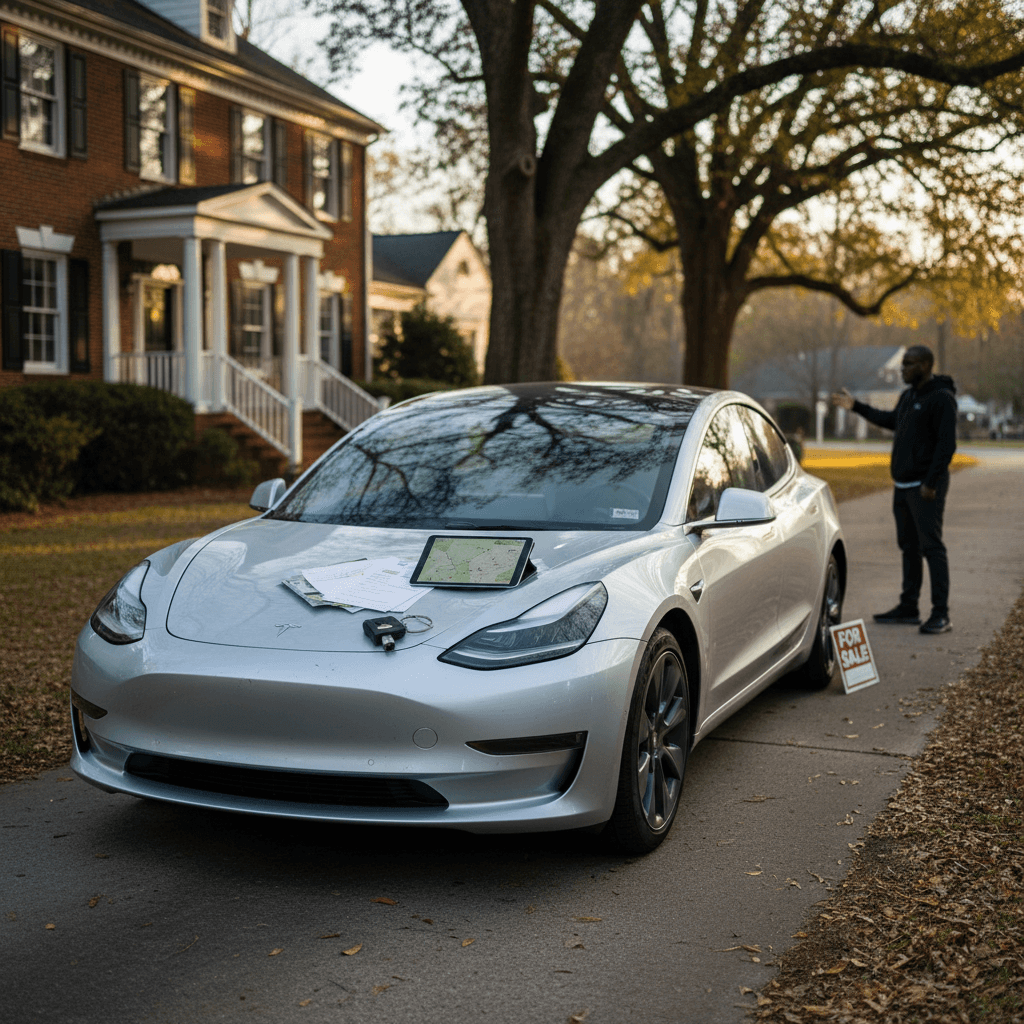
If you’re thinking, “I want to sell my electric car in North Carolina, but I don’t want to get lowballed or stuck at the DMV,” you’re not alone. The EV market has cooled a bit from its peak, buyers are more cautious, and North Carolina has its own mix of highway use tax, EV fees, and paperwork rules to navigate. The good news: with a smart approach, you can still get strong money for a used EV in the Tar Heel State.
Good to know
Why selling an EV in North Carolina feels different
North Carolina is quietly becoming a serious EV state. Between Charlotte, the Triangle, and rapidly growing regions like Greensboro–Winston-Salem, there are more buyers cross-shopping used Teslas, Bolts, IONIQ 5s, and other EVs every month. At the same time, the state has extra annual EV registration fees and a 3% highway use tax when a title changes hands, which shape how buyers think about total cost of ownership.
North Carolina EV selling snapshot (big-picture)
All of this affects how and where you should sell. A buyer in Raleigh with workplace charging will look at your car very differently than a buyer in a small town that relies on public DC fast charging. Your strategy should reflect that reality.
Step 1: Know what your electric car is really worth
Before you take a single photo or request a trade-in, you need a realistic value range for your EV. Unlike gas cars, online pricing tools don’t always understand EV-specific details like state of health (SoH), DC fast charging habits, or software options, so they often under- or over-shoot.
Four pillars that drive your EV’s value in NC
Look beyond year, mileage, and trim
1. Battery health
Buyers care less about the odometer and more about usable range today versus when the car was new. A car that still delivers 90% of its original range is much easier to sell at a strong price than one that’s down in the 70s.
2. Charging flexibility
In North Carolina, access to home Level 2 charging is common in suburbs, but not guaranteed in cities. If your EV comes with a portable Level 2 charger or upgraded onboard charger, that can make it more attractive.
3. Local demand
Tesla Model 3 and Model Y, Chevy Bolt, Hyundai IONIQ 5, Kia EV6, and VW ID.4 tend to move quickly around Charlotte, Raleigh–Durham, and Asheville. Niche models or luxury EVs can take longer to sell and may be more price-sensitive.
4. Software & features
Options like advanced driver assistance, premium audio, or paid connectivity subscriptions can matter more to EV shoppers than a sunroof or chrome package. Be ready to list these clearly.
Pro tip: check multiple sources
Step 2: Decide how to sell your EV in North Carolina
There’s no single “right” way to sell an electric car in North Carolina. The best option depends on whether you value maximum money, speed, or simplicity. Here’s how the main routes stack up.
Ways to sell an electric car in North Carolina
Compare trade-in, private sale, and online EV specialists at a glance.
| Option | What it is | Typical price vs. private sale | Time & effort | Best if you… |
|---|---|---|---|---|
| Dealer trade-in | You trade your EV when buying another vehicle from a North Carolina dealer. | Lowest (often thousands less). | Fast and easy; dealer handles payoff and paperwork. | Value convenience, have equity, or need to roll into another car quickly. |
| Instant cash offer sites | General used-car platforms that give a quick buy offer online. | Low to mid; rarely reward EV upgrades or battery health. | Quick, but may require inspections and haggling at drop-off. | Want a floor offer to compare with other options. |
| Private sale in NC | You advertise and sell directly to another North Carolina driver. | Highest potential price, but not guaranteed. | Most time-consuming; you handle calls, test drives, and DMV steps. | Are comfortable marketing, screening buyers, and handling paperwork. |
| Online EV specialist (like Recharged) | An EV-focused marketplace or retailer that buys and sells only electric vehicles. | Competitive with strong private-party offers, especially for well-kept EVs. | Mostly online; can include home pickup and streamlined paperwork. | Want strong value and expert help with battery health and paperwork. |
For most NC EV owners, the sweet spot is a specialist online EV buyer that understands battery health and can reach a nationwide audience.
Selling privately in North Carolina
If you’re willing to put in the work, a local private sale can bring the highest price. You control your listing price, meet buyers around Charlotte, Raleigh, Wilmington, or wherever you live, and negotiate directly. But you’ll also need to:
- Screen buyers and avoid scams.
- Handle test drives and charging logistics.
- Go to a North Carolina license plate agency to handle title transfer correctly.
If haggling in a parking lot doesn’t appeal to you, consider a different route.
Using an EV specialist or marketplace
EV-focused buyers and marketplaces understand things traditional dealers sometimes miss, like battery degradation, software options, and DC fast charging history. That typically means more accurate pricing and fewer surprises at inspection time.
With Recharged, for example, every vehicle comes with a Recharged Score Report that measures battery health and fair market pricing. That same expertise helps you get a transparent offer when you’re selling, not just when you’re buying.
Watch for EV-ignorant lowballs
Step 3: Get your electric car ready to sell
A clean, well-presented EV with documented battery health is dramatically easier to sell and justify on price, especially in a state where buyers are doing real math on fuel savings vs. EV registration fees.
EV sale prep checklist for North Carolina sellers
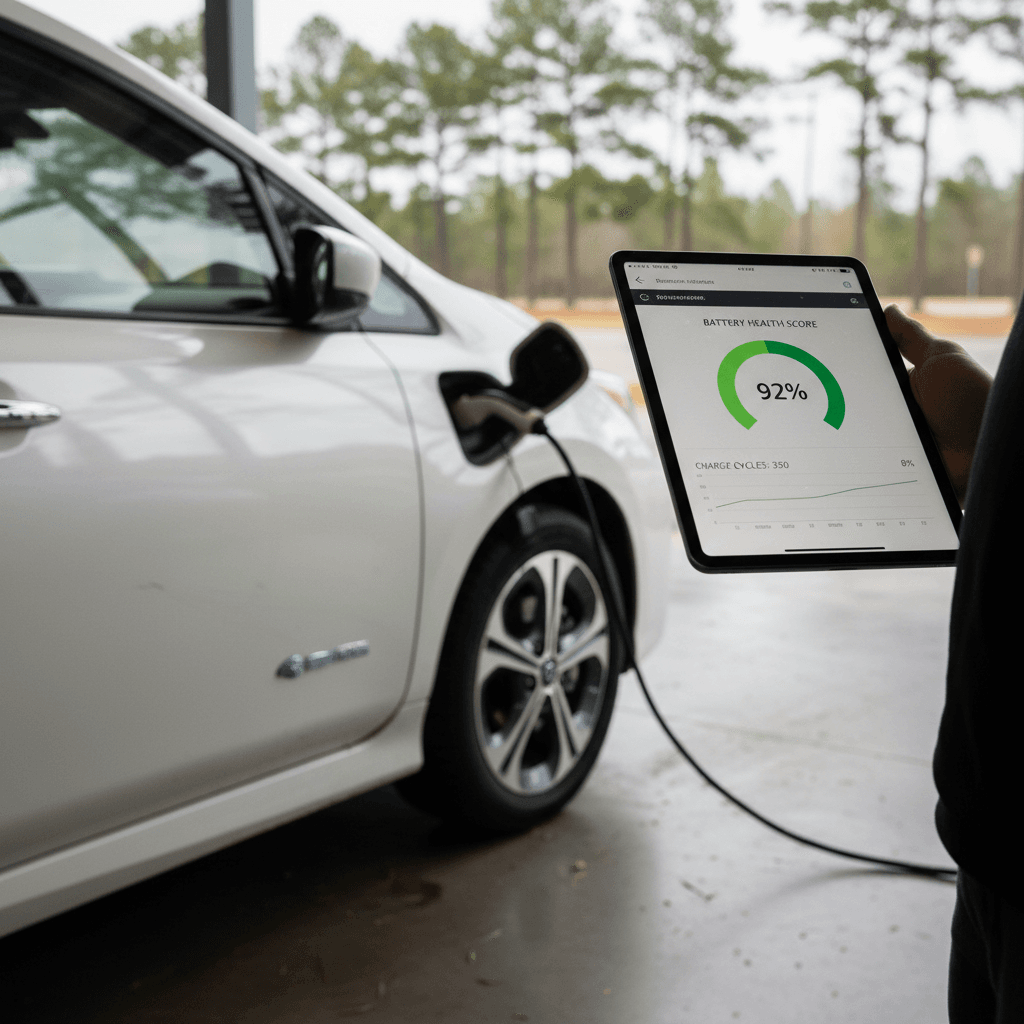
Verify your battery health
If you can, pull a battery health report or range estimate at 100% charge. Some buyers will accept an app screenshot; others will appreciate a third-party diagnostic, or a Recharged Score if you’re selling through Recharged.
Update software and clear warnings
Make sure your EV is up to date, and don’t ignore warning lights. A minor sensor issue can spook buyers who already worry about unknown EV repair costs.
Detail the interior and exterior
North Carolina humidity can be rough on interiors. A good cleaning, odor removal, and paint touch-up can easily be worth a few hundred dollars in perceived value.
Gather charging accessories
Include the mobile charger, Level 2 cable, adapters, and any wall unit you’re not reusing. In NC, where not everyone has a home charger yet, this can be a real selling point.
Document service and charging habits
Have invoices or service records ready, and be prepared to explain how often you DC fast charge vs. home charge. Moderate, balanced charging habits are a big reassurance for buyers.
Plan your photos and listing
Take photos in daylight, plug the car in for at least one shot, and show the in-car range display. Mention nearby charging options if you’re outside the major metros.
Step 4: Understand North Carolina taxes, fees, and paperwork
Whether you sell your EV privately or through a dealer, North Carolina will collect its share when the title changes hands. Knowing who pays what, and when, will keep you out of trouble and make you sound more credible to buyers.
- Highway Use Tax (HUT): North Carolina doesn’t charge regular sales tax on vehicles. Instead, the buyer pays a 3% Highway Use Tax when they title the car in their name, typically based on the sale price at a dealer or a state-assigned value for private-party sales.
- Title and registration fees: The buyer also pays state title and registration fees when they visit a license plate agency. You’ll sign over your title; they’ll handle the rest.
- Annual EV registration surcharge: Electric vehicles face an extra annual fee on top of normal registration, buyers factor this into their ownership costs, so be ready to talk about how much they’ll save on fuel and maintenance compared with a gas car.
- Property tax: North Carolina charges a combined registration and property tax bill each year. That’s on the buyer going forward, not you, once the sale is complete.
Don’t skip the title transfer
If you sell through a dealer or an online buyer that operates like a dealer, they’ll usually handle North Carolina paperwork for you. With a platform like Recharged, that process is digital and guided, so there’s much less guesswork than walking into a DMV office on your own.
How battery health and charging history impact your price
On a gas car, buyers talk about miles. On an EV, serious buyers talk about usable range and battery health. That’s where North Carolina’s mix of road trip drivers and daily commuters comes into play.
What EV buyers want to know about your battery
Answer these clearly and you’ll stand out in NC
Current range
At 80% or 100% charge, what range does the car show today versus the original EPA rating? Even a rough comparison helps the buyer anchor expectations.
Driving pattern
Highway-heavy miles at 75 mph wear range differently than gentle suburban miles. Describe your typical use honestly.
Charging mix
How often do you fast charge vs. Level 2 at home or work? A balanced mix can support a stronger price.
Warranty status
Is the battery still under factory warranty? Many EVs offer 8-year / 100,000+ mile battery coverage, which is a powerful selling point.
Battery-related repairs
If the car ever had a battery module replaced or a high-voltage system repair, have paperwork ready. Done under warranty, this can actually reassure buyers.
Independent health report
A third-party or platform-generated battery report, like the Recharged Score, turns vague seller promises into something buyers can trust.
How Recharged helps here
Ready to find your next EV?
Browse VehiclesWhen to sell your EV in North Carolina: timing the market
Timing won’t turn a $25,000 EV into a $35,000 one, but it can easily move your sale price by a few thousand dollars either way, and it can make a big difference in how fast the car sells.
Smart timing strategies for NC EV sellers
You’re upgrading to another EV
Get trade-in and instant-offer quotes before you ever visit a showroom.
Ask about EV-specific incentives or loyalty bonuses from the new-car dealer.
Use your best instant offer as leverage when negotiating trade-in value.
If the dealer can’t get close, consider a direct sale to an online EV buyer and then buy your next EV separately.
You’re getting out of EV ownership
Look at your annual mileage and EV registration renewal date, selling just before renewal can be attractive to buyers.
Position your listing for commuter buyers in Charlotte, Raleigh, or the Triad who will see big fuel savings vs. gas.
If you’re flexible on timing, list in late spring or early fall, when used-car shopping is busiest and weather is good for test drives.
Your EV is coming off lease
Check your buyout price against retail asking prices for similar EVs in North Carolina.
If your buyout is favorable, you may be able to buy the car, then sell it for more to a private buyer or EV specialist.
Be mindful of turning lease equity into cash vs. rolling it into another lease, the right choice depends on your next vehicle plan.
Seasonal angle in NC
Frequently asked questions about selling an EV in North Carolina
North Carolina EV selling FAQ
Bottom line: how to sell smarter, not harder
Selling your electric car in North Carolina isn’t about guessing a price and hoping someone bites. It’s about understanding battery health, choosing the right sales channel, and navigating the state’s tax and fee structure without headaches. If you put in a little work up front, cleaning the car, documenting battery condition, and getting a couple of solid offers, you’ll be in a much stronger position, whether you sell privately in Charlotte or work with an EV specialist.
If you’d rather have an expert in your corner, Recharged was built for exactly this moment in the EV market. From verified battery diagnostics and fair market pricing to trade-ins, instant offers, consignment, and nationwide pickup, Recharged helps North Carolina owners sell smarter, not harder, and move confidently into whatever comes next, electric or otherwise.