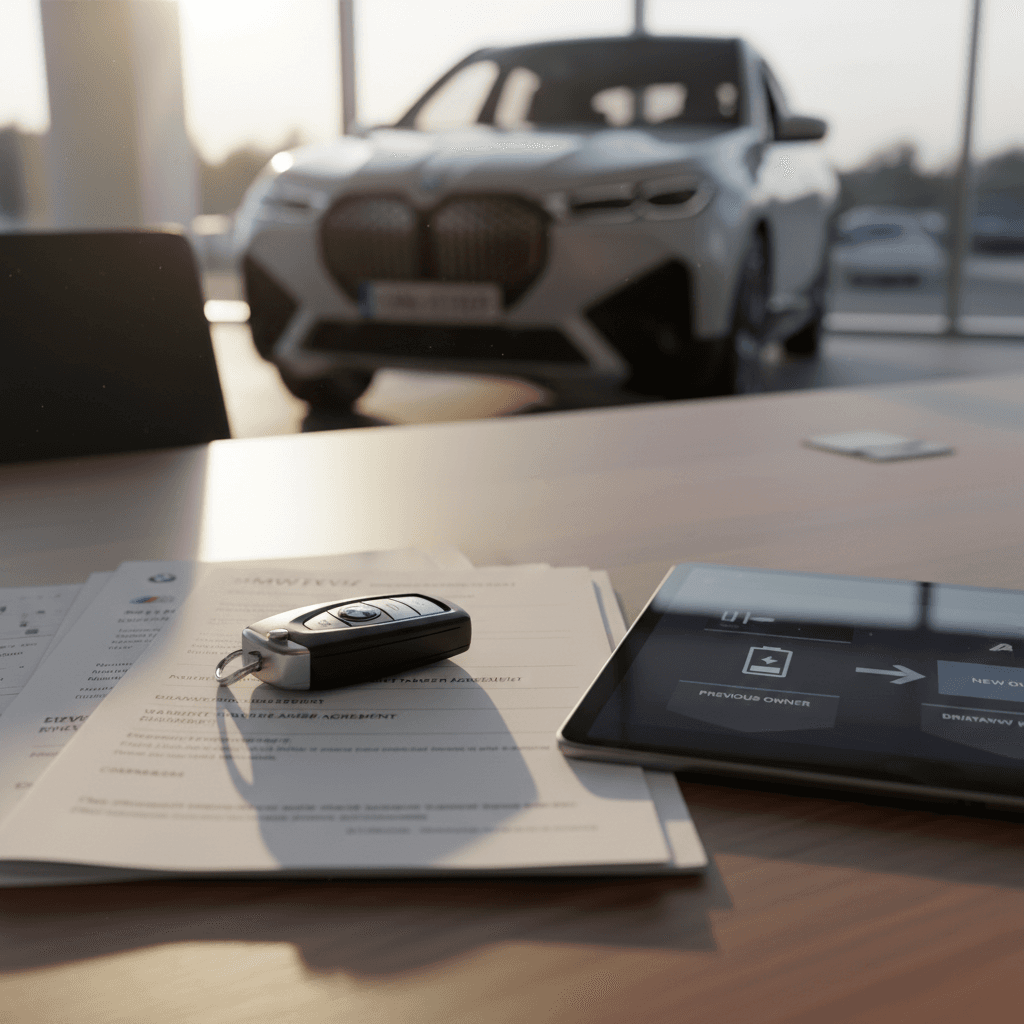
If you’re eyeing a used BMW i4, iX, i5, or i7, the first big question is usually range. The second is, “Does the BMW EV warranty coverage transfer to me?” The short answer: most factory coverage on a BMW electric vehicle follows the car, not the first owner, but some perks and add‑on plans don’t. Let’s unpack exactly what carries over, what doesn’t, and how to verify it before you buy or sell.
Good news for second owners
BMW EV warranty transfer basics
BMW structures its electric-vehicle warranties much like its gasoline cars, with an added layer for the high‑voltage battery. When you buy a used BMW EV, you’re really inheriting three potential layers of protection:
- The original New Vehicle Limited Warranty (sometimes called bumper‑to‑bumper).
- The high‑voltage lithium‑ion battery warranty.
- If applicable, a BMW Certified Pre‑Owned (CPO) Limited Warranty or third‑party/extended service contract.
Each of these has its own rules. Factory warranties overwhelmingly do transfer automatically. Dealer add‑ons and free charging perks often do not. Your job as a buyer is to sort which is which, and get proof in writing.
Always verify by VIN
What warranty coverage BMW EVs include
Most recent BMW EVs sold in the U.S., including the i4, i5, i7 and iX, come with a familiar, layered warranty package from new:
Core BMW EV warranty coverage from new (U.S. market)
Typical coverage for recent model‑year BMW battery‑electric vehicles and plug‑in hybrids. Always confirm specifics by model year and state.
| Coverage Type | Typical Term | What It Covers |
|---|---|---|
| New Vehicle Limited Warranty | 4 years / 50,000 miles | Most components, electronics, interior, suspension, steering, climate, infotainment. |
| High‑Voltage Battery Limited Warranty | 8 years / 100,000 miles | Defects in the lithium‑ion traction battery and internal components; often includes a minimum capacity guarantee. |
| Rust Perforation Warranty | 12 years / unlimited miles | Perforation (rust‑through) of body panels from the inside out. |
| Maintenance plans (where included) | Varies by program | Scheduled services; may be time‑limited and not always part of used sales. |
| BMW Certified Pre‑Owned (if applicable) | 1 additional year / unlimited miles after 4yr/50k | Extends many aspects of the New Vehicle Limited Warranty on CPO vehicles. |
Time and mileage limits are “whichever comes first.”
Check your exact model and year
Which BMW EV warranties transfer to a new owner
Coverage that typically does transfer
- New Vehicle Limited Warranty (4yr/50k) – follows the vehicle identification number (VIN) and transfers automatically to each subsequent owner until it expires.
- High‑Voltage Lithium‑Ion Battery Warranty – the 8‑year/100,000‑mile battery defect and capacity warranty also follows the car, not the first owner.
- Rust perforation warranty – generally tied to the vehicle, not the person who first bought it.
- BMW Certified Pre‑Owned Limited Warranty – if the car was sold as CPO, that coverage stays with it for the entire CPO term.
Coverage that may not transfer
- Dealer‑sold tire & wheel, windshield, or appearance packages – often non‑transferable or transferable only at the selling dealer’s discretion.
- Third‑party extended service contracts – may require a fee and paperwork, or exclude transfer to non‑family buyers.
- Complimentary charging promos (e.g., free Electrify America sessions) – usually limited to the original owner and first registration.
- Prepaid maintenance plans – can be non‑transferable or limited to certain transfers, depending on plan and state law.
Factory coverage is your baseline
How BMW EV battery warranty transfer works
The high‑voltage battery is the heart of your BMW EV, and the most expensive single component. BMW backs its EV and plug‑in hybrid batteries in the U.S. with a dedicated 8‑year / 100,000‑mile battery warranty (whichever comes first), including a minimum capacity guarantee around 70% on many models.
BMW EV battery warranty at a glance
Crucially for second owners, this battery warranty is designed to be transferable. If you buy the car at year 3 with 30,000 miles, you still have up to 5 years and 70,000 miles of battery coverage left, assuming there’s no exclusion from misuse or modification.
- Coverage typically includes defects in materials and workmanship in the high‑voltage battery and its internal components.
- If usable capacity drops below the stated threshold (often 70%) during the warranty period, BMW may repair or replace modules or the full pack.
- Normal, gradual degradation that stays above the capacity threshold is usually not covered.
Use battery coverage as a buying filter
BMW Certified Pre-Owned EV warranty transfer
If you’re shopping at a BMW dealer, many used i4, i5, i7 and iX models will be labeled BMW Certified. CPO status brings its own warranty layer on top of any remaining factory coverage.

For BMW all‑electric vehicles, BMW’s own CPO site highlights two key promises:
- A BMW Certified Pre‑Owned Limited Warranty that adds 1 year of coverage with unlimited miles after the original 4‑year/50,000‑mile New Vehicle Limited Warranty expires.
- An extensive battery warranty that remains at 8 years / 100,000 miles on the high‑voltage traction battery, and explicitly transfers to the new owner along with the CPO warranty.
CPO coverage follows the car
Coverage and perks that usually do not transfer
This is where buyers and sellers get tripped up. The big warranties transfer; the small but tempting perks often do not. Here’s what to watch for on BMW EVs:
Common non‑transferable BMW EV perks and plans
Great if you’re the first owner, less helpful if you’re the second.
Free DC fast charging promos
Tire, wheel & appearance packages
Third‑party extended service contracts
Don’t pay extra for perks you can’t use
Checklist: buying a used BMW EV for its warranty
When you’re hunting for a used i4 or iX, it’s easy to fall in love with paint color and wheels and forget the paperwork. Use this checklist to keep your eyes on the prize: transferable coverage that actually protects you.
BMW EV warranty transfer checklist for buyers
1. Pull a BMW dealer warranty report by VIN
Ask any BMW dealer to run the VIN and provide a printout or PDF showing in‑service date, remaining New Vehicle Limited Warranty, battery warranty end date, and whether the car is or was Certified.
2. Confirm the battery warranty end date
Look for the 8‑year/100,000‑mile high‑voltage battery warranty on the report. Note both the calendar expiration date and the mileage limit so you know how much protection is left.
3. Ask for original warranty and CPO paperwork
Request the window sticker, warranty booklet, and any CPO certificate from the seller. These documents spell out what coverage the car had when new and at CPO sale.
4. Verify any extended or dealer plans directly
If the seller claims tire, wheel, or extended service coverage, call the plan administrator with the contract number and VIN. Ask explicitly if coverage transfers to a new owner and what you must do to complete the transfer.
5. Check for modifications that could void coverage
Non‑approved software tunes, DC‑fast‑charging abuse that triggered warnings, or collision damage that wasn’t repaired properly can complicate future claims. Review service history and pre‑purchase inspection results closely.
6. Get a pre‑purchase EV health check
Before you sign, schedule an inspection that includes a battery‑health or State of Health (SoH) report. When you shop through <strong>Recharged</strong>, every used EV includes a <strong>Recharged Score Report</strong> with verified battery health and fair‑market pricing baked in.
Lean on EV specialists
How warranty transfer affects used BMW EV value
Warranty coverage isn’t glamorous, but it quietly moves the market. Two nearly identical BMW i4s can be several thousand dollars apart in value based on how much factory and CPO coverage they have left, and whether that coverage transfers cleanly to you.
Scenario A: Plenty of coverage left
You’re looking at a 3‑year‑old BMW i4 eDrive40 with 28,000 miles.
- New Vehicle Limited Warranty: ~1 year and 22,000 miles remaining.
- Battery warranty: ~5 years and 72,000 miles remaining.
- No mods, clean service history, and all work done at BMW dealers.
Here, a slightly higher asking price can be justified, the next few years of ownership are largely shielded from major-component surprises.
Scenario B: Out of basic warranty
Another i4 is the same price but 5 years old with 62,000 miles.
- New Vehicle Limited Warranty: expired.
- Battery warranty: ~3 years and 38,000 miles left.
- No CPO coverage; history of out‑of‑network repairs.
In this case, you’re carrying more risk on non‑battery components. You might negotiate a lower price, budget for an extended plan, or look elsewhere.
How Recharged bakes warranty into pricing
BMW EV warranty transfer FAQ
Frequently asked questions about BMW EV warranty coverage transfer
Key takeaways for BMW EV warranty coverage transfer
- The BMW New Vehicle Limited Warranty and high‑voltage battery warranty are designed to transfer automatically to subsequent owners for the unexpired term.
- BMW EV CPO coverage also follows the car, adding peace of mind if you’re buying through a BMW dealer or a CPO‑equivalent program.
- Dealer add‑ons, prepaid maintenance, and free public‑charging perks often do not transfer, never pay extra for them without written confirmation.
- Always verify coverage by VIN and pair that with a thorough EV‑focused inspection, including battery health.
- Working with an EV‑specialist retailer like Recharged can save you guesswork: every used EV comes with a Recharged Score Report, expert guidance, available financing, trade‑in options and nationwide delivery to make your BMW EV purchase as transparent, and protected, as possible.
A used BMW EV with solid, transferable warranty coverage can be a terrific buy, quiet, quick, and far cheaper to run than a comparable gas BMW. Once you understand what warranty coverage transfers, you can shop with confidence, negotiate from a position of strength, and choose the i4, iX, i5 or i7 that fits both your commute and your comfort level with risk.