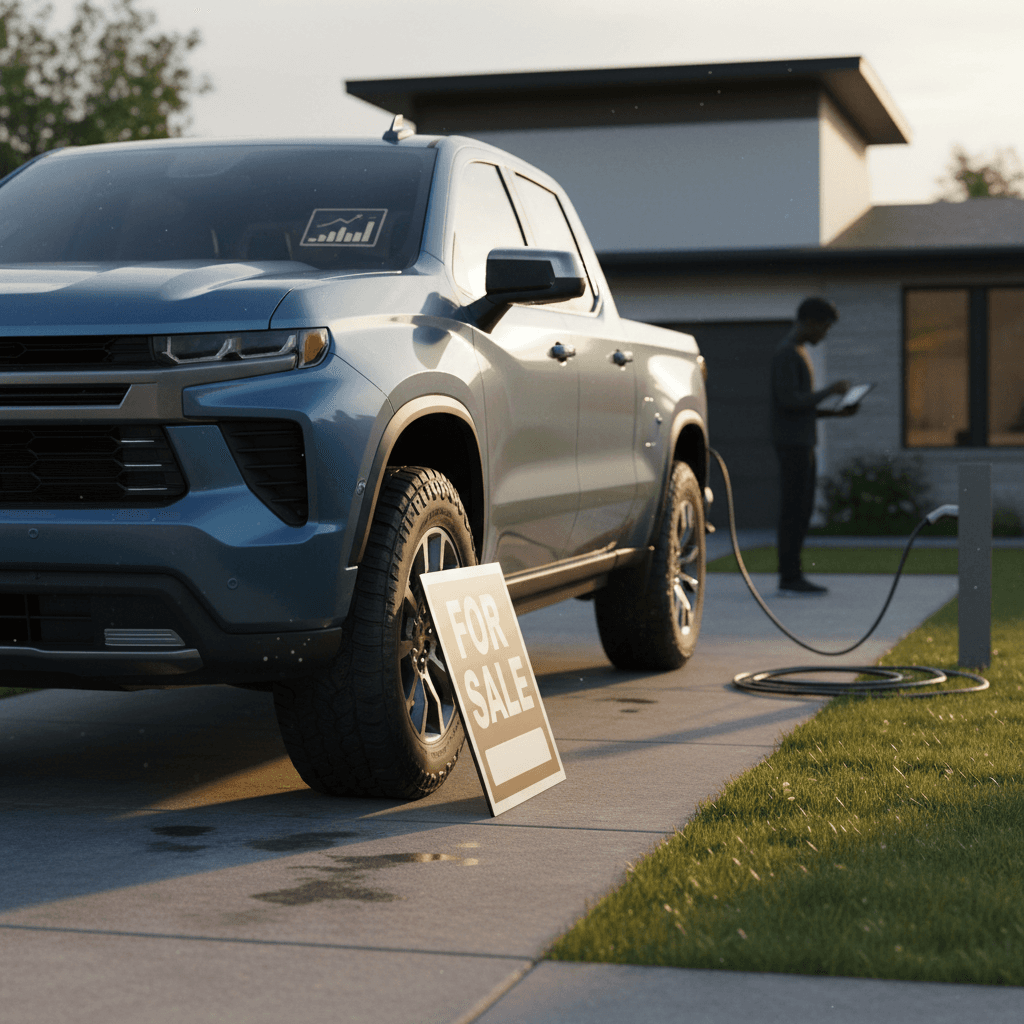
You’re not the only one asking, “How do I sell my Chevrolet Silverado EV without getting steam‑rolled on price?” Early electric trucks are in a weird place: massive capability, rapidly evolving tech, and resale values that can swing by five figures in a year. The good news: if you understand how depreciation, battery health, and timing work, you can walk away from your Silverado EV with a check that actually makes sense.
The short version
Why selling your Silverado EV feels tricky right now
Electric trucks are still finding their floor
Unlike a gas Silverado 1500, there isn’t a decade of used‑truck history to lean on. The oldest Silverado EVs are 2024 models, and the market is still discovering what a used electric pickup is worth after heavy use, towing, and rapid tech updates.
New pricing keeps moving under your feet
GM has been adjusting Silverado EV pricing and incentives as competition heats up and federal EV tax credit rules evolve. That means a truck like yours might be thousands cheaper brand‑new than it was when you ordered it, which directly drags used values down.
Why your neighbor thinks your truck is “worth more”
What is my Chevrolet Silverado EV worth today?
Let’s talk ballpark numbers before we get into strategy. Exact value depends on your trim, miles, options, and condition, but recent data from major pricing guides and used‑EV marketplaces paints a rough picture for the U.S. market as of early 2026.
Chevrolet Silverado EV value snapshot
Don’t chase the unicorn comp
How Silverado EV depreciation really works
All trucks depreciate. Electric trucks just do it with more drama. The Silverado EV has followed the broader EV pattern: steep early drops, then a slower glide as the truck finds its long‑term value. Understanding that curve will help you decide whether to sell now, hold a bit longer, or plan to drive it into the ground.
Illustrative Silverado EV value trajectory
These are example patterns based on current market behavior and pricing‑guide data, not guaranteed numbers for your specific truck.
| Ownership stage | Typical age | What usually happens | Impact on value |
|---|---|---|---|
| Early cliff | 0–24 months | Discounts on new trucks and rapid tech improvements undercut your original MSRP. | Fast drop; many owners see 35–45% off sticker on paper. |
| Stabilization | 3–5 years | Used values settle; buyers see it as a known quantity rather than a science experiment. | Depreciation slows; best time to buy used. |
| Long‑term workhorse | 6–10 years | Battery health, towing history, and repair costs matter more than model year. | Value follows condition and battery, not the badge. |
Think in percentages and stages, not exact dollars.
EV vs gas truck depreciation
Battery health and how much it matters to buyers
With a Silverado EV, the battery pack is the ballgame. It’s the single most expensive component on the truck, and savvy buyers know it. They don’t just want a Carfax; they want proof that your pack will still deliver the range and fast‑charging behavior they’re paying for.
What shoppers look for in your battery
These signals heavily influence how fast your Silverado EV sells and for how much.
State of health
Serious buyers want more than the dash readout. A proper battery diagnostic that estimates state of health (SoH) gives them confidence your pack isn’t a ticking time bomb.
Charging behavior
Fast‑charging logs, especially if you’ve lived at DC fast chargers, make buyers curious about long‑term degradation. A clean report on charging performance helps justify your asking price.
Usage pattern
Lots of heavy towing, commercial use, or high‑miles highway work isn’t a deal‑breaker, but buyers will expect a discount. Transparent documentation beats hand‑waving.
Where Recharged comes in
Ready to find your next EV?
Browse VehiclesBest ways to sell my Chevrolet Silverado EV
You’ve really got four lanes to choose from: classic trade‑in, instant‑offer services, private‑party sale, or a specialized EV marketplace like Recharged. Each has a different blend of price, effort, and risk.
1. Dealer trade‑in
Best for: Speed and convenience when you’re buying something else on the same lot.
- One‑stop transaction: hand them the keys, drive away in something new.
- Dealers may lowball EV trucks if they’re nervous about values and battery risk.
- Good option if you’re upside‑down and need help rolling negative equity.
Think of trade‑in as wholesale: fast, simple, but rarely top dollar.
2. Instant‑offer / EV marketplace
Best for: Sellers who want more than trade‑in money without the Craigslist circus.
- Online appraisal, firm offers, and guided process.
- EV‑focused platforms like Recharged understand things like battery health and charging history, which can improve your valuation.
- Options like consignment let you tap retail buyers while Recharged handles marketing, test drives, and paperwork.
3. Private‑party sale
Best for: Absolute top‑dollar, if you’re willing to hustle.
- List on multiple sites, answer messages, vet buyers.
- Need to educate shoppers about the Silverado EV, charging, and battery, many are EV‑curious but anxious.
- Handle your own safe meetups, test drives, and payment security.
Done right, you can net several thousand more than a trade‑in, but you’ll earn it.
4. Fleet / business resale
Best for: Silverado EVs used in a business with multiple units.
- Some buyers specifically want ex‑fleet trucks with known service history.
- Work‑truck trims can move quickly if priced realistically and marketed to contractors or fleets.
- Talk to EV‑savvy brokers or marketplaces; many fleets already work with partners like Recharged.
Match the method to your stress tolerance
Step‑by‑step checklist to sell your Silverado EV
Pre‑sale checklist for your Chevrolet Silverado EV
1. Pull your numbers together
Gather VIN, mileage, trim, options, service history, and payoff amount if you still owe on the truck. You’ll need these for any valuation, dealer, marketplace, or buyer.
2. Get a real‑world value range
Use at least two tools (like KBB and Edmunds) plus a quick scan of real listings for similar Silverado EVs. Aim for a <strong>price band</strong>, not a single magic number.
3. Check and document battery health
Have a battery health diagnostic run, or sell through a service like <strong>Recharged</strong> that includes a Recharged Score Report. Screenshot or print anything that shows state of health and range.
4. Fix the cheap stuff, skip the vanity
Repair obvious safety issues and warning lights. Don’t dump thousands into cosmetic mods you won’t recoup. A clean interior and professional detail beat a $2,500 wheel package every time.
5. Prep your listing (or appraisal)
Take clear, daylight photos, including close‑ups of the charge port, tires, interior, and infotainment screen. Write an honest description that calls out options (towing packages, bed system, driver‑assist tech).
6. Decide where you’ll sell
Compare actual offers: a dealer trade quote, an EV marketplace instant offer, and your expected private‑sale price. Then pick the path that balances money, time, and stress for you.
Pricing strategy so you don’t underprice or sit forever
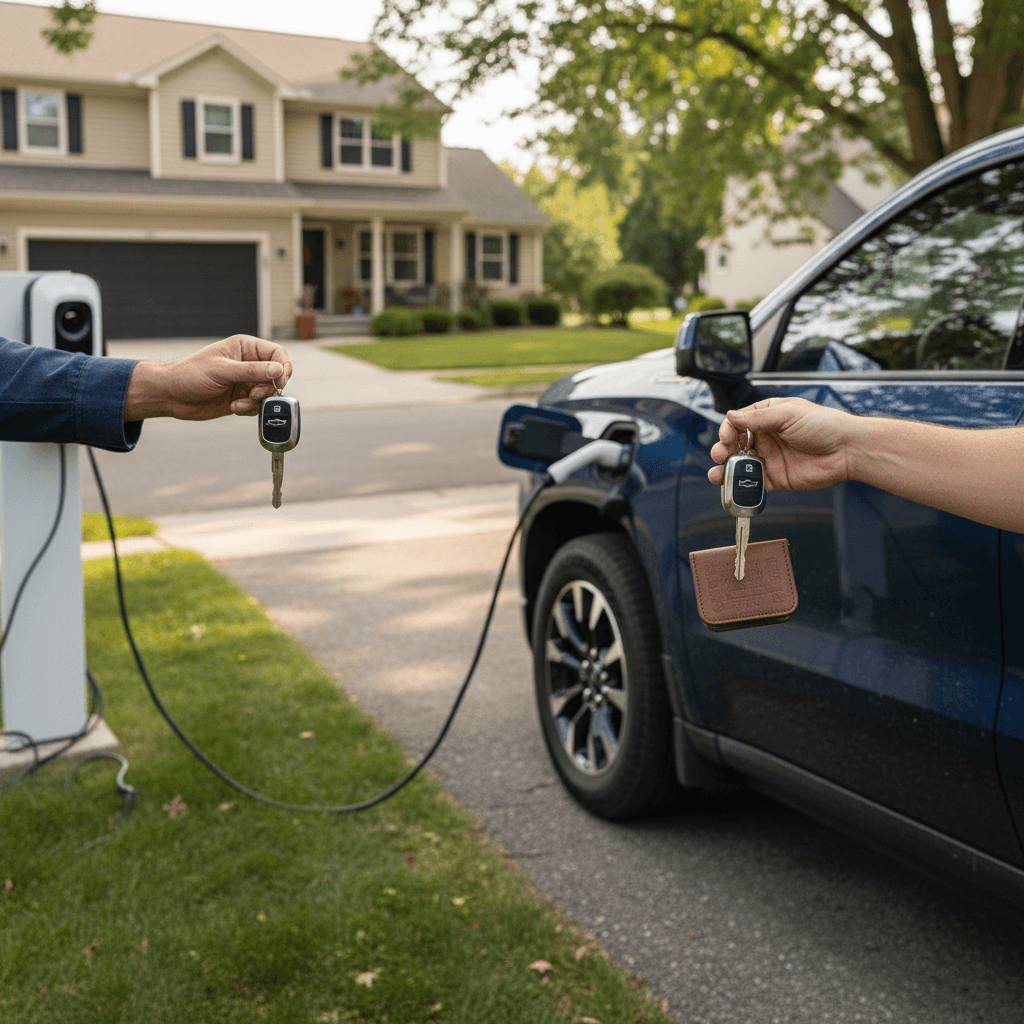
When people say, “I can’t sell my Chevrolet Silverado EV,” what they usually mean is, “I priced it like it’s still 2022.” The game is to position your truck as the obvious best‑value option among the truly comparable listings, not the cheapest, not the priciest, but the one that makes buyers say, "What’s wrong with the others?"
- Start by bracketing: pick a realistic low and high number from guides and live listings.
- Adjust for mileage: higher than average? Shade down; lower miles, shade up.
- Price in your first cut: expect to drop 3–7% if it doesn’t move in the first 2–3 weeks.
- Use round but not obvious numbers: $58,400 feels sharper than $59,999.
- Let your battery report justify the upper half of the range.
Beware of negative equity traps
Tax credits, loans, and payoffs: what to watch for
Because the Silverado EV has been eligible for federal clean‑vehicle incentives in many configurations, your truck’s first owner, maybe you, may have captured a $7,500 tax credit or a commercial credit. That doesn’t directly change today’s resale price, but it does color how much loss you’re actually taking and how fast the truck may move.
Money details to get right before you sell
Small mistakes here can cost thousands later.
Loan payoff
Call your lender for a current payoff quote that’s good through a specific date. Don’t rely on the balance you see in the app; it may not include per‑diem interest or fees.
Tax credit reality check
If you bought the truck used, you probably didn’t get the original new‑EV credit. If you bought new and did, remember that the real cost of the truck was MSRP minus that credit.
Title and registration
Make sure the title is clean, in your name, and that there are no outstanding liens. For leases, you usually can’t sell the truck privately without buying it out first.
Don’t play tax advisor at home
When it makes sense to trade your Silverado EV instead
Despite everything you’ve heard about squeezing every dime out of a private sale, there are very real situations where trading in your Chevrolet Silverado EV is the adult move.
Trade‑in is the right call when…
- You’re deep in negative equity, and the dealer or marketplace can structure a payoff that keeps you mobile.
- You’re time‑poor: your business needs a truck, not another project.
- You’re switching into another EV and want consolidated paperwork and simplified taxes.
Here, Recharged can help by valuing your Silverado EV, applying it toward a different used EV, and handling payoff and title transfer in one transaction.
Hold or sell privately when…
- Your loan is modest or paid off, and you can afford to wait for the right buyer.
- Your truck has strong specs, desirable trim, low miles, clean battery report, that justify a premium.
- You’re not in love with current replacement options or pricing and can drive it another 12–24 months.
FAQ: Selling a Chevrolet Silverado EV
Frequently asked questions about selling a Silverado EV
Bottom line: how to sell smart, not sad
Selling a Chevrolet Silverado EV in 2026 means accepting that the market has moved since you signed your paperwork, and using that to your advantage instead of fighting it. Get clear on what your truck is realistically worth, document its battery health, and choose a selling channel that matches your appetite for effort. Whether you trade it, list it privately, or let Recharged handle the heavy lifting with a Recharged Score Report and expert guidance, the goal is the same: exit your Silverado EV with your finances intact and your next move lined up.