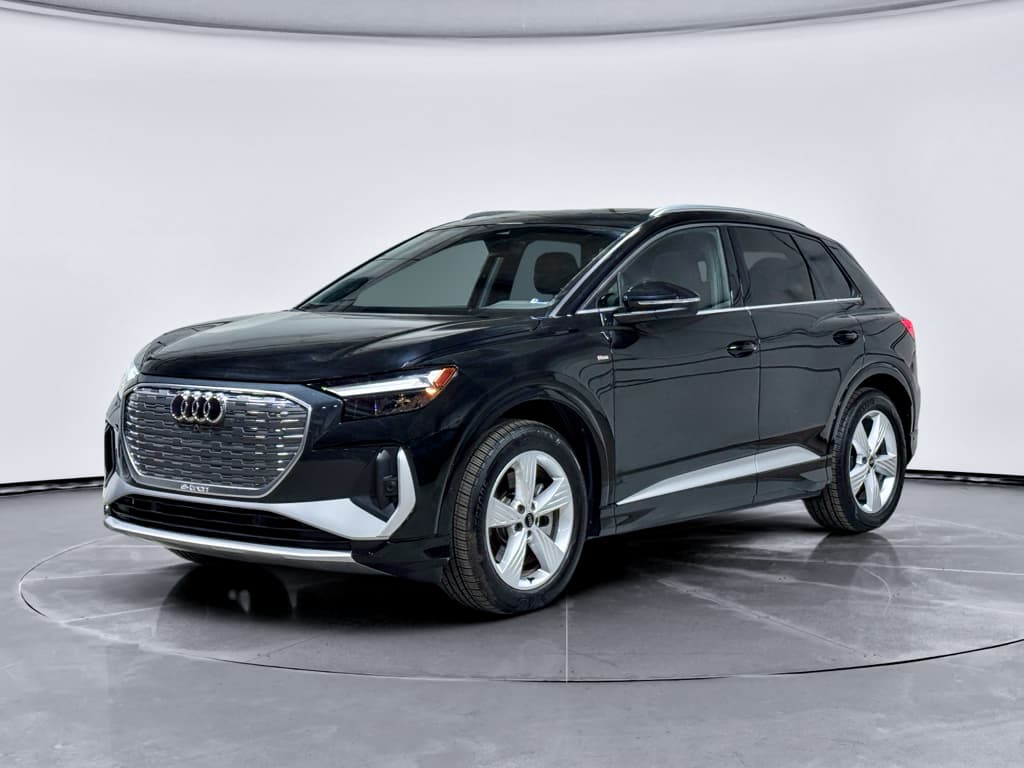
If you’re thinking, “It’s time to sell my Audi Q4 e-tron,” you’re not alone. Audi’s compact electric SUV has become a common sight on U.S. used‑EV lots, and 2025 is a pivotal moment: depreciation is steep, demand is shifting, and buyers have more options than ever. The good news is that if you understand how this market works, especially battery health and pricing, you can still walk away with a strong check.
Why the Q4 e-tron is a special case
Should I sell my Audi Q4 e-tron now?
Before you look up offers, step back and ask why you want to sell. The Q4 e-tron launched in the U.S. in 2022 and most examples on the road are 2022–2025 models, which means the earliest U.S. cars are just hitting the 3‑ to 4‑year mark, exactly when EV depreciation tends to bite hardest. Analysts tracking luxury EVs have seen first‑wave Audi e-tron models lose well over half their value in five years, and early data suggests the Q4 is on a similar, if slightly more moderate, trajectory.
Good reasons to sell now
- Your lease or loan is ending in the next 6–12 months.
- You’re worried about Audi’s long‑term EV strategy and future support.
- You want to move into a newer EV platform with better range or charging speeds.
- Your driving needs have changed (longer commute, new baby, second car, etc.).
Good reasons to keep it longer
- You’re well within the battery and powertrain warranty.
- The car meets your range needs comfortably, even in winter.
- Your monthly payment is low relative to today’s rates.
- You’re not ready to do the shopping-and-selling dance again.
If you plan to keep it at least another 3–4 years and you’re under warranty, maximizing usage value may matter more than chasing today’s resale price.
Depreciation cliff alert
How much is my Audi Q4 e-tron worth today?
Audi Q4 e-tron resale snapshots (U.S. market)
No article can tell you exactly what your individual Q4 is worth, that depends on trim (Premium vs Prestige, standard vs Sportback), mileage, options, region, and condition. But market data gives you a lane to drive in. Clean, low‑mile 2024–2025 Q4 e-trons in desirable specs often appraise in the mid‑$30Ks at traditional dealers, with private‑party sales and high‑trust marketplaces landing a bit higher. Earlier 2022–2023 builds with typical mileage and no tax credit upside tend to cluster in the low‑ to mid‑$20Ks.
Use multiple valuation anchors
Factors that move your Q4 e-tron sale price
What buyers (and algorithms) actually pay for
It’s not just model year, these levers meaningfully change your check.
Battery health & warranty
Battery confidence is the number‑one swing factor for used EV pricing. A Q4 that still has strong usable range and clear documentation of health will command more than a similar‑mileage car with range complaints or no paperwork.
Audi’s high‑voltage battery warranty (typically 8 years/100,000 miles) is a major selling point. The more warranty you have left, the more comfortable buyers feel.
Mileage & usage pattern
EVs tolerate city miles better than constant DC fast‑charging road‑warrior duty. Algorithms don’t see that nuance, but savvy buyers do. Two Q4s with 40,000 miles can look very different if one lived on a fast‑charger and the other charged mostly at Level 2 at home.
Trim, options & wheels
Prestige, all‑wheel‑drive, popular colors, and tech packages attract more shoppers. Oversized wheels and summer‑only tires, on the other hand, can be a liability in snow‑belt regions. Document exact trim and options in your listing, don’t just say “fully loaded.”
Cosmetic condition
Small dings and curb rash don’t change range or performance, but they can knock hundreds off instant‑offer bids and scare private buyers who equate cosmetic neglect with poor overall care. A basic detail and targeted touch‑ups can easily pay for themselves.
Charging behavior history
You can’t easily prove whether you mostly DC‑fast‑charged your Q4, but buyers increasingly ask. If you primarily charged at home and can say that credibly, mention it. It supports a story of gentler battery use.
Region & timing
EV demand is not uniform. A Q4 might fetch more in California or the Northeast than in parts of the Midwest with weaker charging infrastructure. Likewise, tax‑credit changes and new‑model launches can tug prices up or down over just a few months.
Best ways to sell my Audi Q4 e-tron
Once you know your realistic price window, the real question becomes how to sell. Every channel is a trade‑off between price, effort, and risk. With a relatively niche EV like the Q4 e-tron, the gap between a rushed trade‑in and a well‑presented marketplace listing can easily run into the thousands.
Selling options for your Audi Q4 e-tron
How common selling paths stack up on price, effort, and control.
| Option | Typical Price vs Trade‑in | Time & Effort | Pros | Cons |
|---|---|---|---|---|
| Franchise dealer trade‑in | Baseline (0%) | Very low | One‑stop convenience when buying another car; fast payout; no strangers or paperwork. | Usually the lowest number; little transparency into how they valued your EV. |
| Online instant‑offer (large used‑car sites) | +2% to +6% | Low | Fast quotes from home; you can shop multiple offers; often slightly better than local trade‑ins. | Prices move quickly; inspections can add deductions; limited EV expertise. |
| Private‑party sale | +8% to +15% | High | Maximum achievable price; full control over how you present the car and negotiate. | You handle photos, listing, inquiries, test drives, paperwork, and potential flakes. |
| Consignment with EV specialist | +6% to +12% | Medium | Professionals market, show, and negotiate; they understand EV buyers and battery questions; you get a higher net than trade‑in in many cases. | Takes longer than an instant offer; fees/commission reduce some of the upside. |
Think of each option as a bundle of convenience and economics, there’s no single “right” choice for every seller.
Where Recharged fits
Prep checklist before you list or trade
The biggest mistake Q4 sellers make is treating an EV like any other crossover when it comes to prep. With combustion cars, buyers obsess over oil changes and transmissions; with EVs, it’s all about battery, software, and verifiable history. Here’s how to prep specifically for an Audi Q4 e-tron sale.
Pre‑sale checklist for your Audi Q4 e-tron
1. Gather all keys, manuals, and charging gear
Q4 buyers expect at least two keys, the original Level 1 or Level 2 charging cable, and any adapters. Missing gear becomes negotiation leverage against you.
2. Pull service and warranty documentation
Download or request Audi service history, recall documentation, and warranty details, especially for the high‑voltage battery. A clean paper trail reassures buyers and can nudge offers up.
3. Get a battery health and range snapshot
Note your typical usable range at 100% and 80% charge, and if possible, obtain a third‑party or dealer battery health report. On Recharged, every car comes with a <strong>Recharged Score</strong> that clearly explains battery condition in plain language.
4. Fix low‑cost cosmetic issues
Have the car professionally detailed, replace worn wiper blades, and consider inexpensive wheel or paint touch‑ups. You don’t need perfection, just to avoid the aura of neglect that invites lowball offers.
5. Clear error messages and update software
Address any orange or red warning lights before sale, including driver‑assist or infotainment errors. If there’s a pending software update, complete it so buyers see a current, up‑to‑date system.
6. Photograph like a listing that you’d click
Shoot the Q4 clean and dry, ideally in soft daylight. Include exterior walk‑around, interior, infotainment screens, range display, tires, and close‑ups of any flaws. Honest, detailed photos build trust and reduce back‑and‑forth.
Don’t hide EV‑specific issues
Pricing strategy for a fast, fair sale
Pricing an Audi Q4 e-tron is trickier than pricing a mainstream gas SUV because there are fewer comparable sales and incentives on new EVs distort the used market. The key is to look past optimistic listing prices and focus on what actually closes.
- Collect at least three data points: a dealer trade‑in estimate, one or two online instant‑offer ranges, and several recent Q4 e-tron sale prices in your region (not just asking prices).
- Adjust for your specifics: if you’re lower mileage, better trim, or under stronger warranty than the comps, you can aim higher; if not, stay conservative.
- Decide on your speed vs. price trade‑off: if you need the car gone this week, price at or just below the realistic market midpoint; if you can wait 30–45 days, start slightly above and be ready to negotiate.
- Set smart negotiation guardrails: know your walk‑away number before the first test drive or offer. With EVs, the temptation to cave after a few slow days is strong, planning ahead protects you from panic‑dropping the price.
- Watch new‑vehicle incentives and tax‑credit rules: when a new Q4 or rival model gets a big lease subvention or credit, used prices can soften quickly. If you see that coming, leaning toward a faster sale can be rational.
Use transparent pricing language
How Recharged can help you sell smarter
Selling a niche luxury EV is fundamentally different from unloading a mainstream crossover, and many traditional channels still behave as if they’re the same thing. Recharged was built specifically for used EVs, including models like the Audi Q4 e-tron that ride the line between premium and mass‑market.
What you get when you sell your Q4 e-tron with Recharged
Built for EVs from day one, not bolted onto a gas‑car playbook.
Recharged Score & battery diagnostics
Every vehicle on Recharged receives a Recharged Score Report that combines battery‑health diagnostics, range analysis, and pricing transparency. Instead of hand‑waving about “great range,” you show buyers objective data and benchmarks, which translates into higher confidence and fewer price objections.
Flexible ways to sell
You can trade your Q4 e-tron toward another EV, request an instant offer, or choose a consignment model where Recharged markets the car on your behalf. EV‑specialist advisors help you choose the route that best fits your timing, risk tolerance, and price goals.
Nationwide reach & delivery
Because Recharged operates as a digital‑first marketplace with nationwide delivery, your buyer pool isn’t limited to a single metro. That especially matters for an Audi EV, where interest can be much stronger in EV‑dense regions than in your local zip code.
EV‑literate guidance from start to finish
From helping you interpret battery‑health data to positioning your Q4 against rivals like the Model Y or Mercedes EQB, Recharged’s EV‑specialist support is focused on education, not pressure. You get a clear view of your options and trade‑offs before you sign anything.
Ready to find your next EV?
Browse VehiclesLocal feel, digital experience
Frequently asked questions about selling an Audi Q4 e-tron
Audi Q4 e-tron selling FAQ
Bottom line: Is it the right time to sell?
If your Audi Q4 e-tron is in its third to fifth year, you’re in the most consequential part of its depreciation curve. Waiting rarely makes the numbers look better; it just converts theoretical value into sunk cost. If the car still fits your life and you’re under battery warranty, keeping it and enjoying the miles is perfectly rational. But if you’re already thinking, “I should sell my Audi Q4 e-tron before it drops further,” the smartest play is to act intentionally, not reactively.
Start by getting a clear price window from multiple sources, prep the car with EV‑specific buyers in mind, and choose the channel that balances convenience with return. Whether that’s a straightforward instant offer or a more strategic consignment through an EV‑focused marketplace like Recharged, the goal is the same: turn your Q4 e-tron into cash or your next EV with full visibility into the trade‑offs you’re making.