If you live in a cold climate or take winter road trips, you’re probably wondering how much range a Chevrolet Bolt EUV really loses when temperatures drop. The EPA says 247 miles, but that’s in ideal conditions. In real winter driving, most owners see a clear range hit, and understanding the Chevy Bolt EUV winter range loss percentage is key to planning your commute or deciding whether a used Bolt EUV fits your life.
Quick answer
Chevy Bolt EUV winter range loss at a glance
Bolt EUV range: lab vs. winter reality
EPA range vs. winter range for the Bolt EUV
Before we talk percentages, it helps to anchor on the official numbers. The Bolt EUV uses a ~65 kWh lithium‑ion battery and is rated by the EPA at 247 miles of range for the 2022–2023 model years. That figure is based on a controlled test that mixes city and highway driving at moderate temperatures with accessories like heat and A/C managed conservatively.
Real life looks different. In winter you’re dealing with cold-soaked batteries, thicker air, snow or slush, and heavy cabin heat use. All of that drives consumption up, so the same 65 kWh battery gets you fewer miles. What matters for you as a driver is the gap between that 247‑mile rating and the number you can rely on once it’s 20°F and dark on a Tuesday afternoon.
What percentage of range does a Bolt EUV lose in winter?
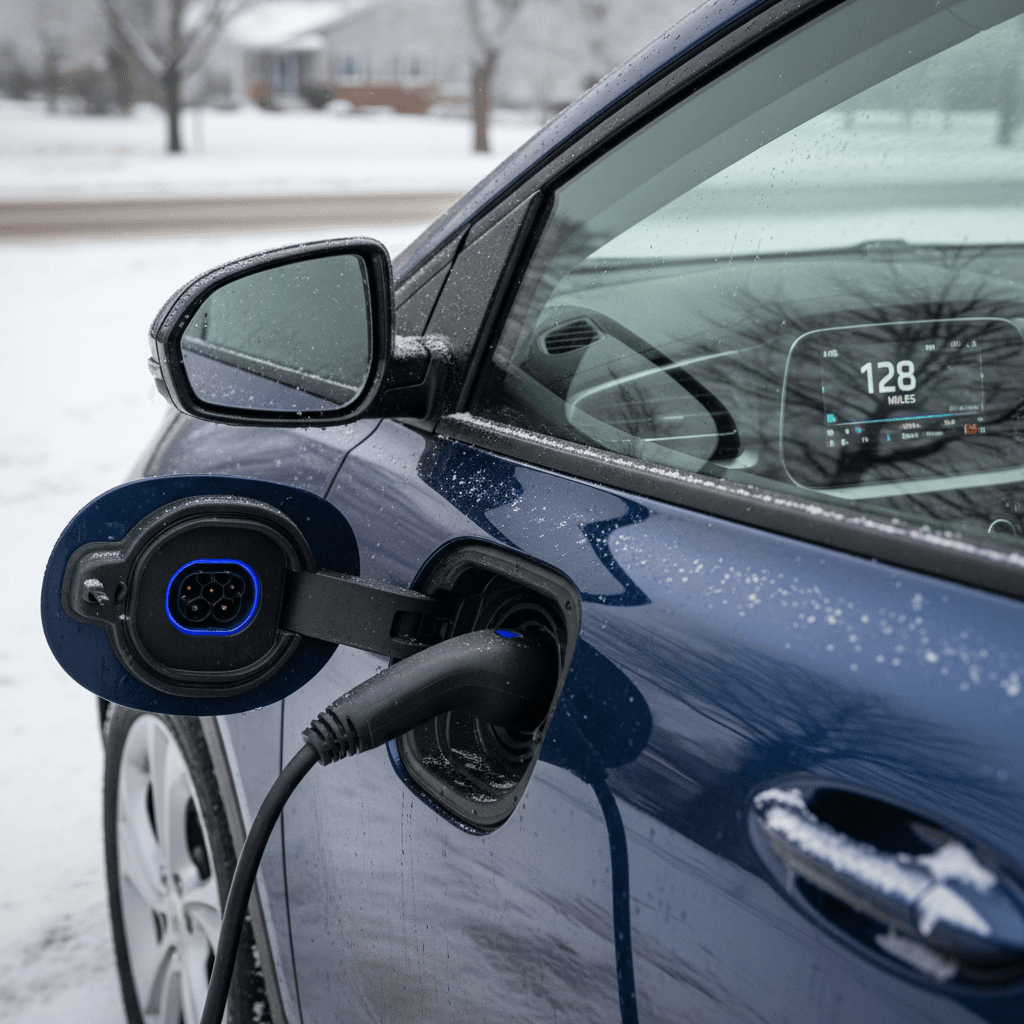
If you look across fleet data, owner reports, and cold‑weather range studies, a consistent picture emerges: the Chevrolet Bolt EUV winter range loss percentage typically sits around 30% in a normal cold‑climate winter. In other words, many drivers get roughly 70% of the EPA range once temps are below freezing and they’re running the heater like a normal person.
Chevy Bolt EUV winter range loss – typical scenarios
Approximate winter range for a Chevrolet Bolt EUV starting from its 247‑mile EPA rating. These figures assume a healthy battery and normal use of climate control.
| Scenario | Temperature & Use | Approx. Winter Range | Approx. Range Loss |
|---|---|---|---|
| Mild winter day commute | Around 32°F, mix of city and suburban, moderate heat | ≈185–195 miles | ≈20–25% |
| Typical cold-climate winter | 15–25°F, mix of city/highway, cabin heat on auto | ≈170–185 miles | ≈25–35% |
| Long highway trip in cold | 10–25°F, 65–70 mph, steady heat | ≈150–170 miles | ≈30–40% |
| Deep-freeze conditions | Below 0°F, highway speeds, strong heat, snow/wind | ≈135–155 miles | ≈40% or a bit more |
Use these numbers as planning benchmarks, not precise promises, your actual range will vary with temperature, speed, terrain, and driving style.
Don’t chase a single magic percentage
Real-world examples of Bolt EUV winter range
Numbers on a chart are one thing; what matters is how they translate to your commute or weekend drive. Here are a few real‑world patterns Bolt EUV owners commonly report:
- In northern U.S. states, many drivers see highway winter range in the 160–180 mile ballpark on a full charge when temperatures sit in the 20s°F and speeds are around 65 mph.
- In harsher climates, Upper Midwest, interior Northeast, mountain regions, owners often describe 150 miles or so as a comfortable winter planning number for longer trips, leaving a cushion for wind, snow, and detours.
- On shorter in‑town winter trips, especially with preconditioning while plugged in, some drivers still get 200 miles or more from a full battery because speeds are lower and there’s time for the cabin and battery to stabilize.
How this compares to other EVs
Why the Bolt EUV loses range in cold weather
The Bolt EUV isn’t uniquely bad in winter, it’s behaving like most EVs given the physics involved. But there are a few specific reasons its winter range loss percentage ends up in that 25–35% band for many drivers.
Key reasons your Bolt EUV loses winter range
Some factors are specific to the Bolt’s hardware; others affect all EVs.
Cold batteries are less efficient
Lithium‑ion batteries deliver less usable energy when they’re cold. In winter, more of the Bolt EUV’s 65 kWh pack is spent warming itself and overcoming internal resistance, so you see fewer miles per kWh.
Cabin heat is energy-hungry
The Bolt EUV uses resistance heating rather than a heat pump. That means keeping the cabin cozy in January can draw several kilowatts continuously, directly eating into your driving range.
Air density, wind, and rolling resistance
Cold, dense air creates more drag at highway speeds. Add winter tires, slush, or snow and rolling resistance goes up too, pushing your consumption higher than in summer.
Driving pattern and short trips
Lots of short hops mean the battery and cabin never fully warm up. The car keeps re‑heating itself, so your per‑mile energy use spikes compared with a long, steady drive.
Battery health vs. winter efficiency
How to reduce winter range loss in your Bolt EUV
You can’t change physics or the weather, but you can stack the deck in your favor. With a few smart habits, many Bolt EUV owners cut their effective winter loss from 35–40% down closer to that 25–30% band.
Practical steps to protect your Bolt EUV’s winter range
1. Precondition while plugged in
Use the myChevrolet app or the key fob to warm the cabin and battery while the car is still charging. That way, the grid, not your battery, pays most of the heat bill, and you start driving with a warm pack.
2. Favor heated seats and wheel
Heated seats and steering wheel use much less energy than blasting cabin air heat. You’ll often be just as comfortable with a slightly cooler cabin and the seat/wheel heaters on.
3. Use Eco or Auto climate settings
Avoid constantly cranking the temperature up and down. Let the climate system settle at a reasonable setting; big swings force the heater to run harder and longer, hurting efficiency.
4. Slow down a little on highways
On a cold day, dropping from 75 mph to 65 mph can save a surprising amount of energy. At winter highway speeds the Bolt EUV’s range can shrink fast; easing off the right pedal helps more than most drivers expect.
5. Keep tires properly inflated
Cold air drops tire pressure. Running significantly under‑inflated increases rolling resistance and hurts range. Check and adjust to the recommended pressures during cold snaps.
6. Park indoors or in sheltered spots
If possible, park in a garage or at least out of the wind. Even a modest temperature bump and less wind exposure helps the battery stay warmer and use less energy getting up to operating temperature.
Battery preconditioning for fast charging
Planning winter trips with a Bolt EUV
The right planning mindset turns a Bolt EUV into a very usable winter road‑trip car, especially if you’re realistic about that 25–35% range loss. Think in terms of comfortable planning range, not theoretical maximum range on a perfect day.
Set a realistic planning range
In summer, many Bolt EUV owners are comfortable planning segments around 200+ miles when they know charging options are solid. In winter, especially below freezing, it’s smarter to plan around 150–170 miles between reliable chargers. That builds in room for headwinds, detours, and slower charging speeds from a cold pack.
Build in charging and weather buffers
On a cold‑weather trip, try not to roll into a fast charger with less than 10–15% remaining, and avoid leaving with less than 80–90% if the next leg is long. Use weather and mapping apps to watch for storms or strong headwinds that can effectively shrink your range even further.
Watch for worst‑case stacking
Used Chevy Bolt EUV & winter range: what shoppers should know
If you’re considering a used Chevrolet Bolt EUV, winter range should be part of your decision, but it doesn’t have to be a deal‑breaker. The key questions are: “Is this car’s battery still healthy?” and “Does its effective winter range fit my life?”
Winter range questions to ask before buying a used Bolt EUV
A little homework goes a long way toward calm winter ownership.
How healthy is the battery?
Ask for recent range or efficiency history and check for battery recalls or warranty work. On Recharged, every vehicle comes with a Recharged Score battery health report, so you can see how the pack has aged before you buy.
How cold is your climate?
If you’re in a milder region, you might only see 15–25% winter loss. In places with long, deep winters, plan on closer to 30–35% and decide whether that still covers your commute and typical weekend trips.
What’s your charging situation?
Home Level 2 charging plus workplace or public options make winter much easier. If you rely heavily on DC fast charging in the cold, know that charging speeds can drop along with range when the pack is cold.
How Recharged can help
Ready to find your next EV?
Browse VehiclesFAQ: Chevrolet Bolt EUV winter range loss percentage
Bolt EUV winter range: common questions answered
Bottom line: Chevrolet Bolt EUV winter range loss percentage
If you boil all the test data and owner experience down, the Chevrolet Bolt EUV winter range loss percentage in real‑world cold climates typically lands around 30%. On a 247‑mile EPA rating, that points to a practical winter range in the 160–185‑mile neighborhood for most mixed driving, with more loss possible in deep cold and at steady interstate speeds.
The key is to plan around those realistic numbers, not the window sticker. Use preconditioning, seat heaters, sane highway speeds, and smart trip planning to tilt the odds in your favor. Do that, and a Bolt EUV can be a confident all‑season commuter or road‑trip partner, especially if you start with a car whose battery health has been verified. If you’re looking at a used Bolt EUV, Recharged’s Recharged Score Report and EV‑specialist support can help you understand exactly what kind of winter range to expect before you ever take delivery.