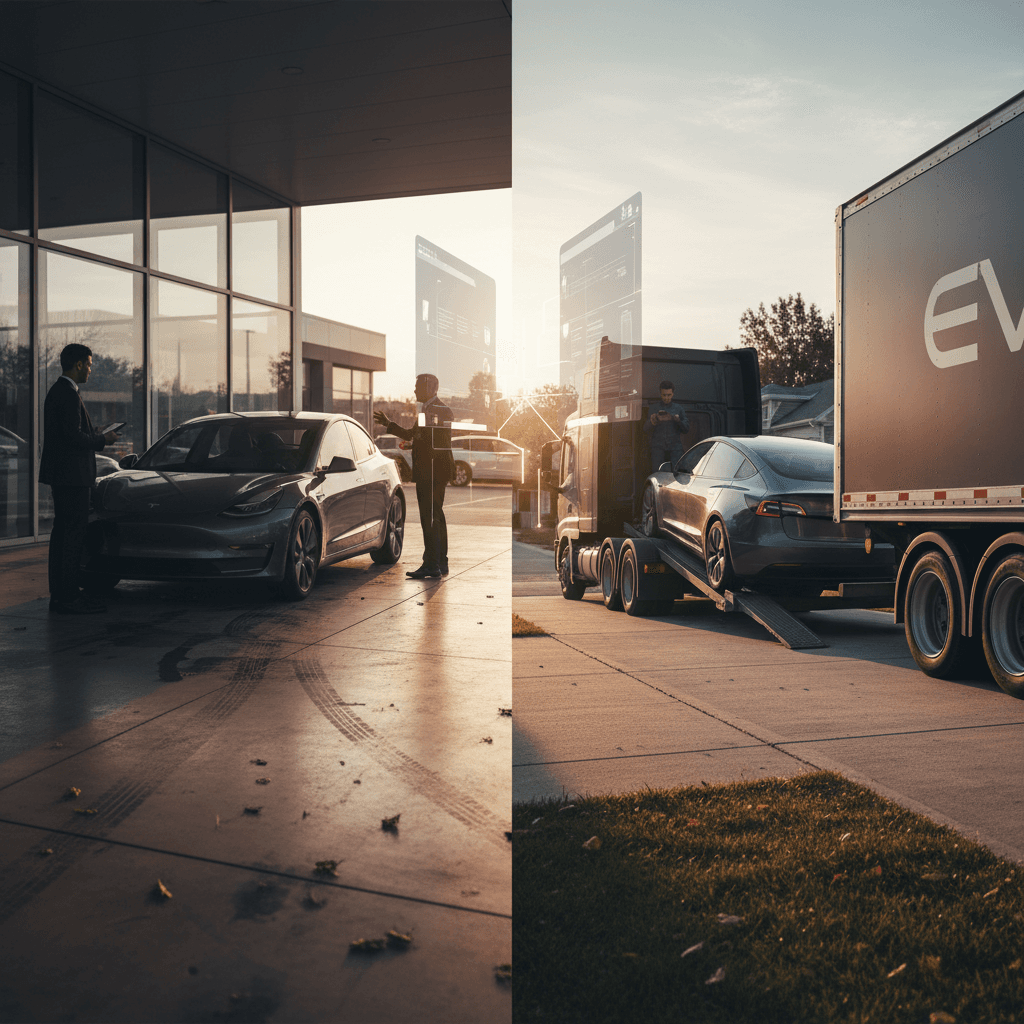
If you’re ready to sell your electric car, you’ll quickly run into the same question: sell your electric car to a dealer vs Carvana, who actually pays more, and who makes it easier? With EV prices moving fast and buyers still learning how to value batteries, choosing the wrong channel can easily cost you thousands.
What this guide covers
Why selling an electric car is different
On paper, selling an EV looks like selling any used car. In practice, electric vehicles break the usual pricing playbook. They depreciate differently, depend heavily on invisible battery health, and often include software features that don’t show up in traditional valuation tools.
- Battery health is the new engine compression test. Two identical EVs with different battery degradation can be worth dramatically different amounts.
- Tax credits distort used prices. Federal and state incentives on new EVs push down what dealers can sell a used one for, which feeds back into your offer.
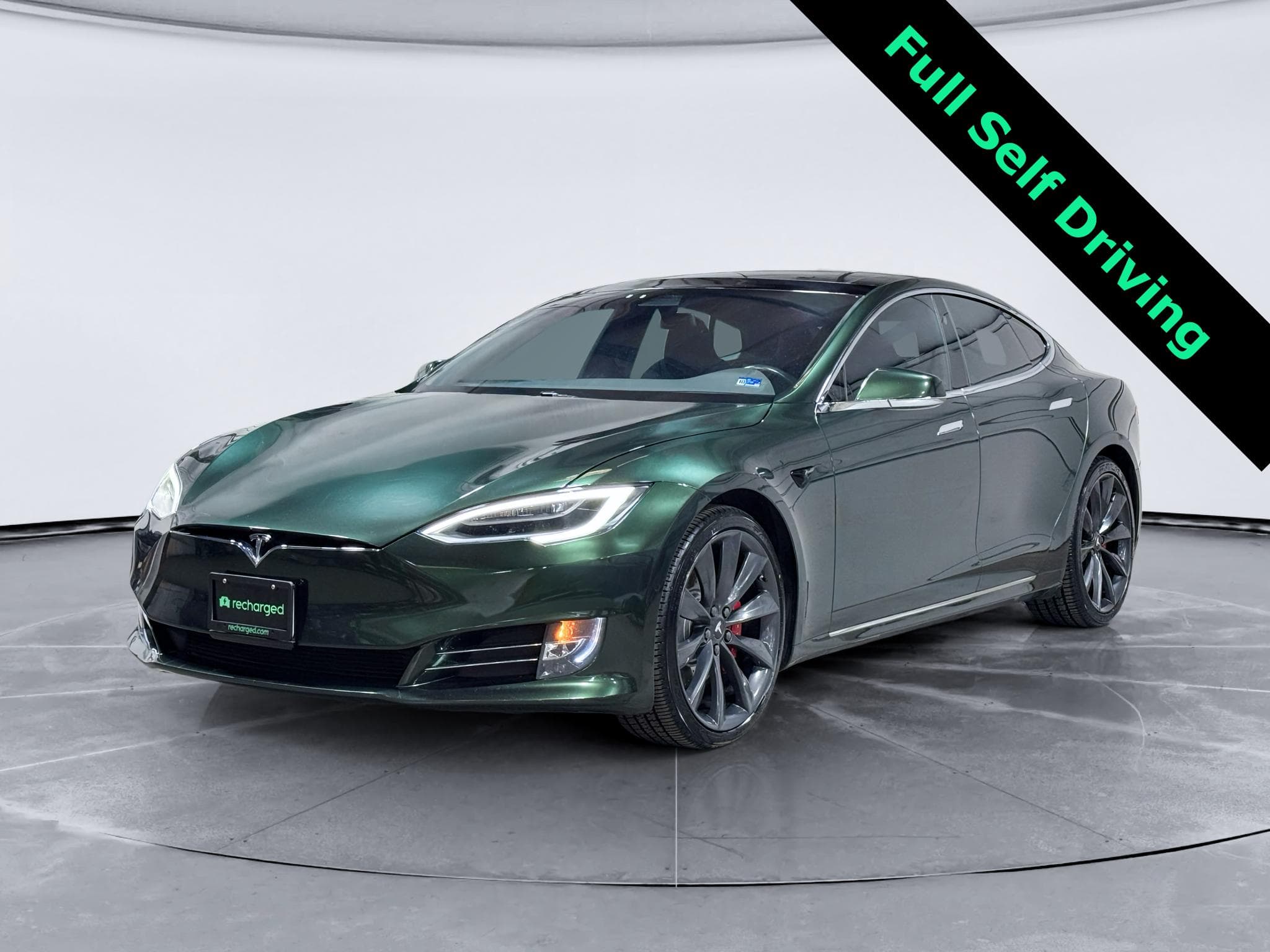
- Software may not count. Options like Tesla Full Self-Driving (FSD) or paid connectivity often aren’t reflected in generic valuations or Carvana’s instant offers.
- Rapid price swings. Used EV prices dropped sharply in 2023–2024, then stabilized as demand for cheaper EVs grew. Online buyers and dealers update pricing at different speeds.
- Limited EV expertise at many dealers. A store that lives on trucks and crossovers may treat your EV as a headache and price it very conservatively.
Why this matters for you
Dealer vs Carvana vs EV specialist: quick take
High-level comparison: sell electric car to dealer vs Carvana vs Recharged
A snapshot of how the main options stack up for most mainstream EVs (Tesla, Hyundai/Kia, Nissan, Ford, etc.).
| Channel | Typical Offer Level | Convenience | EV Expertise | When It’s Usually Best |
|---|---|---|---|---|
| Franchise/independent dealer | Often lowest for EVs, but can be competitive if brand-matched | Medium – you’ll visit in person, negotiate, sign same day | Varies widely; strong if they regularly sell that brand’s EVs | You’re trading in while buying another car the same day, or your EV matches the dealer’s brand and they know how to retail it. |
| Carvana and similar online buyers | Often higher than local dealers on clean, popular models; may be low on niche EVs or high miles | High – instant online offer, pickup or drop-off, minimal haggling | Improving, but still treats many EVs like generic used cars | Your EV is in demand, clean, with normal miles and you want a fast, mostly online sale. |
| EV specialist marketplace like Recharged | Often highest net when battery health and EV options are properly valued | High – digital process plus guidance from EV specialists | High – pricing and marketing built specifically around EVs | You want to maximize value, your EV’s battery is healthy, or you own a model with complex options (e.g., Tesla FSD). |
Every situation is different, but this table captures what most EV sellers experience in today’s market.
Bottom line
How selling your electric car to a dealer works
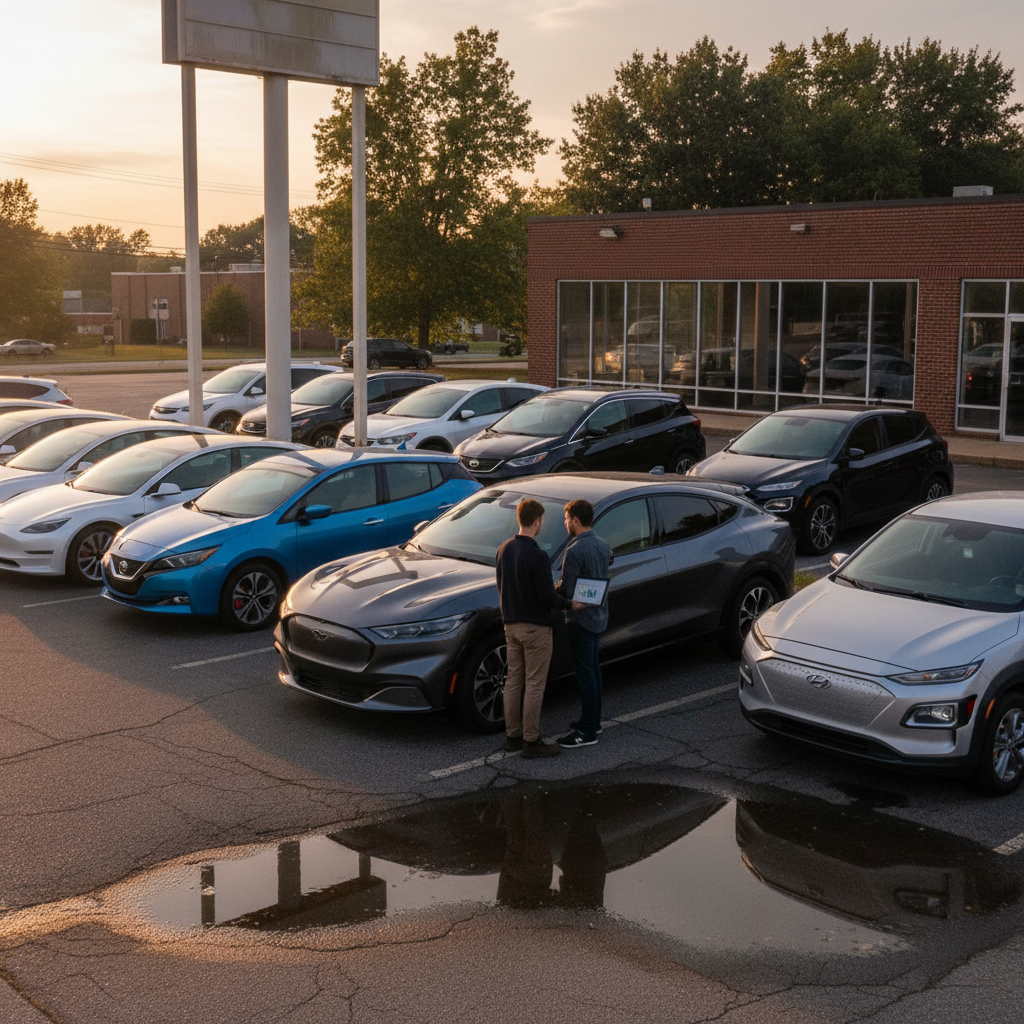
Selling or trading your EV to a dealer looks familiar if you’ve ever sold a gas car. The difference is mostly in what’s happening behind the scenes in their appraisal and how comfortable they are stocking an EV on their lot.
Typical steps to sell your EV to a dealer
1. Get online estimates
Start with instant valuations (KBB, Edmunds, OEM trade-in tools). These rarely reflect EV nuances perfectly, but they give you a baseline before you walk into a store.
2. Visit 2–3 dealers, not just one
Bring your registration, title (or payoff info), and both keys/cards. Hit at least one dealer that sells your EV’s brand, Ford dealer for a Mach-E, Hyundai/Kia for an Ioniq/EV6, etc.
3. Appraisal and test drive
A used-car manager will scan the car for codes, walk around for cosmetic issues, and sometimes test-drive it. With EVs they may also pull basic battery and charge data if they have the tools.
4. Offer and negotiation
They’ll quote a trade-in (if you’re buying) or a straight purchase price. On EVs, especially non-Teslas, expect more caution, and more room to push back if you’ve done your homework.
5. Paperwork and payoff
If you accept, the dealer handles the payoff with your lender and cuts you a check for any equity. You walk out the same day, often within an hour or two.
Pros and cons of selling your EV to a dealer
Selling your electric car to a dealer: pros and cons
How the traditional route stacks up for EV owners
Pros of selling to a dealer
- Same‑day exit. You can sell or trade and leave in a different car within a few hours.
- Easier with negative equity. If you owe more than the EV is worth, dealers are used to rolling that into a new loan.
- No online scheduling or waiting. If you need to sell this weekend, you just walk in.
- Brand-aligned dealers understand their own EVs. A Tesla-focused independent or a Ford store that sells a lot of Mach‑Es may price your car more confidently.
Cons of selling to a dealer
- Often the lowest offers on EVs. Many dealers are wary of used EVs, battery risk, and fast price swings, so they bid conservatively, especially on off-brand EVs.
- More pressure and negotiation. Offers are rarely take‑it‑or‑leave‑it, and some stores tie the EV offer to whether you buy from them.
- Limited buyer pool for your specific EV. If their customers aren’t asking for used EVs, your car will be treated as a risk, not an opportunity.
Dealer tip for EV sellers
How selling your EV to Carvana works
Carvana has built its brand around making selling a car as easy as ordering takeout. For EVs, the broad strokes are the same as with gas cars, but there are a few fine-print details to understand.
- Enter your VIN or plate, answer questions about features, condition, mileage, and ownership, then get an instant online offer.
- Upload photos, ID, and (if needed) loan or lease payoff information.
- Schedule a pickup or drop-off at a Carvana location. In some markets there may be a small pickup fee if you’re far from a hub.
- When the advocate arrives, they’ll verify the car matches your description, check for warning lights, and often scan it for diagnostic codes.
- If everything matches, you sign electronically and get paid via ACH or check, typically within 1–2 business days.
Watch your timing and mileage
Pros and cons of selling your EV to Carvana
Pros of selling an EV to Carvana
- Very convenient. You can go from quote to sale largely from your couch, with pickup from your driveway in many areas.
- Transparent, non‑negotiable offer. The price you accept online is typically what you see at pickup if your description is accurate.
- Often stronger than dealer offers. For clean, in‑demand EVs with average mileage, Carvana has frequently outbid local dealers, especially when the EV fits its retail profile.
- No pressure to buy another car. You’re not in a showroom, so there’s no trade‑in cross‑talk or add‑on sales pitch.
Cons of selling an EV to Carvana
- Limited credit for EV quirks. Carvana’s valuation tools still treat some EV‑specific features, like Tesla software options, as invisible, which can underpay more optioned cars.
- Offer can move around the edges. If demand cools or your mileage changes before you accept, the new offer may be significantly lower.
- One buyer, one price. You’re not getting the benefit of multiple buyers bidding; you’re accepting a single take‑it‑or‑leave‑it number.
- Strict condition expectations. If undisclosed issues or warning lights pop up, they can walk away or adjust the deal on the spot.
EV‑specific factors that change your offer
This is where the gap between selling a gas car and an EV really opens up. Whether you choose a dealer or Carvana, a few EV‑only variables can swing your number dramatically.
Key levers that move your EV sale price
How each factor plays with dealers vs Carvana
Same car, different risk tolerance
Battery health & degradation
Dealer: If they can’t easily test state of health, they’ll often assume the worst and price conservatively, especially on brands they don’t sell new.
Carvana: Relies more on age, mileage, and generic condition data. That can be good if your battery is only average, but bad if you’ve taken great care of it and want credit for that.
Mileage & warranty status
Dealer: Crossing the battery warranty mileage (often 100k–150k miles depending on brand) can instantly push your EV into “auction only” territory for many dealers.
Carvana: Uses mileage bands. If you’re about to cross into a new band, accept before you pile on miles or be ready for the number to move.
Software & options
Dealer: Most will ignore high‑value software like Tesla FSD or connectivity packages when bidding. They’ll sell on payment, not software line items.
Carvana: Same story, its system focuses on hardware trim, not digital extras. You rarely get full value for software through a generic instant‑offer tool.
Tesla software gotcha

Where do you usually get the most for a used EV?
There’s no single winner for every seller, but patterns have emerged as the used EV market has matured and volumes have climbed.
- Best odds of a top offer for mainstream, in‑demand EVs: Carvana and similar online buyers often outbid generic local dealers on clean Teslas, Hyundai/Kia EVs, and other hot models, especially with under-average miles.
- Best odds for niche or higher‑risk EVs: Brand‑aligned dealers or EV specialists tend to do better on early‑generation models, low‑range EVs, or vehicles with unusual specs.
- Best odds for option‑heavy and software‑heavy cars: EV‑first platforms like Recharged are more likely to reflect battery health and options in pricing, because EV shoppers on those platforms are shopping specifically on those details.
Remember: it’s not just headline price
Where Recharged fits vs dealers and Carvana
Recharged was built specifically around used EVs, which means the entire experience, from pricing to inspections to marketing, is tuned to things dealers and generic online buyers often treat as afterthoughts.
How Recharged compares when you’re selling an electric car
Why an EV‑focused marketplace often nets more than a generic dealer or instant-offer site
Battery‑driven pricing
Every vehicle listed on Recharged includes a Recharged Score Report with verified battery health. That lets buyers see, and pay for, the real condition of your pack, rather than assuming the worst.
EV‑specific market data
Recharged tracks actual EV transaction data, not just generic books, and adjusts for fast‑moving trends like tax credit changes and brand‑specific incentives.
Multiple ways to sell
You can request an instant offer, trade in toward another EV, or use Recharged’s consignment model to market your car nationwide and capture full retail value while their team handles the heavy lifting.
Targeted EV buyers
Buyers on Recharged are shopping specifically for used EVs and hybrids. They understand range, charging, and software options, which increases what they’re willing to pay compared with a general buyer pool.
Nationwide reach & logistics
Recharged manages nationwide delivery and logistics. That means your buyer doesn’t have to live in your ZIP code, which is critical if your EV is a specific trim or color that sells better in other markets.
EV‑specialist support
From valuation to closing, you get access to EV‑specialist support, not just generic used‑car sales. They can walk you through battery reports, pricing strategy, and timing.
When Recharged tends to beat dealer and Carvana offers
Step‑by‑step strategy to maximize your EV sale price
Instead of betting everything on one channel, you can treat this like a mini remarketing exercise. With a few smart steps, you’ll know very quickly whether a dealer, Carvana, or an EV specialist like Recharged will put the most money in your pocket.
A practical playbook: dealer vs Carvana vs EV specialist
Step 1 – Get your EV data in order
Pull your service history and any battery or high‑voltage system work.
If your car or a third party can generate a <strong>battery health report</strong>, do it, this is gold for EV buyers.
Note your battery warranty terms (years and miles) and where you sit against them.
Step 2 – Clean and fix the easy stuff
Wash and vacuum the car; clean the screens and steering wheel.
Address low‑cost items like burned‑out bulbs, missing charge cables, or minor scuffs on easily replaced trim.
Gather both keys/cards, mobile app access, and charging accessories, missing items are easy excuses to discount your car.
Step 3 – Collect 3–4 real offers
Get at least one <strong>local dealer</strong> offer (preferably brand‑aligned).
Get an <strong>online offer from Carvana</strong> or a similar platform, staying accurate about condition and mileage.
Request an <strong>evaluation from Recharged</strong> or another EV‑focused marketplace to see how battery health changes the number.
Time these asks within a few days of each other so you’re comparing the same market snapshot.
Step 4 – Choose based on net, not hype
Lay out each offer with fees, logistics, and timing.
Ask: “If all three options closed exactly as promised, which puts the most money in my account for the least hassle?”
If you’re not in a rush, consider a <strong>consignment‑style sale with Recharged</strong>, which can yield a higher net even if it takes a bit longer.
Use offers as leverage, respectfully
FAQ: selling an electric car to a dealer vs Carvana
Frequently asked questions
If you’re choosing between selling your electric car to a dealer vs Carvana, remember you’re not limited to just those two. Dealers win on immediate trades and handling tricky payoff situations. Carvana wins on speed and simplicity, often beating generic dealer offers on clean, popular EVs. But if you want the market to see, and pay for, your battery health, software, and EV‑specific value, an EV‑focused platform like Recharged can turn those invisible advantages into real dollars. Take an hour to gather three or four offers, compare the net outcomes, and then pick the path that gives you the best combination of price, timing, and peace of mind.