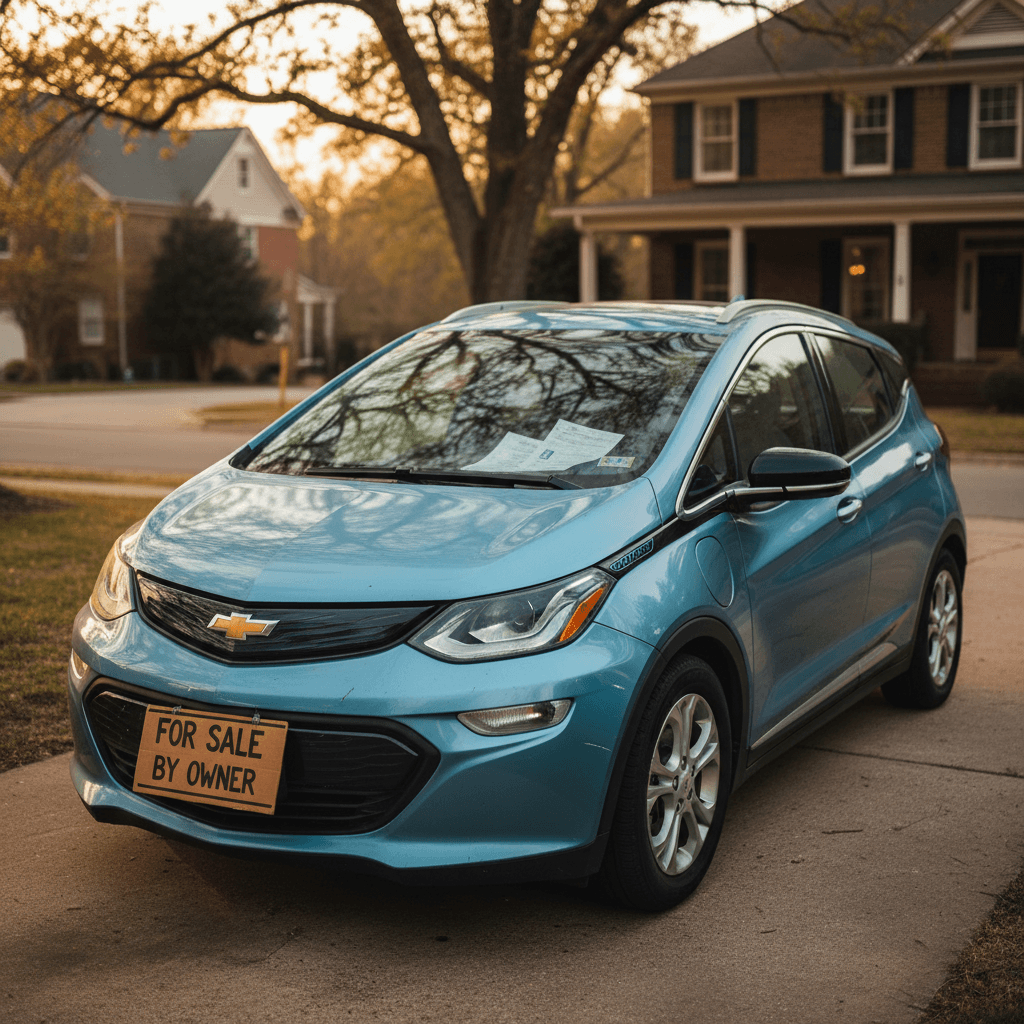
If you’re looking to sell a Chevrolet Bolt EV in Georgia, you’re in a pretty good spot. Demand for affordable used EVs is climbing across metro Atlanta, Savannah, Athens and beyond, and the Bolt EV sits in a sweet spot: practical range, relatively low operating costs, and price points that fit under many buyers’ budgets.
Quick snapshot for Georgia Bolt sellers
Why Bolt EVs Sell Well in Georgia Right Now
Why your Bolt EV is appealing to Georgia buyers
Georgia dropped its generous state EV purchase tax credit years ago and, as of late 2025, the federal EV tax credits for new and used vehicles have ended. That’s pushed more budget‑conscious shoppers toward used electric vehicles instead of new ones. A Chevy Bolt EV with verifiable battery health and a clean recall history stands out as one of the most attainable ways for a Georgia driver to go electric.
Lean into Georgia‑specific demand
Step‑by-Step: How to Sell a Chevrolet Bolt EV in Georgia
Your Georgia Chevy Bolt EV selling checklist
1. Gather key details on your Bolt EV
Write down your VIN, model year, trim (LT or Premier), current mileage, DC fast‑charge usage habits, and any accident or service history. Buyers and dealers will ask for this immediately.
2. Check for open recalls and software updates
Bolt EVs from 2017–2022 went through a major battery recall. Make sure the recall work is complete and keep proof handy; Georgia buyers who’ve watched the headlines will ask about it.
3. Document battery health and remaining warranty
Print or save any service records that mention state of health (SOH), range at 100%, and remaining years/miles on the 8‑year/100,000‑mile high‑voltage battery warranty (or 10‑year/150,000‑mile in some CARB states).
4. Estimate your Bolt’s market value in Georgia
Use several sources, online valuation tools, local listings, and instant‑offer platforms, to get a realistic price range based on mileage, condition and options.
5. Decide how you want to sell
Choose between trading in to a dealer, selling directly to another driver, getting an instant online offer, or using a marketplace like <strong>Recharged</strong> that specializes in used EVs.
6. Prep the car and create your listing
Clean the interior and exterior, take clear photos in daylight, highlight battery health, recall completion and home‑charging readiness, and be transparent about any cosmetic flaws.
7. Handle test drives and payment safely
Meet in public places, confirm insurance for test drives, and use secure payment methods such as cashier’s check or verified digital transfer through your bank.
8. Complete Georgia title transfer and bill of sale
Sign the title correctly, prepare a bill of sale, remove your plates, and remind the buyer about Georgia’s EV registration fee and their need to register at the county tag office.
Pricing Your Chevy Bolt EV for the Georgia Market
Setting the right price is the difference between a Bolt EV that sells in a week and one that sits for months. Georgia shoppers are price‑sensitive: they’re comparing your car not only against other used EVs, but also against efficient gasoline models and plug‑in hybrids. The goal is to price your Bolt high enough to reflect its value, especially if the battery is healthy, but low enough to move in a market that no longer offers federal or state EV purchase credits.
Key factors that move Bolt EV prices up or down in Georgia
Use these to fine‑tune your asking price
Mileage & usage
Georgia buyers often prefer Bolts under 60,000–70,000 miles, but clean higher‑mileage cars can still sell if priced right.
- Lower miles = stronger price
- High highway miles are easier to explain than lots of fast‑charging
Battery health & range
Because the battery pack is the most expensive component, showing strong range at 100% charge and no history of battery faults can justify hundreds or even thousands more.
Model year & warranty
Later‑model Bolts (especially 2020–2022) with more years left on the 8‑year/100,000‑mile battery warranty put buyers at ease and typically command higher prices.
Recall completion
Proof that the battery recall work is complete and the latest software is installed makes your car easier to insure and finance and reduces negotiation friction.
Condition & options
Wheel damage, cracked glass, worn tires or a tired interior will push buyers to discount your car. Conversely, DC fast‑charge capability, driver‑assist packages and upgraded audio can support a higher ask.
Where you sell in Georgia
Bolts listed in metro Atlanta and along major corridors (I‑75, I‑85, I‑20) generally see more interest than those in rural areas, simply because more EV‑curious buyers live there.
Use a range, not a single number
Battery Health, Warranty and Recall History
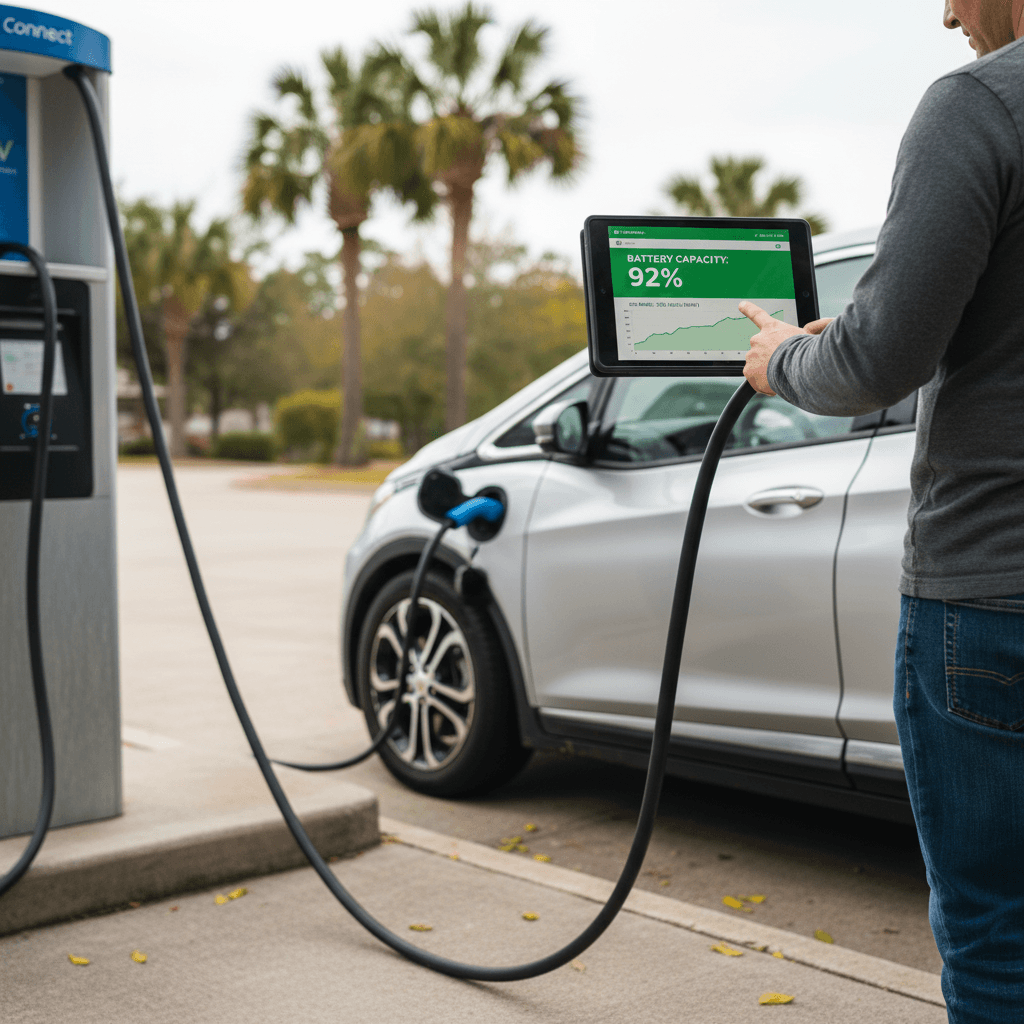
For a used EV, you’re really selling two things: the car and the battery. Most Chevrolet Bolt EVs carry an 8‑year/100,000‑mile high‑voltage battery warranty from their original in‑service date. That coverage follows the car, not the first owner, so a Georgia buyer in 2026 may still have several years of coverage left on a 2019–2021 Bolt EV. Many shoppers have read about the Bolt battery recall and want reassurance that your car is both updated and healthy.
Show what the battery can actually do
Before listing your car, fully charge to 100% and take a clear photo of the estimated range on the driver display. If you regularly charge to 80–90% to preserve battery life, mention that in your description. Simple details like “I’ve mostly charged at home on Level 2 and rarely used DC fast charging” help Georgia buyers feel better about long‑term battery health.
Explain remaining battery warranty in plain English
Spell out the warranty like this: “High‑voltage battery and electric drive components are covered by Chevrolet’s 8‑year/100,000‑mile warranty from the original in‑service date. Based on that, there are about X years and Y miles of coverage left, assuming normal use.” If you bought the car used, you can call a Chevy dealer with the VIN to confirm dates.
Address the Bolt battery recall upfront
Paperwork, Title and Georgia‑Specific Fees
The paperwork to sell a Chevrolet Bolt EV in Georgia is straightforward, but it’s worth understanding the details, especially the costs the buyer will face that may come up during negotiations. Georgia no longer offers a state EV purchase credit, but it does impose an additional annual registration fee on electric vehicles to replace lost gas‑tax revenue.
Key paperwork and EV‑related costs when selling a Bolt EV in Georgia
Use this as a checklist when you finalize the sale.
| Item | Who handles it | What to know in Georgia | Why it matters |
|---|---|---|---|
| Vehicle title | Seller & buyer | You must sign the Georgia title correctly and provide it to the buyer. If there’s a lien, get a lien release from your lender first. | Title issues can delay registration or financing for your buyer. |
| Bill of sale | Seller & buyer | Include VIN, sale price, mileage, date, and both parties’ names and signatures. | Provides proof of sale and protects both sides in case of disputes. |
| Odometer disclosure | Seller | Required for most vehicles under 20 model years old. Many titles include a specific section for this. | Federal requirement; falsifying mileage is illegal. |
| Emissions test | N/A for Bolt EV | Georgia exempts pure battery electric vehicles like the Bolt EV from emissions testing. | One less hurdle for your buyer, but good to mention in your listing. |
| EV registration fee | Buyer | Georgia charges an additional annual registration fee for EVs on top of standard tag fees. | Some buyers will factor this into what they’re willing to pay. |
| Loan payoff & release | Seller & lender | If you still owe money, your lender will need to be paid and then release the title to you or the buyer. | Plan timing carefully so the sale and payoff line up smoothly. |
Always verify the latest requirements with your county tag office or the Georgia Department of Revenue before completing a sale.
Double‑check payoff before accepting a price
Where to Sell Your Bolt EV in Georgia
Once you know what your Bolt EV is worth and you’ve gathered paperwork, you need to decide how to sell it. In Georgia, your realistic options fall into four buckets: traditional trade‑in, selling to a dealer or instant‑offer service, selling privately, or using an EV‑focused marketplace.
Options for selling your Chevrolet Bolt EV in Georgia
Pick the route that fits your timeline and risk tolerance
1. Trade‑in at a Georgia dealership
Best for: Convenience and if you’re buying another car immediately.
- Fastest way to move out of your Bolt EV.
- Dealers may undervalue EVs they don’t understand well.
- Trade‑in value is effectively part of your new‑car negotiation.
2. Sell to a dealer or instant‑offer service
Best for: Owners who want simplicity without buying another vehicle.
- Online tools provide quick offers based on your VIN and photos.
- Some national buyers now understand EVs better than small local lots.
- Offers may be below what a private buyer would pay, but the process is fast.
3. Private sale in Georgia
Best for: Maximizing sale price if you’re willing to do some work.
- List on mainstream classifieds plus EV‑focused groups in Atlanta, Athens, Augusta and Savannah.
- Requires you to manage test drives, negotiation and paperwork.
- Price can be significantly higher than trade‑in if your battery is in good shape.
4. List through an EV specialist like Recharged
Best for: Sellers who want strong pricing and expert help without doing everything solo.
- Recharged focuses solely on used EVs and plug‑in hybrids.
- Every vehicle gets a Recharged Score Report with verified battery health and fair‑market pricing guidance.
- Options include instant offer or consignment, EV‑savvy marketing, and nationwide buyers, not just Georgia locals.
How Recharged can help you sell a Bolt EV
Ready to find your next EV?
Browse VehiclesPrepping Your Bolt EV to Attract Serious Buyers
Buyers don’t just compare mileage and price, they react to how a car feels the moment they see it. A well‑presented Bolt EV can easily be worth several hundred dollars more than a tired one. Fortunately, most of the work here costs more time than money.
- Wash and detail the exterior, paying attention to wheels and glass. EV buyers tend to be detail‑oriented and notice curb rash and scratches.
- Clean the interior thoroughly: wipe hard surfaces, shampoo or spot‑clean seats, and remove personal items and charging clutter.
- Resolve minor issues like low‑tread tires, cracked windshield chips, or burned‑out bulbs when it makes financial sense.
- Charge the car to 80–100% and precondition the cabin before showings so buyers see a healthy range estimate and experience the quiet EV feel.
- Lay out the owner’s manuals, both keys, any home charging cables (EVSE), and service records so buyers can flip through them during a test drive.
- Prepare a one‑page summary with VIN, model year, mileage, battery recall status, remaining battery warranty, and your asking price.
Photograph it like a dealer would
Timing the Market in Georgia
Seasonality matters less for used EVs than for gas trucks or convertibles, but timing still plays a role. In Georgia, demand often bumps up heading into the school year and during mild‑weather months when people are more willing to test‑drive and think about new commutes. On the other hand, macro EV headlines, like the end of federal tax credits in late 2025 or news about new EV plants in the state, can temporarily cool or boost interest.
When selling sooner makes sense
- Your Bolt is nearing the end of its battery warranty window.
- You’re approaching a mileage milestone (like 60,000 or 100,000 miles) that may psychologically push buyers away.
- Local inventory around Atlanta looks thin and prices are still relatively firm in online listings.
When waiting could help
- You’re in a rural area and plan to move closer to Atlanta, Athens or Savannah where EV demand is higher.
- You want to complete recall work, tire replacement or minor body repair first.
- You’re timing your sale to line up with a planned purchase or lease of another vehicle.
Remember: EV technology keeps moving
Common Mistakes Georgia Bolt Sellers Make
- Ignoring the battery recall history or being vague about what was done and when.
- Using generic language like “great range” instead of sharing real‑world miles per charge and a photo of the dash at 100%.
- Overpricing the car based solely on what you owe on the loan rather than current Georgia market data.
- Listing without clear photos, especially of the driver display, charge port, and any cosmetic flaws.
- Failing to explain home charging options, many first‑time EV buyers in Georgia still have basic questions about Level 1 vs. Level 2 charging.
- Accepting risky payment methods instead of verified funds or working through a reputable marketplace or dealer.
Protect yourself during the transaction
FAQ: Selling a Chevrolet Bolt EV in Georgia
Frequently asked questions about selling a Chevy Bolt EV in Georgia
Selling a Chevrolet Bolt EV in Georgia comes down to three things: knowing your numbers, telling a clear battery story, and choosing a sales channel that matches your priorities. If you price to the current Georgia market, document battery health and recall history, and present the car professionally, you’ll stand out in a landscape where many listings still treat EVs like ordinary used cars. And if you’d rather have experts handle the details, from battery diagnostics and pricing to nationwide buyer outreach, Recharged is built specifically to help owners like you exit EV ownership with confidence.