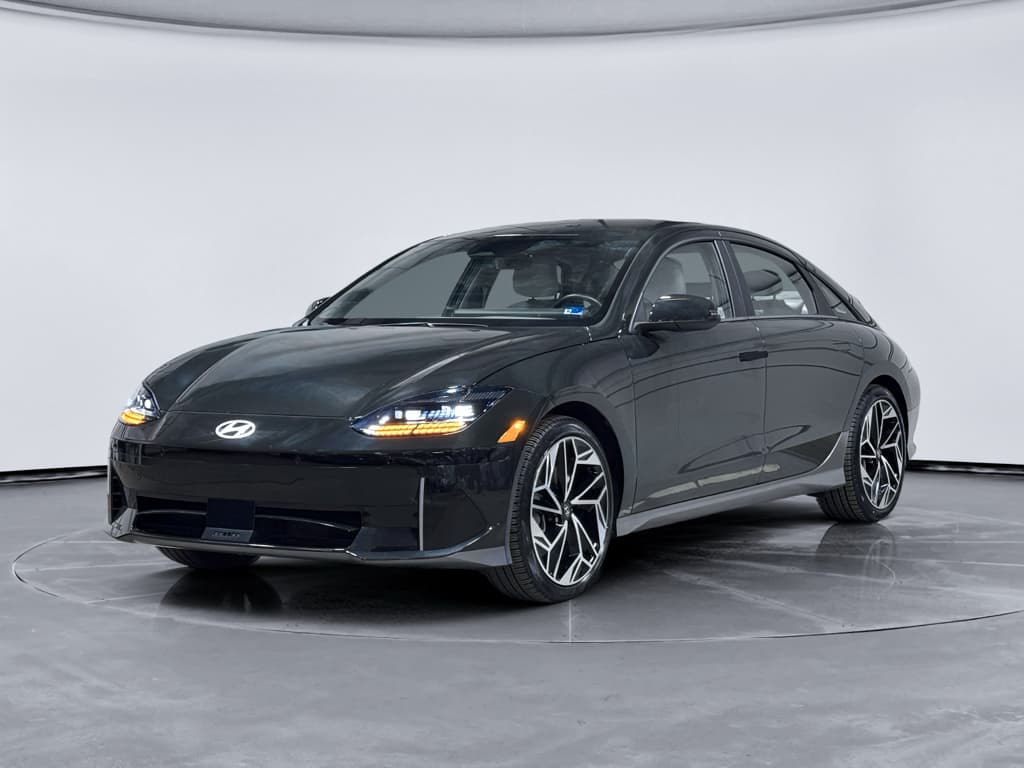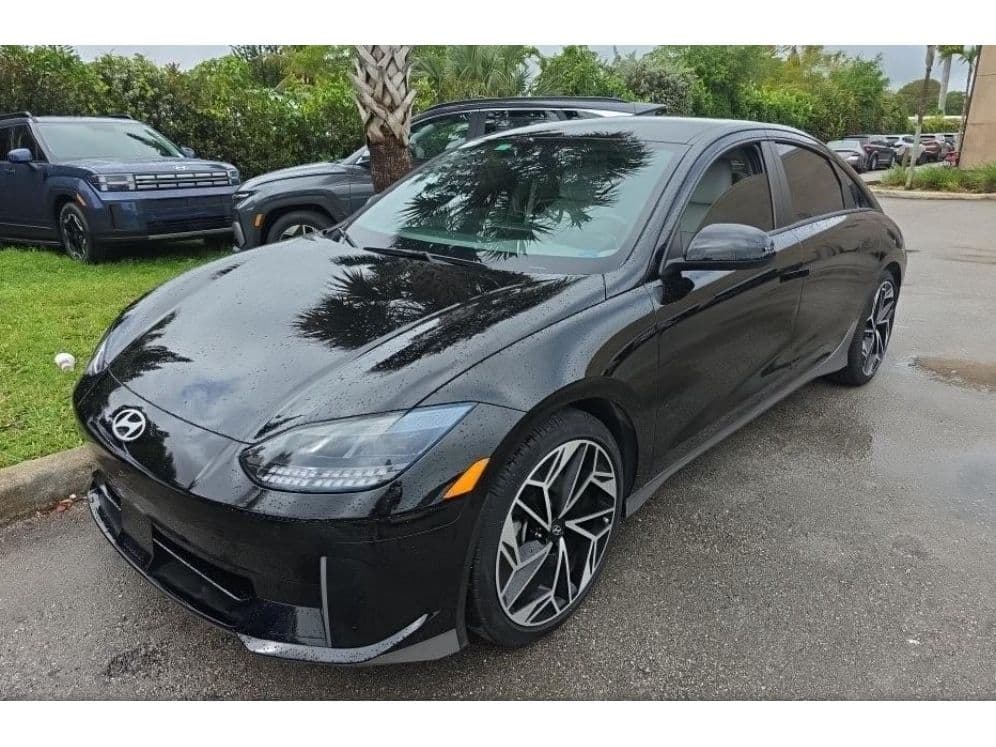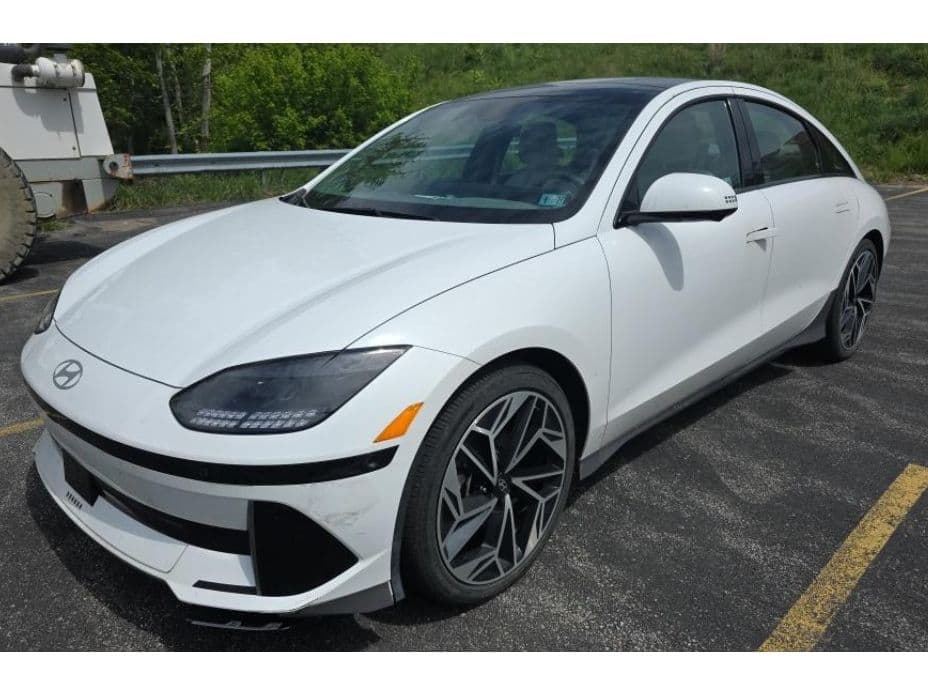
If you’re already thinking, “When should I sell my 2026 Hyundai Ioniq 6, and what will it be worth?” you’re asking the right questions. EV prices can swing fast, and a little planning now can mean several thousand dollars more in your pocket when it’s time to move on.
Quick takeaway
Why your 2026 Ioniq 6’s value matters before you sell
On a modern EV like the 2026 Hyundai Ioniq 6, depreciation is usually your single largest ownership cost, bigger than tires, insurance, and electricity combined. Understanding that curve now helps you decide whether to sell early, hang on for a few more years, or skip new entirely and buy used next time.
If you plan to sell in 2–3 years
You’ll be selling while your Ioniq 6 is still under the original 5-year/60,000-mile bumper-to-bumper warranty and deep into the 10-year/100,000-mile high-voltage battery warranty. That’s prime time for value-conscious used EV buyers, and it’s when you’re most likely to beat average resale numbers.
If you plan to keep it 5–10 years
You’ll ride out the steep part of the depreciation curve and enjoy ultra-low running costs, then sell into a more mature used-EV market. Your sale price will be lower in dollars, but your cost per year of ownership can still be excellent, especially if you bought with good incentives up front.
Why this guide focuses on value, not hype
How much will a 2026 Hyundai Ioniq 6 be worth when you sell?
We don’t have live auction data for a 2026 Ioniq 6 yet, it’s just arriving in U.S. showrooms, but we do have a growing track record from 2023–2025 Ioniq 6 models, plus independent depreciation forecasts.
Hyundai Ioniq 6 value snapshot (based on recent model years)
Translate that into a rough, forward-looking number: if your 2026 Ioniq 6 stickers around $45,000, and it follows current patterns, you might be looking at somewhere in the low-to-mid $20,000s after five years, assuming typical mileage and no major incident history. If you sell sooner, with lower miles and a stronger warranty story, you can beat those averages.
Illustrative resale ranges for a 2026 Hyundai Ioniq 6
These are directional examples, not quotes. Local market, trim, and incentives will push your real number up or down.
| Age of car | Typical miles | Condition & history | Very rough value range* |
|---|---|---|---|
| 1 year (2027) | 10k–15k | Clean, no accidents, full records | ~65–70% of MSRP |
| 3 years (2029) | 30k–45k | Clean, minor wear, no major repairs | ~40–50% of MSRP |
| 5 years (2031) | 60k–75k | Average wear, clean title | ~35–45% of MSRP |
Use this as a starting point, then refine your price using live market tools or a Recharged valuation.
Important disclaimer
Depreciation timeline: what usually happens years 1–5
EVs used to behave like tech gadgets: big price drops, then more big drops. The Ioniq 6 doesn’t escape depreciation, but it’s behaving more like a mainstream midsize sedan with an EV twist. Here’s how a typical curve looks for recent Hyundai Ioniq 6 models.
- Year 1: Biggest single hit. The moment your 2026 Ioniq 6 goes from “new” to “used,” you’re eating the initial discount and any incentives you captured up front. That’s why trade-in offers can feel brutal in the first 12 months.
- Years 2–3: Depreciation moderates but is still noticeable. This is often the sweet spot for selling, buyers get a nearly new EV with warranty left, you avoid the later, slower grind downward.
- Years 4–5: Curve flattens further. Values drift down as warranty coverage ages and newer EVs add range or faster charging, but the free-fall is over. This is where purchase price, incentives, and battery health really separate “average” cars from the desirable ones.
Why incentives blur the numbers
7 factors that move your Ioniq 6’s selling price up or down
What shoppers look at when valuing your 2026 Ioniq 6
These are the levers you can actually influence before you sell.
1. Mileage
Most depreciation models assume 12,000–15,000 miles a year. If you’re under that, you’re in a stronger position. If you’ve turned your Ioniq 6 into a road-warrior, plan to price more aggressively.
2. Accident history
A clean, verified history is gold. Even high-quality repairs on bigger hits can spook EV shoppers, especially when structural parts, airbags, or high-voltage components were involved.
3. Warranty remaining
The closer you are to the original 5 yr/60k bumper-to-bumper and 10 yr/100k battery warranty, the easier it is to sell. Time your sale so the buyer gets meaningful coverage, not just a few months.
4. Battery health
Range is the headline stat for used EVs. A car that still hits close to its original EPA range, or has a documented battery health report, will pull stronger offers than one that’s clearly lost usable capacity.
5. Cosmetic condition
Scratched wheels, curb rash, dings, and a stained interior don’t just look bad, they silently knock real dollars off offers. Detail work before listing almost always pays for itself.
6. Trim, options & color
Higher trims with longer-range batteries, AWD, and popular tech packages tend to hold value better. A polarizing color or unusual interior can narrow your buyer pool.
7. Market timing
Interest rates, gas prices, and local EV incentives swing demand. A tax credit change or a price cut from a rival model can move your Ioniq 6’s number up or down in a single quarter.
Best time to sell a 2026 Hyundai Ioniq 6
Based on how recent Ioniq 6 models are behaving, the typical sweet spot to sell a Hyundai Ioniq 6 for maximum value is between about 18 and 36 months of ownership. At that point, your car still feels essentially new, the technology isn’t yet outclassed by the next wave of EVs, and there’s meaningful warranty coverage left to reassure the next owner.
A practical example
- Late spring and early summer often bring stronger EV demand as buyers gear up for road trips.
- Selling just before a local utility raises EV charging rates or your state adjusts incentives can help you catch demand on the upswing.
- If Hyundai rolls out a major refresh with more range or new battery chemistry, expect used prices on earlier cars to soften, selling just before a big update is announced is usually better than just after.
Checklist: how to boost your 2026 Ioniq 6 resale value
Pre-sale checklist for your 2026 Ioniq 6
1. Get a professional EV detail
A clean, decontaminated exterior and steam-cleaned interior make your Ioniq 6 feel newer and better cared for. Fix obvious cosmetic issues, curb rash, small dents, cloudy headlights, before photos are taken.
2. Gather your paperwork
Service records, recall paperwork, tire receipts, and home-charger installation documents all tell a story of careful ownership. Organize them in a single folder you can hand to a buyer or upload digitally.
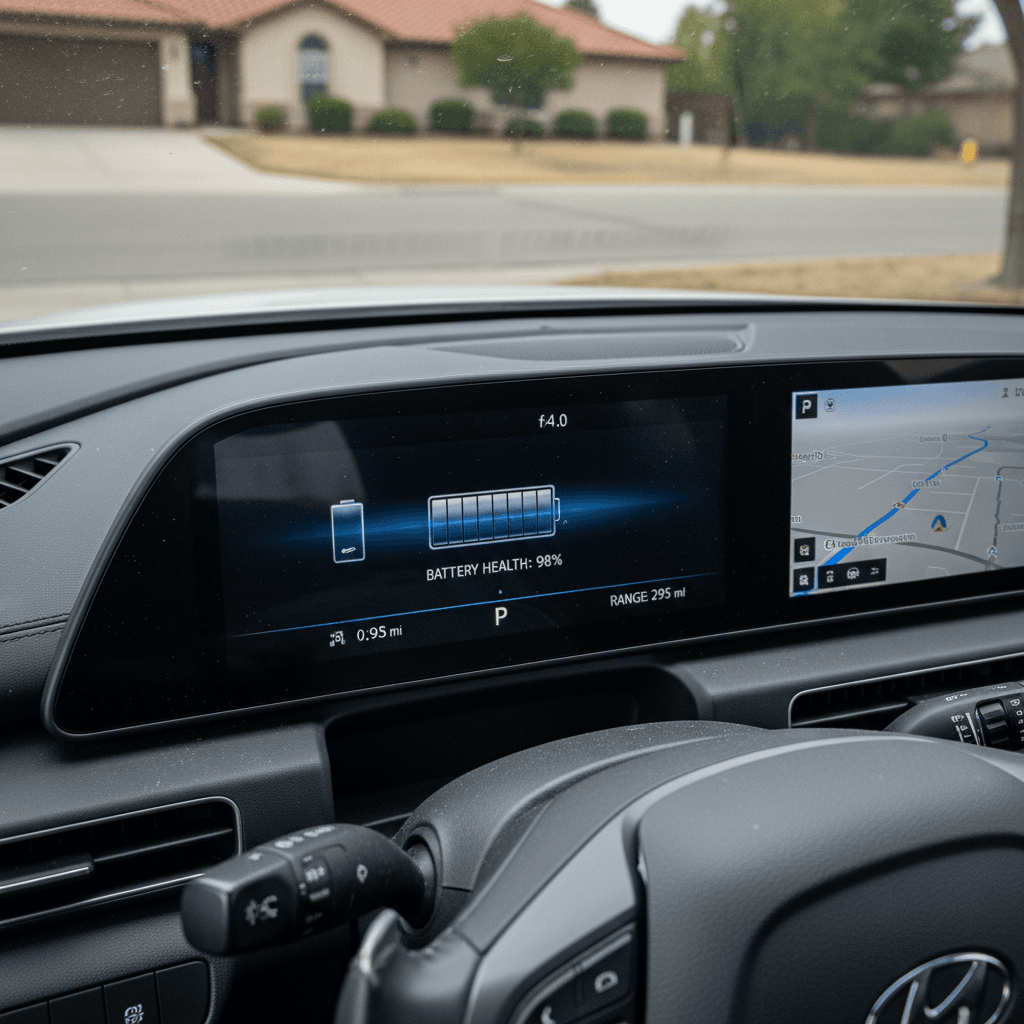
3. Document battery health and range
If you can, capture screenshots of real-world range at 80–100% charge and any battery health readouts from service visits. When you sell through Recharged, your vehicle gets a <strong>Recharged Score Report</strong> with verified battery diagnostics built in.
4. Resolve warning lights and software updates
No buyer wants to inherit a glowing dashboard. Schedule a visit for any open recalls, software updates, or intermittent warnings before you list the car.
5. Address cheap but obvious maintenance
Fresh wiper blades, a cabin air filter, and a recent tire rotation are inexpensive, but they signal that you didn’t neglect basic upkeep. If tires or brakes are near the end of life, price accordingly, or replace them and feature that in your listing.
6. Prep high-quality photos
Shoot your Ioniq 6 in soft daylight with a clean background. Capture all four corners, both sides, front and rear, interior, cargo area, wheels, and close-ups of any flaws so buyers trust what they’re seeing.
Smart pricing strategies when you list or trade in
You don’t have to guess at a number and hope for the best. Think of pricing your 2026 Ioniq 6 as a three-step process: benchmark, adjust, and test.
1. Benchmark the market
- Look up trade-in and private-party estimates for a comparable Ioniq 6 trim, year, and mileage.
- Search listings within 250 miles for your exact or closest trim.
- Note what sits on the market and what disappears quickly.
2. Adjust for your car’s story
- Price toward the top of the range if your car is low-mileage, accident-free, and freshly detailed with strong battery documentation.
- Price toward the lower end if you’re above-average mileage, have prior damage, or the car needs cosmetics or tires.
3. Test and respond
- If you see lots of views but no messages, you’re probably 3–5% too high.
- If offers flood in immediately, you may have left money on the table, but you also reduced hassle, which has its own value.
- On Recharged, your listing is anchored to a fair market price range, so you’re not starting from guesswork.
Don’t ignore total transaction value
Where to sell: trade-in, private sale, or Recharged
Pros and cons of different ways to sell your 2026 Ioniq 6
There’s no single “right” answer, only what fits your time, risk tolerance, and value goals.
Dealership trade-in
Pros: Fast, simple, you only deal with one counterparty, and you may get tax savings on the price difference in some states.
Cons: Usually the lowest dollar amount. Dealers price in reconditioning, auction risk, and profit margin.
Private-party sale
Pros: Often the highest sale price if you’re patient and present the car well.
Cons: Time-consuming. You handle photography, messaging strangers, test drives, and paperwork. Some buyers are still nervous about used EVs.
Recharged marketplace
Pros: Built specifically for used EVs. You get a Recharged Score Report with verified battery health, fair-market pricing guidance, and help with financing, trade-in, or consignment. Nationwide exposure, no EV-explaining 101 with every shopper.
Cons: Availability and options vary by location and vehicle, and standard marketplace fees apply.
If you’re busy or just tired of haggling, selling your Ioniq 6 through Recharged can be a strong middle ground: you keep more control than a straight trade-in, but you’re not doing everything yourself in your driveway.
How battery health and warranty impact what buyers pay
For a used EV, range is the new mileage. Shoppers will absolutely look at your odometer, but they’re really trying to answer one question: “How long will this battery feel like new to me?” That’s where documented battery health and warranty status make a difference.
Hyundai’s warranty is a selling tool
On recent U.S.-market Ioniq 6 models, the high-voltage battery carries up to a 10-year/100,000-mile warranty against defects. As long as that coverage transfers to subsequent owners and you’re within the time and mileage window, highlight it in your listing title and description.
Buyers comparing your Ioniq 6 against a similar-age EV with only an 8-year battery warranty may assign a real dollar value to those extra years of coverage.
Why independent battery health reports matter
On paper, two 2026 Ioniq 6 sedans can look identical. In reality, one might have spent its life fast-charging on road trips and sitting at 100%, while the other mostly AC-charged to 80% in a garage.
That’s why Recharged backs every EV listing with a Recharged Score Report, including verified battery diagnostics. It gives buyers confidence and gives you a credible way to defend your asking price.
Don’t guess about warranty transfer
Common mistakes that quietly destroy Ioniq 6 value
- Letting mileage creep up right before selling. Adding 8,000 freeway miles on a long trip just before listing can push you into a less attractive mileage bracket.
- Ignoring minor damage. A cracked windshield, scuffed bumper, or deep wheel rash is often cheaper to fix yourself than the hit you’ll take if a buyer prices in “unknown” repair costs.
- Skipping software updates and open recalls. A car that shows up at a buyer’s inspection still needing recall work looks neglected, even if you’ve otherwise cared for it.
- Hiding issues. Savvy EV buyers will check history reports and may request a third-party inspection. Being upfront about a prior repair or small issue earns trust and makes full-price offers more likely.
- Listing with weak photos and vague descriptions. “Great car, runs well” doesn’t cut it for a modern EV. Spell out trim, battery, range, charging speed, included equipment, and warranty dates. Show the car clearly from every angle.
FAQs about selling a 2026 Hyundai Ioniq 6
Frequently asked questions
The bottom line: getting fair value for your 2026 Ioniq 6
You can’t control everything about the EV market, but you have more influence over your 2026 Hyundai Ioniq 6 value than it might seem. Drive reasonably, stay on top of maintenance and software, document battery health, and time your sale while there’s still solid warranty coverage left. Do those things and you’re already ahead of most sellers.
When you’re ready, consider getting a valuation and selling path through Recharged. Every Ioniq 6 we handle comes with a Recharged Score Report that verifies battery health, anchors your asking price to fair market data, and connects you with EV-savvy buyers nationwide. That way, when you say goodbye to your Ioniq 6, you can be confident you didn’t leave unnecessary money, or unanswered questions, on the table.