If you’re thinking about selling a 2023 Tesla Model 3 in 2026, your first question is simple: what’s it worth, and how do you avoid leaving money on the table? The good news is that even after recent Tesla price cuts and EV incentives ending, a well‑equipped 2023 Model 3 still commands strong demand, especially if its battery health and history check out.
Quick take
2023 Model 3 value in 2026: the short version
2023 Tesla Model 3 value snapshot (spring 2026)
Used Tesla prices fell sharply after a series of new‑car price cuts and rental‑fleet sell‑offs, and Model 3 values were hit harder than the broader used‑car market. At the same time, demand for clean, well‑cared‑for 2023 cars remains solid because they’re still within warranty, support the latest software features, and offer range and performance that feel current.
Don’t anchor on 2022–2023 pricing
How much is a 2023 Tesla Model 3 worth right now?
Let’s get specific. As of early 2026, major pricing guides show a 2023 Tesla Model 3 in average condition landing around the low‑$20,000s for trade‑in and a bit higher for private‑party sale. For example, one widely used guide pegs a typical 2023 Model 3 at roughly $21,900 resale and around $21,200 trade‑in after about three years on the road, reflecting depreciation of around 46% off original MSRP for that reference configuration.
Rough 2026 value ranges for 2023 Tesla Model 3
These ballpark numbers assume clean title, no major damage, and typical options. Your exact value depends on trim, mileage, location, color, wheels, and software options.
| Scenario | Trim example | Odometer (approx.) | Likely trade‑in range | Likely private‑party range |
|---|---|---|---|---|
| Low mileage, highly optioned | Long Range or Performance | < 15,000 miles | $24,000–$27,000 | $27,000–$31,000 |
| Average use, popular spec | RWD or Long Range | 20,000–35,000 miles | $20,000–$23,000 | $23,000–$27,000 |
| High mileage or cosmetic wear | Any trim | 40,000–60,000+ miles | $17,000–$21,000 | $20,000–$24,000 |
| Accident history / prior damage | Any trim | Varies | Often under $18,000 | Typically $1,500–$3,000 above trade, if documented and repaired well |
Use this as a starting point, then refine with live valuations and battery‑health data.
Guide values vs. real‑world offers
If your 2023 Model 3 is lightly driven, accident‑free, and has desirable options like Enhanced Autopilot or a white interior, you should realistically expect to land toward the top of these ranges, or higher in a hot market. If it has heavy wear, prior damage, or an uncertain maintenance history, expect buyers and dealers to anchor toward the lower end.
Key factors that move your 2023 Model 3 value up or down
Top value drivers when you sell a 2023 Model 3
These are the levers that actually move your number, sometimes by thousands of dollars.
Mileage & use pattern
- Mostly highway, gentle driving tends to mean less wear.
- Long‑distance fast‑charging every day can worry buyers about battery stress.
Battery health & charging history
- Consistent, documented battery health can add real value.
- Unknown or clearly degraded packs push offers down.
Accident & title history
- Minor cosmetic repairs, when documented, don’t hurt much.
- Structural damage, airbag deployments, or salvage branding can cut value dramatically.
Color, wheels & options
- White, gray, and black are safest colors.
- Performance wheels look great but some buyers fear curb rash and ride quality.
Software & feature set
- Clarify what’s active on the car and what’s subscription‑based.
- Highlight recent over‑the‑air updates and features.
Where you’re selling
- Coastal metros and EV‑friendly states often pay more.
- Rural areas or regions with thin charging coverage may discount Teslas more.
Battery health is the new mileage
Soft factors that help
- Complete service history and receipts.
- Single‑owner history with detailed records.
- Two key cards and any key fobs.
- Original mobile connector, adapters, and manuals.
- Non‑smoker, no odors, and a clean interior.
Red flags that hurt
- Visible curb rash or mismatched tires.
- Aftermarket tint or wraps done poorly.
- Warning lights or unresolved software issues.
- Missing charging equipment.
- Evidence of track use or aggressive driving.
Best ways to sell a 2023 Tesla Model 3 (and what you’ll net)
You have the same basic choices as any used‑car owner, sell it yourself, trade it to a dealer, or work with a specialist marketplace, but the stakes are higher with a high‑value EV. Here’s how the common paths usually shake out for a 2023 Model 3.
How different selling options impact your 2023 Model 3’s value
Typical outcomes for a mid‑trim 2023 Tesla Model 3 in good condition. Numbers are illustrative, assuming a fair market value around $24,000.
| Option | Typical convenience | Typical pricing vs. top‑dollar sale | Pros | Cons |
|---|---|---|---|---|
| Traditional dealer trade‑in | Very high | +0% to -10% | Fast, simple, potential tax savings on your next car | Lower offer, limited EV expertise, little visibility into how they priced it |
| Instant online cash offer | High | +0% to -7% | Easy process, firm offer quickly, pickup available in many areas | Pricing algorithms can be conservative on EVs, little nuance for options or battery health |
| Private‑party sale | Low | +5% to +15% | Maximizes price, you control the listing and negotiation | More time and effort, managing test drives, scams, and paperwork |
| EV‑specialist marketplace (like Recharged) | Medium‑high | +3% to +10% | EV‑specific pricing and battery diagnostics, broader audience, guidance through the process | Takes a bit more time than a same‑day trade, marketplace fees may apply |
Your actual net will depend on your car, your state’s fees and tax rules, and how much work you’re willing to do yourself.
Where Recharged fits
7 steps to maximize what you get for your 2023 Model 3
Practical playbook to squeeze more out of your sale
1. Get real‑world valuations from multiple sources
Start with at least two online guides, then get live offers: a Tesla trade‑in quote, one or two instant‑offer sites, and a specialist like Recharged. If they’re all clustered around the same number, that’s your market. If one’s higher, find out why.
2. Document battery health and charging behavior
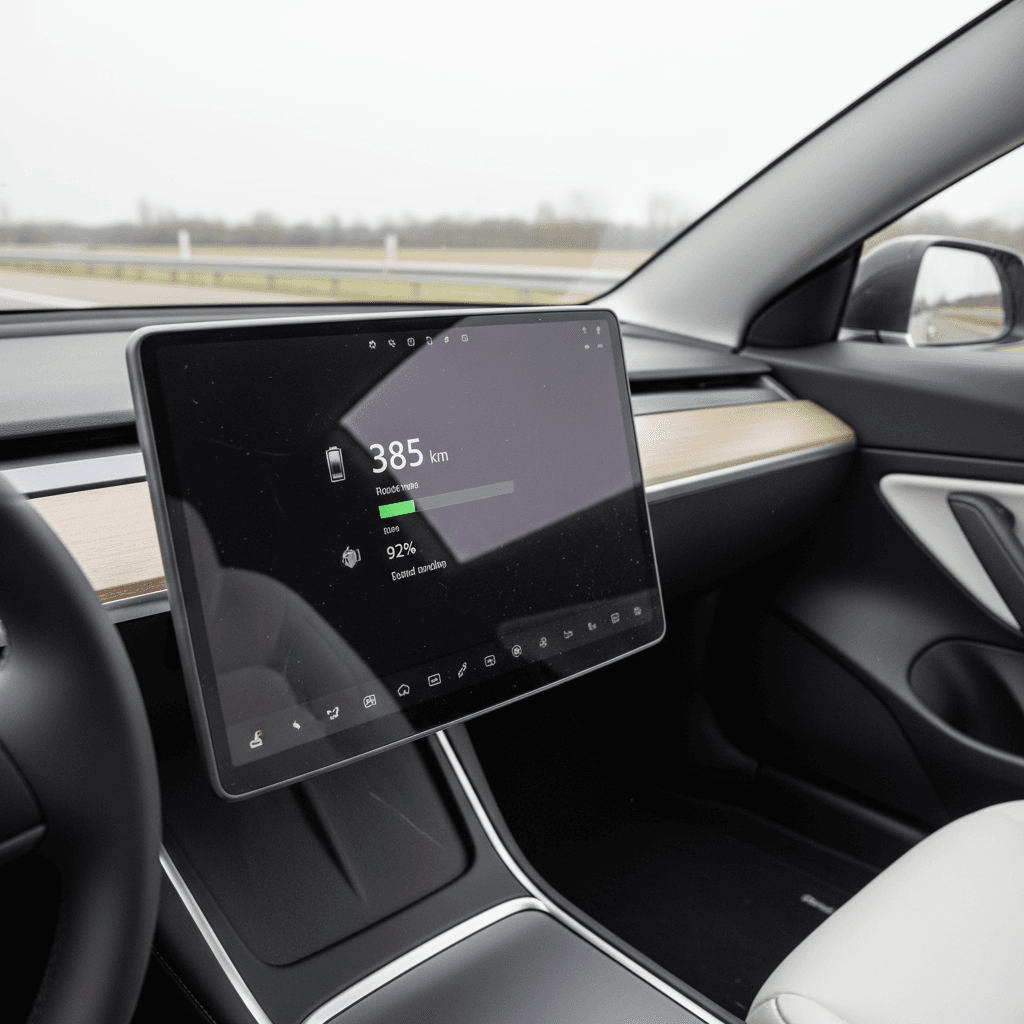
Capture recent range estimates at high state of charge and, if possible, obtain a third‑party battery diagnostic like the <strong>Recharged Score</strong>. Being able to show a quantified state of health makes serious buyers far more comfortable paying toward the top of the range.
3. Fix the small, visible stuff first
Touch up curb rash, replace missing caps, address interior stains, and install a fresh set of quality wiper blades. These small, inexpensive items punch above their weight when a buyer or appraiser is forming first impressions.
4. Gather all keys, chargers, and records
Track down both key cards, any key fobs, your mobile connector, wall‑connector paperwork, and service receipts. A "complete" package signals that the car was cared for and saves the next owner money.
5. Prep high‑quality photos and an honest description
Wash and vacuum the car, shoot photos in soft daylight, and show all four corners, the interior, the touchscreen, and any flaws. In your description, be honest about prior repairs, that builds trust and cuts down on wasted time with skeptical buyers.
6. Decide in advance what matters more: time or money
If you need the car gone this week, prioritize offers that can close quickly, even if they’re a bit lower. If you can wait a couple of weeks, consignment or a well‑managed private listing can be worth the extra effort for a higher net.
7. Lean on EV‑specific expertise
If you’re not an EV die‑hard, don’t feel like you have to answer every technical question yourself. A specialist platform like Recharged can explain charging, battery health, and software features to buyers, which translates into smoother deals and stronger offers.
Script your answers ahead of time
Timing, taxes, and incentives: does waiting help or hurt?
In the gasoline world, waiting sometimes helps you pick up seasonal demand. With EVs, and especially Teslas, the picture is different. New‑car price changes, software updates, and incentive shifts can move your 2023 Model 3’s value suddenly in either direction.
- Depreciation is front‑loaded. The first three years on a Tesla tend to be the steepest for dollar loss. By 2026 your 2023 Model 3 has already taken that hit, but it will continue to decline, just more slowly, from here.
- Federal EV tax credits ended in late 2025. That reshaped the new‑EV market and removed a benchmark that had been pulling some used prices down. With no federal credit on the new side, dealers rely more on straight market demand and inventory levels when valuing trades.
- Software and hardware updates matter. If Tesla releases a meaningful Model 3 refresh (range increase, interior redesign, or major driver‑assist update), your 2023 car can feel older overnight, just the way a new smartphone launch dings last year’s model.
- Local policy and demand can change quickly. New congestion charges, HOV‑lane rules, or local rebates for clean vehicles can spike or cool demand in specific regions.
Don’t try to “time the market” perfectly
How Recharged can help you sell your 2023 Model 3
Recharged was built around a simple idea: used EV owners, and buyers, deserve more transparency than they get in the traditional wholesale‑driven market. That’s especially true for high‑interest cars like the 2023 Tesla Model 3, where battery health and software configuration matter as much as paint color and mileage.
What Recharged brings to your 2023 Model 3 sale
More than just a listing, Recharged is an EV‑first selling platform.
Recharged Score report
Flexible selling paths
Nationwide reach & delivery
Ready to find your next EV?
Browse VehiclesBecause Recharged is focused solely on EVs, the team can speak the language of battery health, charging speeds, and software updates with buyers who might be new to EVs but eager to own a Tesla. In practice, that often means fewer objections and a smoother path to the kind of selling price you had in mind when you ordered your 2023 Model 3.
FAQ: 2023 Tesla Model 3 value and selling questions
Common questions about selling a 2023 Tesla Model 3
Bottom line: when and how to sell your 2023 Model 3
A 2023 Tesla Model 3 sits in a sweet spot in 2026: modern enough to feel current, depreciated enough to be attainable for a wide pool of buyers, and still new enough that warranty coverage and battery health are compelling selling points. That combination makes it a strong candidate to sell, if you approach pricing and presentation with a clear strategy.
Start by grounding yourself in realistic numbers, then do the simple prep work that moves your car from “average” to “standout” in a crowded used‑Tesla market. If you’d rather not go it alone, a specialist like Recharged can put hard data behind your 2023 Model 3’s value with a Recharged Score report, market it to motivated EV shoppers, and guide you from first quote to final funds. However you choose to sell, treating your Model 3 like the desirable, tech‑forward EV it is will help you capture the value you’ve built over the last few years of ownership.