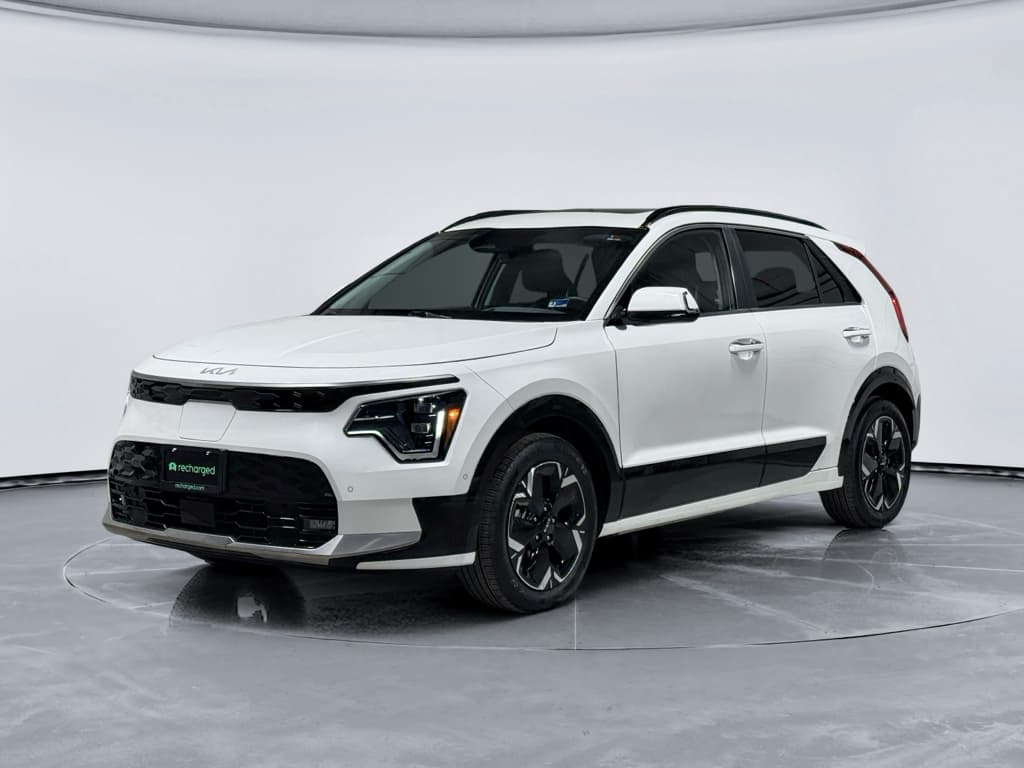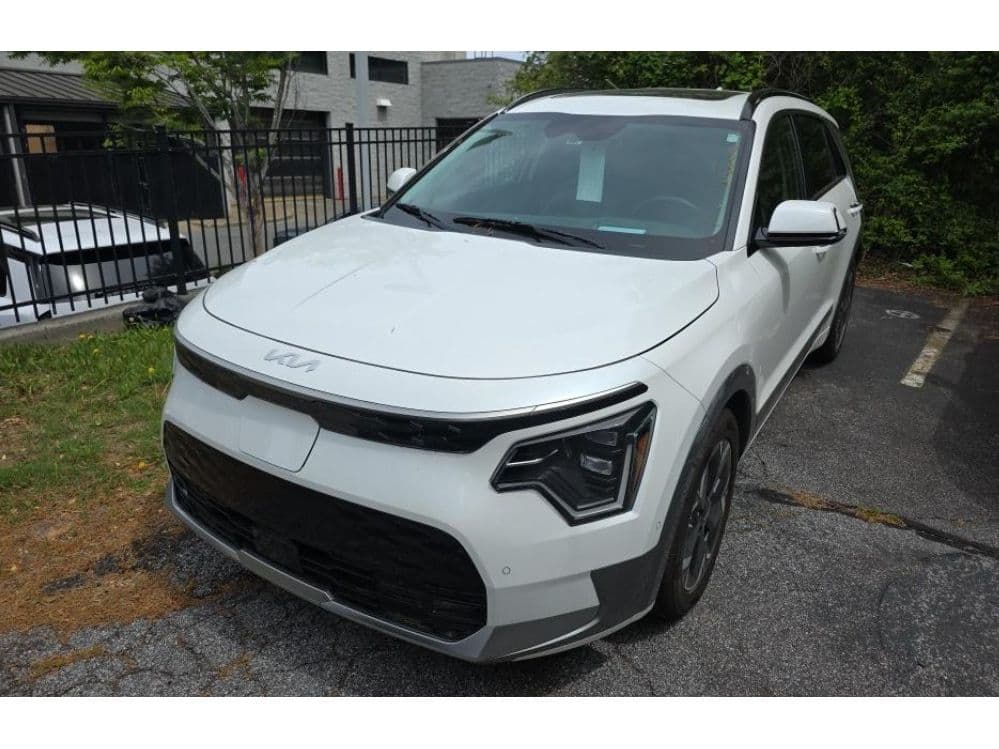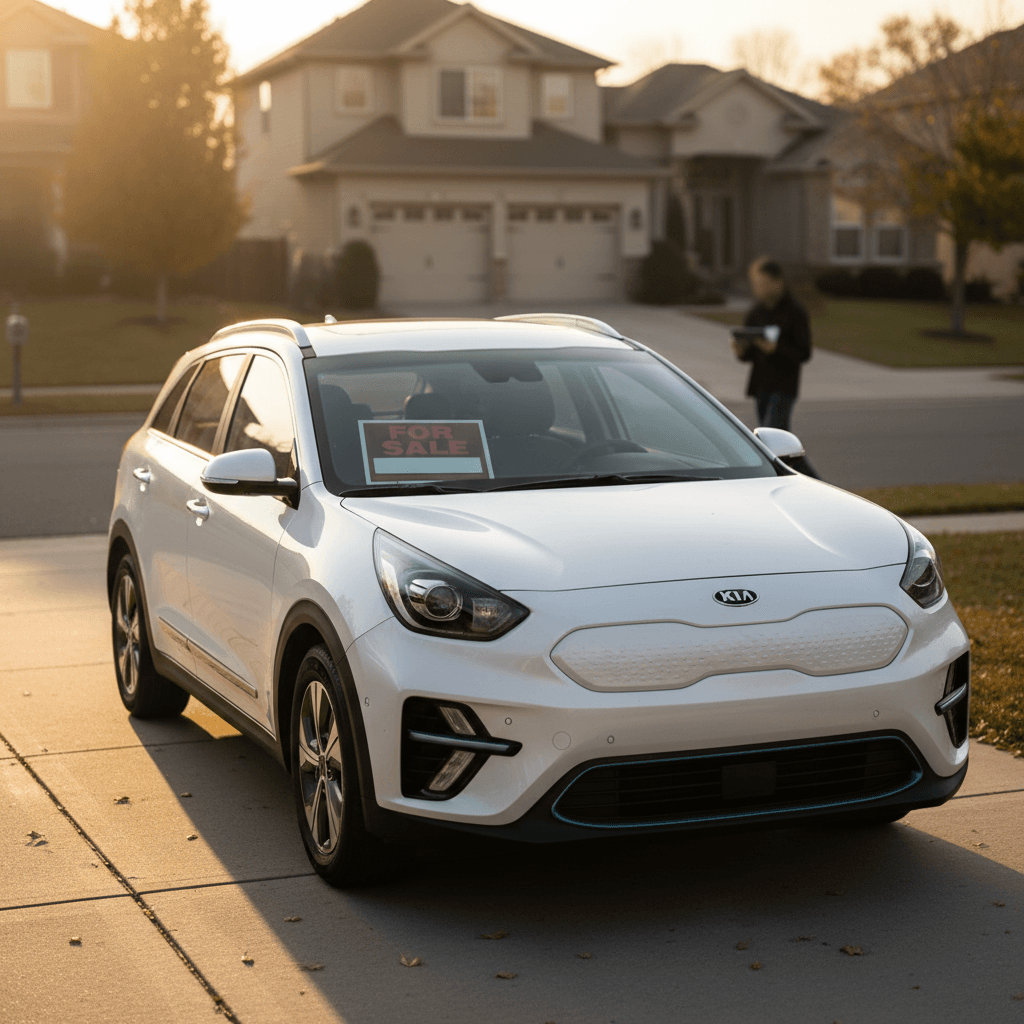
If you’re thinking, “Is now a good time to sell my 2023 Kia Niro EV, and what’s it really worth?” you’re not alone. The Niro EV has taken a bigger depreciation hit than many gas SUVs, but it’s also become one of the better values in the used‑EV market, especially for buyers who care about range, warranty coverage and price more than having the latest badge.
Quick take
2023 Kia Niro EV value in 2026: where things stand
2023 Kia Niro EV value snapshot (2026)
When the 2023 Niro EV launched, it carried MSRPs around $39,500 for the Wind and $44,500 for the Wave, before destination and options. Today, three model years in, used values reflect heavy early EV depreciation, but also cooling used‑EV supply and renewed interest in practical, long‑range crossovers.
High depreciation isn’t all bad
What your 2023 Kia Niro EV is worth right now
Every car is different, but we can outline realistic value bands for a typical 2023 Niro EV in the U.S. as of spring 2026. Assume normal wear, a clean title and no major accidents.
2023 Kia Niro EV value bands (spring 2026, rough guide)
These are directional ranges to help you frame expectations. Exact numbers depend on zip code, equipment, color, history and battery health.
| Scenario | Miles | Condition | Likely Trade‑In Range | Likely Private‑Sale/Marketplace Ask |
|---|---|---|---|---|
| Low‑mile Wave, one‑owner, great history | ≤20,000 | Excellent | $20,000–$22,000 | $24,000–$26,000 |
| Average Wind, typical commuter | 30,000–45,000 | Good | $17,000–$20,000 | $21,000–$23,500 |
| High‑mile commuter or rideshare | 50,000–70,000+ | Fair/Good | $14,000–$17,000 | $18,000–$21,000 |
| Accident on Carfax or cosmetic damage | Any | Fair | $2,000–$4,000 below above bands | $1,000–$3,000 below above bands |
Wind values are generally a bit lower than Wave, but condition and mileage matter more than trim alone.
Use tools, but don’t worship them
Key factors that move your Niro EV’s value up or down
What today’s buyers pay extra for
Your 2023 Niro EV can stand out if you lean into these strengths.
Mileage & usage
Most buyers target under 40,000 miles on a 3‑year‑old EV. Occasional long trips are fine, but heavy rideshare or high‑mileage commuting pushes offers down.
Accident & service history
A clean Carfax, records of tire rotations, brake service, and software updates can be worth thousands versus a car with gaps or accidents.
Battery health & charging habits
Healthy range close to the EPA‑rated 253 miles and a documented history of Level 2 home charging (vs constant DC fast charging) both reassure buyers.
Trim, options & features
Wave models with heat pump, battery warmer and more tech usually draw higher offers. Popular colors and well‑equipped interiors help too.
Remaining warranty
The transferable 10‑year/100,000‑mile EV system warranty is a big advantage. The more of it that’s left, the stronger your resale story.
Condition & presentation
Fresh detail, fixed curb rash and a clean interior matter. Buyers will pay more to avoid reconditioning themselves.
Local market matters
Trade‑in vs private sale vs Recharged marketplace
Dealer trade‑in
- Pros: Fastest, easiest path; good if you’re already buying another vehicle.
- Cons: Typically the lowest dollar amount; dealers price in risk and reconditioning.
- Best for: Convenience‑first sellers who value time and simplicity over every last dollar.
Private party sale
- Pros: Often nets $2,000–$4,000 more than trade‑in on a clean Niro EV.
- Cons: You handle ads, messages, test drives and paperwork.
- Best for: Sellers comfortable marketing their car and screening buyers.
Recharged marketplace
- Pros: EV‑focused buyers, expert pricing support, Recharged Score battery report, and help with financing, trade‑ins and delivery.
- Cons: Not every car or seller wants a fully managed experience.
- Best for: Owners who want close‑to‑private‑sale value with a more guided, digital process.
How Recharged can help
Ready to find your next EV?
Browse VehiclesHow to price your 2023 Niro EV with confidence
Pricing too high means your listing sits; pricing too low leaves money on the table. The sweet spot is usually a realistic number that still leaves room for a small negotiation. Here’s a framework you can apply in under an hour.
Pricing formula for your 2023 Niro EV
1. Establish a "book value" baseline
Pull values from at least two sources (KBB, Edmunds, Black Book, etc.). Use inputs that match your car’s actual mileage, trim and options as closely as possible.
2. Scan real‑world listings
Search for <strong>2023 Niro EV Wind/Wave</strong> within 250 miles on used‑car sites and EV marketplaces. Note asking prices for cars with mileage and condition similar to yours.
3. Adjust for mileage and trim
If your car has significantly lower miles than the listings you see, add a bit; if it’s higher, subtract. Wave trims and preserved‑range features can justify a premium over base Wind models.
4. Factor in condition and history
Outstanding cosmetic condition, new tires, and a clean, documented service history can each justify another few hundred to a couple thousand over the median. Accidents or visible wear push you under it.
5. Decide your channel and spread
Set a <strong>target sale price</strong> and a <strong>bottom‑line number</strong>. Expect your trade‑in offers to cluster near that bottom line and private‑sale offers to land somewhere in the middle.
Anchor slightly high, but stay realistic
7 steps to get top dollar for your 2023 Niro EV
- Get a professional‑level wash and interior detail. Fix easy cosmetic issues like scuffs or curb rash if they’re cheap to repair.
- Gather maintenance records, tire receipts, and any DC fast‑charging history you can document (many owners use app screenshots).
- Check for open recalls and software updates at a Kia dealership and, if possible, have them addressed before listing.
- Take 20–30 clear photos: exterior from all angles, interior, infotainment, tires, charge port, odometer, and the car plugged in and charging.
- Write an honest, detailed description that highlights range, remaining warranty, charging habits, and why you’re selling.
- Choose timing wisely: list just before weekends and avoid major holidays; spring and early summer often see stronger used‑EV demand.
- For Recharged listings, complete your Recharged Score battery health check so shoppers can see verified range and pack health up front.
Avoid these seller mistakes
Battery health, warranty and buyer confidence
For a 2023 Niro EV, battery health is the single biggest wild card in your resale value. Most packs are holding up well so far, but buyers read headlines about EV degradation and want reassurance that your car still delivers usable range.
Turn your battery and warranty into selling points
You can’t change the model year, but you can change how buyers feel about it.
Prove real‑world range
Before you list, take a normal mixed‑driving trip, reset your trip computer, and capture photos of miles driven vs battery % used. If your Niro EV is still delivering close to its rated efficiency, that’s powerful evidence for buyers.
Highlight Kia’s EV system warranty
Make it clear in your ad that the 10‑year/100,000‑mile EV system warranty (including the high‑voltage battery) is still in effect and transferable, and specify how many years and miles remain based on your in‑service date.
Share charging habits
Buyers prefer cars that lived mostly on Level 2 charging. If you mainly charged at home and only used DC fast charging for trips, say so, and, if possible, back it up with app history from Kia Connect or your charging providers.
Leverage a Recharged Score Report
A Recharged Score battery health report uses diagnostics to measure pack health and range so buyers aren’t guessing. Cars with verified healthy batteries typically attract more interest and stronger offers.
What if your range has dropped?
Is now the right time to sell your 2023 Niro EV?
Timing the market perfectly is impossible, but you can avoid obvious pitfalls. Used‑EV pricing has gone through a reset since the 2021–2022 spike, and 3‑year‑old lease returns, exactly where 2023 Niro EVs sit, tend to be a “sweet spot” where depreciation slows a bit but warranty coverage remains strong.
Selling timing scenarios for 2023 Niro EV owners
You want to maximize sale price
Consider listing in the next 6–12 months while your Niro EV is still relatively fresh and well under the 10‑year/100,000‑mile warranty cap.
Target spring and early summer 2026, when car shopping typically picks up and winter range worries fade.
If you can, fix minor cosmetic issues now so you’re ready to move quickly when the right buyer appears.
You’re on the fence about keeping it
Run numbers on your <strong>total cost of ownership</strong>, payment, insurance, charging vs gas, over the next three years.
If your battery health is strong and you like the car, keeping it a bit longer may beat locking in more depreciation today.
Bookmark this guide and, if values clearly stabilize or start improving in your region, revisit a sale when you’re closer to 6–7 years of ownership.
You just want out of EV ownership
Shop trade‑in offers with at least two dealers, but also get an instant or near‑instant offer from EV‑focused platforms like Recharged.
Be realistic: rapid EV depreciation means you might be upside‑down if you bought at peak prices or financed with a long loan.
If negative equity is large, ask your lender and dealer about options to roll it into a new loan or bridge it with cash so you’re not stretching terms too far.
Watch policy and incentive changes
Frequently asked questions about 2023 Niro EV resale
2023 Kia Niro EV resale FAQs
Selling a 2023 Kia Niro EV in 2026 means working inside a market that’s still figuring out how to price used EVs. That uncertainty can hurt uninformed sellers, but it can help you if you understand how depreciation, battery health, warranty coverage and channel choice affect your bottom line. Use the ranges and steps in this guide as a framework, layer in real offers from your area, and don’t be afraid to lean on EV‑focused partners like Recharged to turn your Niro EV’s strengths into a better, smoother sale.