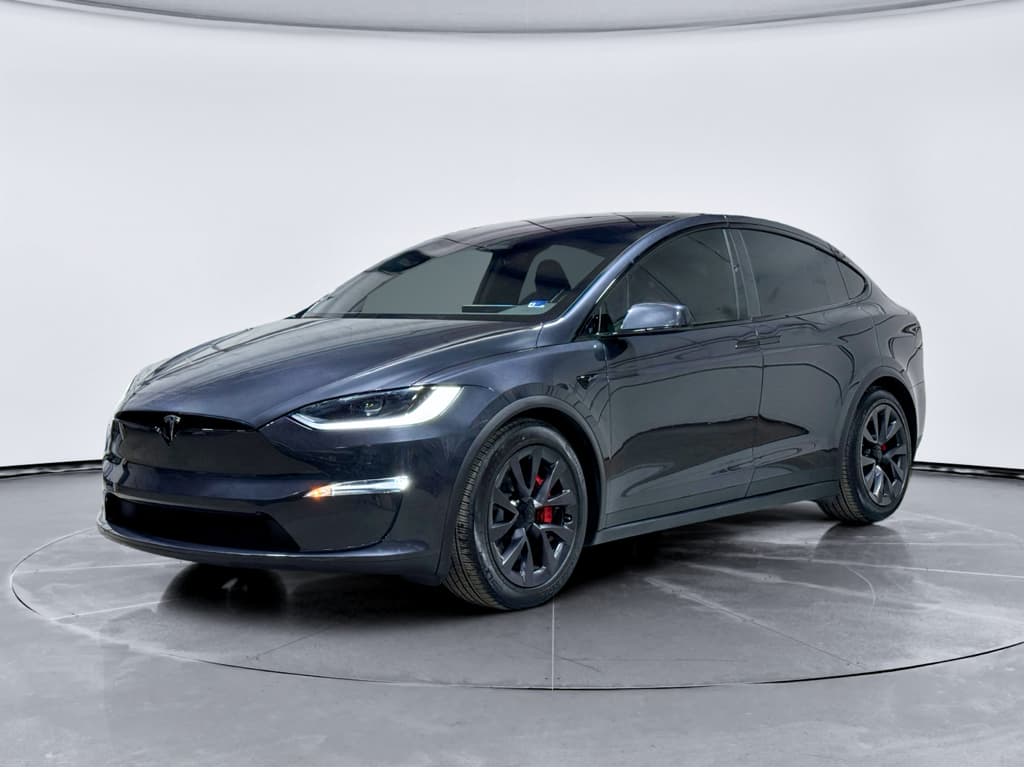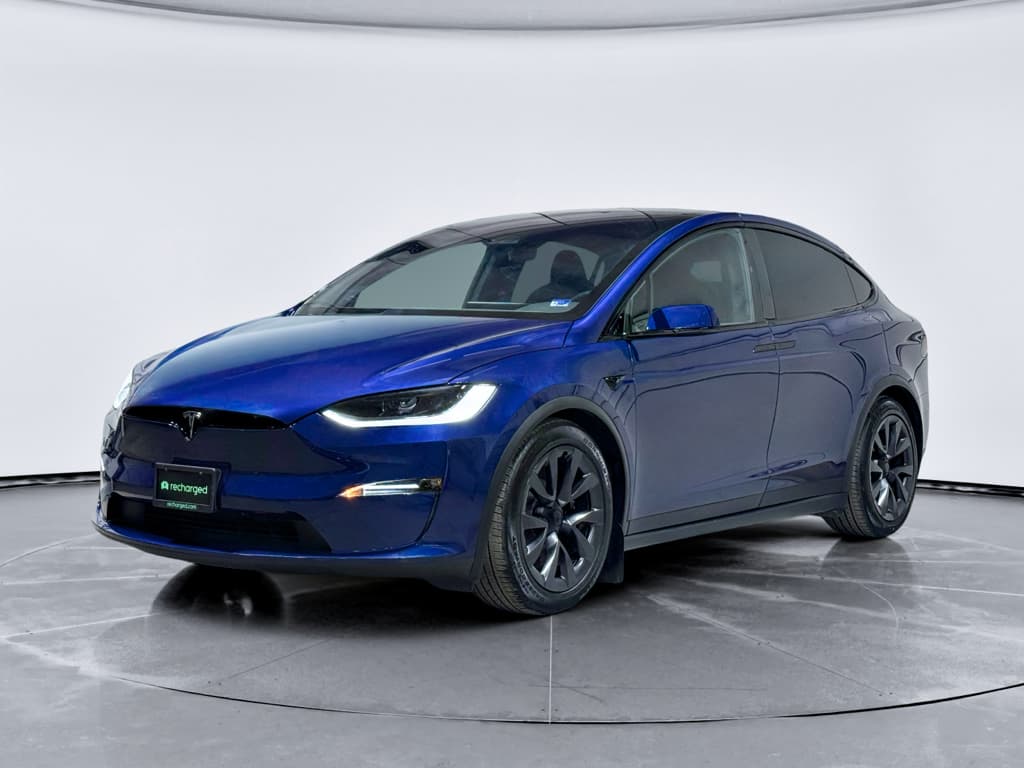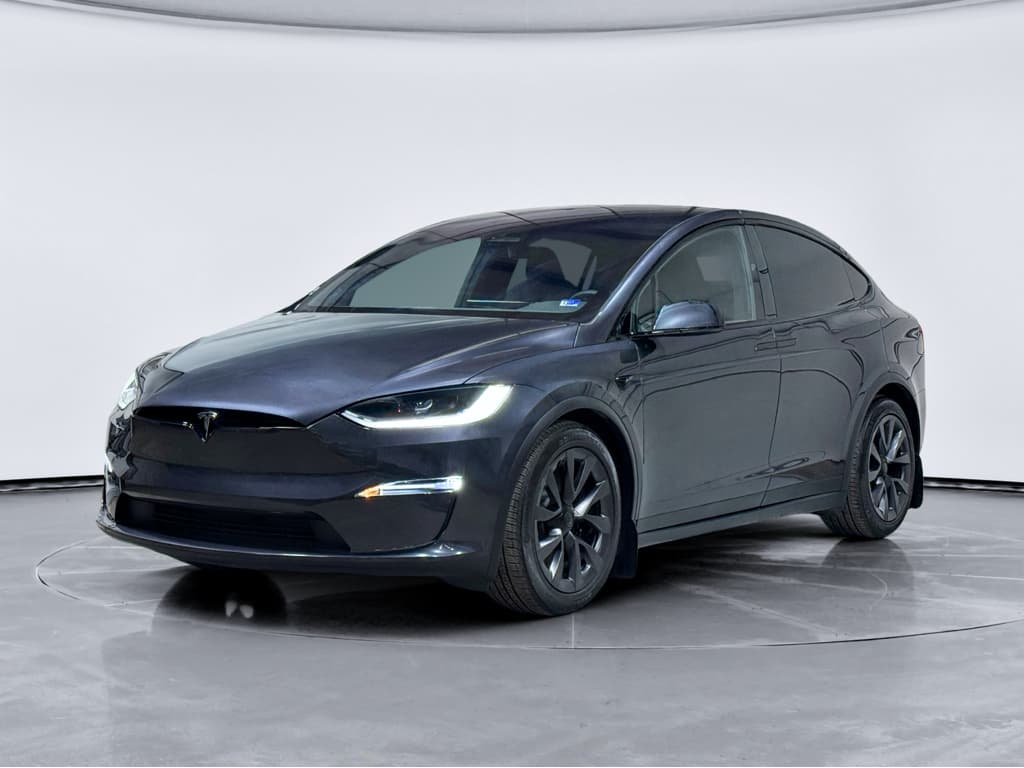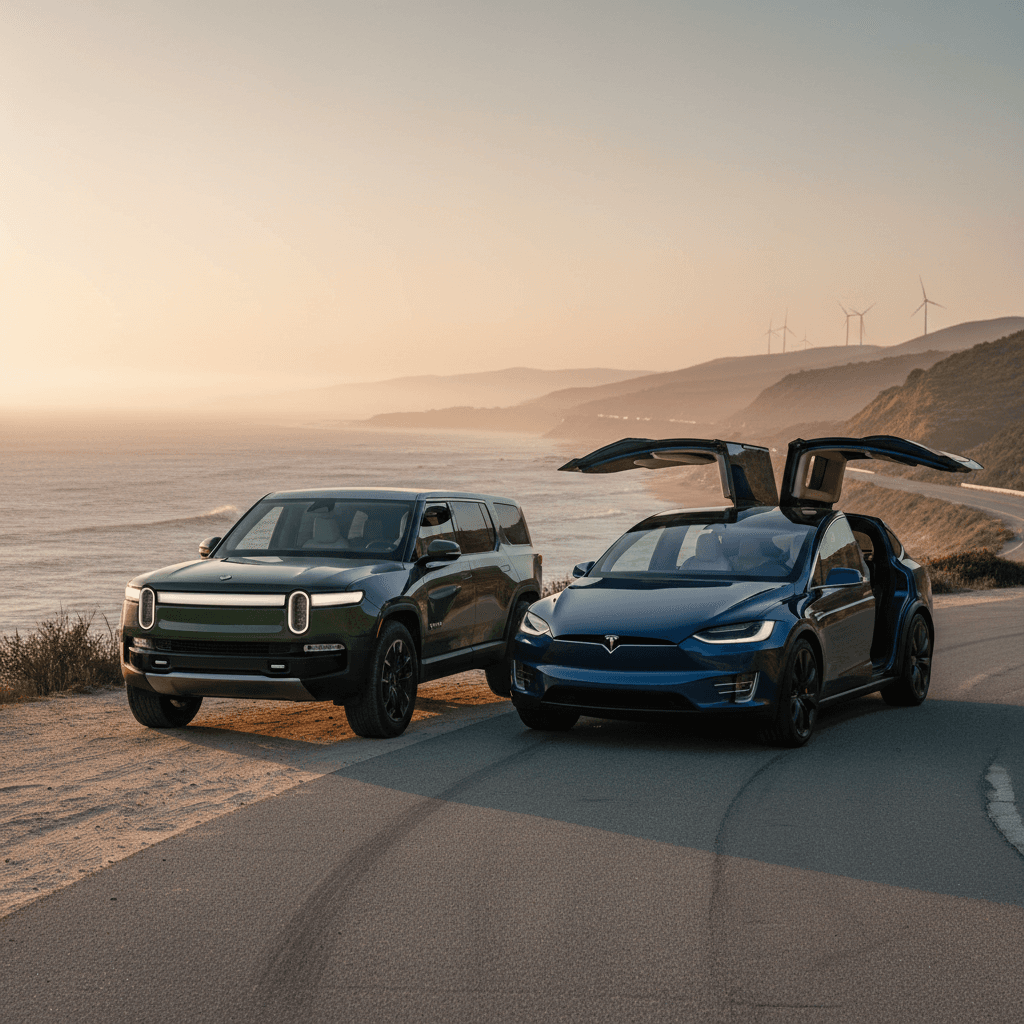
If you’re cross-shopping the Rivian R1S vs Tesla Model X and wondering which is better, you’re not alone. Both are fast, expensive, all-electric three-row SUVs with cult followings, and very different personalities. One is a clean-lined Silicon Valley shuttle; the other is a boxy, overbuilt adventure rig that looks like it could drive through a Patagonia catalog.
Context for 2026 shoppers
Rivian R1S vs Tesla Model X at a Glance
Key numbers: R1S vs Model X (typical trims)
Core specs comparison: Rivian R1S vs Tesla Model X
Approximate specs for common recent configurations. Exact numbers vary by model year and wheel/tire choice, so always verify the specific vehicle you’re considering.
| Attribute | Rivian R1S (recent models) | Tesla Model X (recent models) |
|---|---|---|
| Drivetrain | Dual or Tri/Quad-motor AWD | Dual-motor AWD (Long Range, Plaid) |
| Typical usable battery | ~105–135 kWh packs | ~95–100 kWh |
| EPA range (typical) | ~321–350+ miles; up to ~410 on newest long-range trims | ~330–340 miles depending on trim |
| 0–60 mph | ~4.5 s (dual), ~3.0 s or quicker (Tri/Quad) | ~3.8 s (LR), ~2.5 s (Plaid) |
| Max towing | 7,700 lbs | 5,000 lbs |
| Seating | Standard 3-row (5–7 seats) | 6 or 7 seats depending on layout |
| Length | ~200 in | ~199 in |
| Off-road hardware | Air suspension, adaptive dampers, real off-road modes | Air suspension; on-road focused |
| DC fast charging | Up to ~220 kW on compatible hardware | Up to ~250 kW on Tesla Superchargers |
Always check the window sticker or listing for the specific build you’re buying, especially on the used market.
Who each SUV is built for
Specs showdown: range, performance, and towing
Range and efficiency
If you spend your life on interstates, range and charging speed matter more than rock-crawl modes. Here the two SUVs are close on paper. A recent Model X Long Range typically delivers EPA range in the low- to mid-300-mile zone when new, with the Plaid only slightly behind thanks to stickier tires and more power. Rivian’s R1S in dual- or tri-motor form lands in a similar 320–350-mile sweet spot, with the newest large-pack and Quad configurations targeting well north of 350 miles in ideal conditions.
Real-world EV truth
Acceleration and driving style
- Tesla Model X: Still absurdly quick. Even the Long Range launches like a sports car; the Plaid borders on comic, ripping off 0–60 runs in the mid-2-second range when conditions allow.
- Rivian R1S: More "instant V8" than spaceship. Dual-motor trims feel plenty quick; tri- and quad-motor setups deliver serious thrust, but the experience feels tuned for confidence and control rather than drag-strip theatrics.
If your idea of fun is humiliating sports cars from a stoplight, the Model X, especially a Plaid, is still the more unhinged performer. If you want a fast SUV that feels planted on gravel, mud, or a rutted fire road, the R1S has the more naturally athletic stance.
Towing and payload
On towing, there’s no contest. The Rivian R1S is the better tool. It’s rated up to 7,700 pounds with the proper hitch, and owners routinely tow campers, boats, and enclosed trailers. Do range and charge-planning become a bigger deal when you’re dragging a wall of aluminum behind you? Absolutely. But the chassis, brakes, and cooling are clearly built with this use case in mind.
The Model X can certainly tow, up to about 5,000 pounds when properly equipped, but it isn’t the vehicle you choose to live at the campground all summer. Think small utility trailer or lightweight boat, not a 26-foot bunkhouse.
Specs verdict
Space, comfort, and practicality
Cabin design and seating
Rivian R1S: Warm, outdoorsy, functional
The R1S interior feels like a modern mountain lodge: upright dash, big glass, warm colors, and physical controls where you want them. The seating position is SUV-traditional, with good visibility and an airy greenhouse. Three-row seating is standard, and adults can actually survive in the third row for more than one song on Spotify.
Tesla Model X: Minimalist sci‑fi lounge
The Model X still looks like a prototype that escaped from a design studio. The giant windshield, yoke or wheel (depending on year), and open floor create a very airy cabin. The third row is tighter than the Rivian’s, and the Falcon Wing doors are glorious in a parking-lot flex, slightly terrifying in tight garages, and a potential long-term reliability question on a used example.
Cargo and frunk practicality
Ride comfort and noise
Both SUVs ride on adaptive air suspensions, but they’re tuned for different lives. The Model X is happiest hustling down clean pavement: quiet, flat, and more buttoned-down in quick lane changes. The R1S rides a bit firmer around town, especially on 20" or 22" wheels, but shrugs off battered pavement, dirt, snow, and fire roads with a shrug that says, "We knew you were going to do this."
Wheel and tire choice matters
Technology, driver assistance, and OTA updates
Both brands lean hard on software. Tesla practically invented the modern over-the-air update; Rivian is the rare newcomer that’s nearly as fast and ambitious with features, UI tweaks, and driving-mode refinements.
Infotainment & driver-assist: where each SUV shines
Neither is bad; they just prioritize different philosophies.
Tesla Model X tech strengths
- Super clean UI with a mature app ecosystem and strong navigation.
- Tesla’s Autopilot and optional Full Self-Driving (varies by year and package) are still among the strongest lane-keeping and traffic-jam assistants, though experiences vary widely by owner.
- Broad support for third-party apps (games, streaming, etc.) that make charging stops easier with kids.
Rivian R1S tech strengths
- Gorgeous, modern UI with a more traditional instrument cluster + central screen.
- Driver assistance that feels conservative but confidence-inspiring; frequent OTA updates keep improving lane keeping and adaptive cruise.
- Thoughtful touches: drive modes, off-road displays, camp features, and a UI that feels built for actual outdoor adventures, not just commuting.
On "self-driving" claims
Charging on the road and at home
Public fast charging
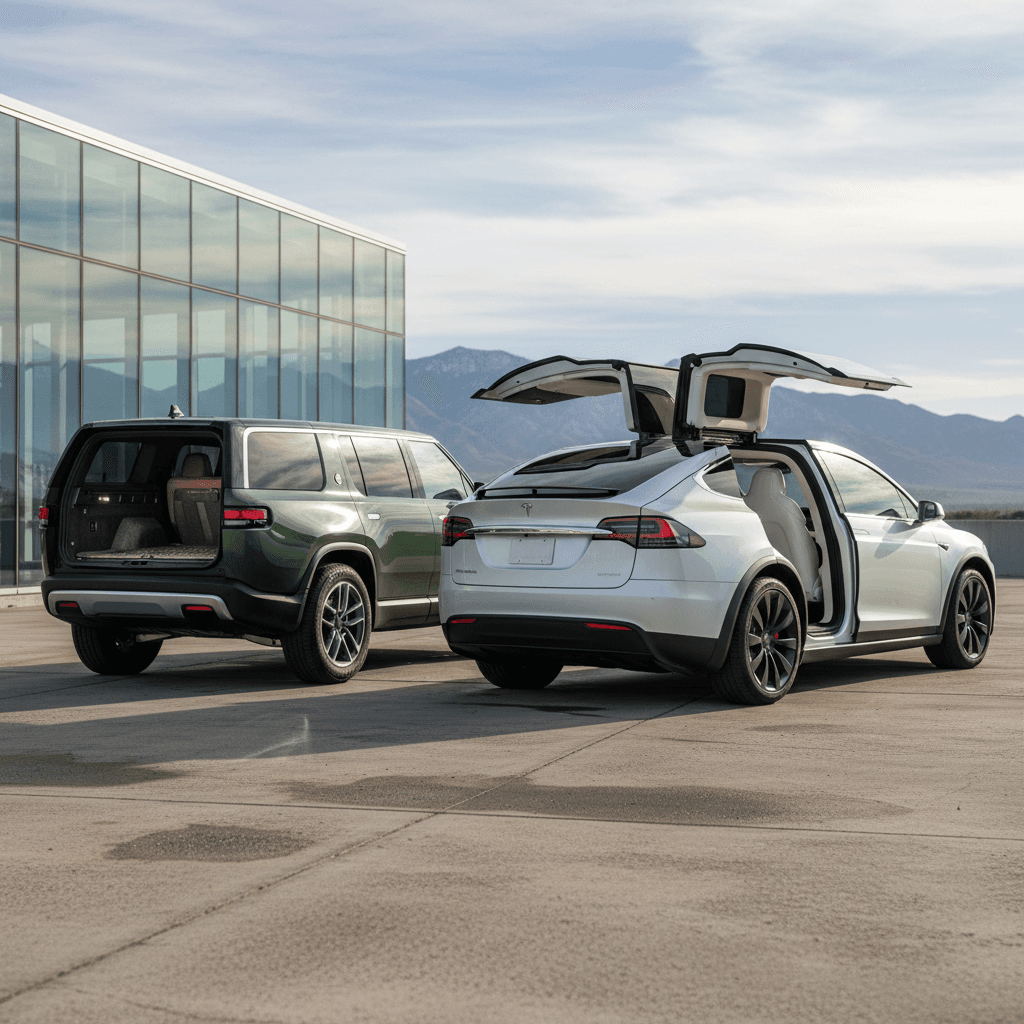
Historically, the Model X’s killer feature was simple: the Supercharger network just worked. You plugged in, walked away, and your car and Tesla handled the billing and handshakes in the background. For years, that was reason enough to pick a Tesla over anything else.
By 2026, the story is more nuanced. Rivian drivers now have growing access to Tesla’s NACS standard, plus improved non-Tesla networks. The R1S still can’t match the sheer ubiquity and plug-and-play polish of Superchargers at every interstate exit, but the gap is no longer a canyon. It’s more of a ditch you can step across with a little planning.
Plan your first road trip before you buy
Home charging
At home, the two are basically equals. Both will happily drink from a 240-volt Level 2 charger overnight and be full, or close to it, by morning. What matters most is your home electrical setup, not the badge on the grille.
If you’re shopping used and don’t yet have a home charger, it’s worth reading a deeper guide to home EV charging and installation and budgeting that work right into your purchase decision.
Driving experience and personality
Here’s where feelings and aesthetics matter just as much as stats. The Tesla Model X is still visually unlike anything else on the road, the windshield, the Falcon Wing doors, the minimalist cockpit. It feels like a tech company’s idea of an SUV: incredibly quick, eerily quiet, and a little bit clinical.
The Rivian R1S, by contrast, feels like a modern reboot of the classic family adventure truck. It has presence. The steering has heft, the suspension tuning encourages you to leave pavement, and the design language says, "We’re going somewhere that doesn’t have cell service." In daily use, it feels warmer, more tactile, and more willing to get dirty.
If the Model X is a glass-and-aluminum iPad on 22‑inch wheels, the R1S is a very fast, very clever Swiss Army knife with a roof rack.
Reliability, resale, and ownership costs
Reliability patterns
Neither brand is immune to issues. Tesla has had years to iron out major drivetrain problems, but the Model X carries a history of finicky Falcon Wing doors, trim and interior wear, and the occasional suspension or MCU drama on older builds. Inspection and service records matter a lot on a used X.
Rivian is newer, but owner surveys and early reliability data have generally been kind to the R1 line. There are still occasional quirks, door seals, trim rattles, early software bugs, but the underlying hardware, especially battery and motors, has so far looked stout. As with any young brand, long-term data is still forming.
Depreciation and resale
The Model X started life as a six-figure flagship. That means steep early depreciation, and increasingly attractive used pricing, especially as Tesla winds down production and shifts attention to other products. You can often find well-optioned, older Xs for the price of a newer R1S with fewer miles but less luxury kit.
The R1S, being newer and supply-constrained for much of its life, has held value better so far. That cuts both ways: higher used prices, but also potentially better residuals if you plan to sell or trade in later. Rivian’s focus on the R1 platform and upcoming R2 family suggests continued software support and ecosystem growth around the R1S.
Battery health is the big variable
Used market: how the R1S and Model X compare
Most shoppers in 2026 are looking at these SUVs on the used market, not new order banks. That’s where the differences in age and brand strategy really show up.
What you typically see used: R1S vs Model X
Patterns you’ll notice when you start actually combing through listings.
Age and mileage
Model X: More variety. You’ll see older, high-mileage examples alongside fairly recent, low-mileage ones as owners upgrade to newer Teslas.
R1S: Generally newer and lower mileage. Many are first-owner vehicles coming off early leases or upgrades to different trims.
Price bands
Model X: Wide spread. Early-build examples can approach mainstream-SUV money; late-model Plaids still command a premium.
R1S: Prices tend to cluster higher, reflecting age and demand. You’re paying for youth and capability rather than sheer badge prestige.
Battery transparency
Traditional listings: Often give only the original EPA range, not current real-world capability.
At Recharged: every vehicle comes with a Recharged Score and verified battery-health report, so you can compare an older Model X and a newer R1S on equal terms instead of guesswork.
How Recharged helps in this comparison
Ready to find your next EV?
Browse VehiclesSo which is better: Rivian R1S or Tesla Model X?
Choose the Rivian R1S if…
- You actually use your SUV as an SUV, camping, skiing, dirt roads, towing real trailers.
- You want a modern platform with a long runway for software updates and ecosystem growth.
- You care more about space, practicality, and adventure capability than headline 0–60 times.
- You like the idea of a warm, modern cabin instead of stark minimalism.
Choose the Tesla Model X if…
- You mostly road-trip on interstates and care about efficiency and fast charging above all else.
- You want the wild acceleration party trick and sci-fi vibe.
- You prioritize Tesla’s mature software ecosystem and navigation.
- You’re value-shopping the used market and can find a well-maintained example with strong battery health.
The honest answer
How to choose: quick checklist
5-step checklist to pick between R1S and Model X
1. Define your real use case
List your top three uses: daily commute, school runs, ski trips, towing a camper, cross-country drives, etc. If most of your life happens off the beaten path or with a trailer, the R1S should jump to the top.
2. Map your longest regular trip
Use modern charging apps to map your longest recurring trip in each vehicle. If one option clearly makes that route easier, that’s a strong signal.
3. Decide how much performance you actually use
Would you notice the difference between 3.8 and 4.5 seconds to 60 mph, or are you really chasing the bragging rights of a Plaid? Don’t overpay for acceleration you’ll never deploy.
4. Set a hard budget and stick to it
Because used Model X prices span a huge range, it’s easy to creep upward into "might as well buy new" territory. Set a ceiling that includes taxes, a home charger, and a healthy maintenance/repair buffer, especially for an older X.
5. Get objective battery and condition data
Before you fall in love with Falcon Wing doors or Rivian’s camp speaker, make sure the fundamentals are sound. At <strong>Recharged</strong>, every R1S or Model X listing includes a <strong>Recharged Score diagnostic, battery health, and transparent pricing</strong> so you can compare apples to apples.
FAQ: Rivian R1S vs Tesla Model X
Frequently asked questions
If you strip away the fan culture and forum noise, the choice between Rivian R1S vs Tesla Model X comes down to how you really live. The Model X is still an incredible long-haul machine and performance party trick, especially at the right used price. The R1S is the one that actually wants to go where your Instagram photos pretend you’ve been. When you’re ready to test those assumptions against real vehicles, with real battery data, Recharged can line up both on the same playing field and help you drive home in the one that truly fits your life.