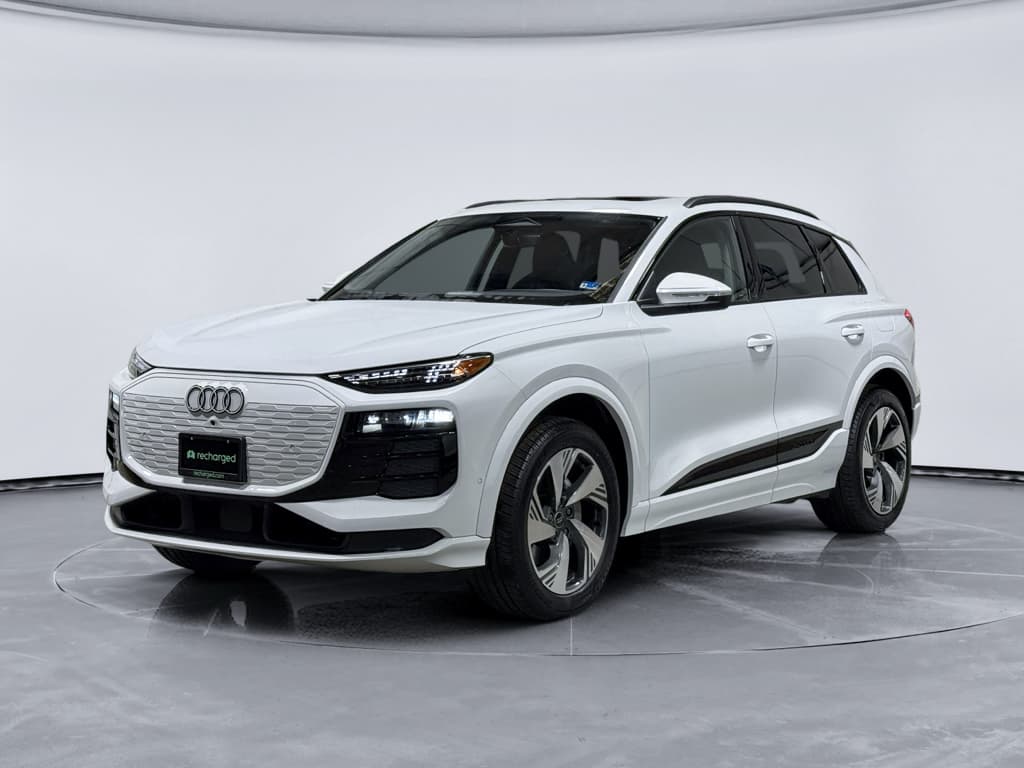
You bought the 2023 Audi Q4 e-tron for the right reasons: quiet, quick, civilized, with four rings on the nose. Now it’s 2026, EV prices have been on a roller coaster, and you’re wondering what your Q4 is actually worth, and how to sell it without getting taken to the cleaners. This guide breaks down how to sell a 2023 Audi Q4 e-tron for the best possible value, using real-world depreciation data, battery-health insights, and practical selling strategies.
What this guide covers
Why 2023 Q4 e-tron values look the way they do
The Q4 e-tron landed in a weird moment for EVs. It’s a compact luxury SUV with a premium badge, but it also arrived just as the industry went into an arms race on range, charging speed, and incentives. That cocktail has meant one thing for early owners: faster-than-average depreciation compared with equivalent gas SUVs.
2023 Audi Q4 e-tron value snapshot (2026)
What those numbers translate to emotionally: if your Q4 had a sticker around $56,000 when new, seeing low‑20s as a resale estimate can feel brutal. But that’s the story across many luxury EVs built between 2021–2023, not just Audi. The upside is that if you play your cards right, documentation, presentation, and smart channel choice, you can still land at the top of the value range for your specific car.
What is a fair price for a 2023 Audi Q4 e-tron in 2026?
Every Q4 is a little different, trim, options, mileage, region, but you can still frame a realistic target range before you ever talk to a dealer. The trick is to separate fantasy "what I hope to get" numbers from what the market is actually paying right now.
Typical 2023 Q4 e-tron value bands in 2026 (U.S.)
Approximate private-party and dealer numbers for a 2023 Audi Q4 e-tron in early 2026, assuming clean history and no major mechanical faults.
| Scenario | Odometer (approx.) | Condition / Notes | Likely Dealer Trade-In | Likely Private-Party Ask |
|---|---|---|---|---|
| High-value example | ≤18,000 miles | Prestige or well-optioned Premium Plus, full service records, clean cosmetic condition, no accidents | $20,000–$22,000 | $23,000–$26,000 |
| Typical real-world car | 20,000–35,000 miles | Normal wear, a few scrapes, routine maintenance done, minor cosmetic issues | $18,000–$20,000 | $21,000–$23,500 |
| Harder-to-sell example | 35,000–50,000 miles | Visible wear, lack of records, prior minor accident, average tires | $15,000–$18,000 | $18,000–$21,000 |
| Problem-child | 50,000+ miles | Multiple owners, accident history, battery or warning-light concerns | Auction money | Buyers will expect a steep discount or walk away |
Use this table as a directional guide only, your actual value will depend heavily on mileage, battery health, options, and local demand.
These are guideposts, not guarantees
When you price your own 2023 Q4 e-tron, start by collecting three numbers for your trim and ZIP code: a trade‑in quote, a private‑party estimate, and real asking prices for similar Q4s currently listed. That triangle of data gives you a realistic window, and then you can decide whether you want a fast, painless sale or every last dollar.
Factors that move your 2023 Q4 e-tron value up or down
Big value drivers for your 2023 Q4 e-tron
Some things you can’t change, others you absolutely can.
Mileage & usage
Lower miles almost always equals more money. A Q4 with 15,000 miles feels like a different product than one with 45,000, even if they drive similarly.
Buyers also like consistent use, steady commuting is less scary than long stretches of storage with unknown charging habits.
Service & history
Printed service records, tire invoices, and a clean vehicle history report are value multipliers. They don’t just prove you maintained the car; they reassure the buyer there’s no ugly surprise hiding offstage.
Accidents & cosmetic condition
Minor cosmetic repairs, bumper scrapes, wheel rash, headlight haze, can swing value by thousands. Accident history doesn’t automatically kill a deal, but it does push your Q4 toward the lower end of the range.
Battery health
Because EVs live or die by their packs, a documented state-of-health (SoH) report is a huge trust builder. A healthy battery can justify top-of-market pricing versus a similar Q4 without proof.
Where you’re selling
Q4 e-trons generally do better in metro areas with strong EV adoption and available public charging. In regions where charging is sparse or winters are severe, buyers will be more price-sensitive.
Season & timing
Listing an EV in the depths of a cold snap, when everyone’s range is down 25%, isn’t ideal. Spring and early fall traditionally see stronger interest. Around new-model announcements, older EVs can take a short-term value hit.
Lean into what’s unique about your Q4
Battery health: how much it really matters when you sell
For savvy used‑EV buyers, the battery is the whole story. The good news with the 2023 Audi Q4 e-tron is that it shipped with a large ~77 kWh usable pack and an 8‑year/100,000‑mile high-voltage battery warranty from the in‑service date. That gives buyers a safety net through roughly 2031, assuming your car isn’t already at moonshot mileage.
- Most 2023 Q4 e-trons on normal duty cycles are seeing modest real-world degradation so far, often a few percent drop from new, not a horror story.
- Aggressive DC fast charging, constantly topping to 100%, or long-term storage at very high or very low state of charge can accelerate wear.
- Cold-climate cars aren’t doomed, but repeated deep discharges in winter will show up as shorter effective range and can worry buyers.

Why a battery health report pays for itself
Ready to find your next EV?
Browse VehiclesHow to talk about range honestly
Buyers don’t want brochure numbers, they want what you actually see. Share your typical commuting range at common charge levels (for example, “I get about 215 miles from 90% to 10% in mixed driving”). Honesty builds trust, and trust is money.
Leverage third-party testing
If you sell through an EV‑specialist marketplace like Recharged, independent technicians can run proper diagnostics rather than guessing from your dash. That documented result becomes part of the listing and travels with the car, just like a home inspection does for a house.
Trade-in vs private sale vs selling to an EV specialist
Once you have a sense of what your Q4 is worth, the next decision is where to sell it. Each path has a different mix of convenience, risk, and payday.
Where to sell your 2023 Q4 e-tron
Three main paths, three very different experiences.
Dealer trade-in
- Pros: Fast, rolled into your next deal, minimal hassle.
- Cons: Typically the lowest number; dealer has to build in auction risk and recon costs.
- Best for: When you value time and simplicity over squeezing every last dollar.
Private-party sale
- Pros: Often yields the highest price if you’re patient and present the car well.
- Cons: Scheduling test drives, tire-kickers, scams, managing paperwork, explaining EV basics.
- Best for: Sellers comfortable vetting strangers and managing the process end-to-end.
EV specialist / marketplace
- Pros: Transparent, EV‑savvy buyers, battery health verified, digital paperwork, nationwide audience.
- Cons: May charge a fee or take a small margin vs a pure private sale.
- Best for: Owners who want near‑retail value without becoming full‑time salespeople.
How Recharged fits in
Pricing strategy: how to list your 2023 Q4 e-tron confidently
Think like both an appraiser and a buyer. As an appraiser, you’re anchored by recent sales and condition. As a buyer, you’re scanning a page of thumbnails asking, “Which one looks like the least hassle?” Your goal is to be the car that looks worth a modest premium, or the cleanest deal at a given price point.
Step-by-step pricing game plan
1. Collect three independent value opinions
Pull numbers from at least two pricing tools and one real offer (e.g., a dealer or instant-offer site). Focus on <strong>actual transactions and live listings</strong>, not just algorithmic guesses.
2. Adjust for mileage and options
If you’re thousands of miles under typical mileage for a 3‑year‑old Q4, bump your target upward. If you’re over, or missing desirable options, shade it down.
3. Factor in battery documentation
A recent, credible battery-health report justifies being at the top of your local price band. Without it, buyers will assume average or below-average health and mentally discount your ask.
4. Decide your priority: speed vs. money
If you need the car gone this week, price at the low end of your realistic range. If you can wait, start near the high end and be prepared to negotiate steadily but calmly.
5. Watch the market for two weeks
If similar Q4 listings in your area are lingering for 45–60 days, don’t chase fantasy numbers. Adjust down in small, deliberate steps rather than massive drops that scream desperation.
Use odd pricing to stand out
Prep checklist to squeeze the most value from your sale
A 2023 Q4 e-tron is still a modern, desirable EV when it looks and feels cared for. Many of the highest-return moves cost very little money but send powerful cues about how you’ve owned the car.
Pre-sale prep for maximum perceived value
Detail the right things, not everything
Invest in a proper interior/exterior detail focused on touch points: steering wheel, screens, seats, charge port. You don’t need concourse paint correction, but you do want “this car has been loved” vibes.
Fix cheap cosmetic annoyances
Touch up obvious paint chips, repair curb-rash on wheels if inexpensive, replace missing trim caps. These are small costs that keep buyers from mentally adding up a to-do list and demanding a discount.
Service and software up to date
If you’re close to a maintenance interval, consider doing it before selling and save the paperwork. Make sure any open recalls or service campaigns are addressed, Audi and EV-focused resellers can help check.
Bundle both keys and accessories
Missing keys or forgotten charging cables are classic last-minute bargaining chips. Include both keys, the portable charging cable, manuals, and any winter mats to make the deal feel complete.
Prepare a simple "EV 101" sheet
Many first-time EV buyers feel overwhelmed. A one-page printout describing how you typically charged, what apps you used, and your honest range expectations can lower their anxiety and help you hold price.
Don’t hide warning lights or known issues
When it might make sense to hold your Q4 a bit longer
Sometimes the smartest financial move is to keep driving the car you already own. A 2023 Q4 e-tron that’s already taken its big first-drop depreciation hit can be a surprisingly cheap luxury EV to own over the next few years, especially if you like the way it drives and your charging setup works.
Reasons to keep it
- Your Q4 is paid off or on a low-rate loan.
- Range still easily covers your daily needs.
- No major reliability issues, and you’re under the 8‑year/100,000‑mile battery warranty.
- Upgrading to a newer EV wouldn’t meaningfully change your cost-per-mile.
Reasons to sell now
- You’re approaching high mileage where values step down again.
- You need features the Q4 simply doesn’t offer (third row, tow rating, faster DC charging).
- Your life has changed, longer commute, no home charging, or a move to a region where the Q4 is less practical.
- A new EV or plug-in hybrid pencils out cheaper to own thanks to incentives or lower energy costs.
Run the math, not just the feelings
FAQ: Selling a 2023 Audi Q4 e-tron
Common questions about 2023 Q4 e-tron resale value
Key takeaways before you sell
- Expect a 2023 Audi Q4 e-tron in 2026 to be worth somewhere in the high-teens to mid‑20s for most clean, normal‑mileage examples, depending heavily on condition and options.
- Your single biggest lever on value is trust: clean history, detailed records, and a verified battery-health report all help push you toward the top of the range.
- Be clear about your priority, speed vs. top dollar, and choose your selling channel accordingly: trade‑in, private party, or an EV‑specialist marketplace like Recharged.
- Small, targeted prep work (detail, minor cosmetic fixes, up‑to‑date service) can return several times what you spend when it comes to final sale price.
- If you’re on the fence, run the ownership math for the next three years; with depreciation already front‑loaded, keeping a 2023 Q4 e-tron you like can sometimes be the thriftiest move of all.
The 2023 Audi Q4 e-tron hasn’t been immune to the growing pains of the early EV market, but that doesn’t mean you’re doomed at sale time. With realistic expectations, thoughtful prep, and the right selling partner, you can turn a soft market into a solid exit. If you’d like a data-backed value range and a battery-health assessment before you make a move, consider starting your journey with Recharged, where used EVs, including Q4 e-trons, are the whole point, not an afterthought.